

Whether you’re launching your first apparel line or expanding a wholesale assortment, understanding the main types of hoodies helps you choose the right blocks, fabrics, and printing methods. This hoodie guide breaks down silhouettes, typical fabrics with GSM ranges, construction cues, use cases, and cost/lead-time considerations—all in one place.
Here’s the deal:
“types of hoodies” isn’t just a fashion taxonomy; it’s a product-development map. Pick the right fit block, match it to a fabric weight, and confirm print compatibility up front—you’ll save rounds of sampling and avoid painful rework.
Soft tip:
If you don’t have an internal pattern library or printing matrix yet, look for a manufacturing partner who can share fabric/GSM guidance and print testing notes before you commit to bulk.
How we categorized types
We grouped hoodie styles by three practical lenses used in development and buying:
- Fit and silhouette blocks: classic, relaxed, oversized, cropped; pullover vs zipper; sleeve type (raglan vs set in)
- Fabric and weight bands: french terry vs fleece; lightweight ≈ 200–260 GSM, midweight ≈ 260–320 GSM, heavyweight ≈ 320–450+ GSM (brand-spec dependent)
- Use and decoration: seasonality and printing/embellishment suitability (screen, DTG, DTF, embroidery) with common caveats
References: Industry fabric and decoration guidance is drawn from sources such as SanMar fleece/french terry overviews, Kornit DTG best practices, Stahls’ performance-wear transfer handbook, and ScreenPrinting.com zipper-printing notes. Links appear throughout the article.
Comparison table for quick scanning
| Type | Fit | Typical Fabrics | GSM Range | Best Season/Use | Print Methods |
|---|---|---|---|---|---|
| Pullover | Classic or relaxed | Fleece or french terry, cotton-rich 80/20 | 260–450+ | Everyday basics, broad-use programs | Screen: Yes; DTG: Yes (cotton); DTF: Conditional (blends) |
| Full-zip | Classic or relaxed | 3-end fleece, cotton/poly | 280–420 | Layering, variable temps | Screen: Conditional with zipper platen; DTG: Conditional; DTF: Yes |
| Quarter-zip | Classic or athletic | Fleece/terry, some performance knits | 260–380 | Light layering, venting | Screen: Chest/back; avoid zip seam |
| Oversized | Relaxed/boxy | Mid to heavy fleece/terry | 300–450+ | Streetwear, cold seasons | Screen: Yes; DTG: Yes; DTF: Conditional |
| Cropped | Short body | French terry/light fleece | 240–340 | Transitional seasons, layering | Screen: Yes; DTG: Yes; DTF: Yes |
| Raglan-sleeve | Athletic slant | Fleece/terry | 260–420 | Mobility/athleisure | Screen: Yes; DTG: Yes |
| Set-in classic | Classic | Fleece/terry | 260–420 | Core basics, uniforms | Screen: Yes; DTG: Yes |
| Tech/performance | Athletic | Synthetic blends (poly/nylon), stretch knits | 180–300 | Training, UV/wicking needs | DTF/low-temp transfers: Yes; Screen: Conditional low-bleed |
| Sleeveless/vest | Layering | Cotton/poly fleece or poly knits | 200–320 | Gym, fanwear, layered outfits | Screen: Yes; DTF: Yes; DTG: Conditional |
| Longline/tunic | Extended length | Fleece/terry | 260–380 | Layered streetwear, modern drape | Screen: Yes; DTG: Yes |
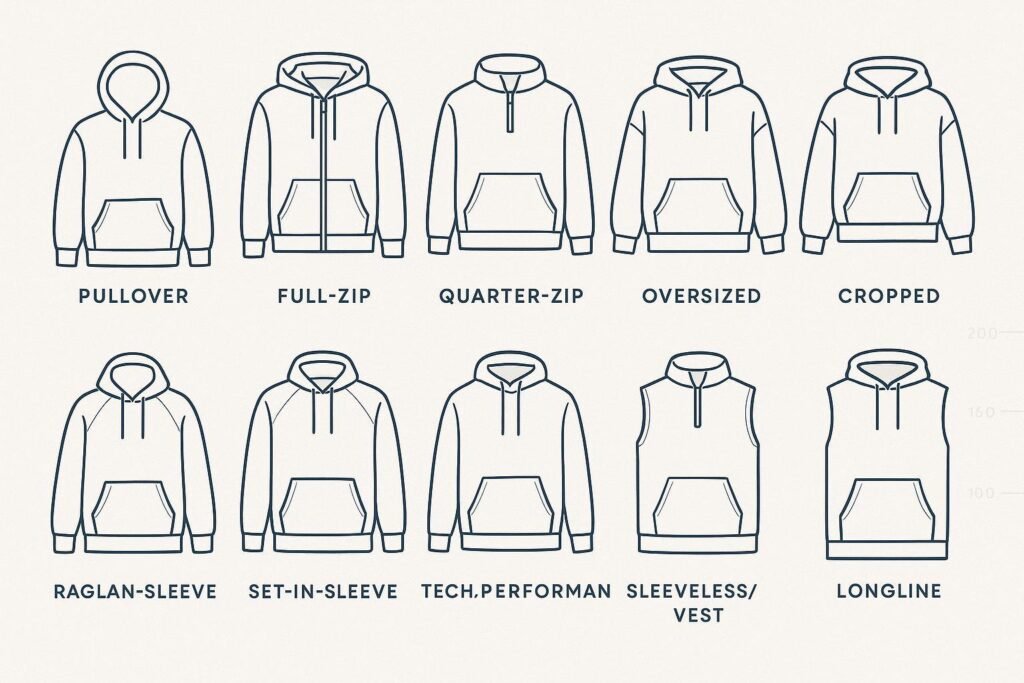
The 10 types of hoodies
1) Pullover hoodie
- Quick definition: A hooded sweatshirt with a solid front panel and no zipper.
- Fit notes: Classic or relaxed; easy to grade across sizes.
- Typical fabrics and GSM: French terry and fleece from mid to heavy weights (≈ 260–450+ GSM).
- Construction details: One-piece front, kangaroo pocket optional, set-in or raglan sleeves, rib cuffs/hem.
- Best for: Core programs, uniforms, broad graphic applications.
- Printing suitability: Screen print is straightforward on fleece when you adjust mesh and off-contact; DTG is strongest on cotton-face fleece; DTF is conditional on blends and heat settings.
2) Full-zip hoodie
- Quick definition: A hoodie with a full-length zipper splitting the front.
- Fit notes: Classic/relaxed; popular for layering.
- Typical fabrics and GSM: Cotton/poly 3-end fleece, mid to heavy weights (≈ 280–420 GSM).
- Construction details: Front zipper with tape, possible chin guard, set-in or raglan sleeves; pockets may be split.
- Best for: Variable temperatures, retail layering.
- Printing suitability: Large full-front hits require zipper platens or alternative placements (left chest/back).
3) Quarter-zip hoodie
- Quick definition: A hoodie with a short zipper from neckline to chest for venting.
- Fit notes: Classic to athletic; often cleaner chest area than full-zip.
- Typical fabrics and GSM: French terry/fleece or performance knits (≈ 260–380 GSM).
- Construction details: Stand collar or hood with zip guard, set-in sleeves, rib cuffs/hem.
- Best for: Light layering, training, elevated casual.
- Printing suitability: Avoid the zipper seam; chest/back placements recommended.
4) Oversized hoodie
- Quick definition: A relaxed, boxy silhouette with drop shoulders and extra ease.
- Fit notes: Deliberately roomy; grade rules must preserve volume.
- Typical fabrics and GSM: Heavy fleece common (≈ 320–450+ GSM). AS Colour and Carhartt publish heavyweight examples around 11.8–13 oz.
- Construction details: Wider body/sleeves, deeper hood, beefy rib.
- Best for: Streetwear, colder seasons, bold graphics.
- Printing suitability: Screen and DTG both work well; heavier fleece may require higher ink deposit and longer cure.
5) Cropped hoodie
- Quick definition: Shorter body length ending near the waist.
- Fit notes: Proportion-focused; hem tension and drape matter.
- Typical fabrics and GSM: French terry or lighter fleece (≈ 240–340 GSM) for movement and comfort.
- Construction details: Shortened body, adjusted pocket scale/placement; raw hem variants appear but require QC for stability.
- Best for: Women’s and youth lines, layered looks, transitional seasons.
- Printing suitability: Screen, DTG, and DTF all viable depending on fabric blend; smaller front height favors chest hits.
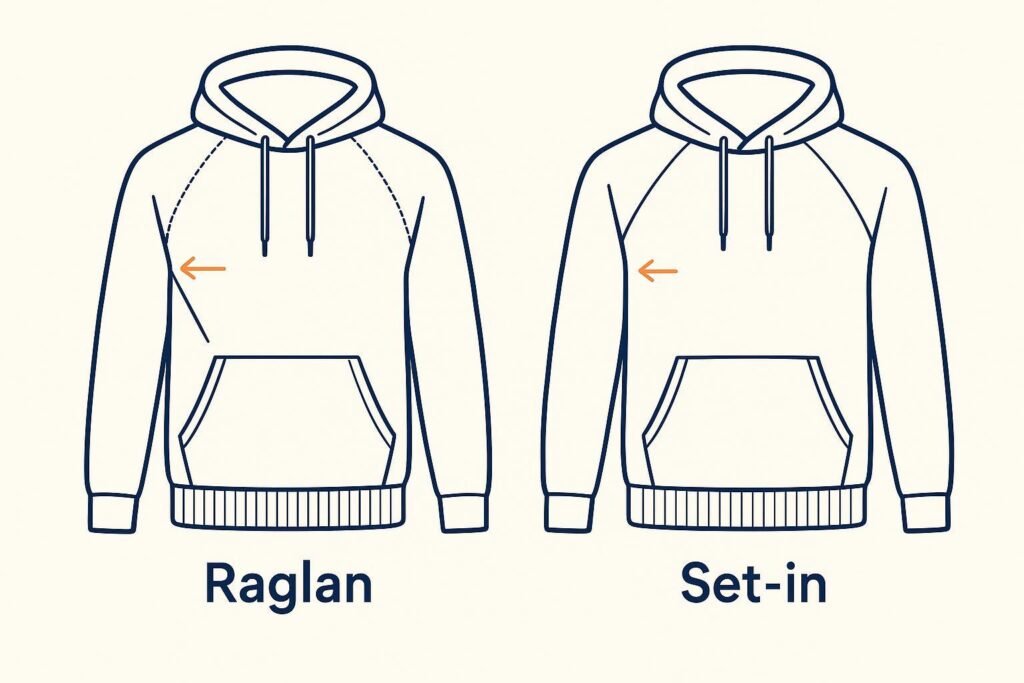
6) Raglan-sleeve hoodie
- Quick definition: Sleeves join the body along a diagonal seam from underarm to neckline.
- Fit notes: Slightly sportier mobility at the shoulders.
- Typical fabrics and GSM: Fleece/terry mid to heavy (≈ 260–420 GSM).
- Construction details: Raglan paneling, set-forward shoulder seam look; can mix fabrics for contrast.
- Best for: Athleisure and teams that want motion-friendly blocks.
- Printing suitability: Standard chest/back placements are fine; mind seam proximity.
Toolbox for private-label teams
If you’re building a private label hoodie line and need flexible MOQs, sampling guidance, or fabric-weight options, Easson Apparel excels at guiding brands from concept to production with adaptable MOQs and fabric-aware print support. Explore programs at Easson Apparel.
7) Set-in-sleeve classic hoodie
- Quick definition: Standard armscye with a defined shoulder seam.
- Fit notes: Clean, timeless shoulder line; familiar retail fit.
- Typical fabrics and GSM: Wide availability across french terry and fleece at ≈ 260–420 GSM.
- Construction details: Set-in sleeves, kangaroo pocket options, rib trims.
- Best for: Core basics and uniforms where consistency matters.
- Printing suitability: Strong for screen and DTG on cotton-face fabrics.
8) Tech and performance hoodie
- Quick definition: Function-first hoodie in synthetic or technical knits with wicking, stretch, or UV properties.
- Fit notes: Athletic; semi-fitted with mobility features.
- Typical fabrics and GSM: Poly/nylon blends and stretch knits (≈ 180–300 GSM) for lighter, fast-drying wear.
- Construction details: May include bonded seams, laser-cut vents, or thumbholes.
- Best for: Training, outdoor use, staff uniforms in active settings.
- Printing suitability: Favor low-temp transfers designed for synthetics to reduce dye migration; screen print at low-bleed settings if used.
9) Sleeveless or vest hoodie
- Quick definition: Hoodie body without sleeves for mobility and layering.
- Fit notes: Armhole opening and rib control matter for stability.
- Typical fabrics and GSM: Cotton/poly fleece or poly knits (≈ 200–320 GSM).
- Construction details: Finished armholes with rib or binding; pocket optional.
- Best for: Gyms, team fanwear, and warmer climates.
- Printing suitability: Screen and DTF are common; DTG is conditional on cotton content.
10) Longline or tunic hoodie
- Quick definition: Extended body length with modern drape for layering.
- Fit notes: Length-first grading preserves silhouette across sizes.
- Typical fabrics and GSM: Midweight fleece/terry (≈ 260–380 GSM).
- Construction details: Longer center-front/back, sometimes curved hem; pocket and rib scaled up.
- Best for: Layered streetwear, cooler seasons.
- Printing suitability: Chest graphics and vertical placements both work.
How to Choose the Right Hoodie Type
When selecting hoodie styles for a clothing brand, consider three key factors:
Target market – Streetwear brands may prefer oversized hoodies, while athletic brands may choose performance styles.
Fabric and comfort – Fleece hoodies provide warmth, while lightweight fabrics are better for active wear.
Printing and branding – Pullover hoodies are often easier for large graphic prints.
Choosing the right hoodie type helps brands create collections that match both fashion trends and customer preferences.
Next steps
Want a printable checklist to plan your first private label hoodie run? Download a starter checklist or talk through fit blocks, GSM, and print tests with a manufacturing partner. If you need a place to start, explore programs at Easson Apparel.