

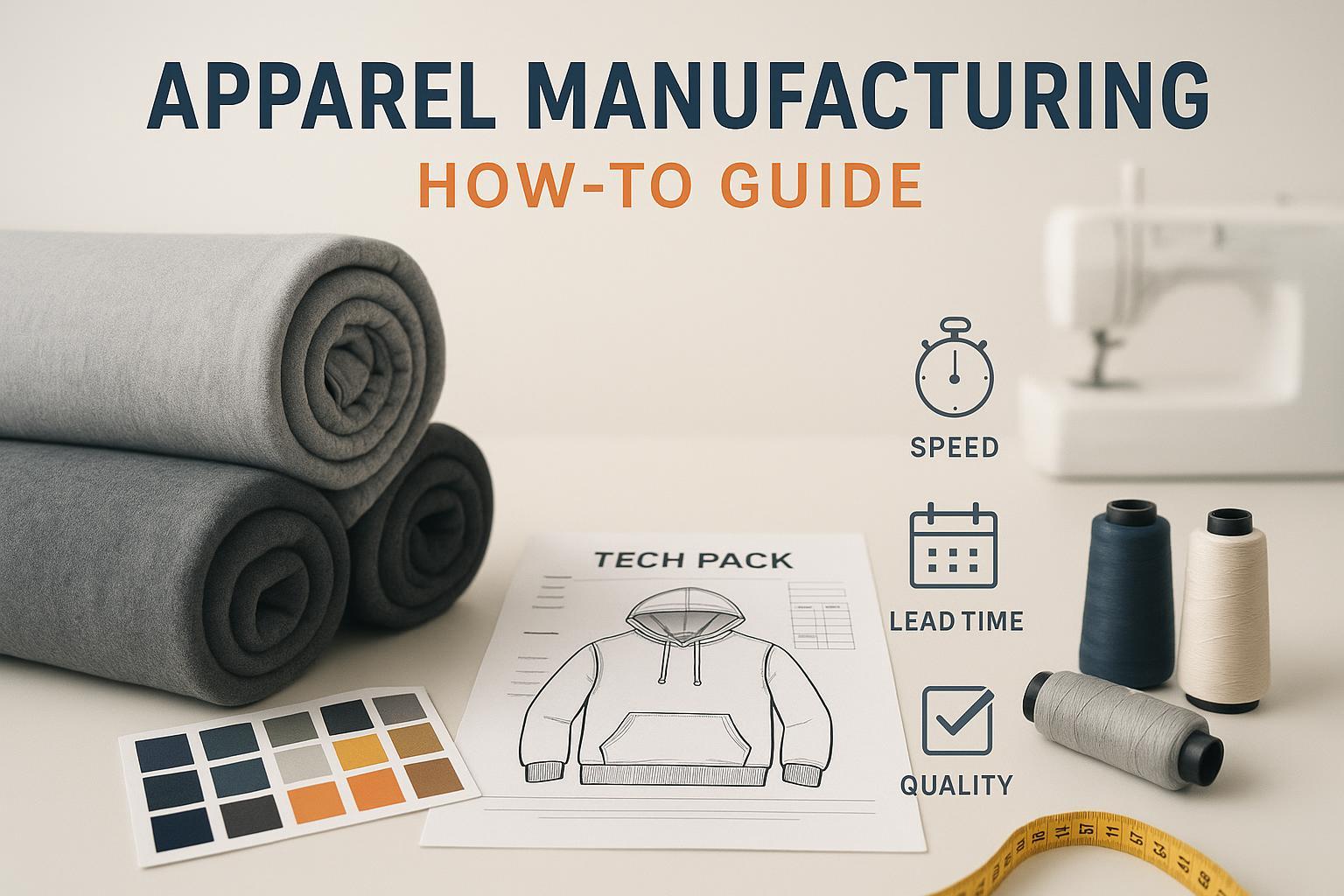
Choosing the right hoodie manufacturer is one of the most important decisions for a clothing brand. A reliable manufacturer affects your production speed, product quality, and ability to launch collections on time.
If you’re evaluating suppliers and wondering how to choose a hoodie manufacturer, this guide explains the key factors—from sampling workflows to capacity verification and quality control.
How to Choose a Reliable Hoodie Manufacturer
A dependable hoodie manufacturer doesn’t just sew well; they operate on time. For US‑bound private label and custom hoodies, your real risk is slippage—samples that take weeks longer than promised, production lines that weren’t actually available, or defects discovered too late. Use this lens to screen vendors:
- Do they provide specific sample turnarounds (proto, fit, PP) and hit them?
- Can they prove line capacity in pieces per day for hoodies, not just generic knitwear?
- What’s their on‑time delivery rate for the last 12 months?
- How do they handle peak seasons and holidays?
Get these answers early. They’ll shape your likelihood of hitting market windows for bulk orders.
Step 1 — Prove the Sampling Workflow
Sampling velocity reveals how a factory plans and communicates. Ask for a clear path with promised dates and check‑ins.
From proto to PP to size set: what “fast and disciplined” looks like
- Proto sample confirms silhouette, fabric platform, and trims.
- Fit sample verifies grading and comfort; log any pattern changes.
- Pre‑production (PP) sample is production‑ready with final fabric, trims, and decoration.
- Size set checks at least three sizes for measurements and balance before bulk.
Insist on time‑stamped milestones. A fast, disciplined custom hoodie manufacturer will share a tracker with target and actual dates, plus rework loops. Book your PP approval meeting the day PP arrives—don’t let decisions idle.
Tests to bake into sampling (shrinkage, colorfastness, seam strength)
Build basic lab checks into sampling so you’re not discovering issues after production starts:
- Shrinkage/dimensional change using AATCC methods for fabrics and garments (e.g., TM135/TM150) with targets of about ≤3% for cotton/poly fleece after home laundering. See the AATCC standards listings in the AATCC Standards hub.
- Colorfastness to laundering and crocking using AATCC methods (e.g., TM61 for wash, TM8 for rub) to protect dark shades from bleeding; reference the same AATCC Standards hub for method overviews.
- Seam integrity and trims: align seam strength and attachment checks via recognized softlines testing; you can validate expectations with your lab during sampling.
Document results and lock targets before PP approval.
Step 2 — Validate Lead Times and Capacity
Speed without capacity proof is a promise you can’t bank. Validate with specifics.
What to ask for (line plans, pieces/day, buffers, subcontracting rules)
- Line plan: how many sewing lines will be allocated to your hoodie style and for how long.
- Pieces/day: expected daily output for your garment complexity and size mix.
- Material readiness: production start tied to fabric/trim in‑house dates, not just a calendar week.
- Buffers and peaks: holiday and Q4 buffers, plus how they handle surge orders.
- Subcontracting policy: when they subcontract, how they control quality, and how it affects timelines.
Cross‑check these claims during sampling. If capacity drops, timelines should be re‑baselined immediately.
Booking inspections and tightening AQL when risk rises
Book your pre‑shipment inspection window 7–14 days before ex‑factory so inspectors can get on‑site. Use the industry‑standard AQL framework (ANSI/ASQ Z1.4 or ISO 2859‑1) with typical apparel thresholds—Critical 0.0; Major 2.5; Minor 4.0—so everyone knows acceptance criteria ahead of time. For an accessible explanation of AQL tables and planning, see the QIMA AQL overview.
If you see rising defect trends in pilot runs or TOP checks, tighten the AQL temporarily or raise the inspection level. It’s faster to catch defects on the line than to rework finished hoodies.
Step 3 — Quality Control That Keeps You On Schedule

Reliability isn’t just punctuality; it’s preventing rework. Lock a quality plan that moves in step with production:
- In‑line audits at key operations (kangaroo pocket, zipper set, rib attachment) to intercept issues early.
- PP sample signed off by all stakeholders (design, tech, production, buyer) before fabric bulk cutting.
- Final inspection to the agreed AQL; document defect Pareto and corrective actions.
Step 4 — Fabric Platforms and Customization That Don’t Slow You Down
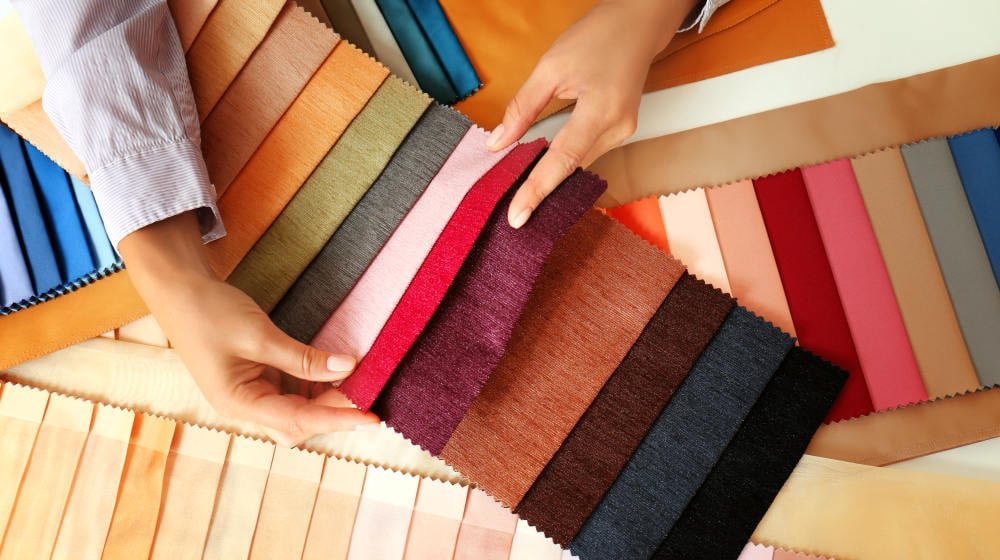
Hoodie fabric and decoration choices affect both timing and risk. Decide early and test early.
Fleece, French terry, heavy jersey: typical specs and pitfalls
- Fleece (cotton/poly blends, CVC): warm and familiar; manage shrinkage and pilling; check rib recovery (elastane content) on cuffs/hem.
- French terry: lighter and versatile; watch for seam puckering on high‑SPI stitches.
- Heavy jersey: structured hand; verify drape and hood balance.
Lock GSM, fiber composition, and finish. Run a quick pilling check (e.g., ASTM D3512 is commonly used; method references are accessible via the AATCC Standards hub) and confirm colorfastness on final recipes.
Custom prints/embroidery: strike‑offs, color matching, wash durability
- Approve strike‑offs on the actual base fabric.
- For screen print/DTF/DTG, wash‑test after 24–48 hours’ cure; reject cracking or heavy crocking.
- For embroidery, check density and backing to avoid tunneling on fleece; test for abrasion at the neckline and pocket edges.
A disciplined custom hoodie manufacturer will align customization approvals with PP timing so artwork doesn’t become the bottleneck.
Step 5 — MOQ, Pricing Signals, and Repeatability
MOQ flexibility is helpful, but raw‑material minimums still govern reality. Discuss:
- Fabric MOQs (greige/dyed) and dye lot sizes; plan colorways that consolidate yardage.
- Trim MOQs for zippers, drawcords, eyelets, and labels.
- Price breaks vs. lead‑time impact: small lots can run sooner on idle lines; very small lots may wait longer for materials.
For bulk orders, align your forecast with the factory’s capacity calendar. Repeatability—same fabric platform, same trims—shortens future cycles.
Step 6 — Communication and Governance
You can’t move fast without clear ownership.
- Single point of contact who runs a shared tracker for samples, materials, bulk cut, sewing, finishing, inspection, and ship dates.
- Change control: any spec change after PP triggers a revised timeline.
- Escalation path: who you call when dates slip, and what the containment plan is.
Agree on meeting cadence: weekly during sampling, twice‑weekly during bulk.
Compliance and Certification Checklist for US‑Bound Hoodies
For US shipments, confirm labeling and, if you sell kids’ sizes, children’s product compliance. Then layer in facility and product certifications to support your brand positioning.
- FTC labeling basics: fiber content, country of origin, and responsible party name/RN, plus permanent care instructions under the Care Labeling Rule. Guidance is detailed on the FTC Clothing and Textiles hub and “Made in USA” claims must meet the “all or virtually all” standard per FTC guidance.
- Children’s apparel: If applicable, issue a Children’s Product Certificate (CPC) based on third‑party testing and add tracking labels; see the CPSC CPC overview.
| Certification/program | What it covers | Buyer notes |
|---|---|---|
| ISO 9001 | Quality management systems | Check scope matches manufacturing activities and verify validity dates via certificate. |
| OEKO‑TEX Standard 100 | Harmful substances in textiles | Verify product class and article range; aligns with chemical safety expectations. See OEKO‑TEX Standard 100. |
| GOTS (if organic claims) | Organic fiber processing and social criteria | Use when you intend to market organic hoodies; confirm certified scope and transaction certificates. See GOTS Implementation Manual v7.2 (2024). |
| WRAP or amfori BSCI | Social/ethical compliance | Confirm facility name matches your production site and certificate is current. See WRAP certification explained or amfori BSCI. |
Keep the number of certificates lean and relevant to your claims.
What a Reliable Partner Looks Like (One Example)
Easson Apparel is one example of a private label hoodie manufacturer that publishes practical sampling turnarounds and capacity notes. For instance, they state sample development in about 7–10 working days and flexible MOQs for simpler styles, with options for expedited production in urgent cases. Use any vendor’s stated SLAs as a starting point; then verify performance with trackers and delivery records.
Vendor Evaluation Scorecard (Template)
Use a simple 1–5 scale for each criterion; multiply by the weight to total 100. Aim for on‑time delivery above 90% and tighten controls if any critical item scores under 3.
| Criterion | Weight | Score (1–5) | Weighted |
|---|---|---|---|
| Sampling TAT adherence (proto → PP → size set) | 25% | ||
| On‑time delivery rate (last 12 months) | 25% | ||
| Capacity transparency (lines, pieces/day, buffers) | 15% | ||
| Communication & governance (POC, tracker, change control) | 15% | ||
| QC results (AQL performance at agreed levels) | 10% | ||
| Compliance & certifications (relevant and current) | 10% | ||
| Total | 100% |
Common Mistakes to Avoid
- Skipping PP sign‑off or size set before bulk cutting.
- Approving prints/embroidery on lab dips instead of final fabric and then skipping wash tests.
- Accepting vague capacity claims without pieces/day and line allocations.
- Forgetting to book inspections until the week of shipment.
- Ignoring FTC label copy (fiber %, COO, RN, care) until after labels are printed.
- Letting spec changes creep in without re‑baselining timelines.
Вопросы и ответы
What’s the difference between a hoodie manufacturer and a custom hoodie manufacturer?
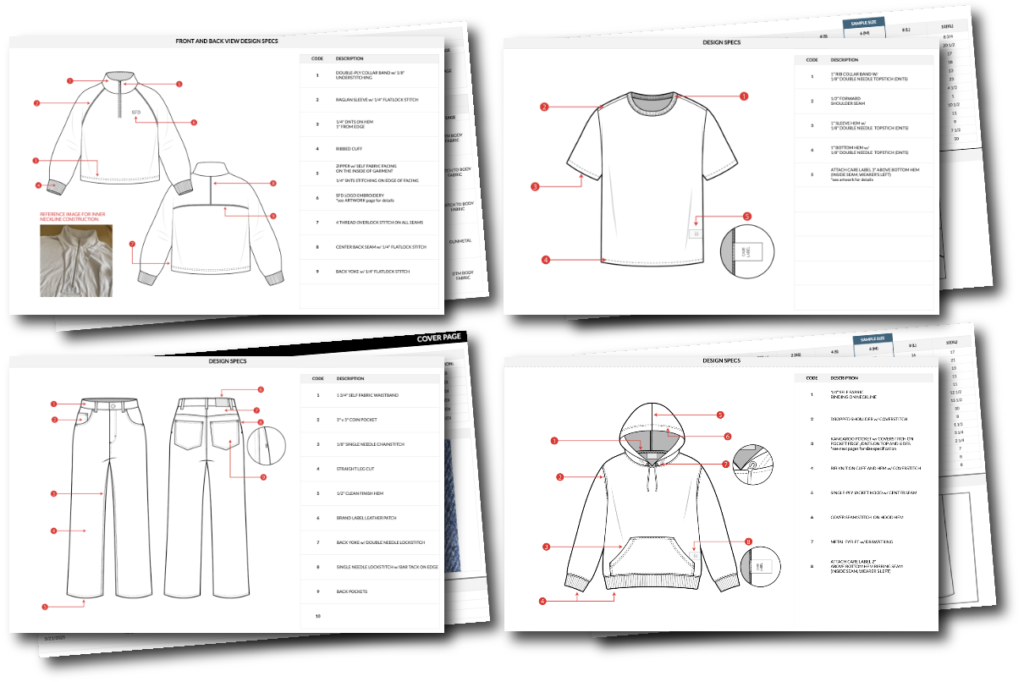
A hoodie manufacturer can produce standard silhouettes to spec. A custom hoodie manufacturer also develops unique patterns, decorations, and trims to your brand’s tech pack, which typically adds sampling steps and approval gates—build that time into your plan.
How should I approach bulk orders if my MOQ is small?
Consolidate colorways and trims to meet fabric and accessory minimums, and negotiate phased deliveries tied to material readiness. Ask the bulk hoodie manufacturer for pieces/day by line so you can model ship dates.
What is the hoodie manufacturing process at a high level?
Typically: tech pack → proto → fit → PP with final materials → size set → bulk cutting and sewing → finishing → pre‑shipment inspection → ship. Keep tests (shrinkage, colorfastness, seam checks) in sampling, not after production starts.
Choosing vendors is ultimately about risk. If you keep the decision lens on speed and reliability—and apply the steps above—you’ll know how to choose hoodie manufacturer partners who hit dates without sacrificing quality. When you’re ready to review specs and timelines, you can contact us for a specification review and pressure‑test production plans before you commit.