Choosing the right hoodie manufacturer is not only about finding a supplier who can sew hoodies. For a clothing brand, the real challenge is finding a production partner who can develop samples on time, control fabric shrinkage, handle decoration details, and deliver bulk orders without unexpected delays.
A hoodie order rarely fails because the design idea is bad. More often, problems happen because the sampling process is unclear, the fabric is not tested early enough, the factory overpromises capacity, or quality issues are found too late in production.
If you are building a private label hoodie line, launching a streetwear brand, or preparing your next bulk order, this guide will help you understand how to choose the right hoodie manufacturer for your brand.
You will learn what to check before placing an order, how to evaluate sampling and production capacity, what quality control steps matter, and how to avoid common mistakes that can cost you time and money.
Why Choosing the Right Hoodie Manufacturer Matters
The right hoodie manufacturer helps your brand control quality, timing, and production risk before bulk production starts.
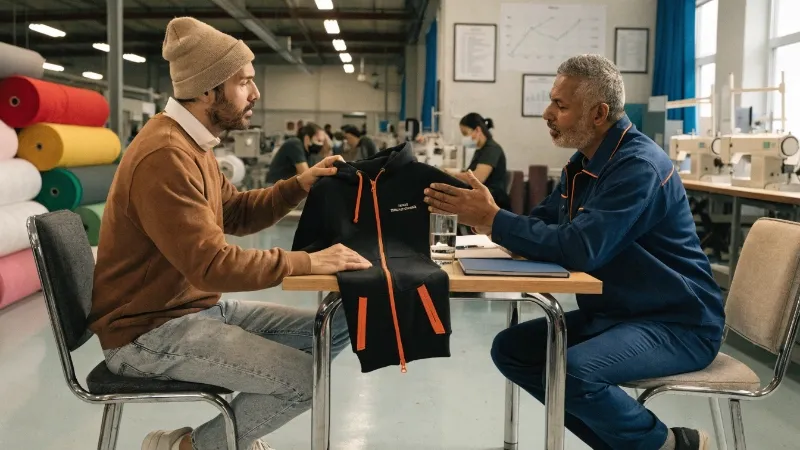
Hoodies may look simple from the outside, but they involve many production details: fabric weight, shrinkage, hood structure, rib quality, pocket placement, drawcords, zipper quality, embroidery, printing, labeling, packaging, and size consistency.
For brands selling in markets such as the US, Europe, Canada, and Australia, buyers expect stable quality and professional finishing. A poor manufacturing partner can cause problems such as:
- Samples that take much longer than promised
- Bulk fabric that feels different from the approved sample
- Hoodies shrinking after washing
- Embroidery puckering on fleece
- Print cracking after a few washes
- Unstable sizing between sizes
- Delays during peak production seasons
- Labels or packaging that do not match market requirements
A good hoodie manufacturer should not only say “yes” to your design. They should help you check whether your fabric, pattern, decoration, MOQ, and timeline are realistic.
Step 1 — Check Their Hoodie Sampling Process
Sampling is the first real test of a hoodie manufacturer’s communication, technical ability, and production discipline.
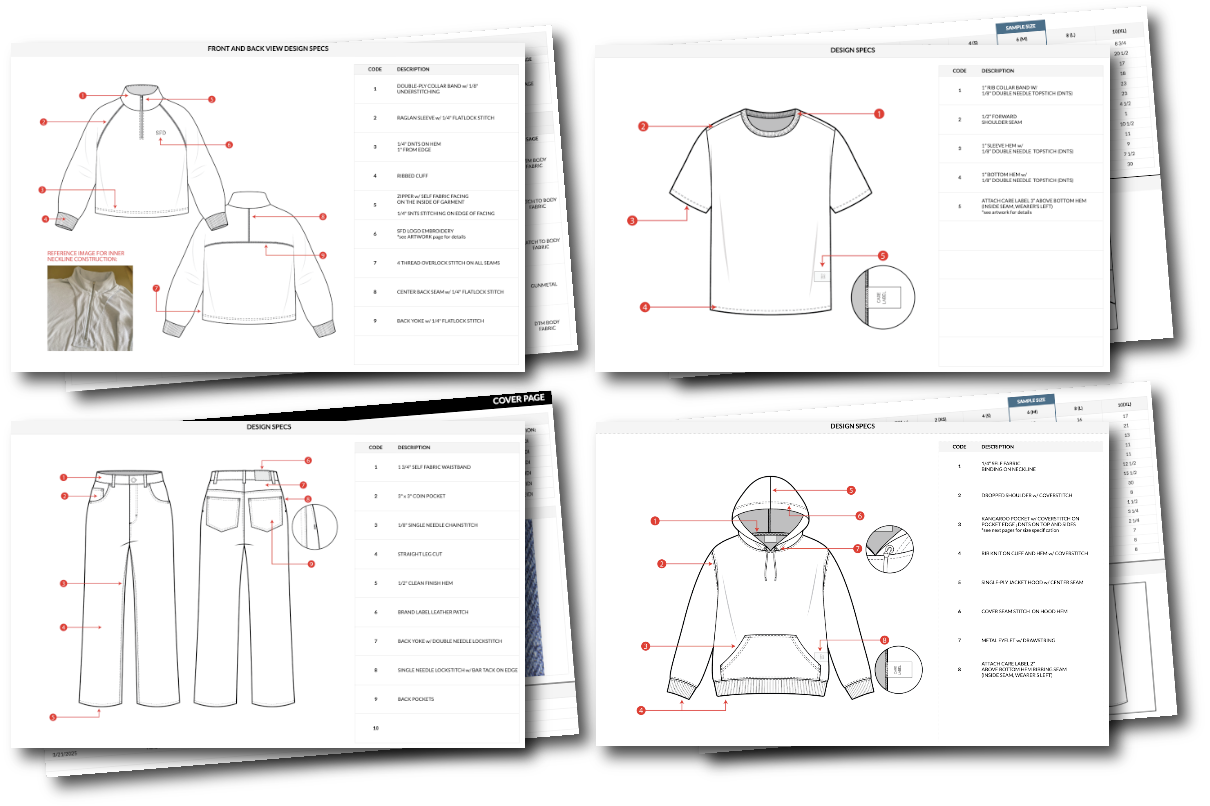
Before you place a bulk order, ask the manufacturer to explain their sampling workflow clearly. A professional custom hoodie manufacturer should be able to tell you what happens from the first tech pack review to the final pre-production sample.
A complete hoodie sampling process usually includes:
Tech pack or reference review
The factory checks your design, measurements, fabric request, decoration method, trims, labels, and packaging needs.Fabric and trim confirmation
The factory confirms available fabric options, GSM, composition, rib, drawcords, zippers, eyelets, labels, and other accessories.Proto sample
This first sample checks the basic silhouette, fabric direction, construction, and overall design feasibility.Fit sample
The fit sample checks measurements, comfort, shoulder shape, sleeve length, body length, hood size, and overall balance.Pre-production sample
The PP sample should use the final confirmed fabric, trims, print or embroidery, labels, and packaging details.Size set sample
For bulk orders, a size set helps confirm grading and fit across different sizes before cutting bulk fabric.
At Easson Apparel, simple hoodie samples usually take around 8–12 days after details are confirmed. For more complex hoodie designs involving heavyweight fabric, special trims, embroidery, washing effects, multiple color panels, or custom-developed fabric, 15–20 days is often more realistic.
This is important because some brands only ask, “How fast can you make a sample?” A better question is:
“What exactly is included in the sample, and what decisions do we need to confirm before you start?”
A fast sample is not helpful if the fabric is wrong, the decoration is not tested, or the measurements are not ready for bulk production.
Step 2 — Verify Lead Times and Real Production Capacity
A reliable hoodie manufacturer should be able to explain not only the delivery time, but also how that delivery time is calculated.
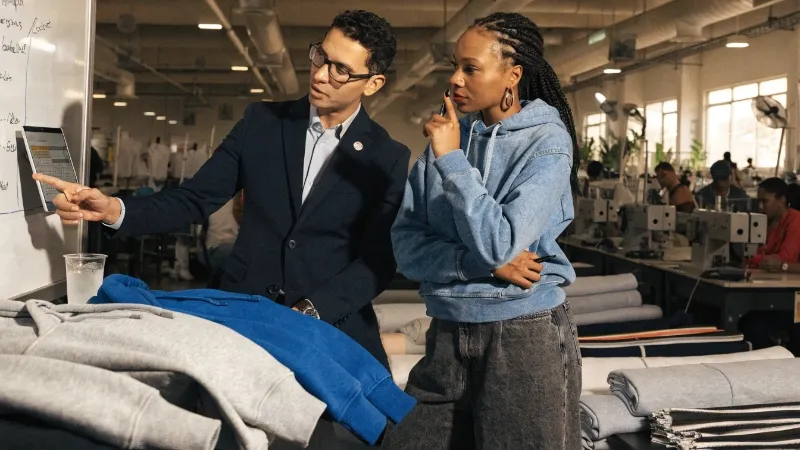
Many suppliers can give a quick answer such as “25–30 days for bulk production.” But for a serious clothing brand, this is not enough. You need to understand whether the timeline is based on real production capacity or just a general promise.
Ask the manufacturer these questions before placing a bulk order:
- How many sewing lines can be allocated to my hoodie order?
- How many pieces per day can your line produce for this style?
- Is the fabric in stock, or does it need to be dyed or knitted?
- How long do trims, labels, drawcords, zippers, or packaging take?
- Will any process be subcontracted?
- How do you manage peak seasons and holiday delays?
- What happens if the sample approval is delayed?
- When should inspection and shipping be booked?
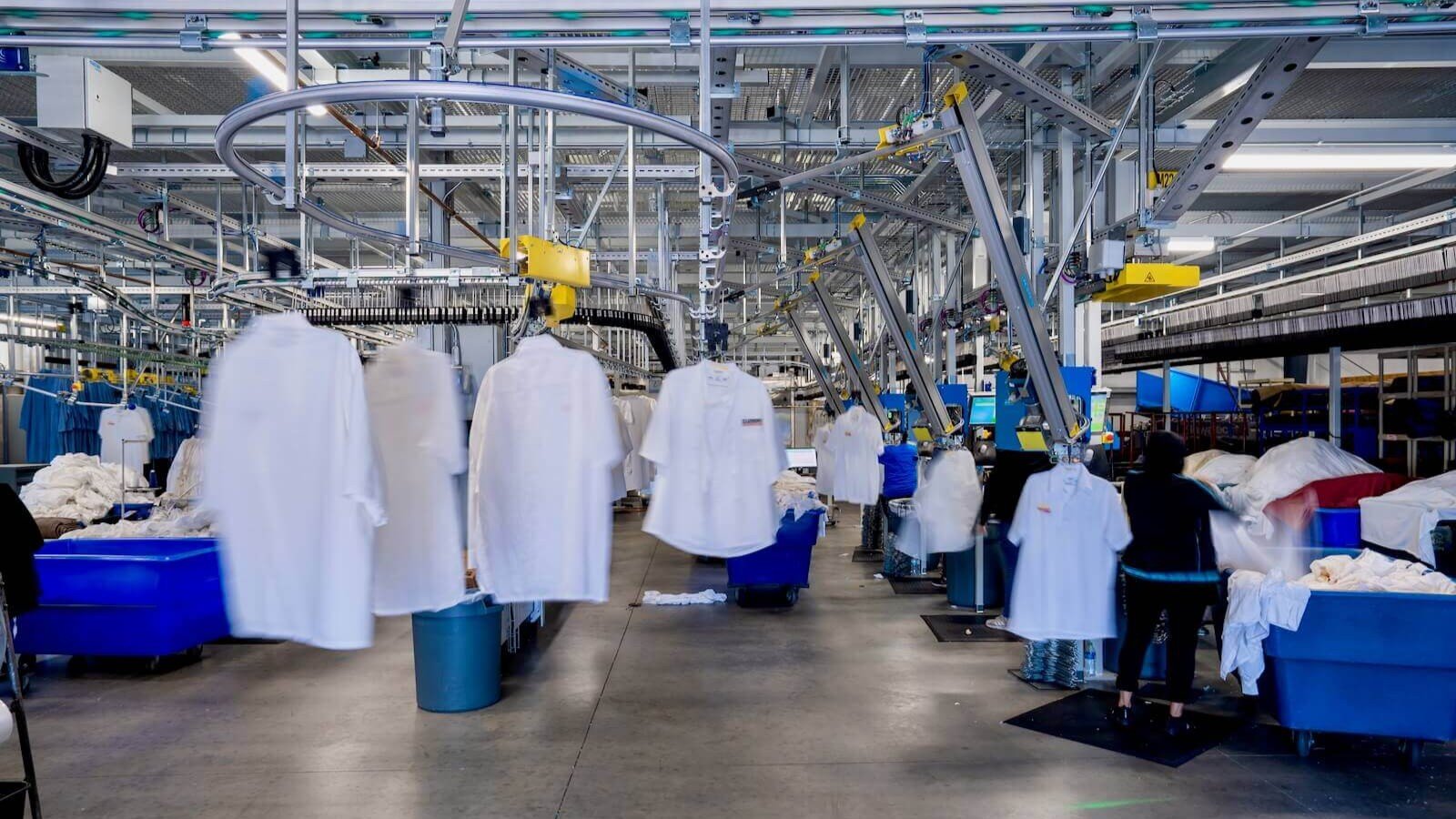
For most standard hoodie bulk orders, a practical production timeline is often around 25–35 days after the PP sample, fabric, trims, and order details are confirmed. However, the actual lead time depends on fabric availability, order quantity, decoration complexity, and factory schedule.
If you are choosing styles for a larger production run, our guide to the best hoodie styles for bulk orders can help you compare production efficiency and customization potential.
For example, a simple pullover fleece hoodie with regular rib and screen print may move faster than a heavyweight zip-up hoodie with custom zipper pullers, embroidery patches, contrast panels, and special packaging.
A good manufacturer should help you build a realistic calendar instead of only giving a simple production estimate.
Step 3 — Review Their Hoodie Quality Control Process
Quality control should happen before, during, and after production—not only at final inspection.
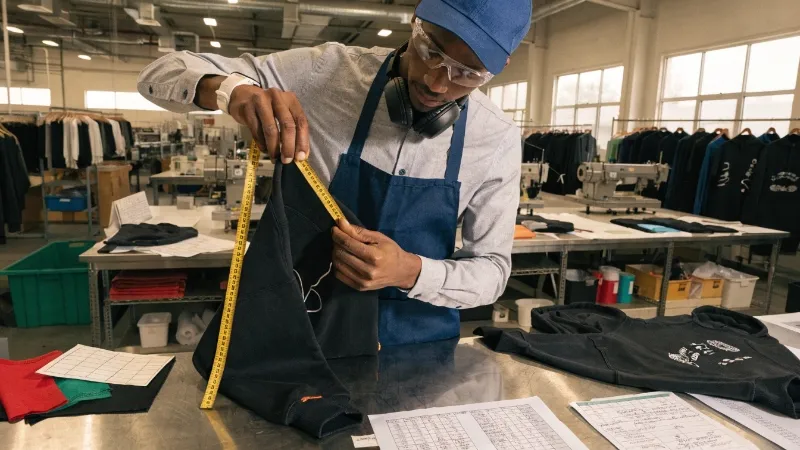
Many hoodie problems are difficult to fix once the bulk order is finished. That is why quality control should begin during fabric and sample development.
For hoodie production, important quality checks include:
- Fabric weight and hand feel
- Shrinkage after washing
- Colorfastness for dark colors
- Rib recovery on cuffs and hem
- Hood shape and balance
- Pocket placement
- Shoulder and sleeve measurements
- Zipper smoothness, if applicable
- Drawcord and eyelet quality
- Print or embroidery durability
- Seam strength at high-stress points
- Final measurements across sizes
For a deeper checklist, read our guide on how to tell if a hoodie is high quality before you approve bulk production.
For cotton or cotton-blend hoodies, shrinkage control is especially important. In our production experience, many hoodie issues come from fabric that was approved by hand feel but not tested properly before bulk cutting.
As a general target, many brands prefer to keep shrinkage around 3% or below after normal washing, but the final standard should be agreed with your manufacturer and testing lab based on the fabric type and market expectations.
For custom prints and embroidery, testing should happen on the actual hoodie fabric, not only on a random fabric swatch. For final inspections, many apparel brands use an AQL inspection approach to define acceptable limits for critical, major, and minor defects before shipment. Fleece, French terry, and heavy jersey can react differently to printing, embroidery density, heat pressing, and washing.
A professional hoodie manufacturer should be willing to run checks before bulk production, especially when the order includes:
- Heavyweight fabric
- Dark colors
- Contrast color panels
- Puff print
- Large screen prints
- Embroidery on thick fleece
- Appliqué patches
- Special washing or finishing
If the factory only checks the product at the end, the risk is higher. Good factories try to catch problems during sampling and inline production, when they are still easier to fix.
Step 4 — Confirm Fabric Options and Customization Ability
Fabric choice is one of the biggest factors affecting hoodie quality, price, structure, and lead time.
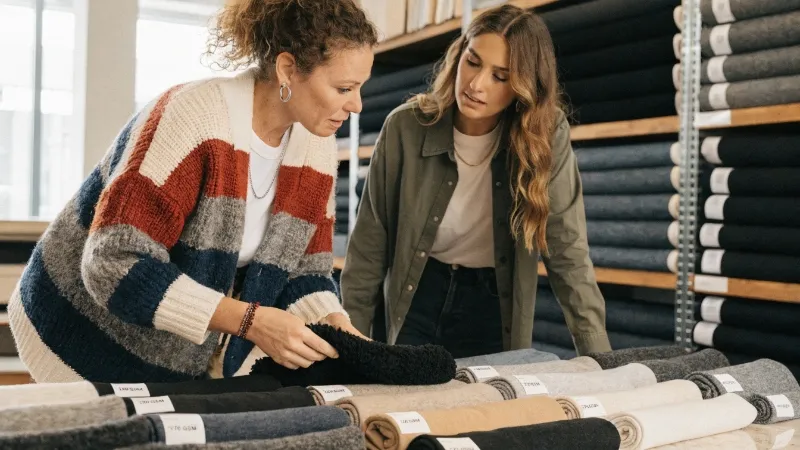
Before choosing a hoodie manufacturer, you should check whether they understand different hoodie fabric platforms and can recommend the right option for your brand.
| Fabric Type | Common Use | Key Points to Check |
|---|---|---|
| French terry | Lightweight to midweight hoodies, spring/autumn styles | Soft hand feel, breathability, loopback structure, shrinkage |
| Fleece | Warm hoodies, casualwear, streetwear | Brushed inside, warmth, pilling, shrinkage, rib matching |
| Cotton/poly CVC | Commercial hoodie programs | Cost balance, stability, easy care, hand feel |
| Heavyweight cotton fleece | Premium streetwear hoodies | Structure, drape, hood balance, high fabric cost |
| Double-face or air-layer fabric | Structured hoodies, clean silhouette | Shape retention, smooth surface, higher cost |
If you are still comparing fleece, French terry, and cotton blends, you can also read our guide to the best hoodie material before confirming your fabric direction. If you are still deciding between pullover, zip-up, oversized, cropped, or heavyweight styles, review our guide to the main types of hoodies first.
For lightweight or standard hoodies, many brands choose fabrics around 280–350 GSM. For more premium or streetwear hoodies, brands may choose 400 GSM, 450 GSM, or even heavier fabrics.
However, heavier is not always better.
A 450 GSM hoodie may look premium, but it can also affect:
- Shoulder drop
- Sleeve volume
- Hood balance
- Sewing difficulty
- Shipping weight
- Final cost
- Drying time after washing
From a factory perspective, the pattern may need adjustment when moving from a 300 GSM hoodie to a 450 GSM hoodie. If the same pattern is used without adjustment, the hoodie may feel stiff, bulky, or unbalanced.
This is where an experienced hoodie manufacturer can help. They should not only ask what GSM you want. They should also explain how that GSM affects fit, cost, and production.
Step 5 — Test Prints, Embroidery, and Branding Details Early
Customization is often where hoodie production becomes slower, more expensive, or riskier.
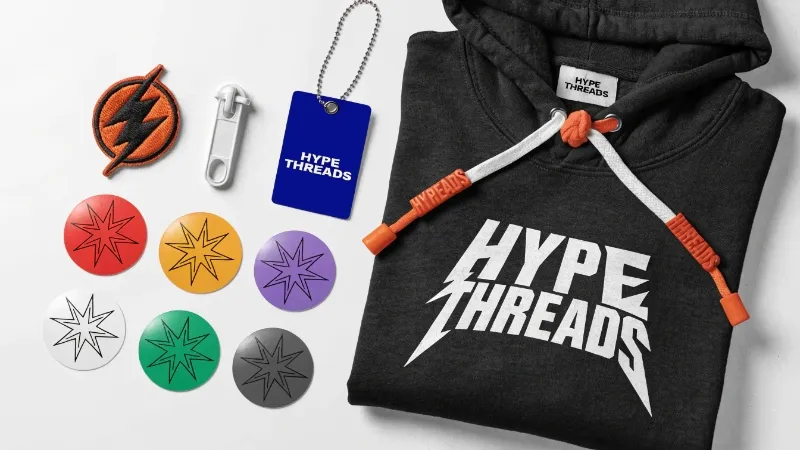
Many brands focus heavily on the main hoodie fabric but leave decoration details until too late. This can create problems during production.
For custom hoodies, common branding methods include:
- Screen printing
- Puff printing
- Plastisol printing
- DTG printing
- DTF printing
- Flat embroidery
- 3D embroidery
- Appliqué embroidery
- Woven labels
- Neck labels
- Hang tags
- Custom drawcords
- Custom zipper pullers
- Branded packaging
Each method has different risks.
For example, puff print needs good control of thickness and curing. Embroidery on fleece needs the right backing and stitch density to avoid puckering. Large embroidery on a soft hoodie can make the fabric feel stiff. Large prints may crack if the print method and curing are not suitable.
Before bulk production, ask your manufacturer to provide:
- Print strike-off
- Embroidery sample
- Color matching reference
- Wash test feedback
- Final placement confirmation
- Artwork size confirmation
- Thread or ink color confirmation
For embroidery, you should provide a high-resolution logo file, preferably vector artwork. If the logo is too detailed, the factory may need to simplify it for better embroidery results.
A good custom hoodie manufacturer should tell you what can be produced cleanly, instead of blindly copying artwork that may not work well on fabric.
Step 6 — Understand MOQ, Pricing, and Repeat Order Stability
MOQ is not only a factory rule. It is often connected to fabric, trims, dyeing, labor, and production efficiency.
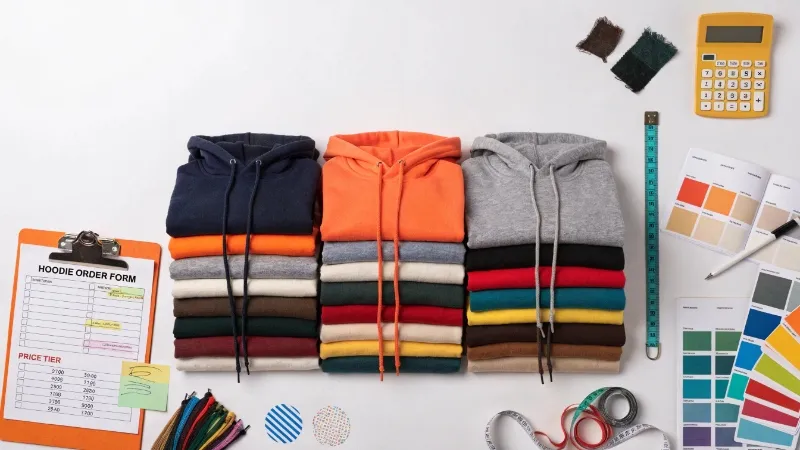
Many startup brands want a low MOQ, which is understandable. But very small hoodie orders can be expensive because the factory still needs to spend time on pattern making, sampling, fabric sourcing, cutting, sewing, decoration, labeling, and packing.
At Easson Apparel, the normal MOQ is often around 100 pieces per color for many standard styles. For startup brands, smaller trial orders may be possible depending on the design, fabric availability, and decoration method, but the unit price will usually be higher.
When discussing MOQ, ask the manufacturer:
- Is the MOQ per style, per color, or per design?
- Can I mix sizes within one color?
- Can I use stock fabric to lower the MOQ?
- What is the price difference between 50, 100, 300, and 500 pieces?
- Does a lower MOQ increase the lead time?
- Will repeat orders be easier after the first production run?
If your brand is still testing the market, it may be smarter to start with a simple hoodie style, fewer colors, and a stable fabric platform. Once the first order sells well, repeat orders can become faster and more cost-effective.
For long-term brands, repeatability is very important. Using the same fabric base, rib, trims, and labels can help reduce development time for future collections.
Step 7 — Make Communication Clear Before Production Starts
Good communication reduces production mistakes before they become expensive problems.
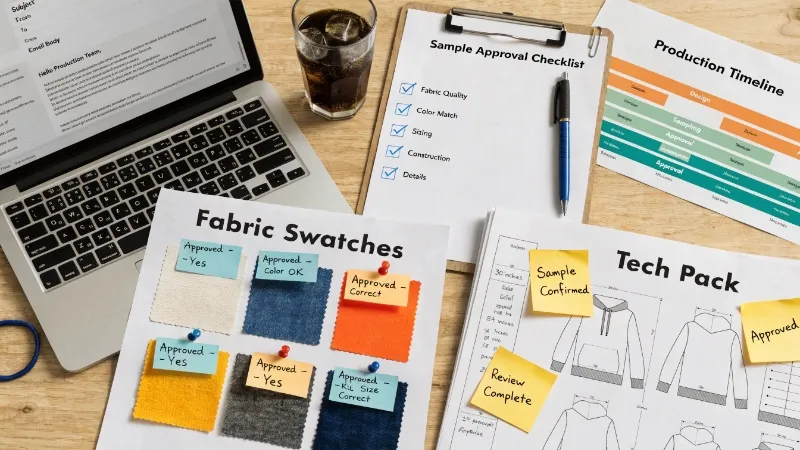
A hoodie order involves many small details. If these details are not confirmed in writing, mistakes can happen easily.
Before production starts, make sure you and the manufacturer confirm:
- Final tech pack
- Final measurements
- Final fabric composition and GSM
- Final color
- Final print or embroidery artwork
- Final logo placement
- Final trims
- Final label details
- Final packaging
- Sample approval comments
- Bulk production timeline
- Inspection plan
- Shipping method
It is also important to agree on how changes are handled.
If you change fabric, trims, measurements, or artwork after PP sample approval, the factory should update the timeline and price if needed. Even a small change can affect material ordering, cutting, sewing, or decoration.
A reliable manufacturer should have one clear contact person who helps manage the project. For bulk orders, weekly updates are useful. During urgent production stages, more frequent updates may be needed.
Good communication does not mean sending many messages every day. It means the right information is confirmed at the right time.
Compliance and Certification Checklist for Hoodie Orders
Certifications and compliance should match your product claims and target market. Do not collect certificates only for decoration.
For hoodie orders, compliance needs may vary depending on your selling country, customer type, and product category.
For adult hoodies, brands usually need to pay attention to:
- Fiber content labeling
- Country of origin labeling
- Care instructions, based on the FTC Care Labeling Rule when selling in the US market
- Responsible party information, if required
- Chemical safety expectations
- Restricted substances requirements from retailers or marketplaces
For products sold in the United States, brands should review FTC textile labeling requirements, including fiber content, country of origin, and responsible party information.
For children’s hoodies, requirements may be stricter. For children’s products sold in the US, brands may need a Children’s Product Certificate based on applicable third-party testing. Brands may need to consider children’s product testing, tracking labels, and market-specific safety rules.
Common certifications or audit programs include:
| Certification / Program | What It Usually Supports | Buyer Notes |
|---|---|---|
| ISO 9001 | Quality management system | Check whether the certificate scope matches garment manufacturing |
| ISO 14001 | Environmental management | Useful for brands with sustainability requirements |
| ISO 45001 | Occupational health and safety | Shows attention to workplace safety systems |
| OEKO-TEX Standard 100 | Harmful substance testing for textiles | Useful when buyers care about chemical safety |
| GOTS | Organic textile processing | Only relevant if you are making organic claims |
| BSCI / amfori BSCI | Social compliance audit | Useful for buyers who care about ethical sourcing |
| WRAP | Social compliance for sewn products | Commonly requested by some international buyers |
A practical point: do not overclaim. If your hoodie is not made with certified organic fabric and processed under the correct certified scope, avoid using “GOTS certified hoodie” casually.
The right approach is to ask your manufacturer which certifications apply to the actual factory, fabric, and production process.
An Example: How a Hoodie Project Can Go Wrong or Right
A good manufacturer helps brands identify risk before bulk production, not after the goods are finished.
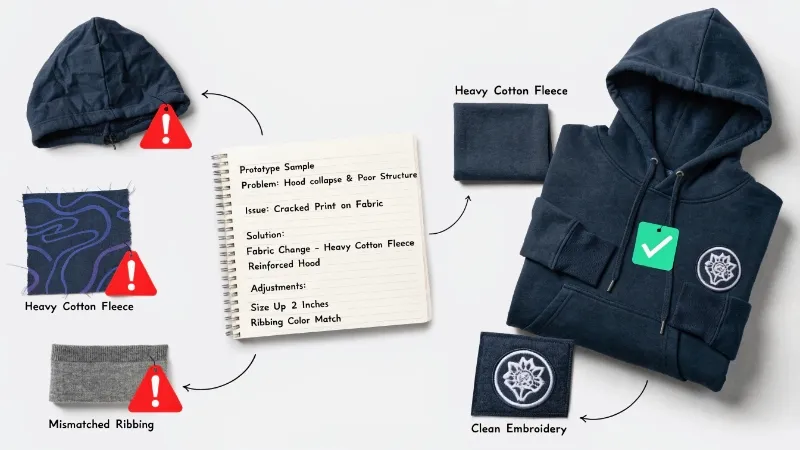
Here is a common situation we see with startup hoodie brands.
A brand wants to make a premium oversized hoodie with heavy fabric, embroidery on the chest, and a large back print. At the beginning, the brand may only focus on the design look and ask for the lowest MOQ and fastest sample time.
But during development, several details need to be checked:
- Is the selected fabric too heavy for the original pattern?
- Will the hood collapse or pull backward?
- Is the embroidery too dense for the fleece?
- Will the large back print crack after washing?
- Does the rib match the main fabric color?
- Can the brand accept the higher shipping cost caused by heavy GSM?
- Is the MOQ realistic for custom-dyed fabric?
In one anonymized hoodie development case, a startup brand originally wanted a very heavy fabric for a small first order. After reviewing the target price, sample goal, and expected hand feel, the fabric direction was adjusted to a more practical mid-heavy option. The sample was easier to control, the hoodie still kept a premium structure, and the brand avoided unnecessary bulk cost before testing the market.
This is the value of working with an experienced hoodie manufacturer. The factory should not simply produce what is requested. It should help the brand make better production decisions.
Hoodie Manufacturer Evaluation Scorecard
Use a simple scorecard to compare manufacturers before choosing your production partner.
You can rate each supplier from 1 to 5, then multiply by the weight. This helps you avoid choosing only based on the lowest price.
| Evaluation Criteria | Weight | Score 1–5 | Notes |
|---|---|---|---|
| Hoodie sampling process | 20% | Does the factory explain proto, fit, PP, and size set clearly? | |
| Sample lead time reliability | 15% | Do they give realistic sample timelines and updates? | |
| Fabric knowledge | 15% | Can they explain GSM, shrinkage, rib, and fabric risks? | |
| Customization ability | 15% | Can they handle print, embroidery, labels, trims, and packaging? | |
| Bulk production capacity | 15% | Can they explain line capacity and production schedule? | |
| Quality control process | 10% | Do they check fabric, measurements, decoration, and final goods? | |
| Communication | 5% | Is there one clear contact person and written confirmation? | |
| Compliance support | 5% | Can they support relevant certifications or labeling needs? | |
| Total | 100% |
A manufacturer with the lowest price may not be the best option if they score poorly on sampling, communication, or quality control.
For hoodie production, a slightly higher unit price can be worth it if the factory helps you avoid delays, rework, fabric mistakes, and customer complaints.
Common Mistakes Brands Should Avoid
Most hoodie manufacturing problems can be reduced if the brand confirms key details before bulk production.
Here are common mistakes to avoid:
1. Choosing a manufacturer only by price
Low price is attractive, but it may mean cheaper fabric, weaker rib, poor finishing, unstable sizing, or rushed production.
2. Skipping fabric testing
Fabric hand feel is important, but it is not enough. Shrinkage, colorfastness, pilling, and recovery should be considered before bulk production.
3. Approving decoration without testing on actual fabric
Prints and embroidery should be tested on the final hoodie fabric. A logo that looks good on paper may not work well on fleece.
4. Using heavy GSM without adjusting the pattern
A heavyweight hoodie usually needs pattern and construction adjustments. Otherwise, it may feel too stiff or unbalanced.
5. Not confirming PP sample before bulk cutting
The PP sample is the final production reference. If it is not approved clearly, the bulk order may not match expectations.
6. Changing details after production starts
Changing measurements, artwork, fabric, or labels after approval can delay the whole order.
7. Ignoring packaging and labeling until the end
Labels, care instructions, hang tags, polybags, and cartons should be confirmed before production is finished.
8. Not asking about subcontracting
If some processes are handled outside the main factory, ask how quality and timing are controlled.
Questions to Ask Before Choosing a Hoodie Manufacturer
Before you decide, ask these practical questions:
- What hoodie fabrics do you commonly work with?
- What GSM ranges do you recommend for my target market?
- How long does hoodie sampling usually take?
- Can you make proto, fit, PP, and size set samples?
- What is your MOQ per color or per style?
- Can you support startup brands with smaller first orders?
- How do you test shrinkage and colorfastness?
- Can you handle embroidery, puff print, screen print, and labels?
- How do you control quality during bulk production?
- What is your normal bulk production lead time?
- How do you handle urgent orders?
- Can you help review my tech pack before sampling?
- What information do you need to quote accurately?
- Do you support private label packaging?
- What happens if the sample needs revisions?
If a manufacturer cannot answer these questions clearly, they may not be ready to support your brand professionally.
FAQs About Choosing a Hoodie Manufacturer
What is the difference between a hoodie manufacturer and a custom hoodie manufacturer?
A hoodie manufacturer can produce hoodies based on existing patterns or standard specifications. A custom hoodie manufacturer can help develop unique fits, fabrics, trims, prints, embroidery, labels, and packaging based on your brand requirements.
If your brand needs private label hoodies, oversized streetwear hoodies, heavyweight hoodies, or special decoration, you should look for a custom hoodie manufacturer with strong sampling and development ability.
What is a good MOQ for custom hoodies?
MOQ depends on the fabric, color, trims, and decoration method. For many standard hoodie styles, 100 pieces per color is a practical starting point. Smaller orders may be possible if stock fabric is available, but the unit price is usually higher.
If you are a startup brand, you can ask the manufacturer whether they can support a smaller trial order first, then move to larger repeat orders later.
How long does it take to make a hoodie sample?
For a simple hoodie sample, 8–12 days is a realistic range after all details are confirmed. Complex samples with heavyweight fabric, custom trims, embroidery, special printing, or fabric development may take 15–20 days or longer.
The more complete your tech pack, artwork, measurements, and fabric direction are, the faster the sample process will be.
How long does bulk hoodie production take?
For many hoodie bulk orders, production usually takes around 25–35 days after PP sample approval and material confirmation. The final timeline depends on order quantity, fabric availability, decoration process, and factory schedule.
If you have a fixed launch date, tell the manufacturer early so they can check the production calendar before accepting the order.
What fabric is best for premium hoodies?
Premium hoodies often use French terry, cotton fleece, CVC fleece, or heavyweight cotton-blend fabrics. Many brands choose 350–450 GSM for a more structured feel, while lighter hoodies may use 280–330 GSM.
The best fabric depends on your target customer, season, price point, and design style. Heavier fabric can feel premium, but it also increases cost and shipping weight.
Should I choose screen print, puff print, or embroidery for hoodies?
It depends on your design. Screen print works well for many graphic designs. Puff print can create a raised effect, often used in streetwear. Embroidery gives a premium look but may not be suitable for very detailed or oversized artwork.
The safest approach is to test your decoration on the actual hoodie fabric before bulk production.
How can I avoid hoodie shrinkage problems?
Confirm the fabric before bulk production and ask for shrinkage testing during sampling. Cotton and cotton-blend fabrics can shrink after washing, so the pattern and measurements should account for expected shrinkage.
You should also confirm care instructions clearly before printing labels.
What information should I send to a hoodie manufacturer for a quote?
To get an accurate quote, send:
- Design images or reference photos
- Tech pack, if available
- Target fabric composition and GSM
- Quantity per color and size
- Size chart
- Print or embroidery artwork
- Label and packaging requirements
- Target market
- Expected delivery date
If you do not have a complete tech pack yet, a good manufacturer can still help you review the basic direction and suggest what details need to be confirmed.
Final Thoughts
Choosing the right hoodie manufacturer is really about reducing production risk.
A good supplier should help you confirm the fabric, sample process, decoration method, MOQ, timeline, and quality control plan before bulk production starts. They should be honest about what is realistic, especially when you are working with heavyweight fabrics, small MOQs, custom embroidery, or urgent delivery dates.
If you already have a hoodie design, tech pack, reference sample, or fabric idea, Easson Apparel can help review your specifications and suggest a practical sampling and bulk production plan.
As a clothing manufacturer based in Dongguan, China, with long-term experience in knitwear production, we support custom hoodie manufacturing, private label production, fabric sourcing, sample development, printing, embroidery, labeling, packaging, and bulk production for overseas clothing brands.
Before you commit to bulk production, send us your hoodie details. We can help you check whether your design, fabric, MOQ, and timeline are realistic for production.