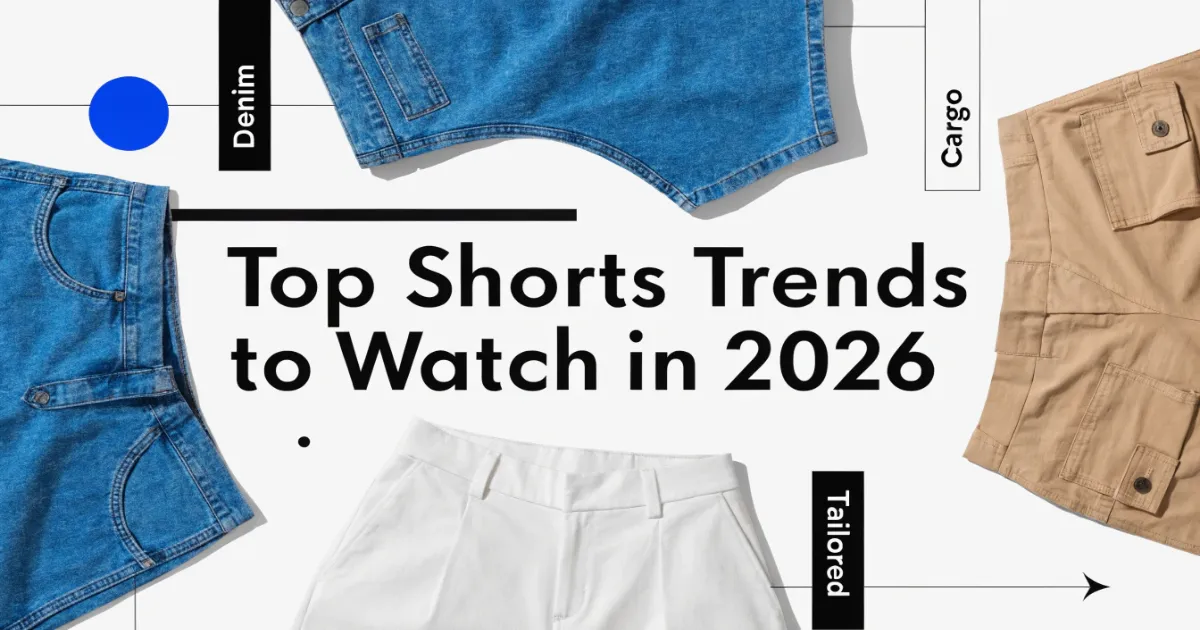
Every season, trend reports flood your inbox. Most of them tell you what's hot. Almost none of them tell you what's actually worth making.
In 2026, the most important shorts trends for clothing brands include utility-inspired cargo shorts, comfort-first knit shorts, sustainable fabric choices, hybrid athletic-casual shorts, and shorter retro silhouettes. But the best trend for your brand depends on your customer, price point, fabric choice, and production risk.
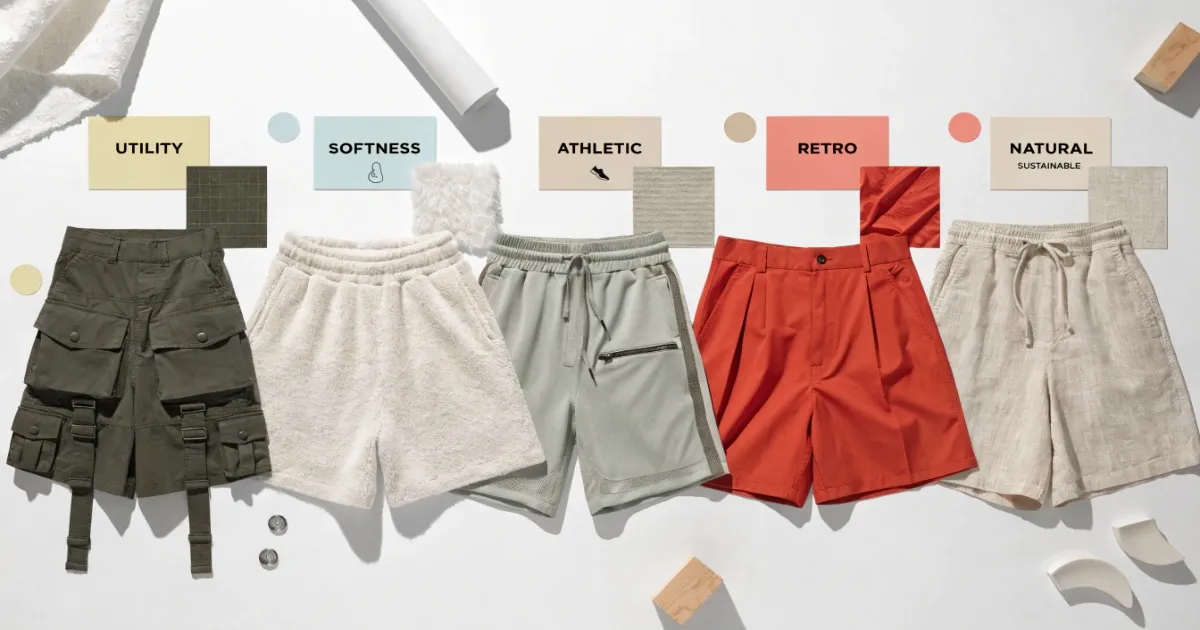
I have been working in apparel manufacturing for over 20 years. Every year, I talk directly with brand owners, buyers, and startup founders who are trying to make the same decision: which trends should I actually build a product around? The answer is never just about what looks good on a runway or a Pinterest board. It is about what your customer will wear, what your factory can produce consistently, and what your margins can support. This post breaks down the top shorts trends I see gaining real traction in 2026, and more importantly, what each one means for your sourcing and design choices.
Are Cargo and Utility Shorts Still Worth Investing In?
Cargo shorts have been declared dead at least three times in the past decade. Yet here we are in 2026, and they are still moving units. Why does this keep happening?
Cargo and utility shorts remain a strong commercial category in 2026 because the functional demand behind them has not gone away. Consumers want pockets, structure, and versatility. The silhouette has evolved from baggy workwear into a cleaner, more tapered utility aesthetic that works across streetwear, outdoor, and casual markets.
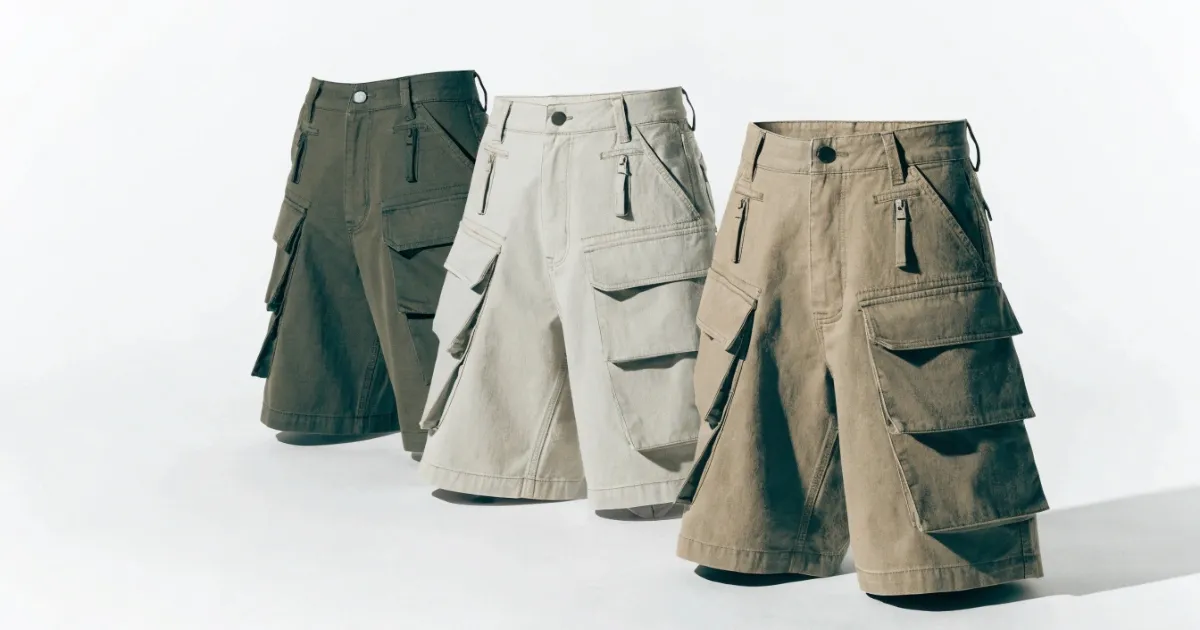
The question for a brand is not whether cargo shorts are trending. The question is whether your version of cargo shorts is positioned correctly for your customer.
What This Trend Means for Production
From a manufacturing standpoint, cargo shorts are more complex than a basic five-pocket cut. The construction involves more panels, more hardware (D-rings, snap buttons, drawcord tabs), and more stitching steps. This has a direct impact on cost and lead time.
Here is a breakdown of what brands typically need to think through:
| Production Factor | Basic Shorts | Cargo / Utility Shorts |
|---|---|---|
| Panel count | 4–6 panels | 8–14+ panels |
| Hardware components | Minimal | Multiple (buttons, snaps, rings) |
| Stitching complexity | Low | Medium to High |
| Sample development time | 7–10 days | 12–18 days |
| Unit cost vs. basic | Baseline | 20–40% higher |
| MOQ sensitivity | Lower | Slightly higher |
These numbers are not fixed, but they reflect the real production reality I see in my factory when clients bring in cargo short requests. Brands that underestimate the cost difference often get surprised at the sampling stage.
The strongest opportunity I see here is in the mid-weight ripstop or canvas cotton blend. These fabrics handle the utility aesthetic well, they wear well across seasons, and they are cost-effective at scale. If your brand is in the streetwear or outdoor-adjacent space, this category has genuine staying power heading into 2026.
Is the Comfort-First Trend in Shorts Just a Post-Pandemic Hangover?
Some people assumed that once offices reopened, consumers would snap back to structured clothing. That did not happen, at least not in the shorts category.
The demand for comfortable, relaxed-fit shorts in 2026 is not a temporary trend. It reflects a permanent shift in how people approach casual and activewear dressing. French terry, waffle knit, and loopback cotton constructions are all seeing strong demand as customers prioritize feel and ease of movement over formal structure.
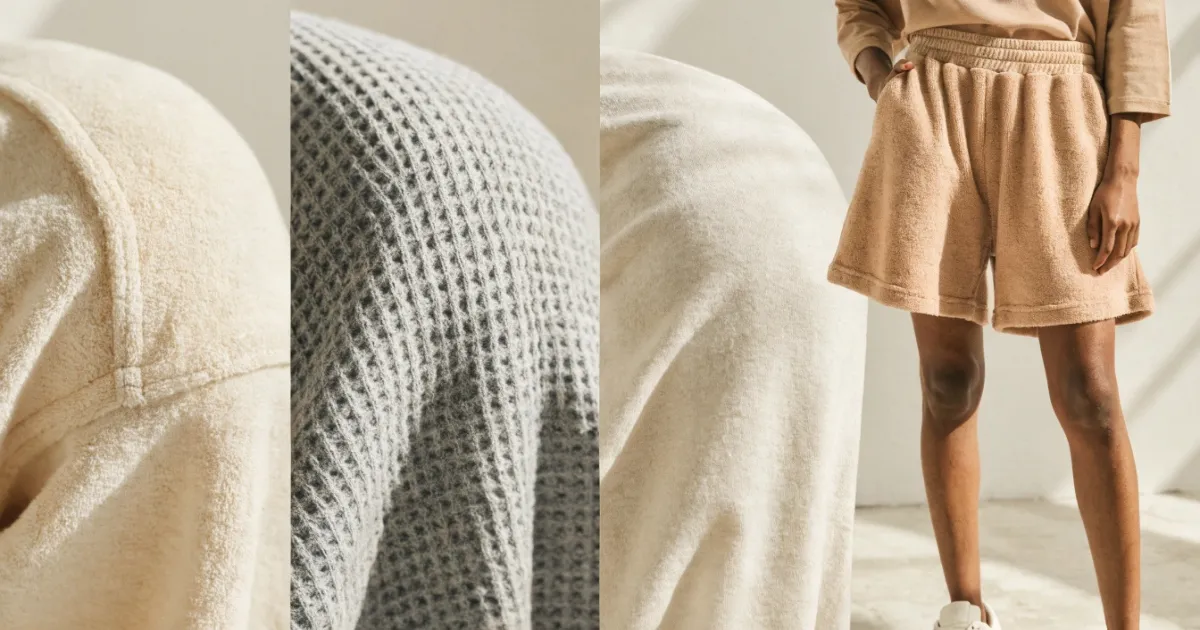
I work primarily in knit and casual garment manufacturing, so I see this shift very directly. The inquiries we receive have changed. Five years ago, most clients asking about shorts wanted woven fabrications. Today, a significant portion ask about French terry, fleece, or jersey shorts designed to feel like loungewear but function as streetwear.
What This Trend Means for Your Fabric Strategy
Comfort-first shorts live or die on fabric selection. The silhouette is often simple, which means the fabric itself carries most of the product's perceived value. Choosing the wrong weight or hand feel is a faster path to returns and brand damage than almost any other decision.
Here is how I typically guide clients through fabric choices for this category:
| Fabric Type | GSM Range | Best Use Case | Key Consideration |
|---|---|---|---|
| French Terry | 280–380 GSM | Casual / loungewear crossover | Softer face, looped back — good hand feel |
| Loopback Cotton | 320–400 GSM | Premium streetwear | Heavier, more structured drape |
| Waffle Knit | 200–280 GSM | Spring / summer comfort | Texture adds visual interest at lower weight |
| Cotton Jersey | 160–220 GSM | Basic or athletic casual | Cost-effective, wide availability |
| Fleece (brushed) | 300–380 GSM | Autumn crossover | Works for transitional seasonal positioning |
The brands I see succeeding in this category are the ones who pick a clear weight and commit to it. Trying to cover too broad a range in one style usually means the product ends up satisfying no one completely.
One practical tip: if you are launching a comfort short for the first time, start with a French terry at around 320 GSM1. It is one of the most forgiving fabrics in production, it photographs well, and it has a strong commercial track record across both premium and mid-market brand tiers.
How Big Is the Sustainable Shorts Opportunity, and Is It Practical for Smaller Brands?
Sustainability has been a buzzword in apparel for years. But the conversation around shorts specifically is worth separating from the broader, often generic sustainability debate.
For shorts in 2026, the most commercially viable sustainable options2 are organic cotton, recycled polyester blends, and low-waste cut-and-sew construction. These choices are increasingly available at accessible price points and do not require massive order volumes to implement, making them realistic for independent and mid-size brands.
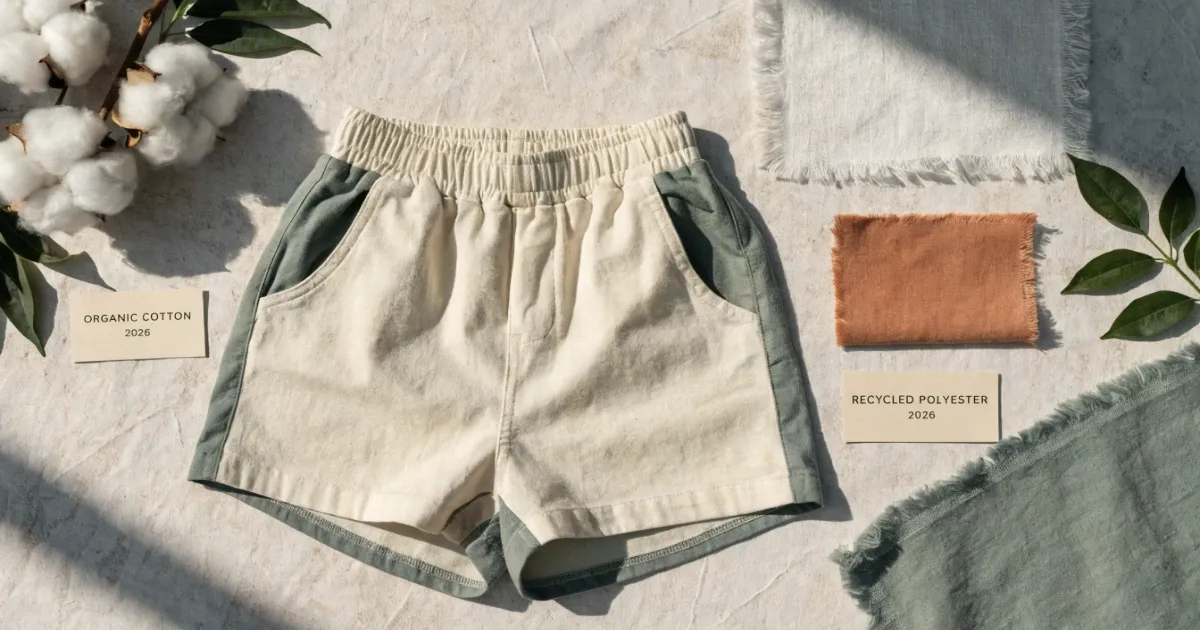
I want to be honest about something here. When a brand tells me they want a fully sustainable product, the first thing I do is ask them to define what that means for their customer and their price ceiling. Sustainability is not one thing. It is a spectrum of decisions, each with different cost and supply chain implications.
Breaking Down the Sustainable Shorts Decision
The table below shows how different sustainability choices affect production at the factory level:
| Sustainability Choice | Cost Impact vs. Conventional | MOQ Flexibility | Consumer Perception Value |
|---|---|---|---|
| Organic cotton fabric3 | +10–20% on fabric cost | Moderate (depends on mill) | High — well understood by consumers |
| Recycled polyester (rPET) | +5–15% on fabric cost | Good — widely available | Medium-High — growing awareness |
| Low-waste pattern cutting | Minimal added cost | High — applies at any volume | Low visibility but genuine impact |
| Natural / low-impact dyeing | +15–30% on processing | Lower — fewer facilities | High for premium positioning |
| Biodegradable packaging | Minimal (+2–5%) | High — easy to implement | Medium — visible at point of sale |
For most small to mid-size brands I work with, the most practical entry point into sustainable shorts is a combination of organic cotton or rPET fabric plus biodegradable packaging. Together, these two choices communicate a genuine sustainability commitment without pushing the cost structure beyond what most retail price points can absorb.
The mistake I see most often is brands trying to adopt every sustainable practice at once on a tight margin. That usually results in either an uncompetitive retail price or a cut corner somewhere in quality. Pick the sustainability choices that are most visible and meaningful to your specific customer, and build from there.
Will Hybrid Shorts — Between Athletic and Casual — Keep Growing in 2026?
The short that can go from a morning run to a café without looking out of place has been a growing category for several years. In 2026, I expect this to continue, but with more defined sub-segments.
Hybrid shorts in 2026 are evolving into two clear directions: performance-casual (athletic function with everyday aesthetics) and smart-casual shorts (structured but relaxed cuts suitable for semi-formal settings). Both require specific fabric and construction choices that differ from traditional athletic or fashion shorts.
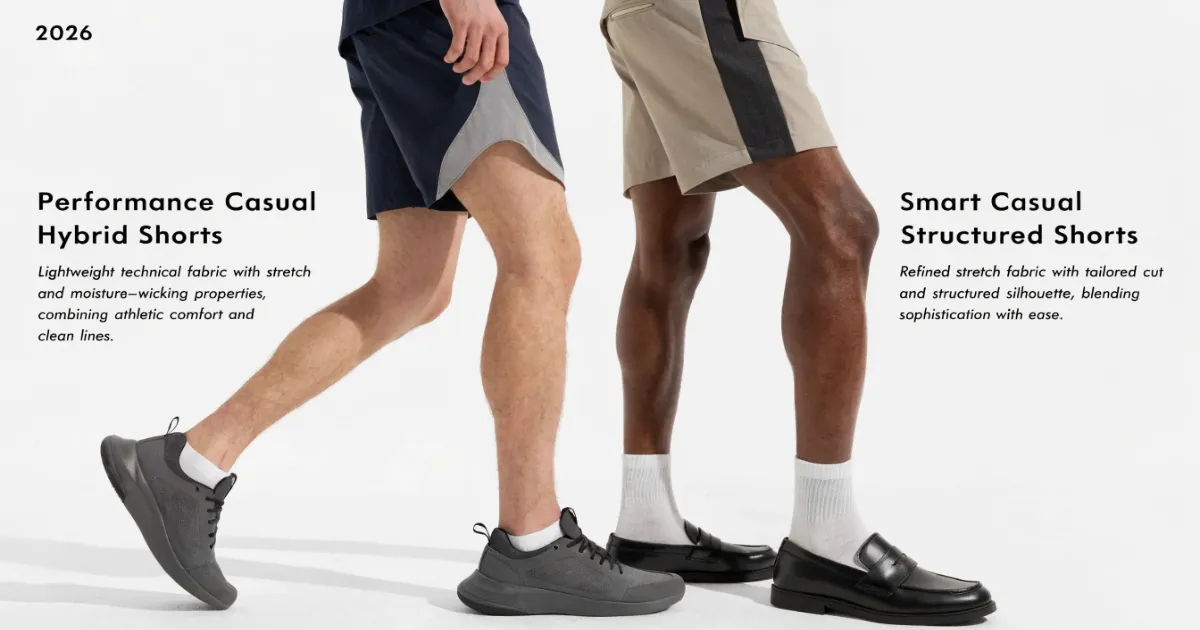
I find this category genuinely interesting from a manufacturing perspective because it challenges the typical category boundaries we work within. A performance-casual short needs stretch, moisture management, and a clean aesthetic. A smart-casual short needs structure, a cleaner waistband, and fabric that does not look like activewear at a glance.
The Manufacturing Reality of Hybrid Shorts
These two directions require very different approaches on the production floor:
| Feature | Performance-Casual | Smart-Casual |
|---|---|---|
| Primary fabric | 4-way stretch woven or interlock knit | Mid-weight cotton twill or structured woven |
| Waistband construction | Elastic with internal drawcord | Clean elastic or button-tab closure |
| Lining | Yes — mesh or moisture-wicking | Typically no |
| Pocket style | Zippered side or seamline | Clean side seam or single back pocket |
| Length | Above knee (7–9 inch inseam) | At or below knee (9–11 inch inseam) |
| Key production challenge | Seam integrity on stretch | Clean finish on structured fabric |
If your brand is entering the hybrid shorts space, the most important decision is which direction you are building toward. I have seen brands try to make a single short that covers both directions. It almost never works. The product ends up looking undefined, and neither the performance customer nor the lifestyle customer feels it was made for them.
Commit to one direction. Build the technical specifications around that customer's real use case. That is what makes a hybrid short a product with a clear reason to exist.
What About Shorter Lengths and Retro-Inspired Silhouettes?
Short shorts are back. This is not a shock if you have been watching what is selling in streetwear and athletic markets over the past two to three years. But there is more nuance here than a simple hemline shift.
The return of shorter inseam lengths (3–5 inches) in 2026 is driven by both athletic performance wear and retro streetwear aesthetics. This silhouette requires careful pattern grading and fit testing, as shorter lengths amplify fit inconsistencies that longer shorts can hide more easily.
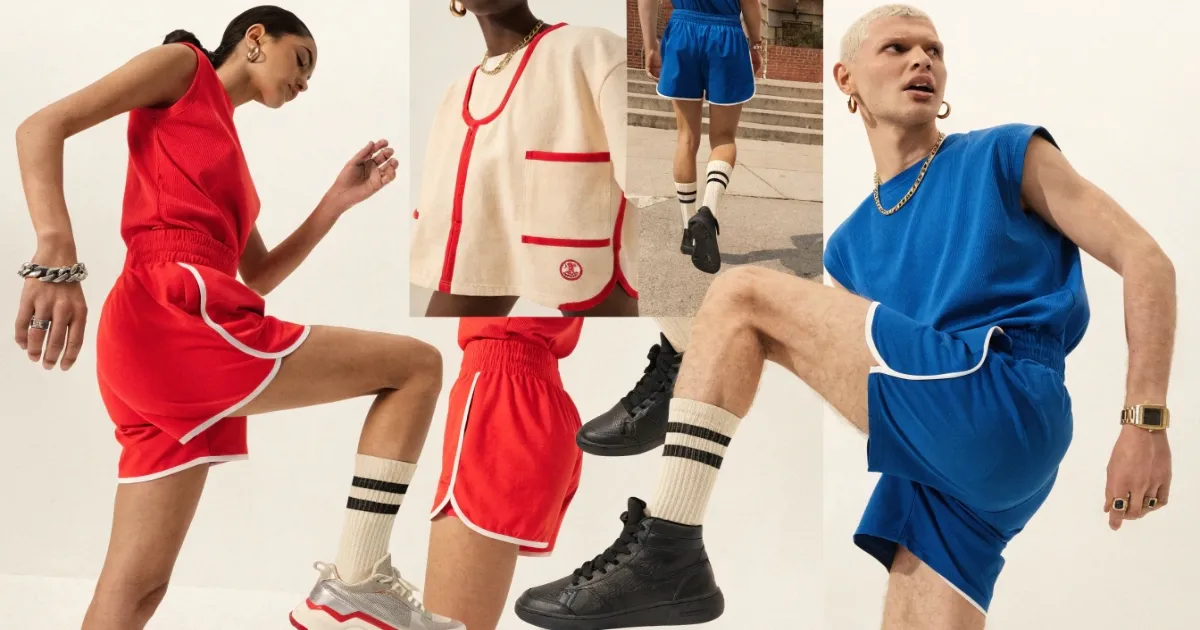
I have worked on a number of retro-cut short projects in the past few years, and the recurring challenge is always fit consistency across size runs. When you are working with a 3 or 4 inch inseam, there is very little room for error. A quarter inch of grading inconsistency is much more visible than it would be on a 9 inch inseam short.
Key Production Considerations for Short-Length Silhouettes
Brands moving into shorter silhouettes need to think carefully about the following:
| Production Area | Specific Challenge | Recommended Action |
|---|---|---|
| Pattern grading | Small inseam amplifies size inconsistency | Tighter tolerance spec on inseam grading |
| Crotch curve | Higher leg opening increases fit sensitivity | More fit iterations during sample stage |
| Hem finish | Short length makes hem quality highly visible | Specify hem type clearly (rolled, clean, rib) |
| Fabric drape | Lighter fabrics ride up more easily | Test drape and weight before bulk fabric order |
| Size range | Fit variation across XS–XL is more pronounced | Budget for additional size fitting sessions |
This is a category where I strongly recommend brands invest in thorough fit testing before moving to bulk production. The cost of an extra sampling round is far lower than the cost of a bulk order with a fit problem that only shows up after you have cut 500 units.
Retro-inspired shorts are a real commercial opportunity in 2026, but they require more pre-production discipline than a standard mid-length silhouette. If your brand is committed to this direction, build that time and cost into your development timeline from the start.
Which Shorts Trends Are Worth Watching, But Not Always Worth Producing?
Not every shorts trend deserves a full production run. Some trends are useful for design inspiration, seasonal drops, or small capsule collections, but they may not be the best choice for every brand's core product line.
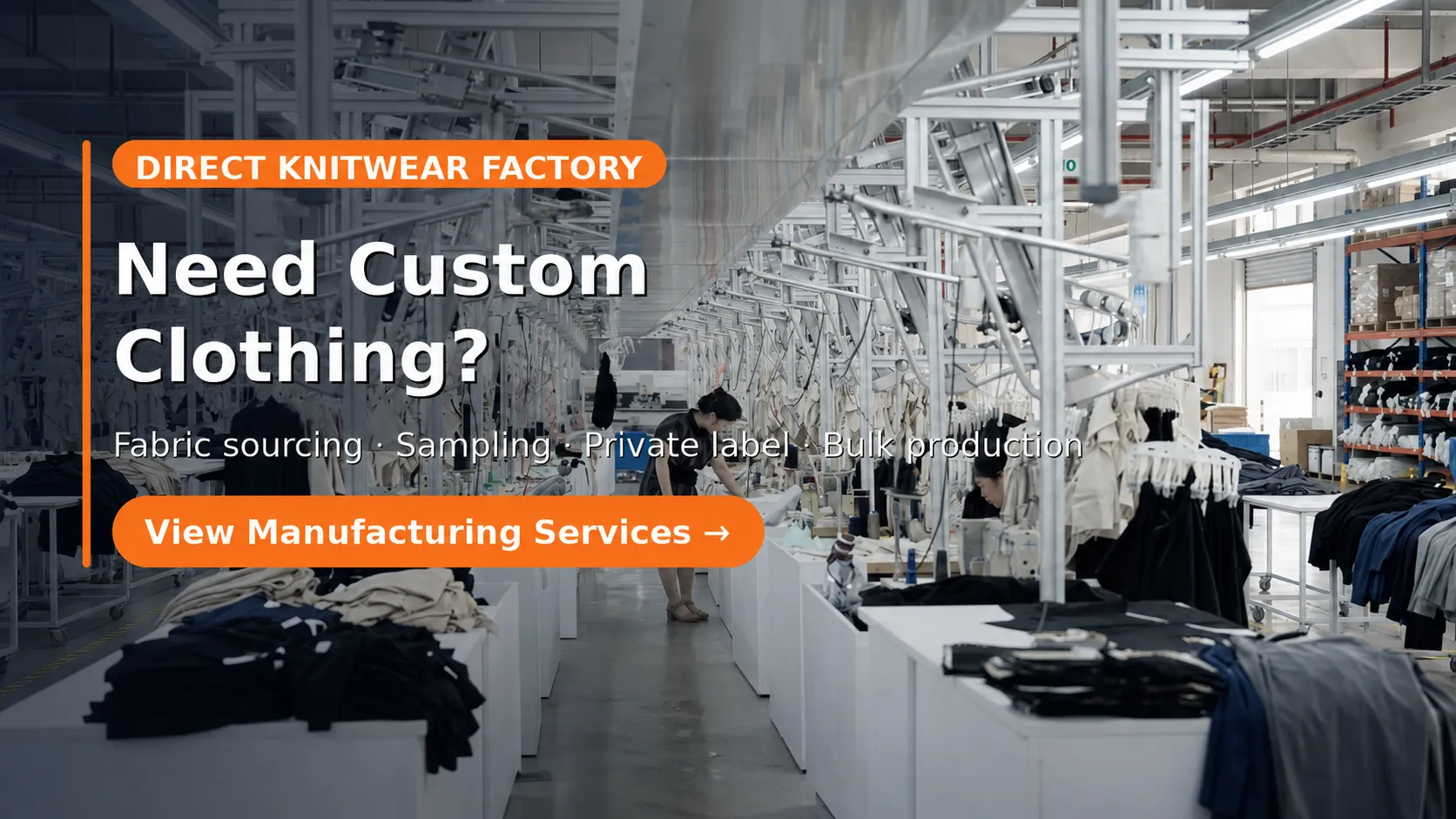
In 2026, trends such as denim jorts, tailored Bermuda shorts, satin shorts, and linen-blend shorts are worth watching. However, each one comes with specific production limits, fabric risks, or audience restrictions. For most clothing brands, these styles work best when they match a clear customer profile and retail price point.
| Shorts Trend | Best For | Production Consideration |
|---|---|---|
| Denim / jorts | Streetwear, vintage-inspired brands, youth collections | Requires denim washing, shrinkage control, and stronger seam construction |
| Tailored Bermuda shorts | Premium casualwear, resortwear, smart-casual collections | Fit, waistband structure, and clean finishing matter more than decoration |
| Satin shorts | Fashion drops, women's summer collections, elevated loungewear | Fabric can be slippery during sewing and may show seam puckering easily |
| Linen-blend shorts | Resortwear, summer basics, vacation collections | Shrinkage, wrinkling, and fabric stability need to be tested before bulk |
| Printed statement shorts | Festival wear, beachwear, promotional collections | Print placement and fabric shrinkage must be checked during sampling |
For most new brands, I would not start with these trends as the first core product unless the customer demand is already clear. They can work well as seasonal additions, but they usually need tighter fabric testing, better fit control, or a more specific brand story.
If your goal is a safer first shorts collection, French terry comfort shorts, hybrid athletic-casual shorts, or clean utility shorts are usually easier to develop, easier to explain to customers, and more forgiving during production.
So, Which Shorts Trend Should Your Brand Actually Make?
| Brand Type | Best Shorts Direction | Why |
|---|---|---|
| Streetwear brand | Cargo / utility shorts or heavy French terry shorts | Strong visual identity, easier to create perceived value |
| Activewear brand | Hybrid performance-casual shorts | Matches comfort, stretch, and daily wear demand |
| Premium basics brand | Smart-casual shorts or structured knit shorts | Cleaner look, higher retail positioning |
| Startup brand | French terry comfort shorts | Lower development risk, easier sampling |
| Eco-conscious brand | Organic cotton or rPET blend shorts | Clear sustainability story without overcomplicating production |
Conclusion
If you are planning a shorts collection for 2026, do not start with the trend first. Start with your customer, target price, fabric direction, and production quantity. From there, you can decide whether cargo shorts, French terry comfort shorts, hybrid athletic shorts, or retro short silhouettes make the most sense for your brand.
At Easson Apparel, we help clothing brands develop custom shorts from fabric selection and sampling to bulk production, private labels, and packaging. If you already have a shorts idea, tech pack, or reference image, we can help you turn it into a manufacturable product.
FAQs
What shorts trends are important in 2026?
In 2026, the most important shorts trends for clothing brands are cargo/utility shorts, comfort-first knit shorts, hybrid athletic-casual shorts, sustainable fabric shorts, and shorter retro silhouettes.
However, not every trend is worth producing at scale. The best choice depends on your brand positioning, target customer, fabric capability, and production budget.
Which shorts trends are worth making for clothing brands?
From a manufacturing and product development perspective, the most commercially viable shorts in 2026 include:
- Cargo and utility shorts for streetwear and functional fashion brands
- French terry comfort shorts for casual and lifestyle brands
- Hybrid athletic-casual shorts for performance and daily wear crossover markets
- Organic cotton or rPET sustainable shorts for eco-focused brands
- Retro short-length styles for fashion-forward and sports-inspired collections
These styles balance market demand, production feasibility, and repeat order potential.
Which shorts trends are NOT always worth producing?
Some shorts trends are better suited for seasonal drops or niche collections rather than core product lines:
- Denim jorts (require heavy washing and complex finishing)
- Satin shorts (fabric instability during sewing)
- Linen-blend shorts (shrinkage and wrinkle control challenges)
- Tailored Bermuda shorts (higher fit and construction precision required)
- Printed statement shorts (limited scalability and trend dependency)
These styles often require tighter quality control and higher sampling iterations.
What determines if a shorts trend is worth producing?
A shorts trend should only move into production if it meets these conditions:
- Clear target customer demand
- Stable fabric supply chain
- Acceptable MOQ and cost structure
- Repeatable production quality
- Fit and grading consistency across sizes
If any of these factors are unstable, the style is better used for sampling or limited collections.
What is the safest shorts category for new brands?
For new or small clothing brands, the safest entry categories are:
- French terry comfort shorts (lowest production risk)
- Simple utility shorts (balanced cost and demand)
- Basic hybrid shorts (good retail flexibility)
These categories are easier to sample, easier to scale, and more forgiving in production.
"What Is French Terry Fabric? Uses, Benefits & Buying Guide". A scholarly source discussing the characteristics and applications of French terry fabric in apparel manufacturing would provide expert consensus on its suitability and market performance at specific GSM ranges. Supports: The properties of French terry fabric at 320 GSM, including its production ease, visual appeal, and market performance.. ↩
"Sustainable Fashion Market YoY Growth Rate, 2026-2033". To support the assertion that organic cotton, recycled polyester blends, and low-waste cut-and-sew construction are commercially viable and increasingly accessible sustainable options for apparel brands in 2026. Supports: the commercial viability and accessibility of organic cotton, recycled polyester, and low-waste cut-and-sew construction as sustainable options for apparel in 2026.. ↩
"Organic Cotton vs. Conventional Cotton: What's the Difference?". Research studies or industry reports on the cost and sustainability impact of organic cotton fabric in apparel manufacturing provide statistical validation for this claim. Supports: Organic cotton fabric is a sustainable choice for shorts production, with a cost impact of 10–20% compared to conventional fabrics.. ↩