
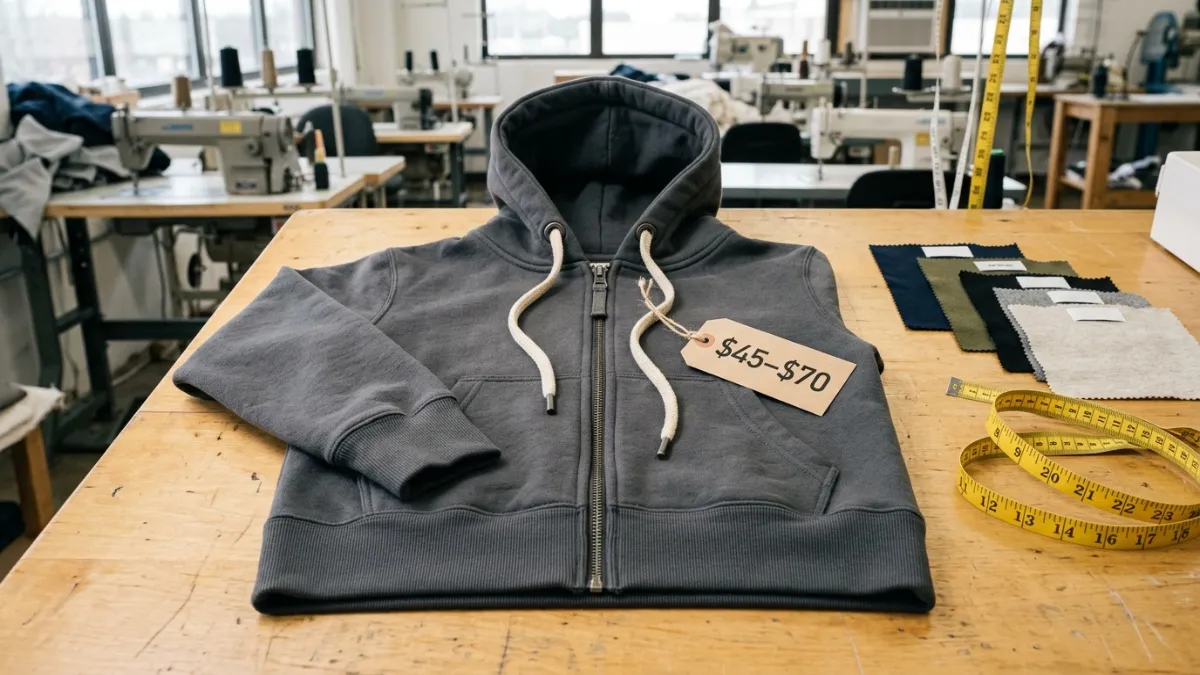
Hoodie prices can feel confusing. One hoodie sells for $25, another similar-looking one costs $70, and a premium streetwear hoodie may go well over $100. The real question is not simply whether a hoodie is cheap or expensive. The better question is: what are you actually paying for?
A good price for a hoodie depends on fabric weight, construction quality, trims, order quantity, and final landed cost. For most consumers and clothing brands, a well-made mid-range hoodie usually sits around $45–$70 retail. For brands sourcing from a manufacturer, the more useful number is landed cost, which includes production, shipping, duties, packaging, and other costs before the product is ready to sell.
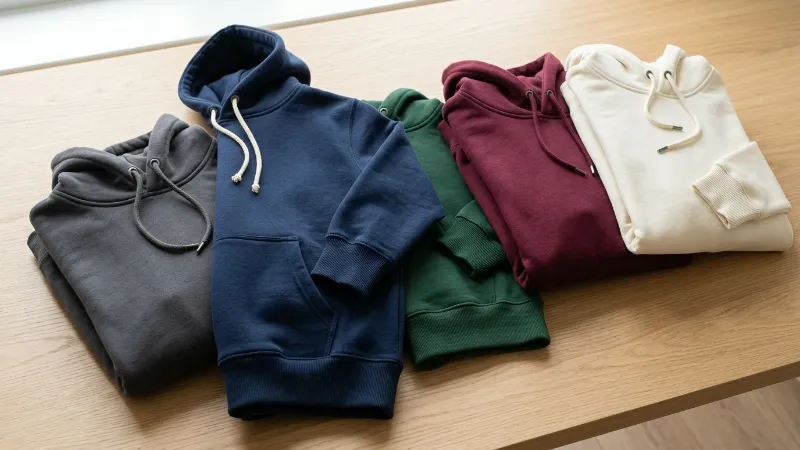
In our opinion, price is only part of the story. A 280 GSM cotton-polyester hoodie and a 420 GSM cotton fleece hoodie may both be called “custom hoodies,” but they will feel, wash, and age very differently.
This guide breaks down hoodie pricing from both a buyer and factory perspective. If you are planning a custom hoodie project, working with an experienced custom hoodie manufacturer can help you understand what a fair hoodie price really means.
What Is the Average Price for a Hoodie in 2026?
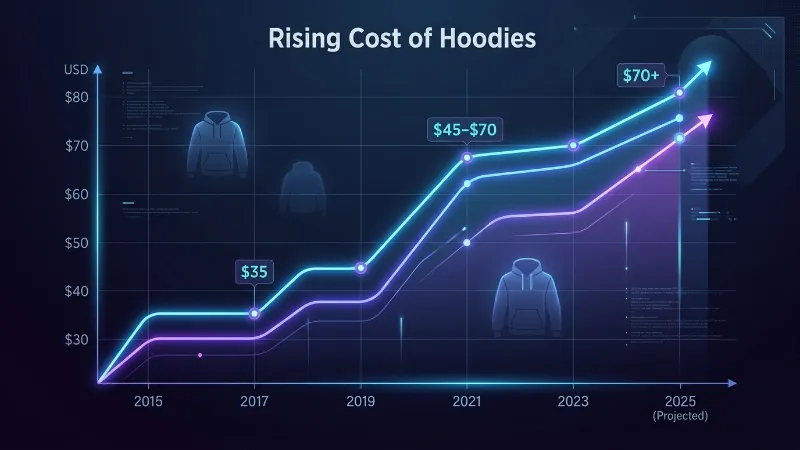
The idea of an "average price" is a trap. In 2026, the average hoodie price is harder to judge by the retail tag alone. A basic promotional hoodie may still sell below $35, while a good mid-range hoodie often sits around $45–$70 retail. Custom hoodie projects may cost more than older quotes when brands require heavier GSM, better trims, certified materials, lower MOQs, or detailed decoration.
The idea of an “average hoodie price” can be misleading because hoodies are not all built the same way. A lightweight fleece hoodie, a heavyweight streetwear hoodie, and a private label hoodie with embroidery and custom packaging have very different cost structures.
For years, people have asked me about the "average price." My answer today is different than it was five years ago. The game has changed. The market is smarter now. A retail price below $30 used to be common for a basic hoodie. Now, in my experience, a price that low is a huge red flag.
It often means the factory is cutting corners. I see it all the time. A brand wants a "heavyweight" 320 GSM (grams per square meter) hoodie, but they only want to pay a rock-bottom price. So, a different factory will offer them a deal using 240 GSM fabric that looks thick but isn't. Or, they'll use a high percentage of cheap polyester and call it a "cotton blend." After a few washes, the customer feels the difference. So, that 15-20% price increase isn't just inflation; it's the new price of honesty. It reflects a shift toward materials that actually last and manufacturing processes we can be proud of.
Several factors are shaping hoodie prices in 2026.
First, cotton remains an important cost driver. The USDA Cotton Outlook shows that cotton supply, consumption, stocks, and prices continue to affect the textile market. The OECD-FAO Agricultural Outlook also explains that cotton demand is influenced by global textile demand and competition from synthetic fibers.
Second, apparel pricing is affected by broader inflation. The U.S. Bureau of Labor Statistics CPI release reported that the apparel index rose in March 2026. For clothing brands, this matters because retail prices, production costs, freight, duties, and operating costs all affect the final selling price.
Third, import costs can change the real cost of a hoodie. For example, knitted cotton sweatshirts and pullovers may fall under U.S. tariff classifications such as HTS 6110.20.20.05, depending on the product details. This is why brands should not judge a hoodie only by the factory quote.
From a factory perspective, a 15–20% cost increase compared with older hoodie projects is not unusual when a brand upgrades from a basic lightweight hoodie to a heavier, better-finished, retail-ready product. But this should not be treated as a universal inflation number. It is more accurate to see it as a practical sourcing estimate when the product specification becomes more demanding.
A 280 GSM CVC hoodie and a 450 GSM cotton fleece hoodie should not be compared only by unit price. They are different products.
The 3 Main Price Tiers of Hoodies
Hoodie pricing usually falls into three tiers: budget, mid-range, and premium. The difference is not only the brand name. Fabric composition, GSM, stitching, trims, finishing, and quality control all affect the final price.
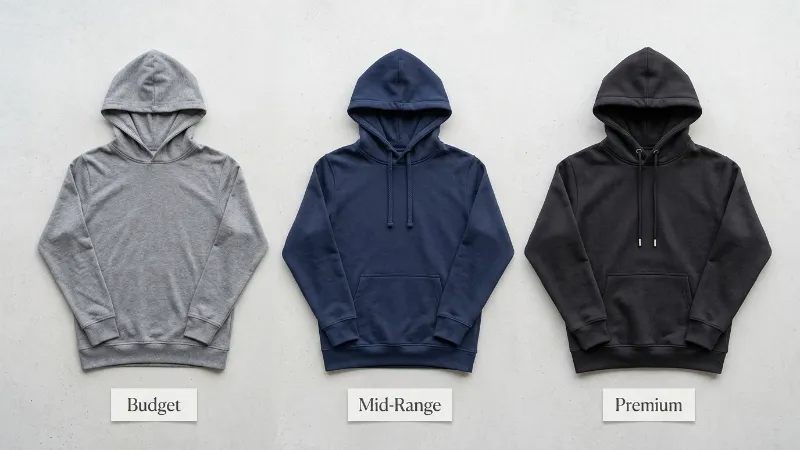
In factory pricing, we usually do not start by asking whether a hoodie is “cheap” or “expensive.” We look at what it is made from and how it is constructed.
| Price Tier | Retail Price Range | Common Fabric / Build | Best For | Key Risk |
|---|---|---|---|---|
| Budget | $20–$35 | Lightweight fleece, CVC or polyester-rich blends, basic trims | Promotions, giveaways, entry-level products | Thin handfeel, pilling, weak shape retention |
| Mid-Range | $45–$70 | Cotton fleece, French terry, better rib, stronger stitching | Everyday retail, startup brands, quality basics | Specs must be checked carefully |
| Premium | $80+ | Heavyweight cotton, specialty yarns, custom wash, premium trims | Streetwear, premium private label, brand storytelling | Price may include large brand markup |
Budget Hoodies: $20–$35
Budget hoodies are common in fast fashion, promotional events, and low-cost merchandise. They often use lighter GSM fabrics or cotton-polyester blends to control cost.
This does not always mean the hoodie is bad. If the goal is a one-time event, school activity, or simple promotional giveaway, a budget hoodie can make sense. But if a brand wants repeat customers, strong handfeel, and better washing performance, this tier may create problems.
The main risks are lighter fabric, weaker rib recovery, lower-cost drawcords and eyelets, simpler stitching, and more visible pilling after repeated washing.
Mid-Range Hoodies: $45–$70
This is usually the best value range for both consumers and clothing brands.
In this tier, you can often find better fabrics such as cotton fleece, French terry, or cotton-rich blends with a more substantial handfeel. A good mid-range hoodie should not feel flimsy. It should hold its shape, feel comfortable after washing, and use trims that do not make the garment feel cheap.
For startup clothing brands, this is often the most practical zone. The retail price is still acceptable for customers, while the product quality is strong enough to support brand reputation.
Premium Hoodies: $80+
Premium hoodies may use heavyweight cotton, long-staple cotton, specialty yarns, garment dyeing, enzyme washing, custom hardware, appliqué, embroidery, or detailed packaging.
However, once a hoodie goes above $80 retail, the extra price is not always only about material. Part of it may come from brand positioning, marketing, retail margin, and perceived exclusivity.
A premium hoodie can be worth the price, but only when the product details support it.
What Factors Actually Influence the Cost of a Hoodie?
The real cost of a hoodie is shaped by fabric GSM, fiber composition, finishing, shrinkage control, stitching quality, trims, decoration, MOQ, and packaging. Fabric matters, but it is only the starting point.
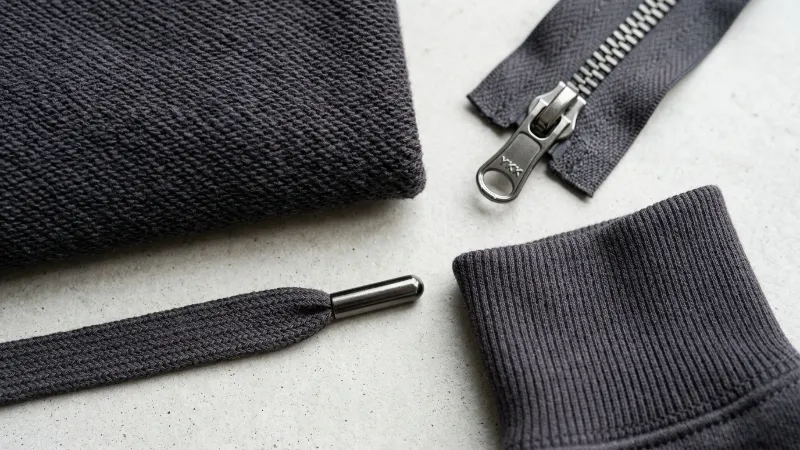
Two hoodies can both be labeled “cotton fleece,” but their costs may be very different. In production, small details often make a large difference.
Fabric Weight: GSM
GSM means grams per square meter. It measures fabric weight and density.
A lightweight hoodie may be around 240–280 GSM. A standard quality hoodie may sit around 320–380 GSM. A heavyweight hoodie may reach 400–500 GSM or more.
| GSM Range | Hoodie Type | Typical Feel |
|---|---|---|
| 240–280 GSM | Lightweight / promotional | Soft but thinner, less structured |
| 300–360 GSM | Standard everyday hoodie | Balanced weight and comfort |
| 380–450 GSM | Heavyweight hoodie | Better structure, warmer handfeel |
| 500 GSM+ | Premium / streetwear hoodie | Very substantial, higher cost, heavier wear |
Higher GSM usually means more yarn, higher dyeing cost, heavier shipping weight, and more difficult handling during production. That is why heavyweight hoodies cost more. To compare fleece, French terry, cotton, and cotton-poly blends in more detail, read our guide to the best hoodie material.
Fabric Composition
A 100% cotton hoodie usually costs more than a polyester-rich blend. Cotton-rich fabrics often feel more natural and breathable, while polyester can help reduce cost, improve durability, and support shape retention.
Common hoodie fabrics include 100% cotton fleece, cotton-polyester CVC fleece, French terry, brushed fleece, recycled polyester blends, and organic cotton blends.
If a brand wants certified materials, such as fabrics tested under OEKO-TEX STANDARD 100, the sourcing and testing requirements may also affect cost.
Pre-Shrinking and Fabric Stabilization
Shrinkage control is one of the most overlooked cost factors.
A hoodie can look perfect in the sample stage but become a customer complaint after washing. If the fabric is not properly stabilized before cutting, the final garment may shrink too much, twist at the seams, or lose its fit.
For better hoodie production, factories may test shrinkage before bulk cutting and adjust the pattern or fabric process accordingly. This adds time and cost, but it helps reduce returns and quality complaints.
Stitching and Construction
Stitching quality affects durability. Areas such as the shoulder seam, sleeve join, kangaroo pocket, hood seam, rib cuff, and hem need stable sewing.
A lower-cost hoodie may use simpler construction and fewer reinforcement details. A better hoodie may include cleaner seam finishing, stronger pocket attachment, better rib sewing, more consistent stitch density, reinforced stress points, and a better hood shape.
These details are not always obvious in product photos, but customers feel them after wearing and washing.
Trims and Hardware
Trims include drawcords, eyelets, aglets, zippers, labels, neck tape, and packaging.
For zip-up hoodies, zipper quality is especially important. A poor zipper can make the entire hoodie feel cheap. Brands often use suppliers such as YKK because zippers and fasteners are small components that affect daily use.
A custom drawcord with metal aglets, branded eyelets, woven labels, or custom packaging can improve perceived value, but each detail adds cost.
Printing, Embroidery, and Decoration
Decoration can change the cost dramatically.
A simple one-color screen print is very different from puff print, flock print, large embroidery, appliqué embroidery, multi-position printing, garment washing, or oversized front and back graphics.
For brands, the best approach is to confirm artwork size, placement, color count, and technique before asking for a final quote.
Wholesale vs. Retail: How Much Should You Pay?
Are you starting a brand and trying to figure out how to price your hoodies? Getting your wholesale cost wrong is a fast way to kill your business before it even starts.
A standard rule in the apparel industry is to use a 2.5x to 3x markup from your final landed cost to set your retail price. A hoodie that you sell for $60 should cost you, the brand owner, no more than $20-$24, including shipping and duties.
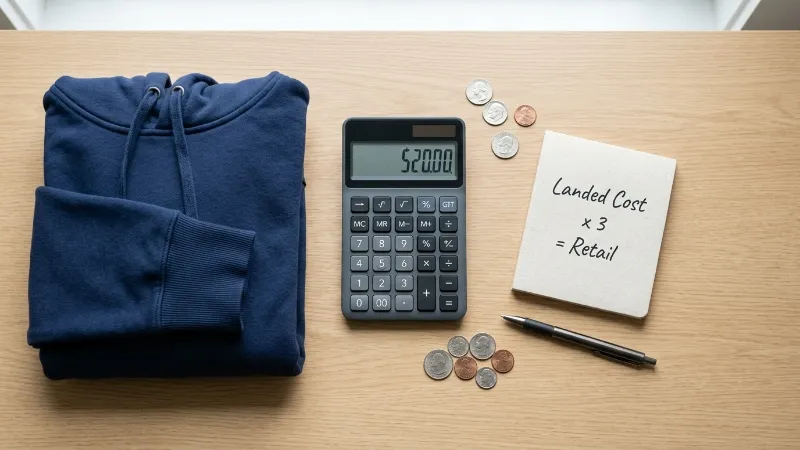
For new brand owners, pricing is one of the scariest parts of the business. I see them make two common mistakes: they either price too low and leave no room for profit, or they don't understand what their final cost actually is. Let's make it simple.
Your "landed cost" is the most important number. This is not just the price the factory charges you (the "ex-factory price"). It's the total cost to get that single hoodie into your warehouse. This includes the unit price from the factory, plus shipping, import duties, and any customs fees.
Let's walk through a realistic example for a quality mid-range hoodie:
- Ex-Factory Price: Let's say you work with a factory like mine. For a well-made, 400 GSM, 100% cotton hoodie with good hardware, the production cost might be $18 per unit.
- Landed Cost: Now, you have to ship it from China to your country (e.g., the USA). Depending on the quantity and shipping method, this could add $3-$5 per unit. Let's call it $4. So, your landed cost is $18 + $4 = $22 per unit.
This $22 is your true cost of goods. Now, you need to set your retail price. A 2.5x markup is generally considered the minimum to run a healthy business.
| Item | Calculation | Price |
|---|---|---|
| Ex-Factory Price | The cost to produce one hoodie | $18.00 |
| Shipping & Duties (Estimate) | The cost to get it to your warehouse | + $4.00 |
| Your Landed Cost | Your total cost per hoodie | $22.00 |
| Retail Price (2.5x Markup) | $22.00 x 2.5 | $55.00 |
| Retail Price (3.0x Markup) | $22.00 x 3.0 | $66.00 |
Why so high? Because that markup has to cover everything else: your marketing budget, website hosting fees, photography, payment processing fees, warehousing, salaries, and, finally, your profit. If you price your $22 hoodie at $40, you'll sell a lot, but you won't have a business for long.
So, What Is Considered a Good Price for a Hoodie?
A truly "good" price is measured in cost-per-wear, not the initial price tag. A cheap $20 hoodie that lasts 5 wears costs $4 per wear. A quality $60 hoodie that lasts over 100 wears costs just $0.60 per wear. The real value is in durability.
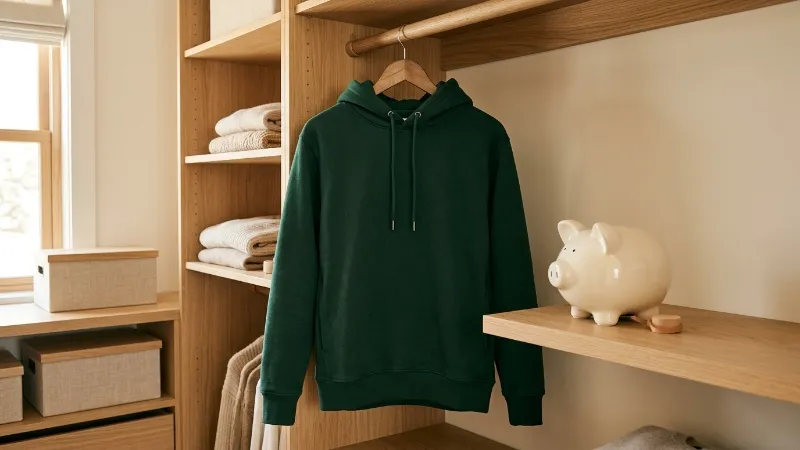
As a manufacturer, I think about longevity. The best products we make are the ones that become a person's favorite, worn week after week for years. That’s the real test of quality. And when you think about it that way, the definition of a "good price" changes completely.
Let's do the math.
- The Cheap Hoodie: You buy a $20 fast-fashion hoodie. It looks okay at first. But after five washes, it’s pilled, faded, and has lost its shape. You stop wearing it. Your cost-per-wear was $4.00.
- The Quality Hoodie: You invest in a $60 mid-range hoodie made from heavyweight, pre-shrunk cotton. You wear it twice a week for a year. That’s over 100 wears. And it still looks great. Your cost-per-wear is $0.60.
Which one was actually more expensive?
From what I’ve seen producing for brands all over the world, the retail price range of $45 to $70 is the absolute sweet spot for consumers. In this zone, you are paying for tangible quality: excellent fabric, careful construction, and durable hardware. When you go much above that price, you start paying more for the brand's marketing budget than for any significant increase in material quality. For most people, this range is the quality ceiling, where you get the best possible product for a fair price. It's the price of a hoodie that's built to last.
How to Tell if a Hoodie Is Worth Its Price Tag
You're holding a hoodie, trying to decide if it's worth buying. You can't trust the price tag alone. So how can you tell if it's quality or just clever marketing?
To judge whether a hoodie is worth the price, check the fabric label, handfeel, GSM, stitching, rib recovery, zipper quality, drawcords, and washing performance. First, check the fabric tag and aim for 100% cotton. Second, feel the weight—it should feel substantial. Third, inspect the stitching on the seams and pockets; it should be tight and even. Finally, gently pull on the cuffs; they should snap back into shape.
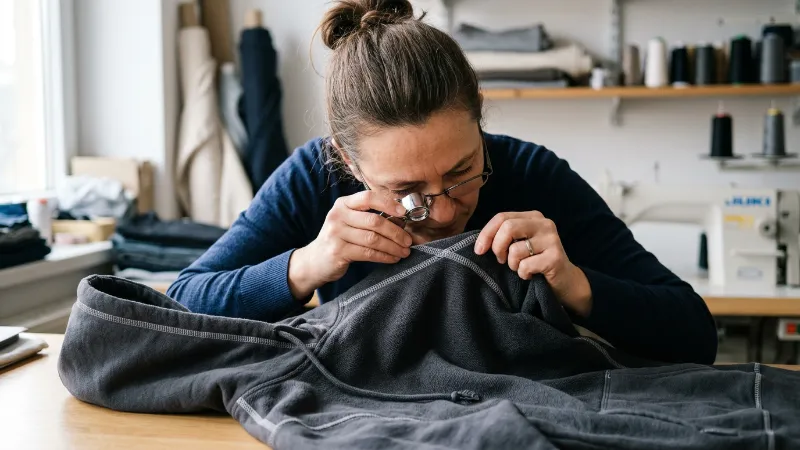
I can teach you to judge the quality of a piece of clothing by touching and observing within about ten seconds. You don't need to be an expert, you just need to know what to look for. Here is a simple checklist you can use in any store.
1. Check the Fabric Label
Look at the fiber content. In the U.S., the FTC textile labeling guidance explains that most textile and wool products need labels showing fiber content, country of origin, and the identity of the manufacturer or responsible business.
For hoodies, common labels include 100% cotton, cotton-polyester, recycled polyester blend, organic cotton, or cotton-spandex rib.
The label will not tell you everything, but it is a good starting point.
2. Feel the Weight
A better hoodie usually has a more substantial handfeel. It should not feel paper-thin unless it is designed as a lightweight layer.
If the product page does not mention GSM, ask the supplier. For brands, GSM should be part of the quote.
3. Inspect the Stitching
Look at the shoulder seam, sleeve seam, pocket edge, hood seam, and rib cuff. The stitching should be clean, straight, and consistent.
Loose threads, uneven seams, or weak pocket attachment are warning signs.
4. Test the Rib Recovery
Gently stretch the cuff or hem rib and release it. Good rib should recover its shape. Poor rib may stay stretched, which makes the hoodie look old quickly.
5. Check the Hardware
For zip-up hoodies, open and close the zipper several times. It should glide smoothly and feel stable.
For pullover hoodies, check the drawcord, eyelets, and aglets. These details are small, but they influence the customer’s first impression.
6. Ask About Shrinkage
For brands, shrinkage is not a small issue. Ask whether the fabric has been tested before bulk production. A good manufacturer should be able to discuss shrinkage, washing performance, and bulk tolerance clearly.
Where Can Brands Find High-Quality Hoodies at the Best Prices?
For clothing brands, the best hoodie price usually comes from balancing quality, MOQ, customization, and landed cost—not simply choosing the lowest factory quote. Working directly with an experienced manufacturer gives brands more control over fabric, fit, trims, sampling, and final production quality.
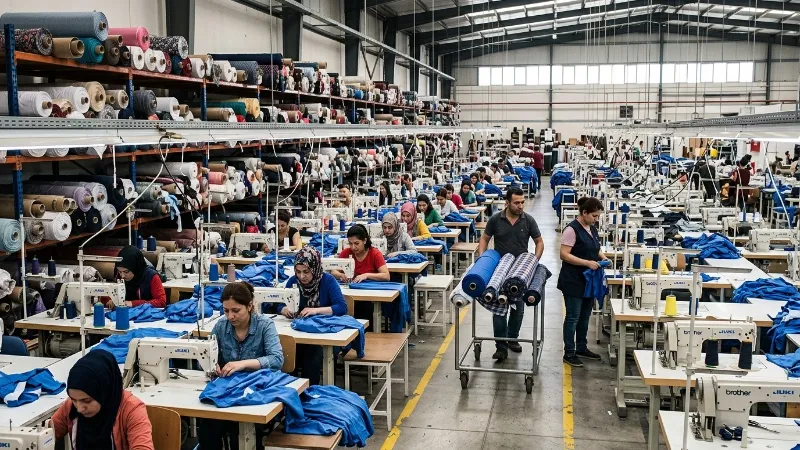
The price you pay in a retail store is the result of a long journey with many markups along the way. Typically, the chain looks like this: Factory -> Sourcing Agent -> Importer/Wholesaler -> Brand -> Retailer -> You. Each step adds its own profit margin, which is why a hoodie that costs my factory $18 to make can end up selling for $80 or more.
When you, as a brand owner, work directly with a manufacturer, you cut out several of those steps. This is the smartest way to build your business. Instead of searching on giant platforms like Alibaba and hoping the supplier you find is telling the truth, you build a relationship with a partner. I've seen too many young brands get burned by chasing the lowest possible price online. They receive samples that look nothing like the photos, or a production batch that is far inferior to the sample they approved.
That's why a partnership is different. If you are building a hoodie collection for your brand, Easson Apparel can help you develop custom hoodies from fabric sourcing to sample making and bulk production. With 21 years of garment manufacturing experience, we support brands with practical fabric advice, flexible MOQ discussions, private label options, printing, embroidery, and production quality control.
Instead of asking only, “How cheap can this hoodie be?” a better question is: what hoodie quality can support your brand, retail price, and customer expectations?
Conclusion
Ultimately, a "good" hoodie price is not about finding the cheapest option, but the best value. Focus on quality materials, durable construction, and the long-term cost-per-wear to make a smart investment.