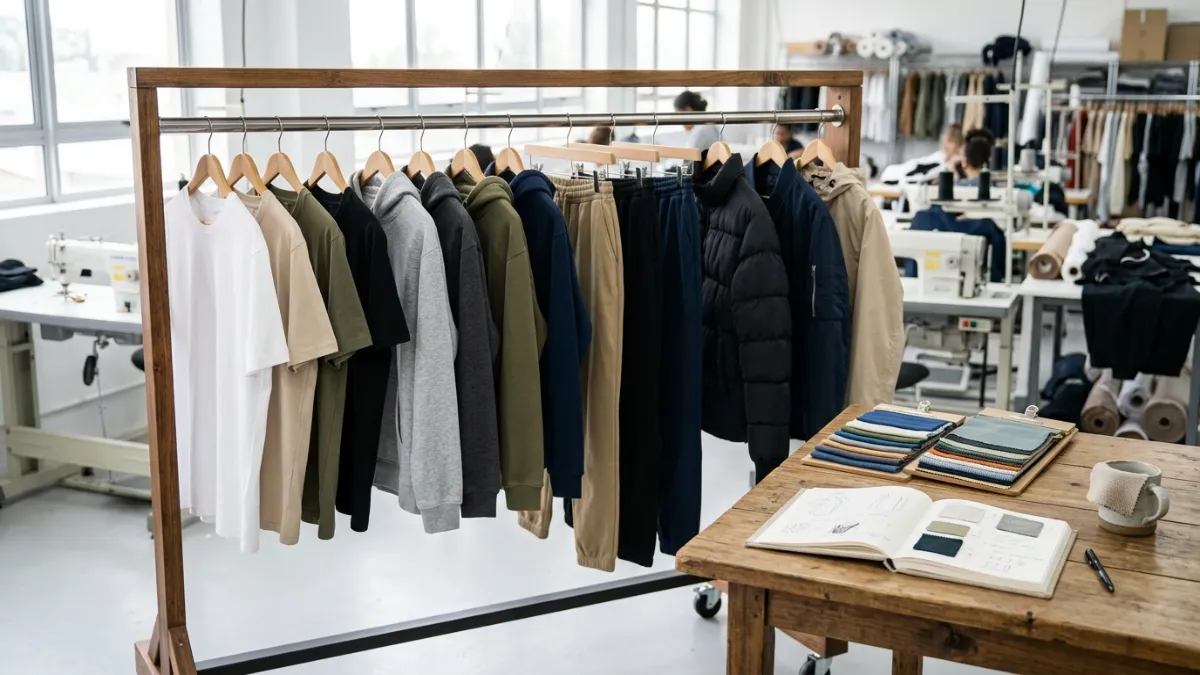
A T-shirt, a hoodie, a jacket, and a pair of leggings may all look like simple product choices on a mood board. In production, they are completely different business decisions. Each category affects your fabric cost, sample time, MOQ, quality control, and the amount of risk your brand takes before the first order is even shipped.
Choosing the right clothing category means matching your product idea with your customer, price point, material, construction, budget, and production complexity. The best category is not always the trendiest one. It is the one your brand can produce well, sell confidently, and scale without losing control.
At our factory, we have seen many new brand founders start with the same question: “What is the best clothing product to sell?” It is a fair question, but it often leads to the wrong answer. A better question is: “Which apparel product fits my brand stage, customer expectations, and production budget?”
This guide explains the main clothing categories, the difference between clothing style types and product categories, and how to choose the right apparel products for your brand.
Overview: What Are Clothing Categories?
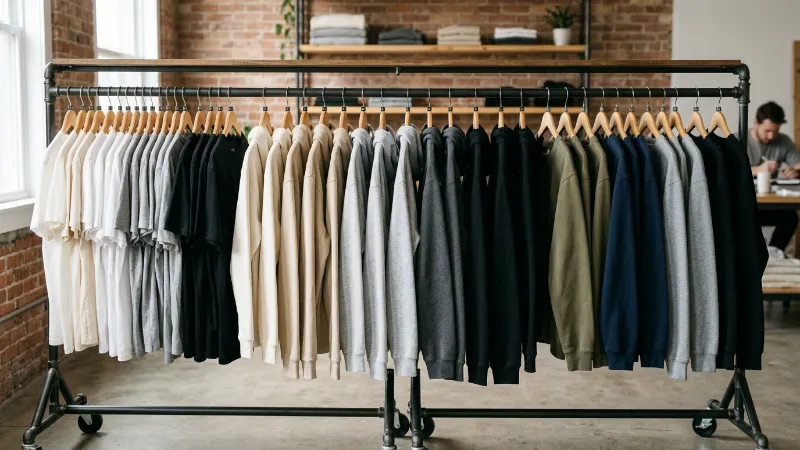
Clothing categories are groups of garments classified by product type, function, fabric, construction, or wearing occasion. For fashion brands, these categories also affect MOQ, sample cost, production time, fabric sourcing, labeling requirements, and quality control.
Common clothing categories include tops, bottoms, outerwear, dresses, activewear, loungewear, underwear, swimwear, uniforms, and accessories. For a shopper, these categories make it easier to browse a website or choose an outfit. For a clothing brand, they are more than labels. They shape your first collection, supplier choice, production cost, inventory plan, and brand positioning. If you are still looking for production support, working with a reliable custom clothing manufacturer can help you turn category planning into real samples and bulk production.
For example, T-shirts, hoodies, polos, and sweatshirts can all sit under the broader “tops” category. But from a factory point of view, they are not the same. A basic T-shirt usually needs simpler fabric sourcing and fewer sewing steps. A hoodie may involve fleece or French terry, rib cuffs, hood lining, drawcords, pockets, heavier GSM, and more shrinkage control. A polo shirt needs attention to collar structure, placket finishing, buttons, and neckline stability.
For brands selling into the U.S. market, product category decisions can also affect labeling work. The FTC explains that most textile and wool products need labels showing fiber content, country of origin, and the identity of the manufacturer or responsible business. You can review the FTC’s guide on textile and wool labeling requirements1 when planning your product information.
So for a brand, clothing categories should not be treated like a simple wardrobe list. Each category should be judged by customer demand, fabric requirements, production difficulty, MOQ, margin, compliance needs, and risk.
Clothing Style Types vs. Clothing Categories: What’s the Difference?
A clothing category is the physical type of garment, such as a T-shirt, hoodie, jacket, or jogger. A clothing style type is the aesthetic direction applied to that garment, such as streetwear, minimalist, vintage, sporty, or luxury casual.
This distinction matters when you speak with a manufacturer. A factory cannot produce “streetwear” by itself. But a factory can produce an oversized hoodie with dropped shoulders, 450 GSM fleece, ribbed cuffs, and a puff print on the back. Those details create the streetwear look.
Here is a simple example:
| Product Category | Streetwear Style Specs | Minimalist Style Specs |
|---|---|---|
| Hoodie | Oversized fit, dropped shoulders, 450 GSM heavyweight fleece, large puff print on the back | Regular or slim fit, 320 GSM French terry, clean seams, small embroidered logo |
| T-shirt | Boxy fit, heavyweight cotton, bold screen print | Combed cotton, clean fit, soft hand feel, subtle branding |
| Joggers | Relaxed fit, heavy fleece, elastic cuffs, logo print | Slim tapered fit, smooth French terry, tonal embroidery |
Many new brands describe the feeling first: “I want a premium streetwear hoodie” or “I want a clean minimalist T-shirt.” That is useful for creative direction, but it is not enough for production. A manufacturer still needs fabric composition, GSM, fit, measurements, print method, embroidery details, trims, labels, and packaging requirements.
When you think about clothing style categories or clothing style types, always connect the style back to real specifications. This makes your communication clearer, reduces sample revisions, and helps the factory turn your idea into a product that can actually be made.
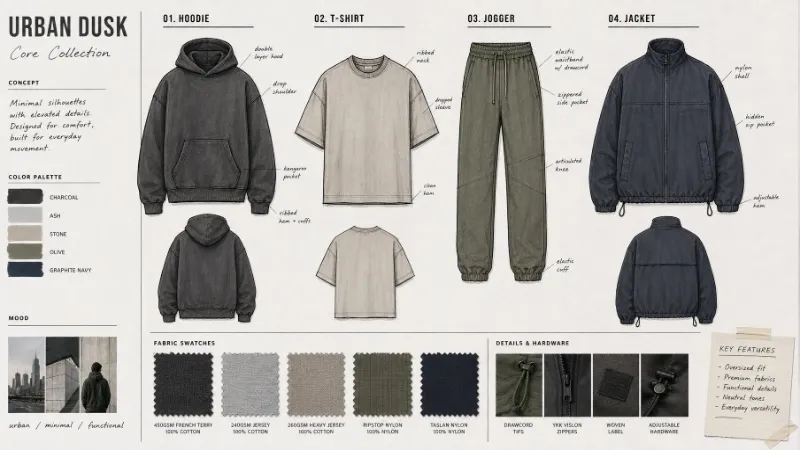
Tops and Bottoms: Core Apparel Products Most Brands Start With
Tops and bottoms such as T-shirts, hoodies, sweatshirts, polos, joggers, and shorts are often the safest starting categories for new brands. They are easier to sample, easier to customize, and usually more flexible for small to medium production runs.
For many startup fashion brands, knitwear categories are the most practical place to begin. If your first product is a tee, choosing an experienced T-shirt manufacturer can help you control fabric weight, fit, shrinkage, neckline shape, and print quality from the sample stage.
That does not make them low value. A T-shirt is never just a T-shirt once you start producing it. Fabric weight, yarn quality, fit, stitching, shrinkage, printing, neckline shape, and finishing all change how the product feels and sells.
A 180 GSM cotton T-shirt may work for a basic promotional product. A 220–240 GSM combed cotton T-shirt feels more structured and premium. A 350 GSM hoodie can suit everyday casualwear, while a 450 GSM fleece hoodie may be better for a heavyweight streetwear brand. If hoodies are your core product, our hoodie manufacturer guide explains more about fabric, fit, printing, embroidery, and production details.
Here is how a basic category can become a premium product:
| Variable | Basic Example | Premium Example | Brand Impact |
|---|---|---|---|
| Fabric | 180 GSM carded cotton | 220–240 GSM combed cotton or Pima cotton | Better hand feel and stronger premium perception |
| Construction | Basic stitching | Side seams, shoulder taping, clean neckline | Better durability and shape retention |
| Fit | Standard template | Custom oversized, relaxed, or slim fit | Creates a clearer brand silhouette |
| Branding | Simple print | Screen print, embroidery, puff print, woven label | Improves perceived value |
If your brand sells skin-contact products, fabric safety can also become part of your buying decision. Certifications such as OEKO-TEX® STANDARD 1002 can help brands understand whether textile components have been tested for harmful substances.
This is why many new brands are better off starting with a focused collection of T-shirts, hoodies, and joggers instead of launching too many unrelated categories. It keeps sampling, sizing, fabric sourcing, and inventory easier to control.
Outerwear, Dresses, and One-Piece Garments: When Categories Become More Complex
Outerwear, dresses, and one-piece garments are more complex because they usually involve more pattern work, more fabric behavior, more components, and stricter fit control. These categories can strengthen a brand, but they need more development time and budget.
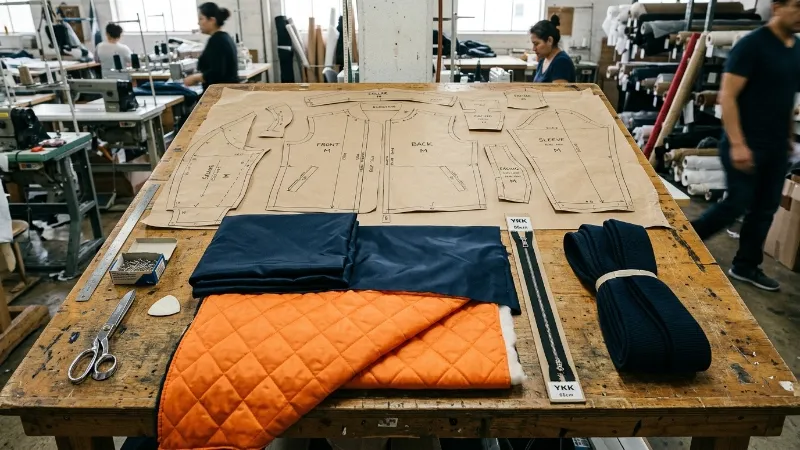
The jump from a T-shirt to a jacket is bigger than many new brands expect. A T-shirt may have a few main fabric panels and relatively simple sewing steps. A bomber jacket, lined coat, or technical vest may involve shell fabric, lining, ribbing, zippers, snaps, padding, pockets, labels, and special finishing.
Every extra component adds another point of risk. If the zipper is delayed, the sample is delayed. If the lining shrinks differently from the shell fabric, the garment may twist after washing. If the rib cuff color does not match the body fabric, the finished piece may look inconsistent. These are not small details in production. They affect cost, timeline, and final quality.
Dresses and one-piece garments also need careful handling. Fabric drape, silhouette, seam placement, body fit, and length all matter. A simple jersey dress may be manageable, but a structured woven dress or jumpsuit needs more precise pattern work and fitting.
For woven garments and structured pieces, seam strength can become an important quality factor. ASTM’s D1683/D1683M seam strength test method3 is one example of how sewn seam strength and seam efficiency can be evaluated for critical seam assemblies.
This does not mean new brands should avoid outerwear or dresses forever. It means they should understand the commitment before starting. These categories are usually better for brands with a clearer design direction, stronger budget, and enough time for sample revisions.
If your first collection budget is limited, a strong knitwear foundation is often a safer starting point. Once your customer base and cash flow are more stable, expanding into more complex apparel categories becomes easier.
Activewear and Specialized Garments: Performance, Function, and Production Risk
Activewear and specialized garments require more than a good design. They often need technical fabrics, performance testing, specialized stitching, stretch recovery, colorfastness control, and stricter quality standards.
Activewear is one of the easiest categories to underestimate. A performance top, legging, sports bra, or compression garment must do more than look good in photos. It has to stretch, recover, breathe, stay comfortable against the skin, and perform during movement.
From a factory point of view, leggings are not simply “stretchy pants.” They require the right nylon/spandex or polyester/spandex fabric, strong stretch recovery, stable dyeing, opacity, and a smooth hand feel. Seam type also matters. Flatlock seams are often used because they reduce friction and improve comfort. A basic seam may rub against the skin or break under stress.
Colorfastness is another issue brands should not ignore, especially for dark activewear, sweat-heavy use, and high-friction areas. AATCC provides industry-recognized textile test methods and procedures4 that cover many types of textile performance evaluation, including colorfastness-related testing.
Based on our factory’s 21 years of experience, if a startup has a first production budget under $10,000, we usually do not recommend starting with highly technical activewear such as leggings unless the brand already has clear fabric standards, fit references, and testing expectations. The product is possible, but the risk is higher than with T-shirts, hoodies, or sweatshirts.
Specialized garments such as swimwear, uniforms, workwear, and outdoor clothing bring their own challenges. Swimwear needs stretch, lining control, body fit, and colorfastness. Workwear may need reinforced seams and durable fabrics. Uniforms require consistency across sizes and repeat orders.
These categories can be profitable, but they need a more serious development process. For a first collection, brands should be honest about whether they have enough budget and technical knowledge to support that process.
How to Choose the Right Clothing Category for Your Brand
The right clothing category should match your target customer, brand positioning, sales channel, fabric budget, MOQ, and risk tolerance. A good first product is not always the most trendy one. It is the one you can produce consistently and sell profitably.
Instead of starting with a long list of product ideas, start with your customer.
Are they buying streetwear, gymwear, premium basics, resort clothing, corporate uniforms, or everyday casual pieces? A streetwear customer may care about silhouette, heavyweight fabric, and bold graphics. A premium basics customer may care more about fabric softness, fit, and subtle finishing. A fitness customer will expect performance fabric and durability.
Next, look at your price point. A $25 T-shirt and a $65 premium T-shirt cannot be developed in the same way. Fabric, stitching, labels, packaging, and decoration methods must support the retail price you want to charge.
Then review your budget and MOQ. A small budget spread across too many categories usually leads to weak products. Fewer styles with better fabric and stronger quality control will often perform better than a large first collection with inconsistent results.
Here is a simple decision table:
| Brand Type | Better Starting Categories | Why It Works |
|---|---|---|
| Streetwear brand | Heavyweight T-shirts, hoodies, sweatpants | Strong canvas for fit, graphics, and structure |
| Premium basics brand | Combed cotton T-shirts, polos, French terry sweatshirts | Fabric quality and fit can become the selling point |
| Fitness lifestyle brand | Performance tees, joggers, lightweight hoodies | Easier than starting with leggings or sports bras |
| Small private label brand | T-shirts, hoodies, polos, shorts | Flexible customization and easier MOQ control |
| Cold-climate casual brand | Fleece hoodies, sweatshirts, joggers | Stronger seasonal demand and higher perceived value |
Care instructions should also be considered before bulk production, especially when a product uses special fabrics, washes, prints, embroidery, or trims. The FTC’s guide to complying with the Care Labeling Rule5 is useful for brands selling apparel in the U.S. market. For international care symbols, ISO also provides information on care labelling code using symbols6.
This turns category selection into a business decision. You are not just asking what looks good. You are choosing what your brand can produce well, sell clearly, and repeat reliably.
Factory Advice for Startup Fashion Brands
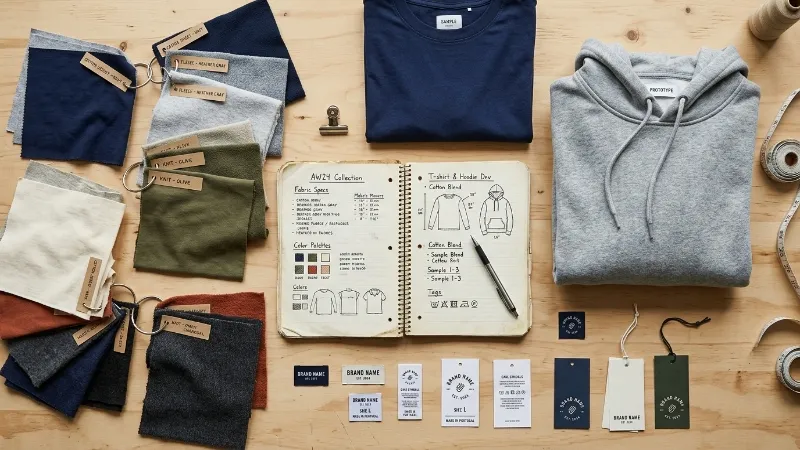
For most startup fashion brands, the best first step is to start narrow, simple, and premium. Focus on one to three connected categories, such as T-shirts, hoodies, and joggers, before expanding into more complex products.
Many new brands try to launch too much at once. They want T-shirts, hoodies, pants, jackets, hats, and bags in the first collection. On paper, it feels exciting. In production, it often creates pressure on sampling, fabric sourcing, sizing, quality control, and cash flow.
A stronger approach is to build a focused product line. A streetwear brand can start with one heavyweight T-shirt, one hoodie, and one sweatpant. A premium basics brand can begin with a T-shirt, polo shirt, and crewneck sweatshirt. A fitness lifestyle brand can test performance T-shirts, joggers, and lightweight hoodies before moving into leggings or sports bras.
This makes the whole process easier to control. Your budget goes into better fabric instead of being split across too many small runs. Your sample development becomes more focused. Your sizing system is easier to manage. Your brand story also becomes clearer for customers.
A focused first collection gives you useful feedback. If your heavyweight T-shirt sells well, the next step may be a hoodie. If your hoodie performs strongly, joggers or shorts may be the natural extension. Expansion should come from customer response, not only from a large idea board.
In our opinion, a well-made T-shirt or hoodie can do more for a new brand than a complicated jacket that uses up the budget and still feels unfinished. Start with products you can control. Build trust with the customer first. Then expand when your brand, supply chain, and sales data are ready.
FAQ
What are the main clothing categories?
The main clothing categories include tops, bottoms, outerwear, dresses, activewear, loungewear, underwear, swimwear, uniforms, accessories, and footwear. For fashion brands, the most practical categories are usually the ones that match their customer, budget, and production stage. Startup brands often begin with easier categories such as T-shirts, hoodies, sweatshirts, polos, joggers, and shorts.
What is the difference between clothing categories and clothing styles?
A clothing category is the actual garment type, such as a T-shirt, hoodie, jacket, or jogger. A clothing style is the aesthetic direction, such as streetwear, minimalist, sporty, vintage, or luxury casual. For production, the category tells the factory what to make. The style is created through details such as fabric, fit, GSM, color, print, embroidery, trims, and finishing.
What clothing category is best for a startup fashion brand?
For most startup fashion brands, the safest starting categories are T-shirts, hoodies, sweatshirts, polos, joggers, and simple shorts. These products are easier to sample, easier to customize, and usually more flexible for small or medium production runs. They also give brands room to build identity through fabric quality, fit, color, printing, embroidery, and packaging.
Which clothing categories are hardest to manufacture?
Technical activewear, outerwear, swimwear, structured dresses, and workwear are usually harder to manufacture. They often require more complex pattern work, technical fabrics, specialized stitching, trims, lining, performance testing, and stricter quality control. These categories can be profitable, but they are usually better for brands with stronger budgets, clearer specifications, and more production experience.
How many clothing categories should a new brand launch with?
A new brand should usually start with one to three connected clothing categories. For example, a streetwear brand might begin with T-shirts, hoodies, and sweatpants. A premium basics brand might start with T-shirts, polos, and sweatshirts. A focused launch is easier to manage, easier to explain to customers, and safer for budget control than a large first collection.
Conclusion
Clothing categories are more than names on a product menu. They shape your cost, MOQ, sample timeline, production risk, quality control, labeling work, and customer experience. If you are building a fashion brand, the goal is not to launch every product at once. The goal is to choose the category that gives your brand the best chance to start strong.
For many new brands, simple knitwear categories such as T-shirts, hoodies, sweatshirts, polos, joggers, and shorts are the most practical starting point. They are easier to customize, easier to test, and easier to scale. More complex categories like outerwear, dresses, activewear, swimwear, and workwear can come later when your budget, customer base, and development process are stronger.
If you are planning your first collection, start with a clear category, define your style through real specifications, and choose a manufacturer who can help you balance design, fabric, MOQ, cost, and production risk. At Easson Apparel, we help brands turn early product ideas into practical, well-made apparel through fabric sourcing, sample development, custom manufacturing, printing, embroidery, and bulk production support.
Ready to choose the right category for your brand? Share your target product, quantity, fabric idea, and design reference with our team. We can help you review whether your first collection is realistic, what risks to watch for, and which apparel products are the best place to start.
This FTC guide explains fiber content, country of origin, and business identity labeling requirements for many textile and wool products. It helps brands understand what product information may need to appear on apparel labels when selling in the U.S. market.
This page explains care label requirements for clothing and certain textile goods. It helps brands understand why washing, drying, ironing, bleaching, and cleaning instructions should be considered before bulk production.
This page explains a textile safety certification for materials tested for harmful substances. It helps brands evaluate fabric and trim safety when developing skin-contact apparel such as T-shirts, hoodies, underwear, kidswear, and activewear.
AATCC provides textile testing methods used across the industry, including colorfastness and fabric performance tests. It helps brands understand why fabric testing matters for activewear, dark colors, repeated washing, sweat exposure, and product durability.
This ASTM standard relates to sewn seam strength testing for woven fabrics. It helps brands understand why structured garments, jackets, workwear, and other complex categories need stronger attention to seam quality.
This ISO page explains care labelling symbols for textile articles. It helps brands selling internationally understand how care symbols communicate washing, bleaching, drying, ironing, and professional cleaning instructions.
[FTC Textile and Wool Labeling Requirements](https://www.ftc.gov/business-guidance/resources/threading-your-way-through-labeling-requirements-under-textile-wool-acts) ↩
[FTC Care Labeling Rule Guide](https://www.ftc.gov/business-guidance/resources/clothes-captioning-complying-care-labeling-rule) ↩
[OEKO-TEX® STANDARD 100](https://www.oeko-tex.com/en/our-standards/oeko-tex-standard-100/) ↩
[AATCC Textile Test Methods and Procedures](https://www.aatcc.org/standards/) ↩
[ASTM D1683/D1683M Seam Strength Test Method](https://www.astm.org/d1683_d1683m-22.html) ↩
[ISO 3758 Care Labelling Code Using Symbols](https://www.iso.org/standard/42918.html) ↩