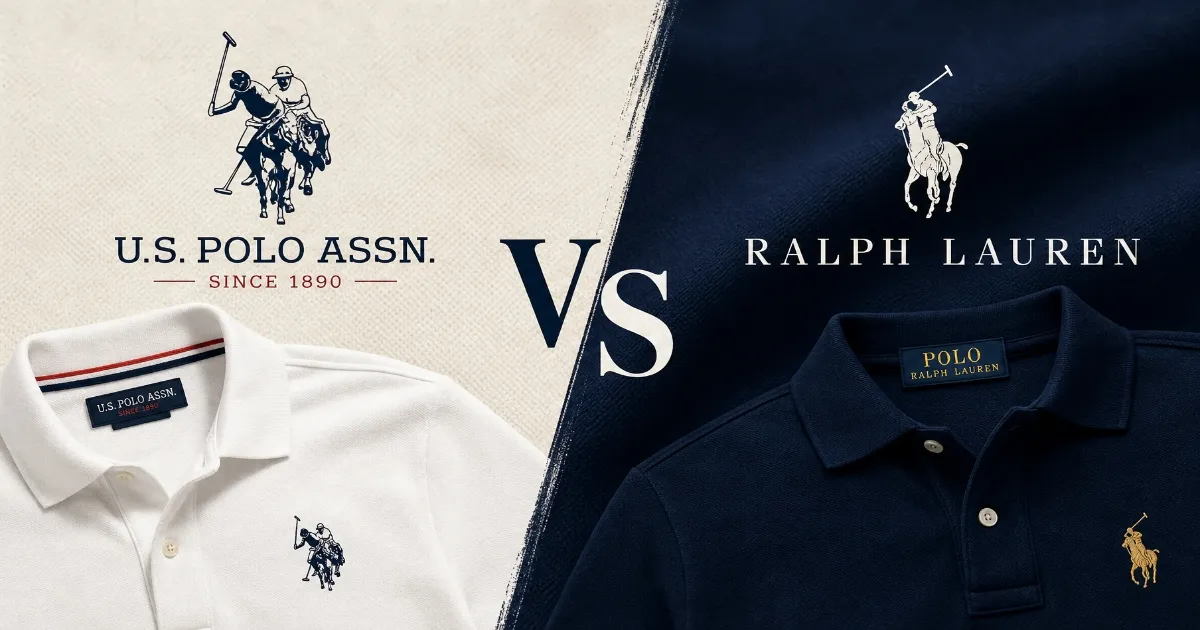
Two polo shirt brands. Similar logos. Very different prices. Many buyers ask which one is better — but that question might be the wrong starting point.
US Polo Assn and Ralph Lauren are not the same brand, and neither is universally "better." The right choice depends on your target market, pricing strategy, and what your customers value. Understanding the difference between these two brands helps any clothing brand make smarter product and sourcing decisions.
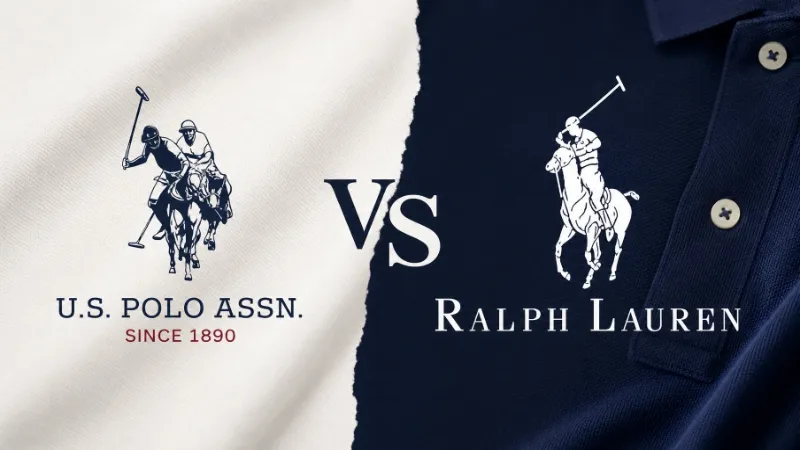
The real value in comparing these two brands is not about picking a winner. It is about understanding how brand positioning, fabric choices, and production quality shape customer perception — and how that knowledge can guide your own brand decisions. After 21 years of producing polo shirts and knitwear for brands in Asia and overseas, the patterns in this comparison come up again and again in client conversations.
Are US Polo Assn and Ralph Lauren the Same Brand?
Two brands. Two horses. Two very different stories — and many buyers still confuse them.
US Polo Assn is the official brand of the United States Polo Association, the governing body for the sport of polo in America. Ralph Lauren is a luxury fashion brand founded in 1967 by designer Ralph Lauren. They are completely separate companies with no ownership connection.
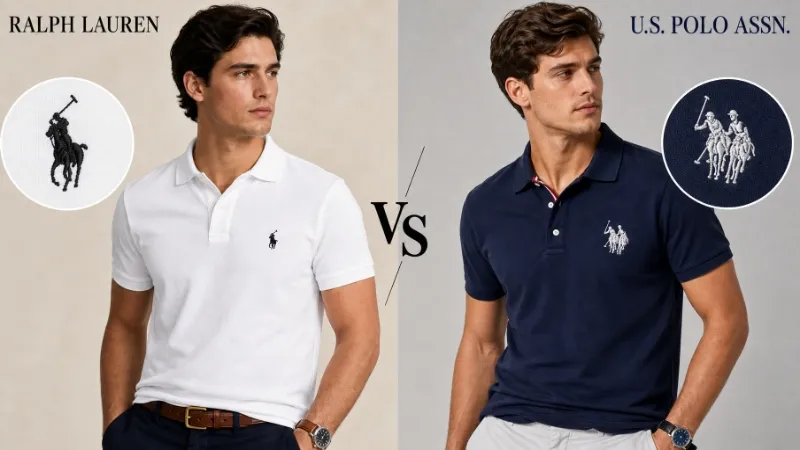
This confusion costs buyers money. Some buyers think US Polo Assn is a cheaper version of Ralph Lauren, or a sub-brand under the same corporate umbrella. It is not.
Here is a quick breakdown of their core differences:
| Feature | US Polo Assn | Ralph Lauren (Polo) |
|---|---|---|
| Founded | 1890 (association), brand in 1980s | 1967 |
| Brand type | Sports association brand | Luxury lifestyle fashion brand |
| Price range (polo shirts) | $20–$50 retail | $80–$150+ retail |
| Target customer | Value-conscious, sport-adjacent | Aspirational, premium lifestyle |
| Brand ownership | USPA Global Licensing | Ralph Lauren Corporation1 |
From a manufacturing perspective, these two brands sit in completely different production tiers. Ralph Lauren sources from premium factories with strict quality controls, higher fabric specifications, and tighter tolerances on finishing. US Polo Assn operates with a licensing model, meaning different products are produced by different manufacturers at various quality levels depending on the market and retailer.
This is important for any brand owner to understand. A licensed brand does not always mean consistent quality. The logo carries the name, but the actual garment quality can vary widely from one product line to the next.
Why Do Their Logos Look Similar?
The logos both feature a polo player on horseback. That is not a coincidence — it is a legal and commercial story worth knowing.
Ralph Lauren popularized the polo player logo in fashion starting in the 1970s.2 US Polo Assn, as the official governing body of the sport, also uses polo imagery as part of its identity. The two companies have had legal disputes3 over logo similarity, but both currently operate with their respective marks.
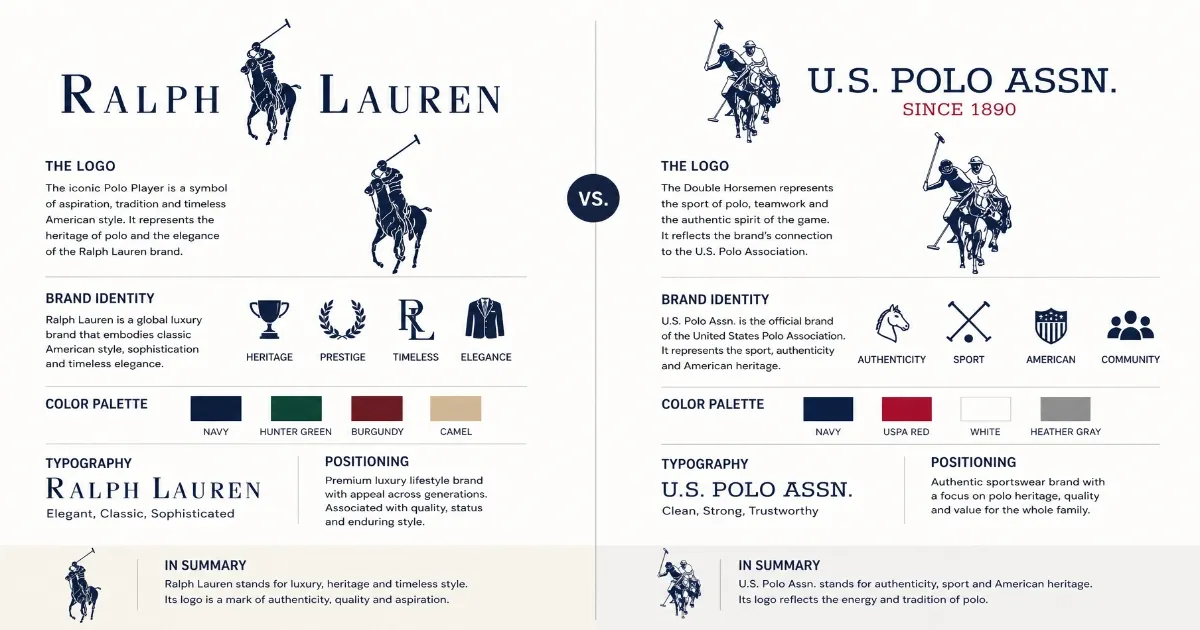
This logo situation is a real case study in brand identity risk. Ralph Lauren spent decades building aspirational value around that polo image. When consumers see a similar image on a lower-priced product, it creates what brand strategists call a "halo effect" — shoppers may perceive US Polo Assn as related to or comparable with Ralph Lauren.
For clothing brands building their own identity, this raises a direct question: are you building your brand on a clear, owned visual identity, or borrowing equity from an existing image in the market?
What does this mean for product development?
When working with clients who want to build a polo shirt brand, the logo and brand story are discussed before fabric is even selected. Here is why that order matters:
- Your logo signals your price tier. A minimalist embroidered logo reads premium. An oversized printed graphic reads casual or streetwear.
- Your brand name anchors customer expectations. If your brand name sounds sport-adjacent, customers expect function and durability. If it sounds fashion-forward, they expect fit and finish.
- Confusion with existing brands is a legal and trust risk. The US Polo Assn and Ralph Lauren dispute is a reminder that visual similarity creates problems, even if unintentional.
Build your identity clearly before you build your product. Your manufacturer can help you execute the product, but the brand direction has to come first. If you are not clear about how to determine Your Brand positioning, you can refer to the article: Fast Fashion vs Custom Manufacturing: Which Is Better for Your Clothing Brand?
Is Ralph Lauren Always Better Than US Polo Assn?
Not always. And the answer depends entirely on who is buying and why.
Ralph Lauren offers more consistent premium quality in terms of fabric, fit, and finishing. US Polo Assn offers accessible quality at a lower price point. For a consumer who values longevity and brand prestige, Ralph Lauren wins. For a consumer who wants a clean, presentable polo at everyday prices, US Polo Assn delivers.
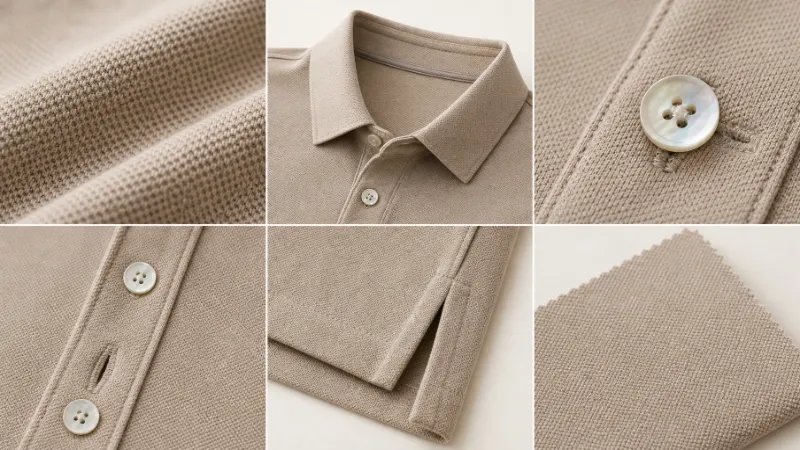
This is the kind of question that gets asked in showrooms and trade meetings regularly. The honest answer from a production standpoint: Ralph Lauren's polo shirts are built to a higher specification. But "higher specification" does not automatically mean "right for your customer."
Here is a practical comparison from a garment construction perspective:
| Quality Factor | Ralph Lauren (Polo) | US Polo Assn |
|---|---|---|
| Typical fabric | 100% combed cotton piqué | Cotton piqué, sometimes blended |
| Yarn quality | Higher twist, finer count | Standard twist, varies by product |
| Collar construction | Reinforced, structured rib | Basic rib collar, less structured |
| Button quality | Horn-look or custom buttons | Standard plastic buttons |
| Finishing | Cleaner seams, branded details | Functional finishing, less refined |
These differences matter when you are sourcing for your own brand. If your customers pay $40–$60 retail, they expect Ralph Lauren-adjacent quality. If your retail price is $20–$30, US Polo Assn-level construction is appropriate. The mistake many brands make is charging a mid-premium price while sourcing at a budget specification.
What Can Fabric and Craftsmanship Tell Me Beyond the Brand Name?
Brand names are marketing. Fabric and construction are the actual product. Learn to read the garment, not just the label.
Polo shirt quality can be assessed through fabric weight, yarn type, piqué weave tightness, collar structure, and seam finishing.4 These factors directly affect how a polo shirt looks, feels, and lasts after washing — and they are the real indicators of value regardless of brand name.
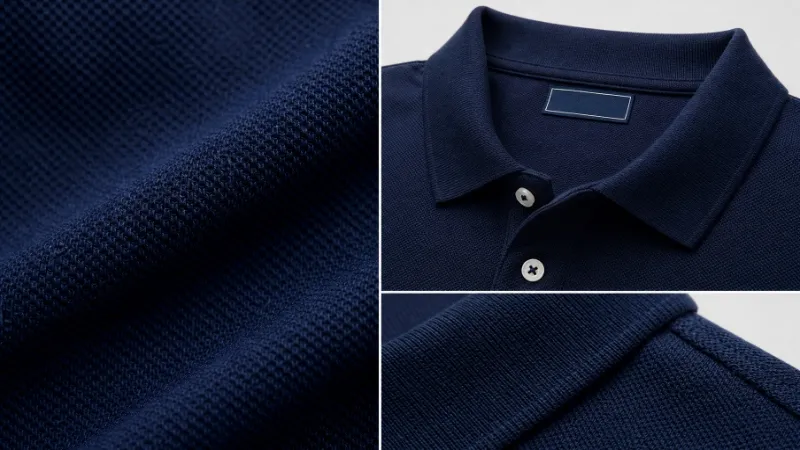
After years of producing polo shirts for both local and international clients, the same misconceptions about quality come up repeatedly. Many buyers focus on GSM (grams per square meter) as the main quality indicator. GSM matters, but it is only one data point.
Key fabric and construction factors to evaluate
Fabric composition and yarn quality
A polo shirt described as "100% cotton" can range from rough and stiff to soft and smooth depending on the cotton grade and yarn processing. Combed cotton removes short fibers and impurities, resulting in a smoother, stronger yarn. Ring-spun cotton adds durability and a cleaner surface. Open-end spun cotton is cheaper and coarser.
Ralph Lauren typically uses combed cotton in their core polo lines. Budget brands, including some US Polo Assn products, use standard or open-end spun cotton to manage costs.
Piqué weave structure
Polo shirts are typically made from piqué knit fabric. The tightness and regularity of the piqué texture affects both appearance and durability. A tight, even piqué holds its shape better after washing. A loose or irregular piqué will distort and look worn quickly.
| Weave Quality | Visual Result | Durability |
|---|---|---|
| Tight, even piqué | Structured, premium look | High — holds shape after washing |
| Medium piqué | Acceptable appearance | Moderate — slight distortion over time |
| Loose or irregular piqué | Casual, less refined | Low — quick shape loss |
Collar construction
The collar is where quality differences become most visible after a few washes. A well-constructed collar uses a separate rib-knit band with reinforced edges. Cheaper collars are thinner, curl after washing, and lose their shape quickly. This is one of the first things checked when reviewing a factory sample.
Seam finishing and placket alignment
Premium polo shirts have clean, flat seams and perfectly aligned button plackets. These details seem minor, but they signal production discipline. A factory that aligns plackets consistently is a factory with good quality control across the board.
How Should a Clothing Brand Choose Between Premium Image and Affordable Value?
Many brands try to look premium while sourcing cheap. The market catches on faster than expected.
A clothing brand should align its sourcing specification with its retail price point and target customer expectation. Selling a $70 polo shirt with budget construction damages brand trust. Selling a well-made polo at $35 with honest positioning builds customer loyalty.
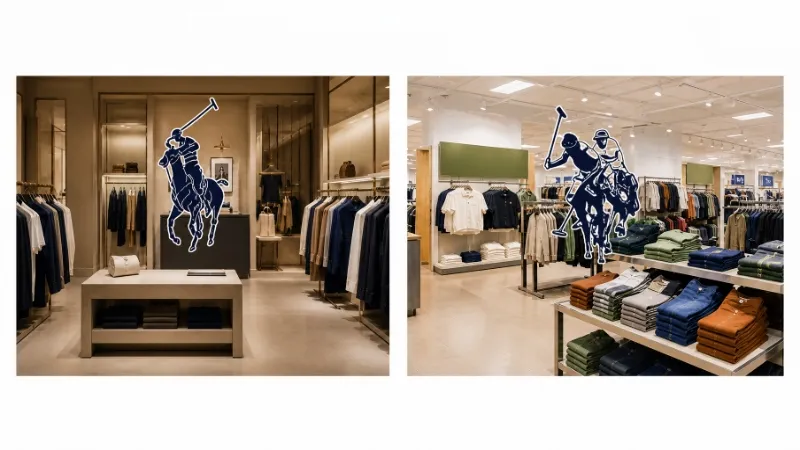
This is one of the most common strategic mistakes seen among startup clothing brands. They want the brand image of Ralph Lauren but the unit cost of US Polo Assn. Those two goals are not compatible — at least not without careful product development.
How to define your quality tier before sourcing
Here is a framework used when onboarding new clients asking for polo shirt production:
Step 1: Define your retail price What will your customer pay? Work backwards from that number. A general rule in the apparel industry is that the cost of goods should be 25–35% of the retail price for a healthy margin.
Step 2: Map that price to a construction standard At a $25–$40 retail price, you can produce a decent 200–220 GSM cotton piqué polo with clean finishing. At $60–$90 retail, your customer expects 230–250 GSM combed cotton, structured collar, quality buttons, and refined finishing.
Step 3: Match your brand story to that standard Do not position a 200 GSM polo as a luxury product. It will not survive the first customer review. Instead, position it as a "clean, everyday essential" — which is honest and defensible.
| Retail Price | Recommended GSM | Cotton Type | Expected Finishing |
|---|---|---|---|
| $20–$40 | 180–220 GSM | Standard or combed | Basic clean finish |
| $40–$70 | 220–240 GSM | Combed cotton | Structured collar, quality buttons |
| $70–$120 | 240–260 GSM | Combed, ring-spun | Full premium finishing |
What Supply Chain Lessons Can Buyers Learn From These Two Polo Brands?
How a brand manages its supply chain shows up directly in product consistency and customer trust.
Ralph Lauren's vertically controlled sourcing produces consistent quality across seasons. US Polo Assn's licensing model produces more variation.5 For buyers building their own brand, the lesson is clear: consistent supplier relationships produce more reliable product quality than chasing the lowest price each season.
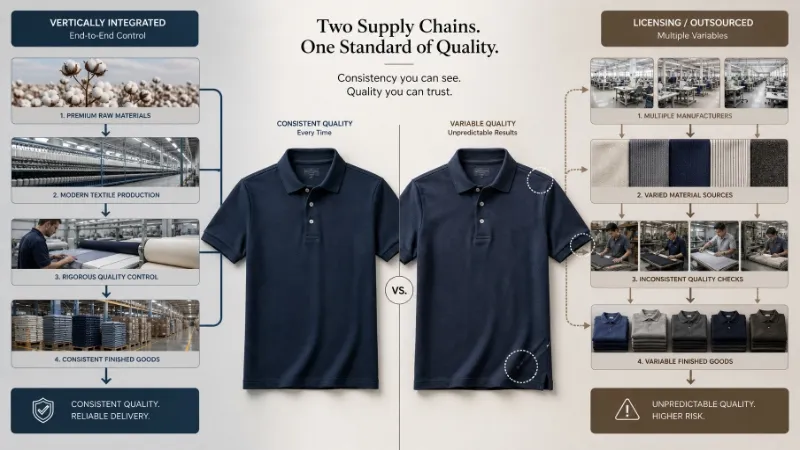
The licensing model of US Polo Assn is a useful cautionary example. Because different licensees produce different product categories, quality can vary significantly between a US Polo Assn jacket and a US Polo Assn polo shirt, even within the same retail season. Customers who buy based on the brand name may be disappointed when the quality does not match their previous purchase.
What this means for your sourcing strategy
Supplier relationships matter more than spot pricing
Working with the same factory across multiple seasons builds a shared understanding of your standards. The factory learns your fits, your finishing preferences, your quality tolerance. That learning is lost every time you switch suppliers for a 5% cost saving.
Consistency is a brand asset
When a customer buys your polo shirt twice, the second shirt should feel identical to the first. This sounds obvious, but it requires active quality management — consistent fabric sourcing, locked-down construction specs, and a factory partner who maintains those specs across production runs.
MOQ flexibility reflects factory risk tolerance
One question asked by almost every startup brand: what is the minimum order quantity? The answer depends heavily on the factory's production model. Factories that work with established brands at scale often have high MOQs because their production lines are optimized for volume. Finding a factory willing to work at lower MOQs — like 300–500 pieces per style — requires either a relationship or a factory specifically set up for that kind of flexibility.
Easson Apparel, the MOQ for polo shirts starts at a level that works for startup brands. This is a deliberate choice, because growing with a brand from small orders to large ones builds a stronger long-term relationship than only serving established volume buyers.
How Can Startups Build Their Own Polo Shirt Line From This Comparison?
The Ralph Lauren vs US Polo Assn comparison is not just a brand story. It is a product development roadmap for any brand entering the polo shirt market.
Startups can build a credible polo shirt line by defining a clear quality tier, choosing fabric specifications that match their retail price, working with a manufacturer experienced in polo shirt construction, and building a consistent brand identity that is not confused with existing players.

Here is how to translate the lessons from these two brands into a practical product development process.
Step-by-step guide for polo shirt line development
Define your brand position first
Are you building a sport-adjacent brand, a lifestyle brand, or a workwear brand? Each position has different fabric, fit, and finishing implications. A sport-adjacent polo needs moisture management or stretch properties. A lifestyle polo prioritizes softness and drape. A workwear polo needs durability and easy care.
Select fabric based on function and price
Do not start with a fabric name. Start with the end use and price point, then work back to the specification. A good manufacturer will guide you through fabric options — including cotton piqué, cotton-polyester blends, and performance knits — based on your requirements. If you are choosing fabrics for your brand, you can refer to this article:How to Choose the Best Fabric for a Startup Clothing Brand?
| Brand Position | Recommended Fabric | Key Properties |
|---|---|---|
| Sport/active | Cotton-polyester blend or performance piqué | Moisture-wicking, stretch, durability |
| Lifestyle/casual | 100% combed cotton piqué | Softness, clean appearance, breathability |
| Workwear | Heavy cotton piqué or poly-cotton | Durability, easy care, shape retention |
Develop your sample with production intent
Many startups develop a sample for presentation but do not think about production feasibility. A sample that looks great but requires hand-finishing on every unit will cost you in production. Work with a manufacturer who tells you which design details add cost and which do not. That conversation saves budget and prevents surprises.
Build your brand identity into the garment
This is where startups can differentiate. Your woven label, hang tag, custom buttons, or embroidery placement all contribute to perceived quality. A clean, well-placed woven label on a 220 GSM combed cotton polo can feel more premium than a poorly finished 250 GSM polo with a cheap printed label.
Plan for reorders from the start
One of the biggest operational mistakes is treating the first order as a standalone project. Your fabric, trim specifications, and construction details need to be documented and stored with your factory so that the second order matches the first. Ask your manufacturer how they manage repeat order consistency. If they do not have a clear answer, that is a risk signal.
Conclusion
US Polo Assn and Ralph Lauren serve different markets for good reasons. For any brand building its own polo shirt line, the lesson is simple: match your product spec to your price point, build consistent supplier relationships, and create a brand identity that is clear and your own. If you are planning to develop your own private label polo shirts, start with your target customer, fabric specification, logo method, MOQ, and retail price. A manufacturer with polo shirt experience can help turn those decisions into a production-ready sample.
"Brands - Ralph Lauren Corporation", https://corporate.ralphlauren.com/brands. Ownership of the Ralph Lauren brand by Ralph Lauren Corporation is confirmed by authoritative sources such as encyclopedias or corporate filings. Evidence role: expert_consensus; source type: encyclopedia. Supports: Ralph Lauren Corporation is the owner of the Ralph Lauren brand.. ↩
"Ralph Lauren Corporation", https://en.wikipedia.org/wiki/Ralph_Lauren_Corporation. Ralph Lauren introduced the polo player logo in 1972 as part of his Polo line, establishing it as a symbol of aspirational lifestyle fashion. Evidence role: historical_context; source type: encyclopedia. Supports: Provides historical context for Ralph Lauren's introduction of the polo player logo in the 1970s.. ↩
"Polo Ralph Lauren v. U.S. POLO ASSN. – A 38-year Trademark Saga", https://iplaw.allard.ubc.ca/2022/04/05/polo-ralph-lauren-v-u-s-polo-assn-a-38-year-trademark-saga/. Legal disputes between US Polo Assn and Ralph Lauren over logo similarity have been documented in trademark and intellectual property cases. Evidence role: case_reference; source type: institution. Supports: The source should confirm the existence and details of legal disputes between US Polo Assn and Ralph Lauren regarding logo similarity.. ↩
"The Quality of Polo Shirts | News", https://www.promostars.pl/en/news/the-quality-of-polo-shirts/. Textile education resources identify fabric weight, yarn type, weave tightness, and finishing as critical quality indicators for polo shirts. Evidence role: definition; source type: education. Supports: Defines key factors for assessing polo shirt quality in garment production.. ↩
"The influence of occupational licensing and regulation", https://conservancy.umn.edu/server/api/core/bitstreams/60914596-19d6-4921-820f-40a1351cbd83/content. Licensing agreements under US Polo Assn result in varied product quality due to differences in licensee manufacturing standards. Evidence role: mechanism; source type: research. Supports: Describes how US Polo Assn's licensing model leads to product quality variation.. Scope note: Specific quality differences may depend on individual licensee practices. ↩