
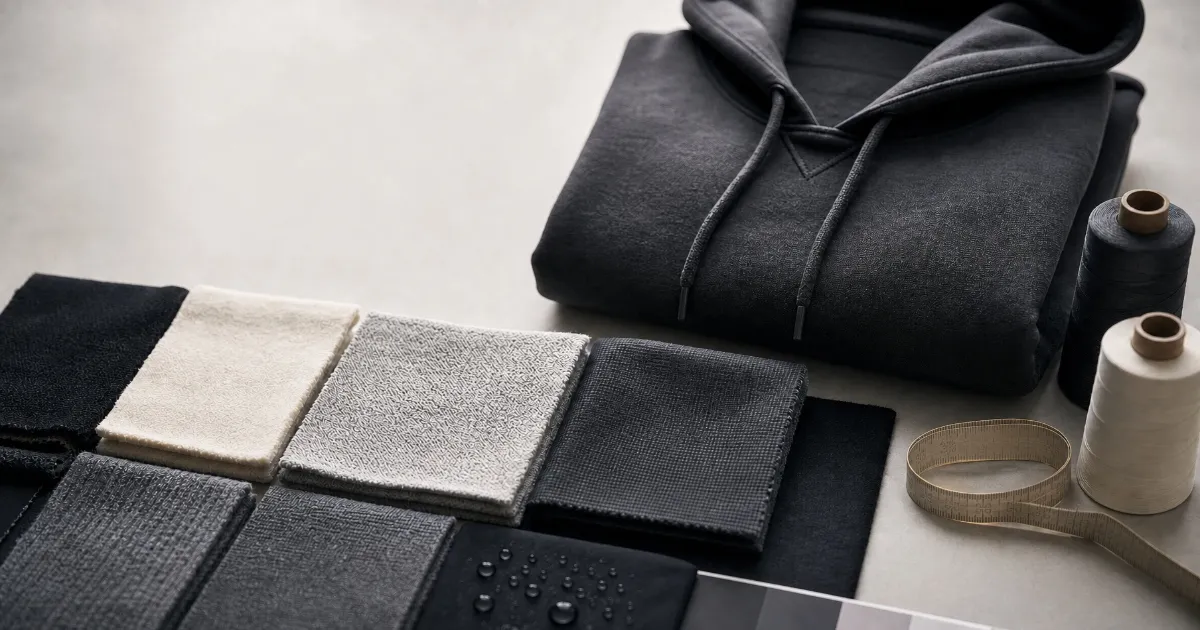
You pay $120 for a hoodie from a big brand. Six months later, it starts to lose shape, the color looks dull, and the fabric no longer feels like it did on day one.
That is usually not just a branding problem. It is a manufacturing problem.
The best hoodie brands in 2026 do not win on logo alone. In many premium hoodies, the real difference comes from fabric weight, fiber blend, shrinkage control, stitch consistency, dyeing quality, and interior finishing. A 350gsm+ fabric, stable seams, controlled colorfastness, and documented wash testing are often stronger signs of quality than the retail price.
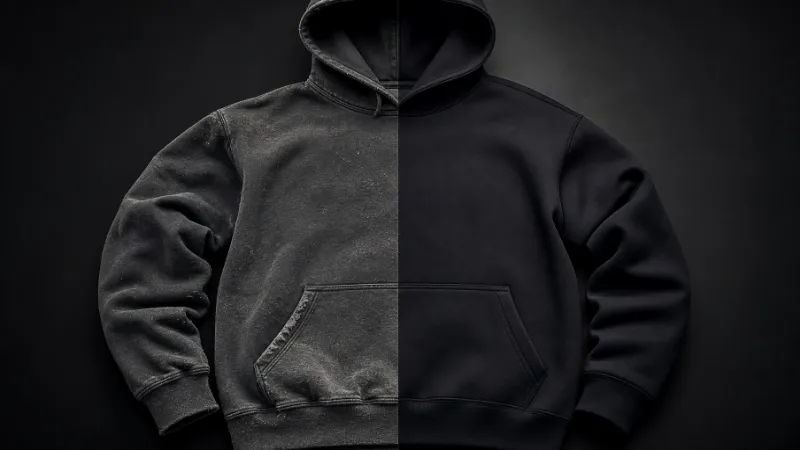
At Easson Apparel, our team has spent over 20 years manufacturing knitwear and hoodies in Guangdong, working on production details for brands and private-label buyers. Over that time, we have seen the difference between hoodies that only look premium in photos and hoodies that can actually survive repeated wear, washing, and customer complaints.
This guide breaks down the hidden details behind better hoodie brands — from fabric selection to stitching, dyeing, shrinkage control, and factory evaluation.
What the Best Hoodie Brands Usually Get Right
Not every successful hoodie brand uses the same formula. A streetwear brand, an athletic brand, a luxury basics brand, and an outdoor lifestyle brand may all produce “premium hoodies,” but they usually define quality differently.
The best hoodie brands are not copying one fabric or one construction method. They make clear decisions based on their customer, price point, climate, fit, and brand positioning.
| Brand Type | What They Usually Focus On | Common Hoodie Features |
|---|---|---|
| Premium streetwear brands | Structure, weight, oversized fit, visual identity | Heavy fleece, dropped shoulders, boxy fit, strong rib trims |
| Athletic or performance brands | Stretch, recovery, breathability, movement | Polyester blends, elastane in key areas, moisture-management finishes |
| Luxury basics brands | Hand feel, clean fit, color consistency | Cotton-rich French terry, soft fleece, clean stitching, muted colors |
| Outdoor or cold-weather brands | Warmth, layering, durability | Brushed fleece, sherpa lining, heavier GSM, functional pockets |
| Gift and loungewear brands | Comfort, softness, easy sizing | Oversized fit, plush fabric, simple size ranges, cozy hand feel |
This is why judging a hoodie only by the brand name can be misleading. A good hoodie should be evaluated by what it was designed to do.
A 450gsm oversized streetwear hoodie may feel premium for winter, but it may be too heavy for activewear. A 280gsm French terry hoodie may feel too light for luxury streetwear, but it can be perfect for spring layering. The best brands understand this balance before production begins.
What Fabric Are the Best Hoodie Brands Actually Using in 2026?
Many people assume the best hoodie is always made from 100% cotton. Cotton can be excellent, especially for premium French terry or heavyweight fleece. But in real production, there is no single “best” fabric composition for every hoodie.
In 2026, many premium hoodie brands use cotton-rich fabrics, cotton-polyester blends, recycled polyester blends, or small amounts of elastane depending on the target fit, softness, recovery, and price point. The fabric choice should match the product goal, not just follow a trend.
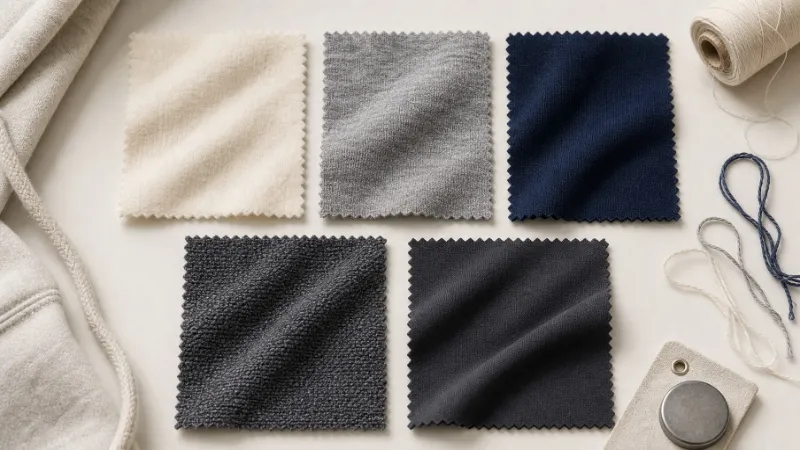
Here are several common fabric directions used by better hoodie brands:
| Fabric Type | Common Use | Strength | Possible Weakness |
|---|---|---|---|
| 100% cotton French terry | Premium basics, spring hoodies, natural hand feel | Breathable, soft, natural | Can shrink or lose shape if not pre-treated |
| Cotton-polyester fleece | Everyday hoodies, streetwear, private-label collections | Better shape retention, more stable after washing | Lower cotton percentage may reduce natural hand feel |
| Cotton-rich CVC fleece | Mid-to-premium hoodies | Good balance of softness, durability, and cost | Quality depends heavily on yarn and finishing |
| Recycled polyester blend | Sustainable collections, active or casual hoodies | Supports recycled material positioning when documented | Needs proper certification to support claims |
| Cotton with elastane or rib with elastane | Rib cuffs, collars, stretch zones, fitted styles | Better recovery and stretch | Too much stretch can affect structure |
For most brands, the key question is not “Is cotton better than polyester?” The better question is:
What should this hoodie do after 20 washes, 50 wears, and real customer use?
If the product needs a natural premium hand feel, cotton-rich French terry may be the right choice. If the product needs better shape retention and a more stable fit, a cotton-polyester blend may perform better. If the brand wants a sustainability story, recycled polyester can be useful, but the claim should be supported by proper documentation.
Why Fabric Weight (GSM) Is One of the Most Important Hoodie Quality Signals
GSM means grams per square meter. It measures fabric weight. For hoodies, GSM has a major impact on structure, warmth, drape, and perceived quality.
Many premium hoodies sit around 350gsm and above, but GSM alone does not define quality. A good 320gsm fabric with strong yarn, stable knitting, and good finishing can outperform a poorly finished 400gsm fabric.
| GSM Range | Common Meaning | Suitable For |
|---|---|---|
| Below 280gsm | Lightweight hoodie fabric | Summer hoodies, promotional items, light layering |
| 280–330gsm | Medium-weight hoodie fabric | Everyday casual hoodies, spring/fall collections |
| 350–420gsm | Heavyweight premium range | Streetwear, structured hoodies, higher-end basics |
| 450gsm and above | Very heavy or specialty range | Winter hoodies, oversized streetwear, cold-weather styles |
A 350–400gsm hoodie usually feels more structured than a 280gsm hoodie. It holds shape better, feels more substantial, and often gives customers a stronger sense of value.
But brands should not blindly choose the heaviest fabric. Heavy GSM increases fabric cost, garment weight, shipping cost, and sometimes production difficulty. If the hoodie is too heavy, customers may like it in photos but avoid wearing it often.
For brands developing a hoodie line, the better approach is to define the product first:
- Is it for streetwear or sportswear?
- Is it for winter or all-season wear?
- Should it feel soft and relaxed or structured and premium?
- What retail price does the brand need to hit?
- Will the customer pay extra for heavier fabric?
Once these answers are clear, GSM becomes a strategic choice instead of a guessing game.
What Does Premium Hoodie Manufacturing Actually Look Like Behind the Scenes?
Fabric is only the starting point. Two hoodies can use similar fabric but feel completely different after production.
The difference often comes from cutting accuracy, sewing consistency, stitch density, seam finishing, shrinkage control, and quality inspection.
Premium hoodie manufacturing usually focuses on stable seams, balanced stitch density, clean interior finishing, and consistent measurements across sizes. The goal is not just to make one good sample, but to make the same hoodie consistently across bulk production.
Stitch Density: Small Detail, Big Difference
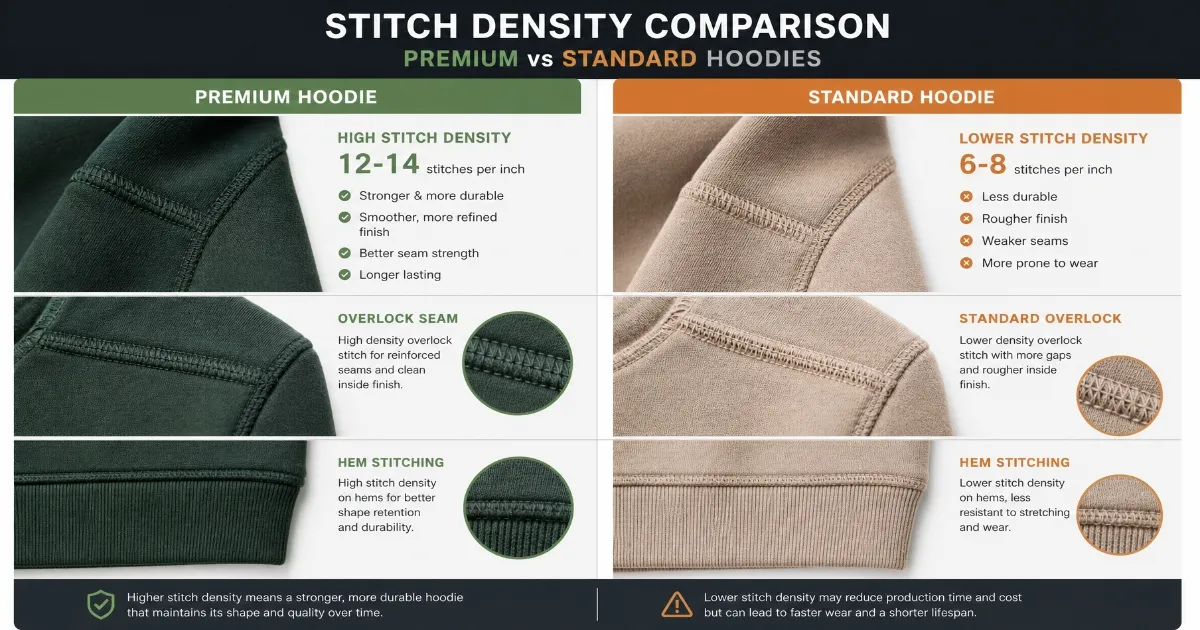
Stitch density is often measured in stitches per inch. For many knit garments, a stronger and more stable seam usually requires a balanced stitch density. Too few stitches can make the seam weak. Too many stitches can damage the fabric, cause puckering, or reduce stretch.
| Stitch Density | General Meaning | Possible Result |
|---|---|---|
| Too low | Fewer stitches holding the seam | Higher risk of seam opening or distortion |
| Balanced range | Suitable for the fabric and seam type | Better durability and cleaner appearance |
| Too high | Too many needle points in the fabric | Puckering, stiffness, or needle damage |
For many hoodie seams, a factory may use around 10–14 stitches per inch depending on fabric thickness, sewing machine, thread, and seam type. This is not a fixed rule for every hoodie, but it is a useful quality checkpoint.
When evaluating a sample, do not only look at the outside. Turn the hoodie inside out and check:
- Shoulder seams
- Side seams
- Underarm seams
- Hood joining seam
- Kangaroo pocket attachment
- Rib cuff and hem connection
These areas carry stress during wear. If the stitching is loose, uneven, or already pulling on the sample, the problem will usually become worse in bulk production.
The Hidden Finishing Details That Separate Good Factories From Average Ones
Interior finishing is one of the easiest areas for brands to overlook. A hoodie can look clean from the outside but feel rough, bulky, or unstable inside.
Good factories do not only sew the hoodie together. They control the inside of the garment so seams feel smooth, edges are protected, and the hoodie keeps its shape after washing.
| Finishing Method | What It Does | Typical Use |
|---|---|---|
| Basic overlock | Prevents raw edges from fraying | Standard hoodie production |
| Overlock + coverstitch | Adds stability and cleaner appearance | Premium casualwear and sportswear |
| Flatlock seam | Creates a flatter seam against the body | Activewear, performance hoodies |
| Binding or taping | Covers and reinforces selected seams | Higher-end hoodies or special design details |
| Brushing and soft finishing | Improves inner hand feel | Fleece and cozy hoodie styles |
Double overlock or additional seam finishing can improve durability and comfort, but it is not automatically required on every seam. The right solution depends on the fabric, price point, design, and buyer standard.
The important point is this: cheap finishing often shows up later. The hoodie may look fine when packed, but after several washes, the inside can start to feel rough, seams may twist, and loose threads may appear.
A serious manufacturer should be able to explain why a specific seam construction is used, not just say “this is normal.”
How Do the Best Hoodie Brands Get Color That Actually Lasts?
Color is one of the first things customers notice when a hoodie ages. A black hoodie that turns gray too quickly, a navy hoodie that fades unevenly, or a bright hoodie that bleeds in the wash can all damage a brand’s reputation.
Top hoodie brands usually manage color through the right dyeing method, controlled finishing, lab testing, and clear buyer standards. Reactive dyeing is often used for cotton-rich fabrics when strong wash fastness is required, while pigment dyeing may be chosen intentionally for a vintage or garment-dyed effect.
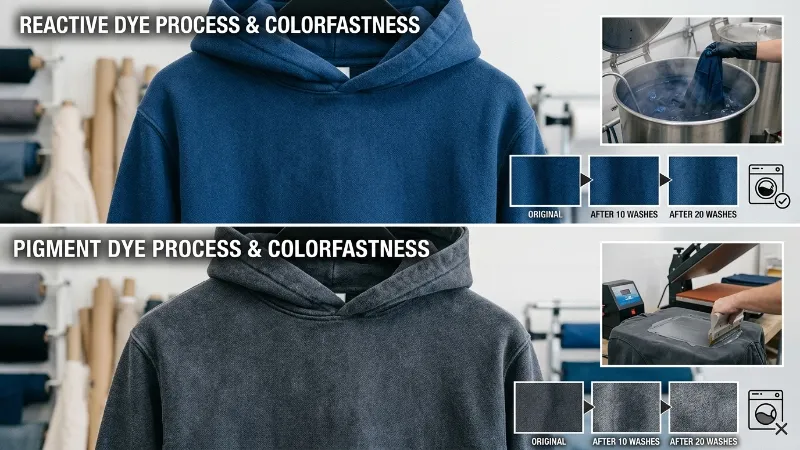
Reactive Dyeing vs Pigment Dyeing
Reactive dyeing and pigment dyeing are both used in apparel production, but they create different results.
| Dyeing Method | Common Use | Strength | What Brands Should Watch |
|---|---|---|---|
| Reactive dyeing | Cotton-rich fabrics, stable solid colors | Better wash fastness when well controlled | Requires good process control and testing |
| Pigment dyeing | Vintage, washed, faded, garment-dyed looks | Fashionable worn-in effect | Color may fade by design |
| Piece dyeing | Fabric dyed before cutting | Good for consistent bulk production | Needs shade control between batches |
| Garment dyeing | Finished garment dyed after sewing | Soft, casual, unique color effect | Higher risk of shade variation and shrinkage |
A good hoodie brand does not simply ask for “black” or “navy.” It defines the color standard, dyeing method, lab dip approval process, and acceptable colorfastness level before bulk production.
For many premium hoodies, a colorfastness grade around 4 or above is a strong target, but the exact standard depends on the buyer, fabric, color, and test method.
REACH Compliance Does Not Mean One Dyeing Method Is Mandatory
For brands selling into the EU, compliance is important. But it is not accurate to say that REACH requires all hoodies to use reactive dyeing.
REACH is mainly about chemical safety and restricted substances. For apparel brands, the practical concern is whether dyeing and finishing chemicals are controlled, tested, and documented.1
This means brands and manufacturers should pay attention to:
- Restricted azo dyes
- Formaldehyde levels
- Heavy metals
- pH value
- Colorfastness
- Chemical odor
- Skin-contact safety
- Documentation from dyeing mills or testing labs
Reactive dyeing can be a good choice for many cotton-rich hoodies, but compliance depends on the whole dyeing and finishing process, not only the dyeing method.
For B2B buyers, the most practical step is to ask the supplier for relevant testing documents, such as OEKO-TEX2, REACH-related test reports, or fabric mill certifications when needed.
Why Pre-Shrink Treatment Is One of the Most Underrated Quality Steps
Shrinkage is one of the most common hoodie complaints. A customer buys a size L, washes it twice, and suddenly the fit feels closer to a size M. This problem often starts before the garment is even sewn.
Better hoodie factories usually control shrinkage at the fabric stage through pre-shrink treatment, wash testing, and measurement checks before bulk cutting. For many premium cotton-rich hoodies, keeping shrinkage within about 3–5% is a common target, depending on the buyer’s standard.
| Pre-Shrink Control Level | Possible Shrinkage Risk | Common Production Level |
|---|---|---|
| No clear pre-shrink control | Higher shrinkage risk after washing | Low-cost production |
| Basic steam or finishing control | Moderate shrinkage control | Standard production |
| Pre-shrink + wash test + measurement tracking | Better size stability | Premium or export-focused production |
Pre-shrink treatment helps the fabric release part of its natural shrinkage before the garment is cut and sewn. This is especially important for cotton-rich fleece and French terry.
A good factory should test shrinkage before bulk production, not after the goods are finished. In practical production, this usually means:
- Testing fabric shrinkage before cutting
- Washing a sample according to the buyer’s care standard
- Measuring key points before and after washing
- Adjusting patterns or fabric treatment if shrinkage is too high
- Confirming size specs before bulk production
Skipping this step can save time in the short term, but the cost appears later through returns, complaints, bad reviews, and poor repeat orders.
What Does the Hoodie Supply Chain Actually Look Like in 2026?
A major hoodie brand may not produce all hoodies in one factory. Different products may be placed in different factories depending on price point, capacity, delivery time, fabric type, and target market.
In 2026, many apparel brands split hoodie production by product tier, region, cost structure, and factory capability. The country of origin can give some context, but it does not guarantee quality by itself. A well-managed factory in China, Vietnam, Bangladesh, Turkey, Portugal, or another sourcing region can produce good hoodies if the standards and controls are clear.

A brand may source from multiple factories for several reasons:
| Reason | Why It Matters |
|---|---|
| Cost control | Different product lines need different price structures |
| Lead time | Some factories are faster for repeat bulk orders |
| Fabric access | Certain regions have stronger supply chains for specific fabrics |
| Duty and logistics | Import costs and shipping routes affect final cost |
| Factory specialization | Some factories are better at fleece, some at sportswear, some at loungewear |
| Capacity planning | Large brands often need backup factories to avoid delays |
This is why the label alone does not tell the full story. A hoodie made in the same country can vary widely in quality depending on fabric, factory management, sewing control, and inspection standards.
For brands sourcing hoodie production, the most important question is not only “Where is it made?” The better question is:
What fabric, process, testing, and inspection system does this supplier use?
How to Evaluate a Hoodie Factory Before You Place an Order
For brands and buyers sourcing hoodie production, a factory should be judged by more than a low quote. A low price can be useful, but only if the supplier can still control quality, communication, and delivery.The following article can help you better select and evaluate the level of a hoodie manufacturer
Before placing a hoodie order, evaluate the supplier through samples, fabric documents, stitching quality, shrinkage data, color control, and production communication. Good factories are usually willing to explain the process clearly.
| Evaluation Point | What to Look For | Red Flag |
|---|---|---|
| Fabric specification | GSM, composition, width, shrinkage, hand feel | Supplier cannot provide clear fabric details |
| Stitching quality | Clean seams, balanced stitch density, no skipped stitches | Loose threads, uneven seams, puckering |
| Interior finishing | Smooth internal seams, stable edges, clean pocket attachment | Rough edges, exposed threads, messy finishing |
| Shrinkage control | Wash test data or sample wash result | No clear shrinkage testing process |
| Color control | Lab dip, bulk shade approval, colorfastness standard | No approval process before bulk dyeing |
| Compliance documents | OEKO-TEX, REACH-related testing, fabric mill reports if needed | Supplier avoids documentation questions |
| Sample lead time | Clear sample timeline and revision process | Vague timing or repeated delays |
| Communication | Clear replies about fabric, MOQ, price, and lead time | Only gives price without asking for details |
One useful test is simple: ask the factory why they recommend a certain fabric for your hoodie.
A professional supplier should not only say “this fabric is good.” They should explain the relationship between GSM, fit, shrinkage, season, price, and your target customer.
What New Hoodie Manufacturing Technology Is Changing the Industry in 2026?
Technology is affecting hoodie production, but not every new process is ready for every brand. Some technologies are useful for premium or performance collections, while others are still more common in specialty production.
In 2026, the most practical improvements for many hoodie brands are still better fabric development, digital pattern control, sample accuracy, wash testing, and quality inspection.3 More advanced technologies, such as seamless knitting or functional coatings, can be valuable, but only when they fit the product and budget.
3D Seamless Knitting
3D seamless knitting is more common in certain knitwear and performance categories than in traditional cut-and-sew fleece hoodies. It can reduce some seams and improve comfort, but it often requires specialized machines, higher technical setup, and larger development budgets.
For most hoodie brands, especially startups and mid-sized labels, traditional cut-and-sew production is still more practical. It offers more flexibility in fabric choice, printing, embroidery, pocket design, rib trims, and sizing.
Functional Finishes and Coatings
Functional finishes may include moisture-wicking, anti-pilling, antibacterial, water-repellent, or UV-related treatments. These can add value, especially for activewear, outdoor lifestyle products, and premium technical collections.
However, brands should be careful with marketing claims. If a hoodie claims antibacterial, UV protection, recycled content, or special performance benefits, those claims should be supported by testing or supplier documentation.
A coating or finish is only useful if it survives washing and matches the customer’s real use case.
A Quick Buyer’s Checklist for Evaluating Any Hoodie
Whether you are buying a hoodie for yourself or developing one for your brand, use these basic checks.
| Check | What to Do | Good Sign |
|---|---|---|
| Fabric weight | Ask for GSM or feel the garment weight | Fabric feels appropriate for the product positioning |
| Interior seams | Turn the hoodie inside out and check by hand | Smooth seams, no rough raw edges |
| Collar and cuff recovery | Stretch gently and release | Rib returns close to original shape |
| Color quality | Check shade consistency and wash test result | No obvious fading, bleeding, or uneven dyeing |
| Smell | Smell the fabric directly | No sharp chemical odor |
| Pocket attachment | Pull lightly around kangaroo pocket edges | No loose stitching or distortion |
| Size stability | Check wash test data if sourcing bulk | Measurements remain within agreed tolerance |
| Price logic | Compare price with fabric, GSM, trims, and process | Price matches the actual construction level |
A low retail price does not automatically mean poor quality. A high retail price does not automatically mean premium quality either.
The real test is whether the hoodie’s materials, construction, finishing, and testing match the promise made by the brand.
Conclusion: Great Hoodie Brands Are Built Before the Logo Goes On
Real hoodie quality is built long before the logo, label, or product photo is added. It starts with fabric weight, yarn quality, shrinkage control, dyeing method, stitching, finishing, and factory discipline.
The best hoodie brands in 2026 understand one thing clearly: customers may buy the first hoodie because of design, but they come back because the product still feels good after months of wear.
For clothing brands, this means you should not start hoodie development with price alone. Start with the product goal:
- What season is this hoodie for?
- What GSM and fabric hand feel does your customer expect?
- Should the fit be oversized, regular, cropped, boxy, or athletic?
- Will the hoodie use embroidery, screen printing, puff print, or appliqué?
- What shrinkage and colorfastness standard do you need?
- What retail price are you trying to support?
At Easson Apparel, we help brands develop custom hoodies from fabric sourcing and sample development to private labeling, printing, embroidery, bulk production, and packaging support. If you are building a hoodie collection and want to avoid costly production mistakes, send us your design, target quantity, fabric idea, and brand positioning. Our team can help you turn the concept into a production-ready hoodie with the right fabric, fit, and manufacturing process.
"EU REACH - International Trade Administration", https://www.trade.gov/eu-reach. Supports the explanation that REACH regulations primarily concern chemical safety and restricted substances in textiles, emphasizing the practical need for apparel brands to ensure dyeing and finishing chemicals are controlled, tested, and documented. Evidence role: definition; source type: government. Supports: core focus of REACH regulations in the context of apparel.. ↩
"OEKO-TEX® STANDARD 100", https://www.oeko-tex.com/en/our-standards/oeko-tex-standard-100/. To understand the scope and importance of OEKO-TEX certification in ensuring textile product safety and environmental responsibility, consult official OEKO-TEX documentation or independent textile certification bodies. Evidence role: definition; source type: institution. Supports: the definition, scope, and significance of OEKO-TEX certification in textile chemical safety and quality assurance. ↩
"Textile Innovations: The Rise of Smart Fabrics in Fashion Design", https://www.rmcad.edu/blog/textile-innovations-the-rise-of-smart-fabrics-in-fashion-design/. Supports the assertion that in 2026, practical improvements in hoodie manufacturing largely stem from advancements in fabric development, digital pattern control, sample accuracy, wash testing, and quality inspection, rather than solely from more advanced, niche technologies. Evidence role: general_support; source type: institution. Supports: identification of the most practical technological improvements for hoodie manufacturing.. ↩