
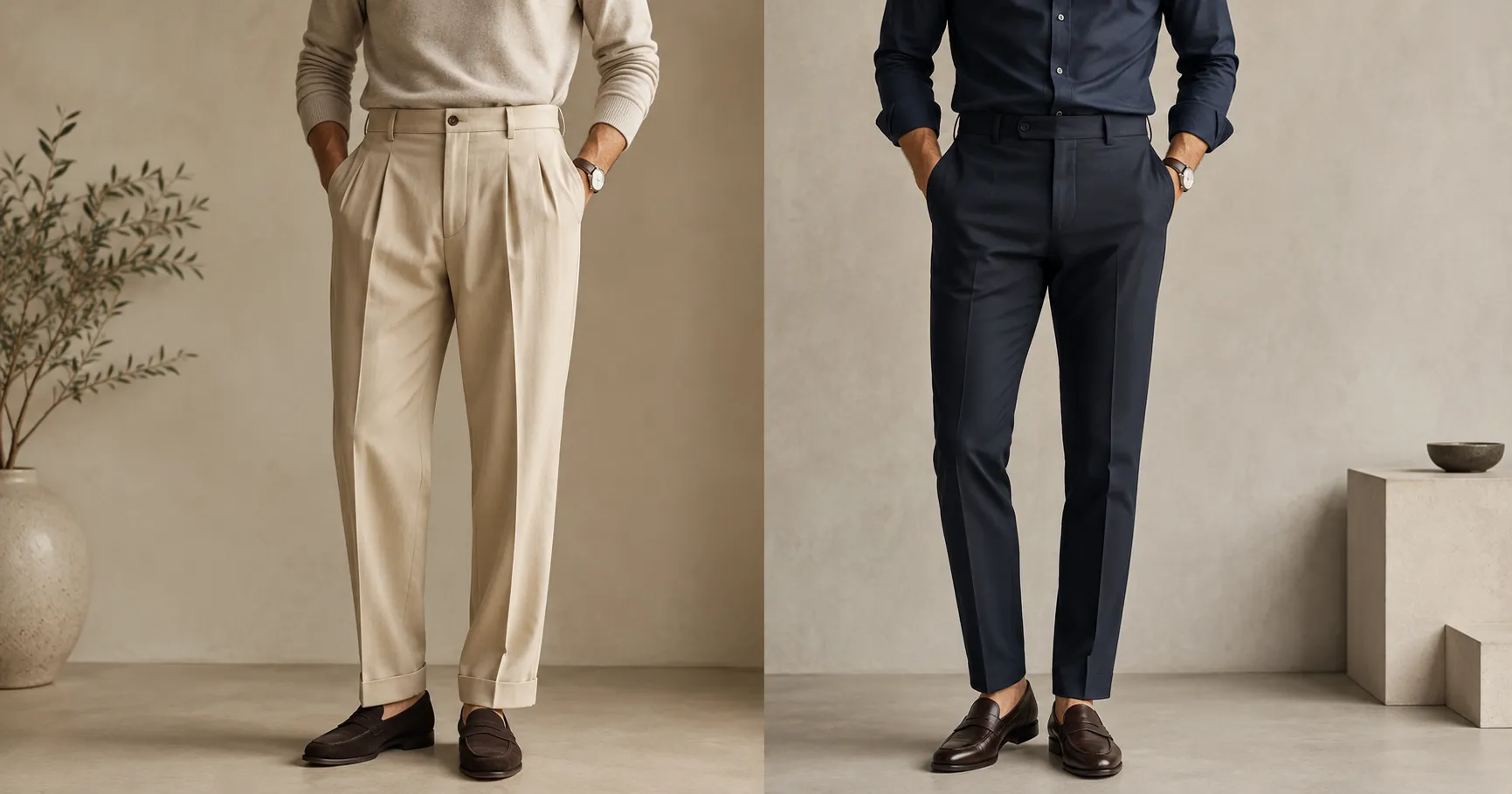
Choosing the wrong pant construction can cost you returns, reorders, and customer trust. Most buyers focus on price. But the real risk is in a design decision made too early, without enough context.
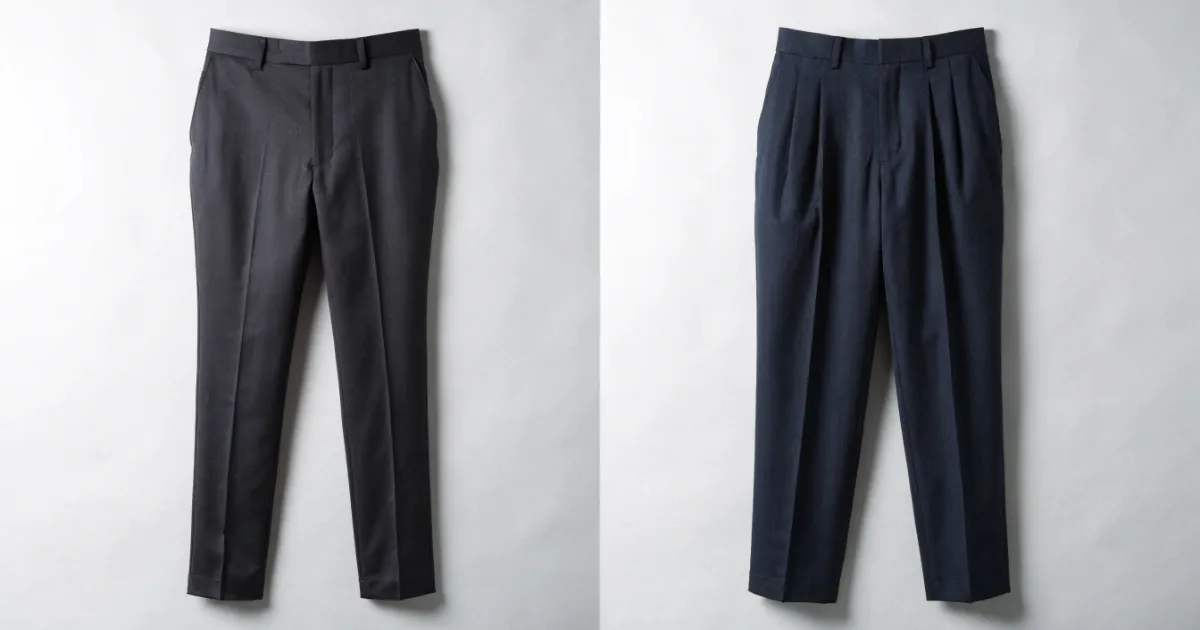
Pleated pants add volume and mobility above the thigh. Flat front pants create a cleaner, trimmer silhouette. Neither is universally better. The right choice depends on your target customer, intended use, fabric selection, and how your product will be worn and washed over time.
I have worked in apparel manufacturing for over 20 years. I talk to brands every week about pant development. And this question — pleated or flat front — comes up more than almost any other. What I want to do here is give you the kind of honest, factory-side breakdown that helps you make a smarter product decision.
What Actually Makes Pleated Pants Different From Flat Front Pants?
Most people treat this as a style question. It is not just a style question.
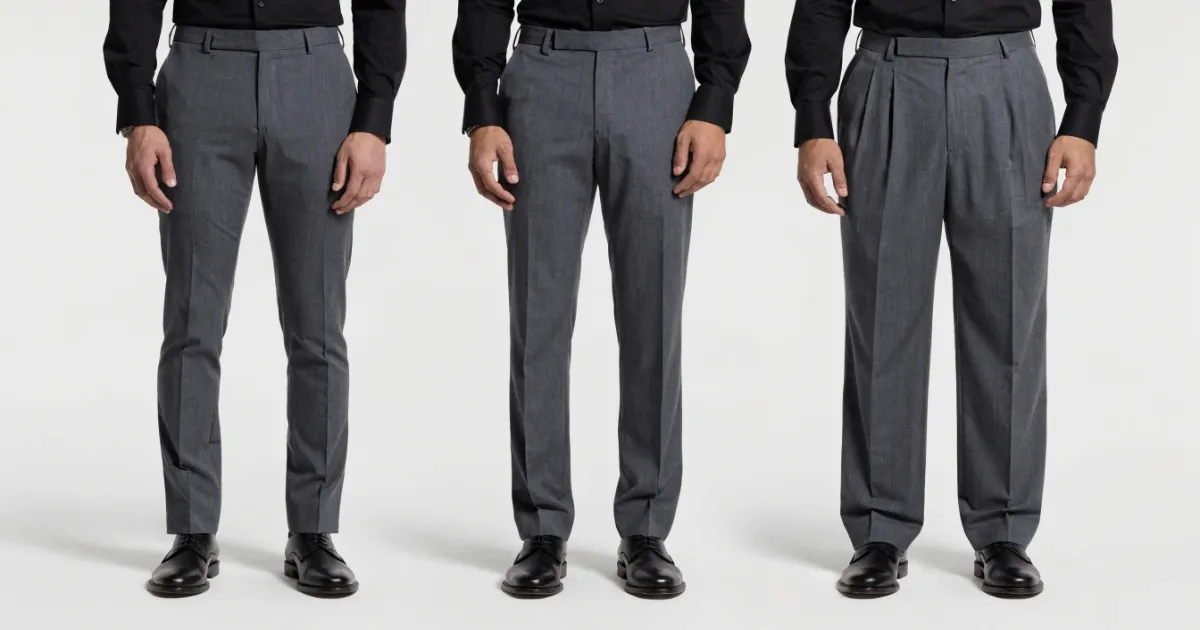
Pleated pants include one or more folds of fabric stitched at the waistband and released toward the thigh. These folds create extra room across the hip and upper leg. Flat front pants have no folds. The fabric lies smooth from waistband to crotch seam, producing a fitted, streamlined appearance.
This difference in construction changes several things at once.
What Changes When You Add a Pleat
Fit and ease allowance
A single forward pleat typically adds 1.5 to 2.5 cm of circumference at the hip when the pleat opens during movement. A double pleat adds more. This is not just about looking roomier. It directly affects how a person sits, bends, or moves. For a customer who wears pants all day at a desk or in a physical job, this matters.
Flat front pants rely entirely on the cut for their ease. That means the pattern grading and fabric stretch properties carry all the responsibility. If either is off, the customer feels it immediately.
Fabric behavior
Pleats need a fabric with enough body to hold the fold shape. Limp fabrics — thin cotton blends, washed-out linens, lightweight jersey — will not support a pleat cleanly. The pleat collapses, bunches, or twists. This is one of the most common complaints we see in first-time pleat orders from brands that are coming from a streetwear background.
Flat front pants are more forgiving across fabric weights, but they highlight every fitting issue. A 5mm difference in the rise measurement is invisible in a pleated trouser. In a flat front pant, it shows.
Construction complexity
Pleated designs require more steps. The pleat needs to be pressed and positioned before stitching the waistband. Double pleats require exact symmetry. Each step adds time and, if not controlled well, adds variability. We run tighter inspection checkpoints on pleat construction than on most other trouser details because the tolerance window is narrow.
| Feature | Pleated Pants | Flat Front Pants |
|---|---|---|
| Ease at hip/thigh | High | Low to moderate |
| Fabric weight requirement | Medium to heavy | Flexible |
| Pattern complexity | Higher | Lower |
| Manufacturing tolerance | Tighter | Moderate |
| Visible fit flaws | More forgiving | Less forgiving |
| Typical use case | Formal, workwear, relaxed tailoring | Casual, contemporary, slim-fit |
Which Body Types and Customer Profiles Does Each Style Actually Serve?
This is where I see brands make the most assumptions.
A brand will say: "Our customer is 25–35, urban, fashion-conscious." And then they will ask which trouser style is right. But that description does not tell me enough. I need to know what that customer is wearing the pants for, how they are built, and what they expect from fit.
A slim or straight body type with a narrow hip will wear a flat front pant cleanly. A customer with a wider hip or fuller thigh will find a flat front pant restrictive, especially in a non-stretch fabric. A pleated pant redistributes that volume without requiring stretch in the material.
Matching Style to Customer Context
Formal and corporate wear
Pleated trousers have a long history in tailored menswear. For brands developing suit separates, formal dress pants, or office-appropriate bottoms, a forward or reverse pleat adds a structured, classic look. The pleat also supports comfort during long wear, which matters to this customer.
Contemporary and minimalist brands
Flat front trousers dominate this space. They photograph well, read as modern and clean, and work across a wide price range. If your customer is buying for everyday smart-casual wear and is not at the extremes of the size curve, flat front is lower risk in development.
Relaxed tailoring and workwear revival
This is where it gets more interesting. Over the past few years, we have seen more brands — especially in the streetwear-adjacent and premium casual space — come to us asking for wide-leg, high-rise pleated trousers. They want the volume and the vintage reference, but they want it in cotton canvas or heavyweight twill, not suiting fabric. This works well when the fabric is chosen correctly. It does not work when a brand tries to run the same pleat specification in a 180 GSM poplin.
Women's workwear and tailored casualwear
This segment has grown significantly for us. Pleated wide-leg trousers in women's sizing are now a consistent repeat product for several of our brand clients. The key fit consideration here is rise length and waistband placement. Women's pleat trousers need more precise fitting at the hip-to-waist ratio than men's because the proportional difference is larger. We always recommend a fit sample in the target size range before bulk production.
What Are the Real Sourcing Risks When You Specify Either Style?
I want to be direct about this because I have seen projects go wrong at each of these points.
Knowing the risk areas early means you can brief your factory correctly and set up inspection checkpoints that actually catch problems before bulk shipping.
Flat front pants carry a higher visible fit risk than most buyers expect.
When a flat front pant arrives with a waistband that gaps, or a front rise that pulls, there is nowhere for that error to hide. The garment shows it immediately. This means the pattern grading and the fabric stability need to be confirmed before you approve bulk production.
Shrinkage is the number one issue I see in flat front cotton trousers. A 3% length shrinkage on a flat front pant affects the front rise. On a pleated trouser, the same shrinkage compresses the pleat slightly but does not distort the silhouette as severely. We strongly recommend pre-shrinking fabric before cutting for any flat front trouser in a natural fiber. We also recommend that buyers request a washed sample before bulk approval.
Pleat symmetry is the number one issue I see in pleated trousers.1
If the left and right pleats are not pressed to the same angle and depth before the waistband is attached, the pants will not hang straight. This is a production control issue, not a design issue. It requires a dedicated QC checkpoint at the pressing stage. Many factories skip this and catch the problem only at final inspection, which means reworking finished goods. We added a mid-process pleat check to our standard line inspection after seeing this repeated across several early orders from new clients.
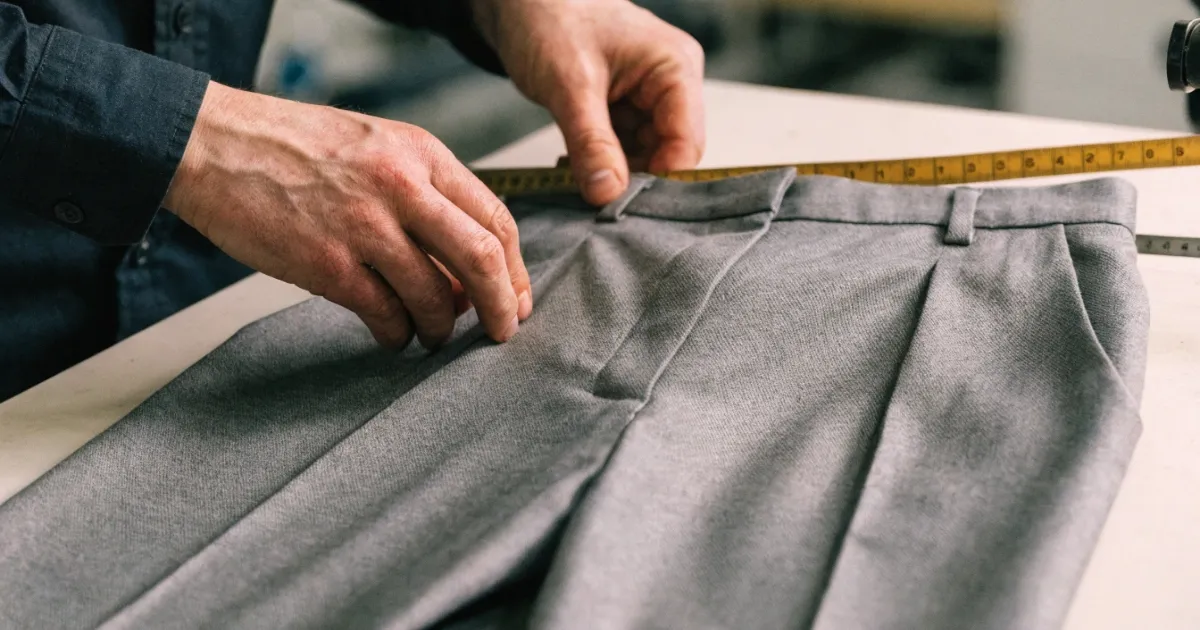
Key Risk Summary by Style
Flat front pants — watch for:
- Fabric shrinkage affecting the rise and overall length
- Waistband gapping caused by pattern inaccuracy or interfacing failure
- Fit issues that become visible at the extremes of your size run
Pleated pants — watch for:
- Pleat asymmetry from inconsistent pressing
- Fabric weight mismatch causing the pleat to collapse or over-spread
- Pleat depth variation across sizes in the graded range
A Note on Fabric Specification
I want to add one more practical point here. When clients come to us with a fabric they have already selected, and then ask to add a pleat construction, we sometimes have to push back. Not because pleats cannot be done — we do them regularly — but because the specific fabric they have chosen will not support the design intent.
The most common mismatch is a client who wants a sharp, structured pleat in a soft, washed-out cotton fabric.2 The result is a pleat that looks fine on a hanger and falls apart when worn. If you are committed to a specific pleat style, bring your fabric requirement and your design intent to your manufacturer at the same time. Let them tell you if the combination will work before you run samples.
Quick Decision Guide: When Should You Choose Pleated or Flat Front Pants?
For both clothing brands and everyday buyers, the best choice depends on the intended silhouette, fabric, customer body type, and wearing occasion. Pleated pants are not automatically more formal, and flat front pants are not automatically more modern. The right front construction should support the way the pants are meant to fit, move, and perform.
| Product Goal or Customer Need | Better Choice | Why It Works |
|---|---|---|
| Clean, minimal, modern look | Flat front pants | The smooth front creates a sharper and more streamlined silhouette. |
| More room through the hip and thigh | Pleated pants | Pleats add extra volume and mobility without relying only on stretch fabric. |
| Slim or tapered casual pants | Flat front pants | A flat front works better when the design needs a clean, close-to-body shape. |
| Wide-leg or relaxed tailoring | Pleated pants | Pleats help control volume and make the pants drape more naturally from the waist. |
| Entry-level chinos or everyday trousers | Flat front pants | The construction is simpler, easier to produce consistently, and usually lower risk. |
| Premium trousers or tailored collections | Pleated pants | Pleats add structure, depth, and a more developed design detail when executed well. |
| Lightweight or soft washed fabrics | Flat front pants | Very soft fabrics may not hold pleats cleanly after wearing or washing. |
| Medium-weight twill, wool blend, or structured fabric | Pleated pants | These fabrics can support the pleat shape and keep the front looking intentional. |
| Customers who sit, bend, or move often | Pleated pants | The added ease above the thigh improves comfort during movement. |
| Customers who prefer a sharper visual line | Flat front pants | The smooth front reduces bulk and gives the pants a cleaner appearance. |
As a simple rule, choose flat front pants when your priority is a clean silhouette, lower production complexity, and easier styling. Choose pleated pants when your priority is comfort, movement, relaxed tailoring, or a more structured design statement. For brands, the safest decision is to confirm the front construction together with the fabric, rise, thigh measurement, and final fit direction before sampling.
Conclusion
Pleated and flat front pants each serve distinct purposes. Your choice should be driven by your customer's body, lifestyle, and use case — not by trend alone. Get the fabric and construction aligned from the start, and control the right quality checkpoints. That is how you avoid the most common development mistakes.
If you are developing pleated or flat front trousers for your brand, the biggest risk is not style — it is pattern balance and fabric compatibility. At [Easson Apparel](https://eassonapparel.com/), we help brands validate design and fabric before sampling to reduce development risk.
"Automated Seam Folding and Sewing Machine on Pleated ..." Garment production research highlights pleat symmetry as a critical quality control factor in pleated trousers, requiring precise alignment during manufacturing. Supports: Pleat symmetry is the number one issue I see in pleated trousers. ↩
"[PDF] Automated Seam Folding and Sewing Machine on Pleated Pants for ..." Textile design guides explain that soft, lightweight fabrics lack the structural integrity needed to maintain sharp pleats, leading to collapse or distortion. Supports: The most common mismatch is a client who wants a sharp, structured pleat in a soft, washed-out cotton fabric. ↩