If you’ve ever searched “types of t-shirts” and felt like you walked into a vocabulary trap, you’re not alone.
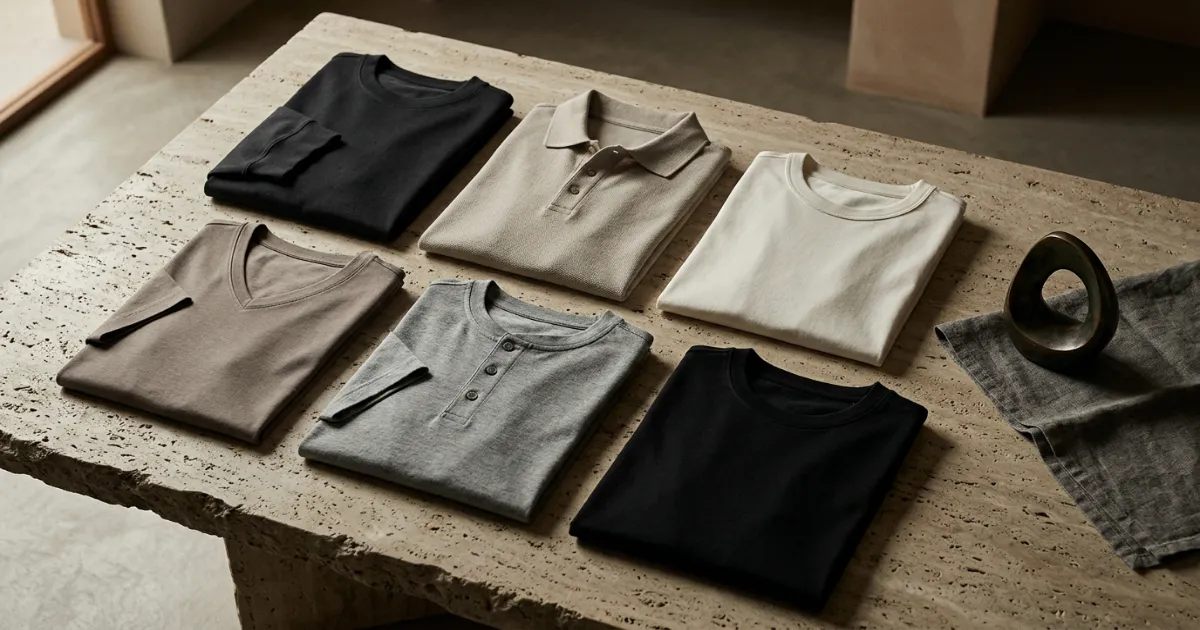
In manufacturing, we describe a tee by the specs that change the product: neckline shape, fit block, sleeve construction, fabric composition, fabric weight, and finish. Common types include crew neck, V-neck, Henley, regular-fit, slim-fit, oversized, boxy, longline, raglan, sleeveless, graphic, performance, and heavyweight T-shirts.
There is no single universal classification because these categories can overlap. For example, one T-shirt can be a heavyweight, oversized, crew-neck graphic tee at the same time. The easiest way to choose the right type is to start with its intended use, then compare the fit, fabric weight, sleeve construction, and design details.
Quick List: 21 Different Types of T-Shirts And Explained
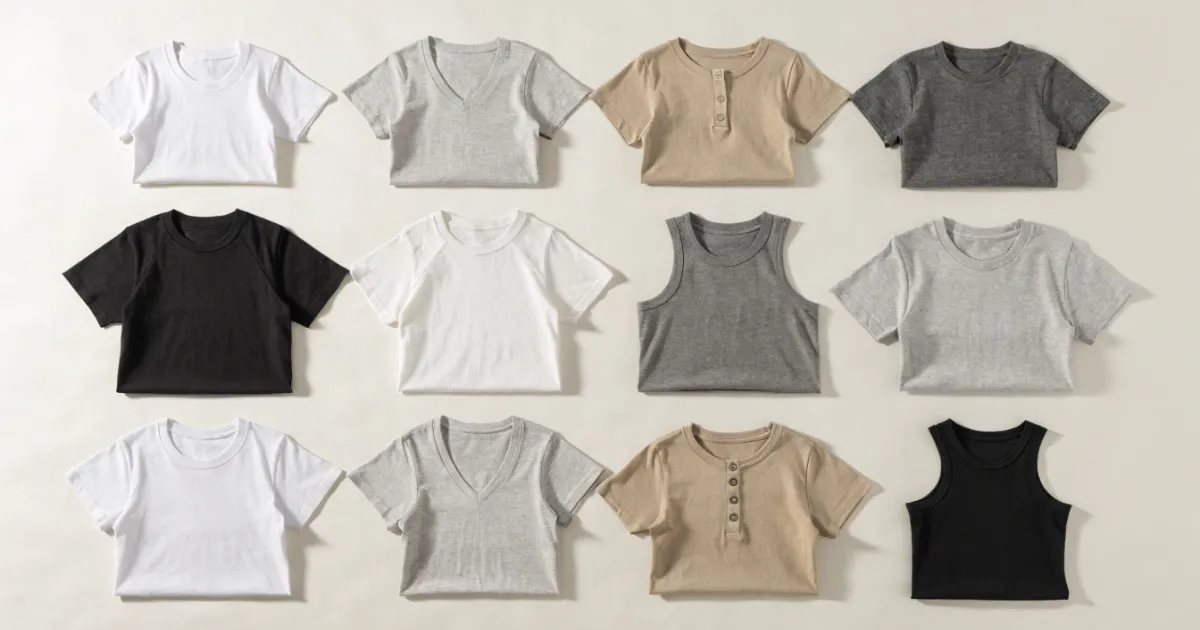
Below are 21 t-shirt styles people commonly search for. I’m keeping the mini-format consistent so you can compare them quickly.
| Type of T-Shirt | Main Category | Best For |
|---|---|---|
| Crew Neck T-Shirt | Neckline | Everyday wear, layering, basic wardrobes |
| V-Neck T-Shirt | Neckline | Open-neck styling, layering under shirts or jackets |
| Relaxed-Fit T-Shirt | Fit | Comfortable daily wear without looking oversized |
| Henley T-Shirt | Neckline / Detail | Smart-casual outfits and elevated basics |
| Polo T-Shirt | Collar / Hybrid | Smart casual, uniforms, golf, office-casual looks |
| Pocket T-Shirt | Design Detail | Casual wear with a simple visual detail |
| Regular-Fit T-Shirt | Fit | Safe everyday basics for most body types |
| Slim-Fit T-Shirt | Fit | Cleaner silhouettes and layering under outerwear |
| Oversized T-Shirt | Fit | Streetwear, relaxed styling, statement silhouettes |
| Longline T-Shirt | Proportion | Taller bodies, layering, longer outfit proportions |
| Boxy T-Shirt | Fit | Modern casual looks and structured streetwear basics |
| Drop Shoulder T-Shirt | Sleeve / Fit | Relaxed streetwear and soft oversized silhouettes |
| Raglan Sleeve T-Shirt | Sleeve | Sporty casual wear and easier shoulder movement |
| Performance T-Shirt | Fabric / Function | Gym wear, sports, uniforms, travel, active use |
| Sleeveless T-Shirt | Sleeve | Summer, training, layering in hot weather |
| Long-Sleeve T-Shirt | Sleeve | Transitional seasons, layering, sun protection |
| Ringer T-Shirt | Design Detail | Retro casual outfits and contrast-trim styling |
| Graphic T-Shirt | Design Detail | Streetwear, branding, expressive casual wear |
| Plain T-Shirt | Design Detail | Minimal wardrobes, layering, premium basics |
| Striped T-Shirt | Pattern / Design | Casual outfits with visual interest |
| Heavyweight T-Shirt | Fabric / Weight | Premium basics, streetwear, cooler weather |
T-Shirt Types by Neckline
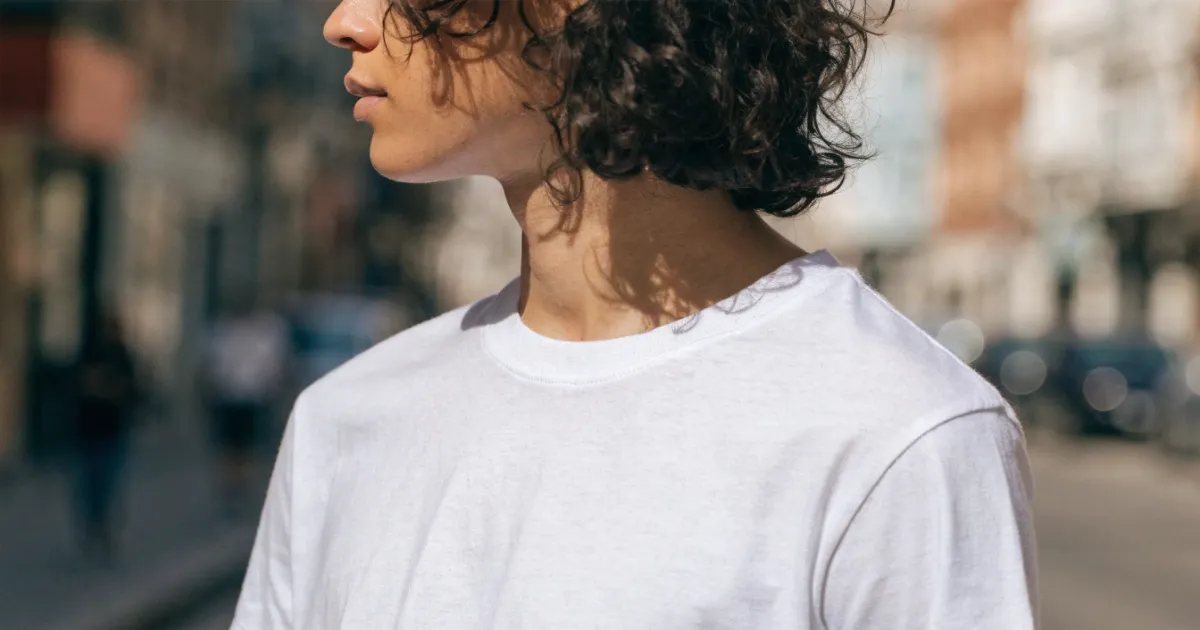
1. Crew Neck T-Shirt
Category: Neckline Type
- What it is: A T-shirt with a round neckline that sits fairly close to the base of the neck.
- Key features: Round neck opening; usually finished with a rib collar.
- Best for: Everyday wear, layering under overshirts, hoodies, jackets.
- What makes it different: It is the easiest neckline to use because it works across casual wardrobes, layering pieces, and most basic product lines without creating much styling risk.
- Possible drawbacks or limitations: If the neckline is too tight or the rib is too stiff, it can feel restrictive or sit awkwardly after washing.
2. V-Neck T-Shirt
Category: Neckline Type
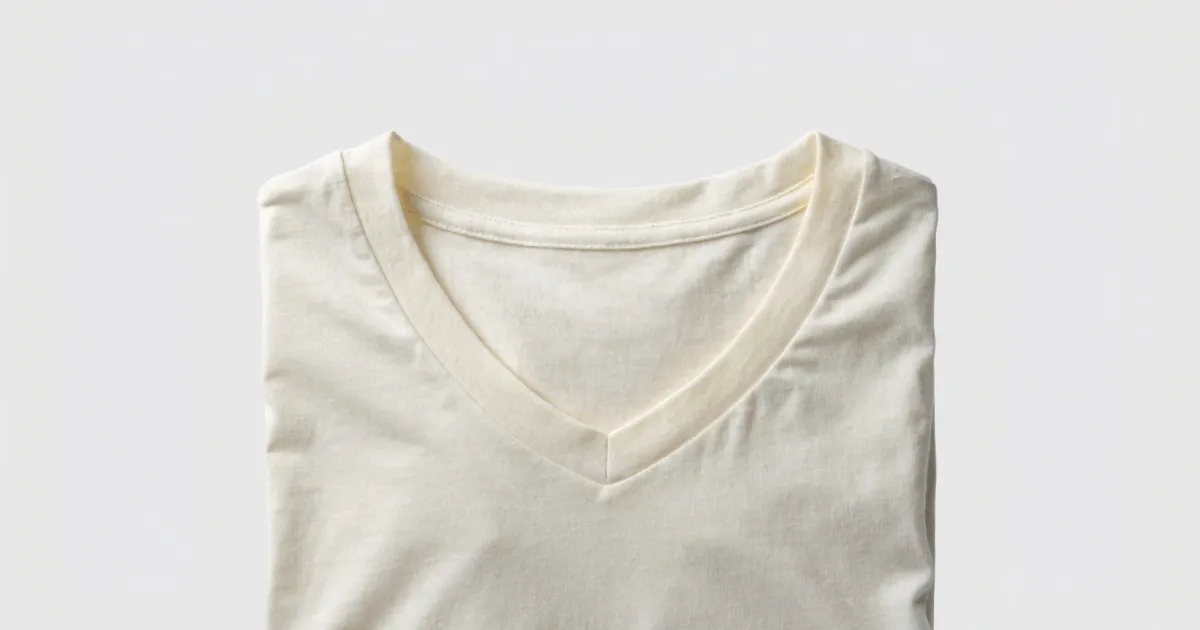
- What it is: A tee with a V-shaped neckline.
- Key features: V point depth varies (shallow to deep); collar finish still matters for durability.
- Best for: Men who want a slightly more open neckline; layering where you don’t want the collar visible.
- What makes it different: Visually elongates the neck and creates a sharper line than a crew.
- Possible drawbacks or limitations: Too-deep V-necks can look dated or overly “underwear-like” in casual outfits.
3. Henley T-Shirt1
Category: Neckline Type
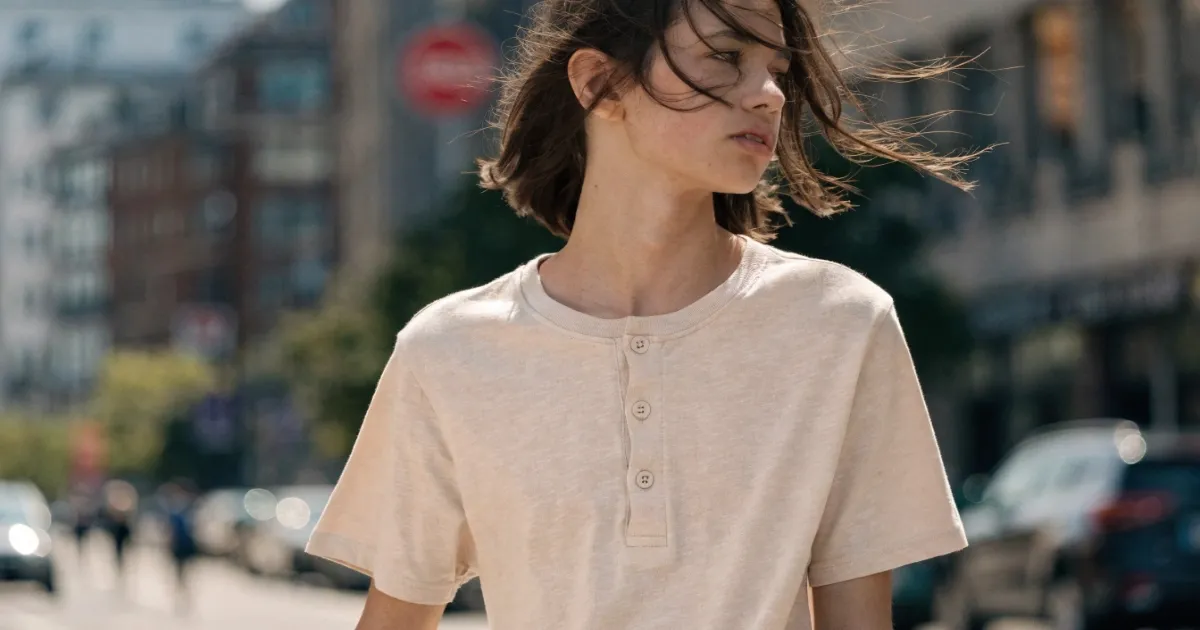
- What it is: A collarless tee with a short button placket at the front.
- Key features: 2–5 buttons; placket adds structure and visual interest.
- Best for: Smart-casual outfits; brands that want a “step up” from a basic tee without going full polo.
- What makes it different: The placket changes the vibe—more intentional, less like a plain undershirt.
- Possible drawbacks or limitations: More parts = more ways to fail (placket puckering, button issues). It’s also slightly slower/ costlier to produce than a plain neck.
4. Polo T-Shirt
Category: Neckline Type
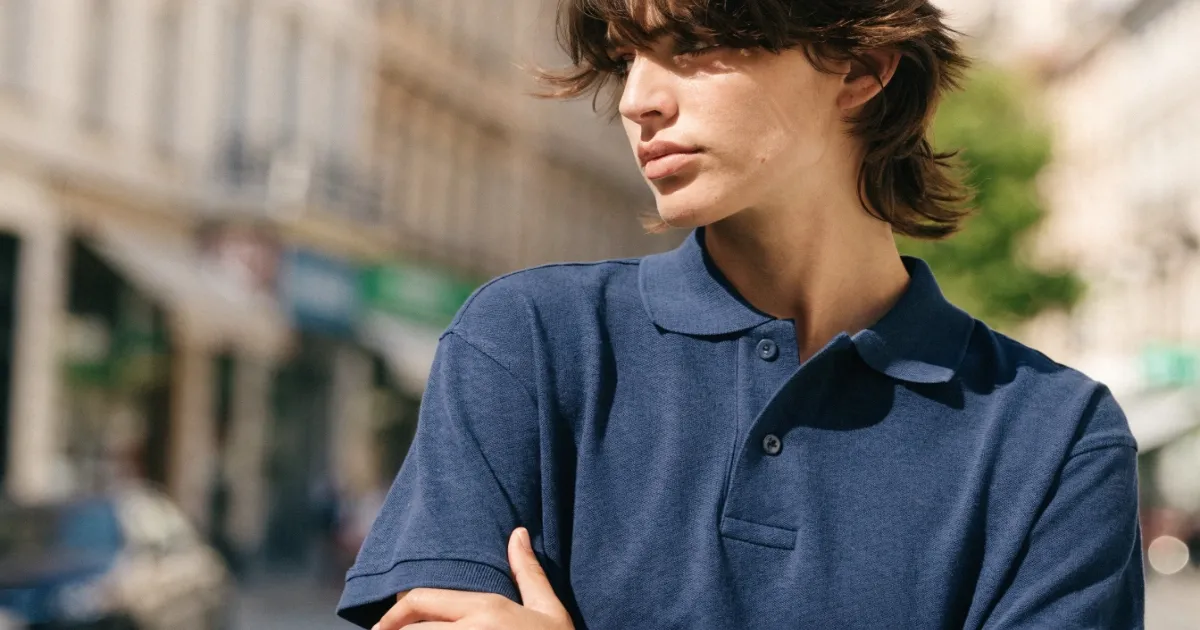
- What it is: A knit top with a collar and placket (often called a polo shirt2).
- Key features: Collar stand, buttons, and typically a more structured fabric.
- Best for: Smart casual, uniforms, “presentable casual,” golf/club looks.
- What makes it different: The collar instantly raises formality compared to other t-shirt styles.
- Possible drawbacks or limitations: Fit and collar quality matter a lot—cheap collars curl and collapse quickly.
Common mistake: many buyers focus only on the collar as a style signal, but ignore collar quality and body balance. A polo with a weak collar, unstable placket, or poor fit loses its smart-casual advantage very quickly and can end up looking cheaper than a well-made basic tee.
T-Shirt Types by Fit and Length
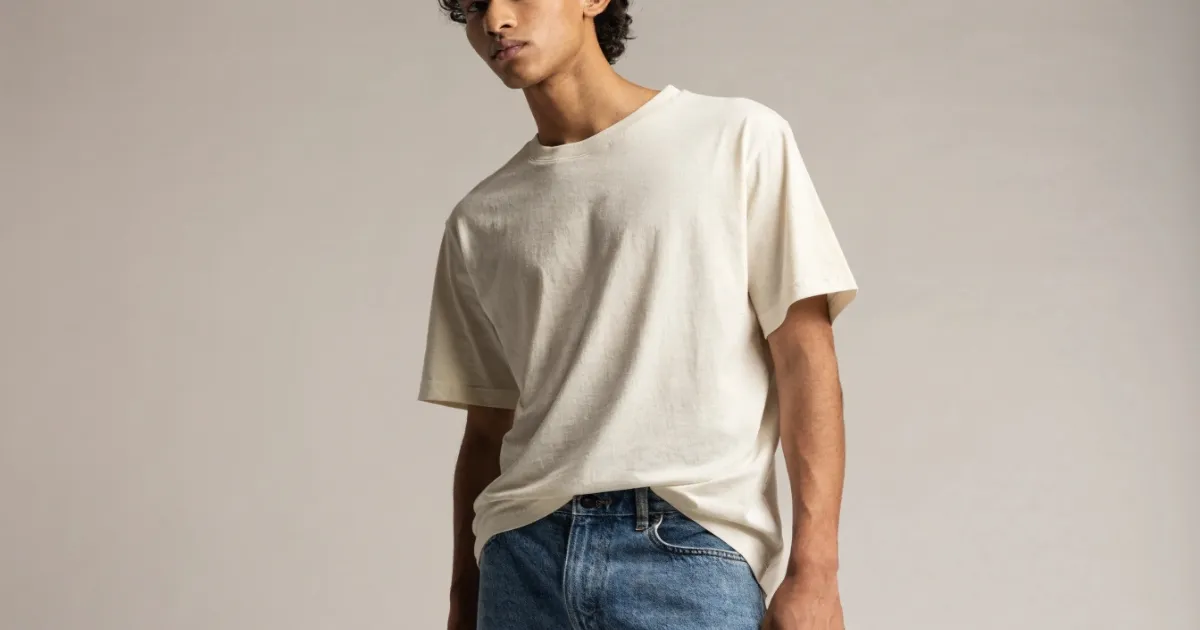
5. Relaxed-Fit T-Shirt
Category: Fit Type
- What it is: A T-shirt with more room than a regular fit, but without the exaggerated volume of an oversized tee.
- Key features: Extra ease through the chest and waist, more comfortable movement, and a cleaner shape than most oversized styles.
- Best for: Everyday wear, casual wardrobes, and buyers who want comfort without looking sloppy.
- What makes it different: It sits in the middle ground between regular fit and oversized fit, which makes it one of the most practical options for real-life wear.
- Possible drawbacks or limitations: If the fabric is too soft and the block is too loose, it can lose shape and start to look tired rather than relaxed.
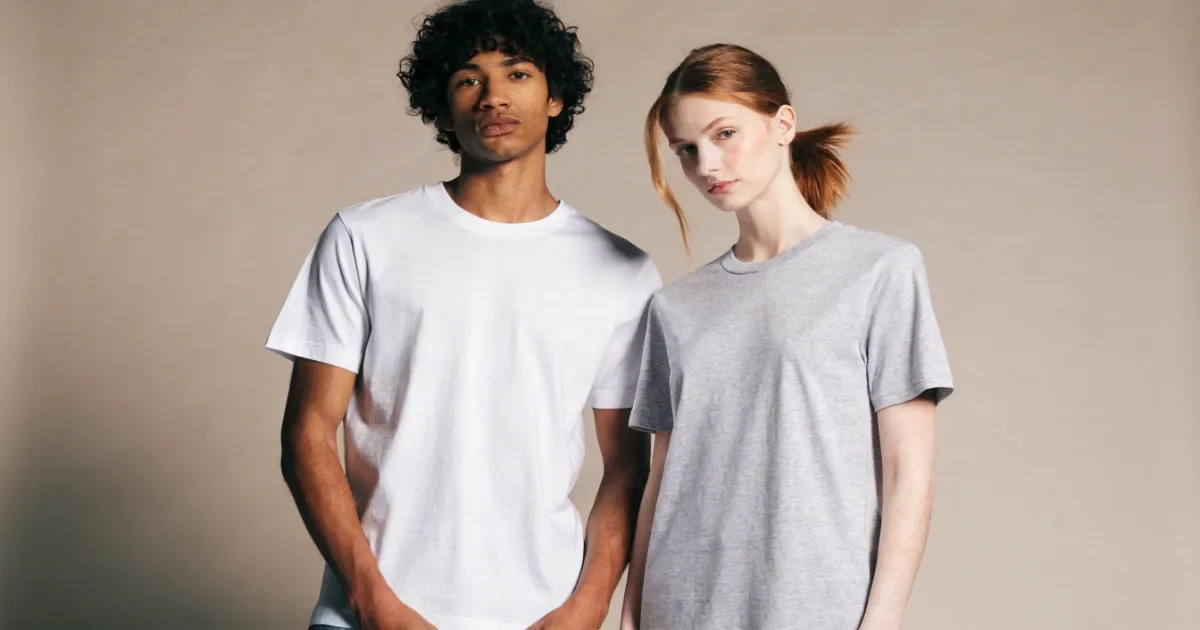
6. Regular-Fit T-Shirt
Category: Fit Type
- What it is: A balanced, “standard” fit—neither tight nor intentionally oversized.
- Key features: Shoulder seam sits near the shoulder bone; moderate chest/waist ease; hem around mid-hip.
- Best for: Most bodies, most occasions, most wardrobes.
- What makes it different: It’s the baseline fit block many brands start from.
- Possible drawbacks or limitations: If you want a sharp silhouette, regular fit can look boxy on some frames unless the fabric has good drape.
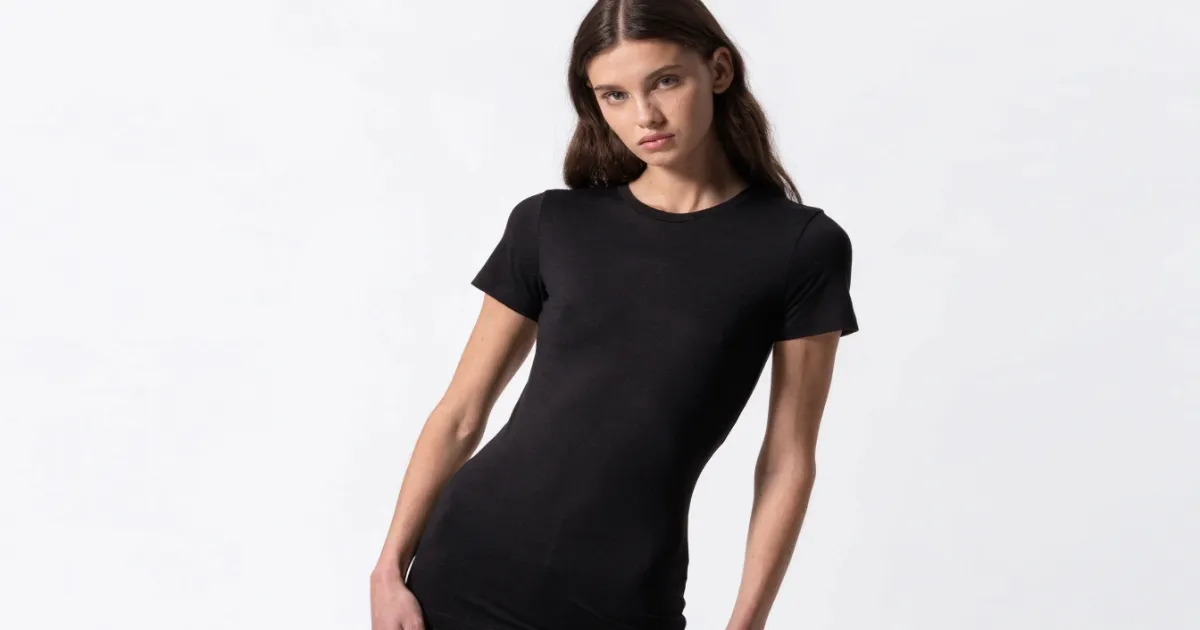
7. Slim-Fit T-Shirt
Category: Fit Type
- What it is: A closer-to-body fit through chest, waist, and sleeves.
- Key features: Narrower torso; more sleeve taper; often slightly shorter.
- Best for: Lean builds; outfits where you want a clean line under a jacket.
- What makes it different: Shows more body shape and looks “neater” when it fits correctly.
- Possible drawbacks or limitations: On broader chests/arms, slim fit can pull across the chest or ride up. It also shows sweat more readily in light colors.
Common mistake: many people assume slim fit automatically looks more polished. In reality, when the chest, sleeve, or waist is too tight, the tee starts showing pulling lines and stress points, which makes it look strained rather than refined.
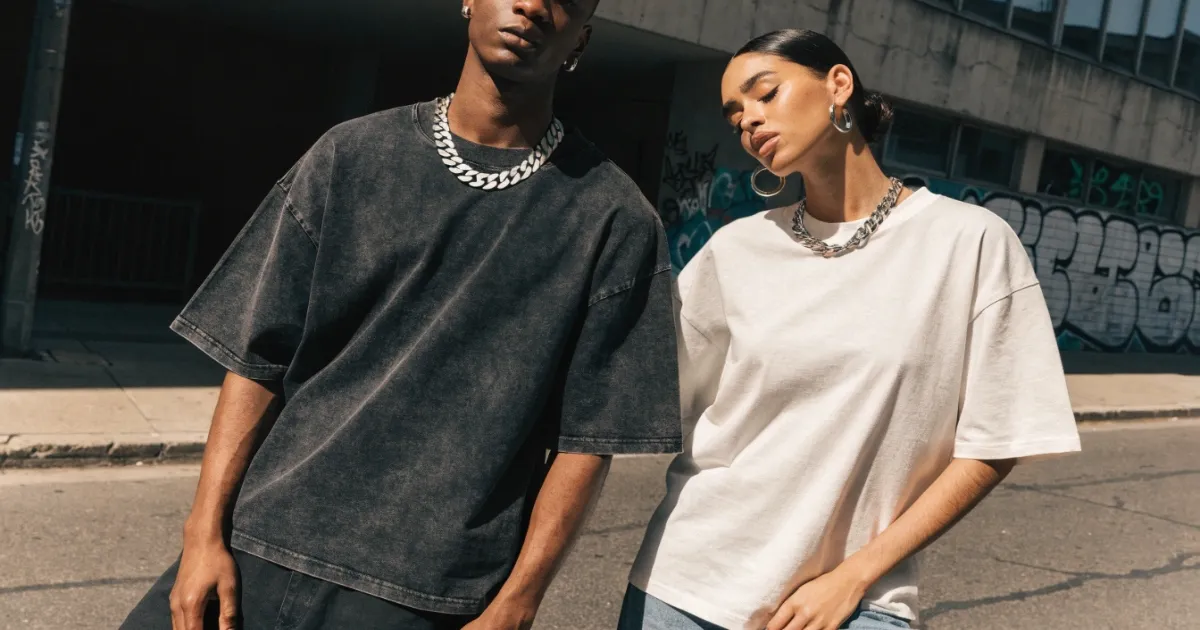
8. Oversized T-Shirt
Category: Fit Type
- What it is: Intentionally large through body and sleeves, often with dropped shoulders.
- Key features: Extra width; looser sleeves; sometimes longer length.
- Best for: Streetwear looks, casual comfort, layering over a tank or long-sleeve.
- What makes it different: What makes an oversized tee work is not just extra size, but how the added volume is balanced across the shoulder, sleeve, body width, and length.
- Possible drawbacks or limitations: Oversized without enough fabric weight can look sloppy or “clingy-baggy” (it hangs but also collapses). Common mistake: sizing up a regular tee does not create a good oversized silhouette. If the proportions are not reworked properly, the result often looks accidental and unbalanced instead of intentional.
Manufacturing note: A good oversized tee is not just a regular tee graded up. If the shoulder drop, sleeve opening, body width, and length are not rebalanced together, the result looks accidental instead of intentional.
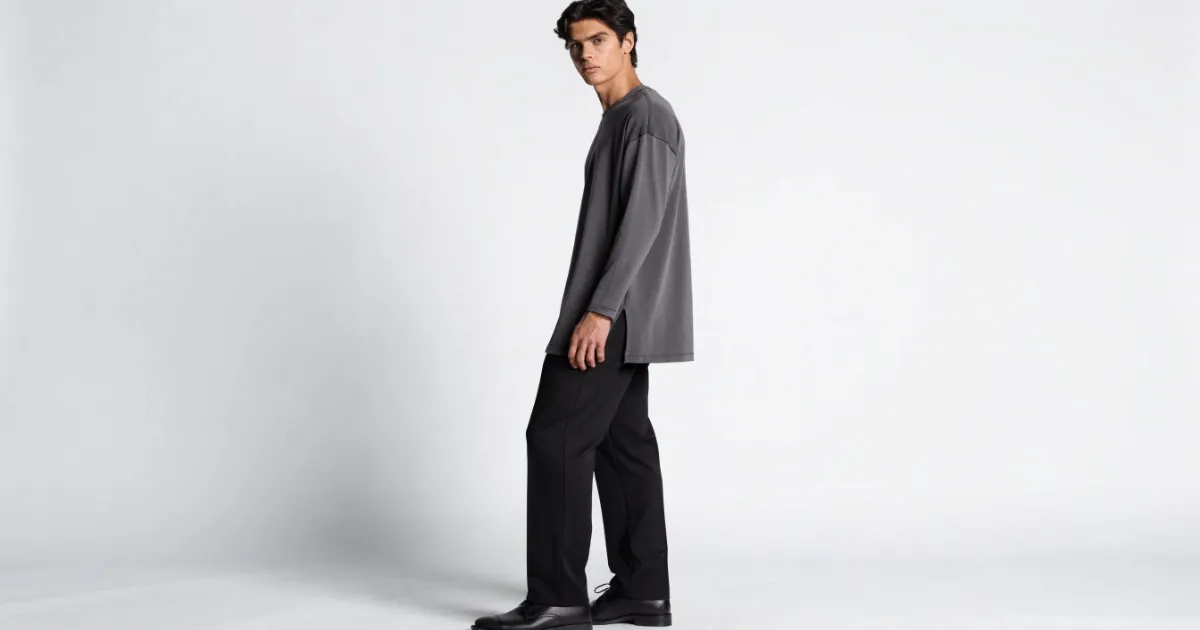
9. Longline T-Shirt
Category: Fit / Proportion Type
- What it is: A tee designed with extra body length.
- Key features: Hem falls lower than typical mid-hip length; often paired with slim pants.
- Best for: Taller bodies; layering where you want the tee to peek below a jacket/hoodie.
- What makes it different: Length changes proportions even if the width is regular.
- Possible drawbacks or limitations: Can look like it doesn’t fit if the rest of the outfit isn’t balanced (especially with loose pants).
10. Boxy T-Shirt
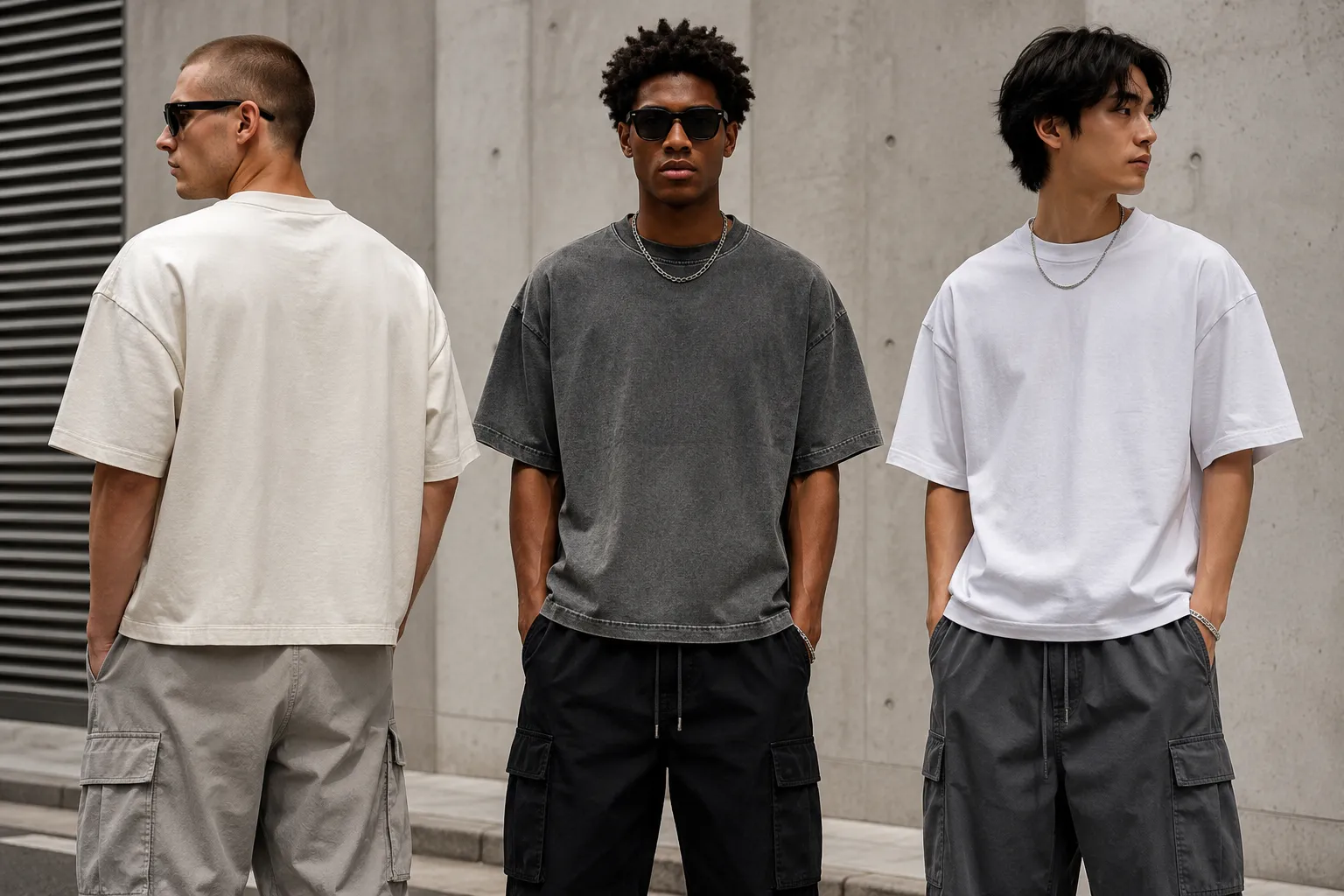
Category: Fit Type
- What it is: A squarer silhouette—wider body with less length (or less taper).
- Key features: Straight side seams; broader chest/waist; often a shorter, more “blocked” look.
- Best for: Modern casual outfits; streetwear; people who like structure.
- What makes it different: Compared to oversized, boxy is often shorter and more geometric.
- Possible drawbacks or limitations: Can visually widen the torso. If that’s not what you want, choose relaxed fit with better drape instead.
| Fit Type | Length | Width / Body Ease | Shoulder Shape | Best Use Case |
|---|---|---|---|---|
| Oversized | Usually longer, though it depends on the block | Very roomy through the chest and waist | Often dropped shoulders | Streetwear, layering, relaxed casual looks, volume-focused styling |
| Boxy | Usually shorter or more cropped in proportion | Wide and square through the body | Can be slightly dropped or extended, but more controlled than oversized | Modern casual outfits, structured silhouettes, fashion-forward basics |
| Relaxed | Standard to slightly longer length | More room than regular fit, but not exaggerated | Natural or slightly relaxed shoulder line | Everyday wear, easy casual styling, comfort without looking sloppy |
| Regular | Standard length | Balanced body ease, neither tight nor loose | Natural shoulder position | Daily basics, layering, low-risk wardrobe staple, broad consumer appeal |
T-Shirt Types by Sleeve and Construction
11. Drop Shoulder T-Shirt
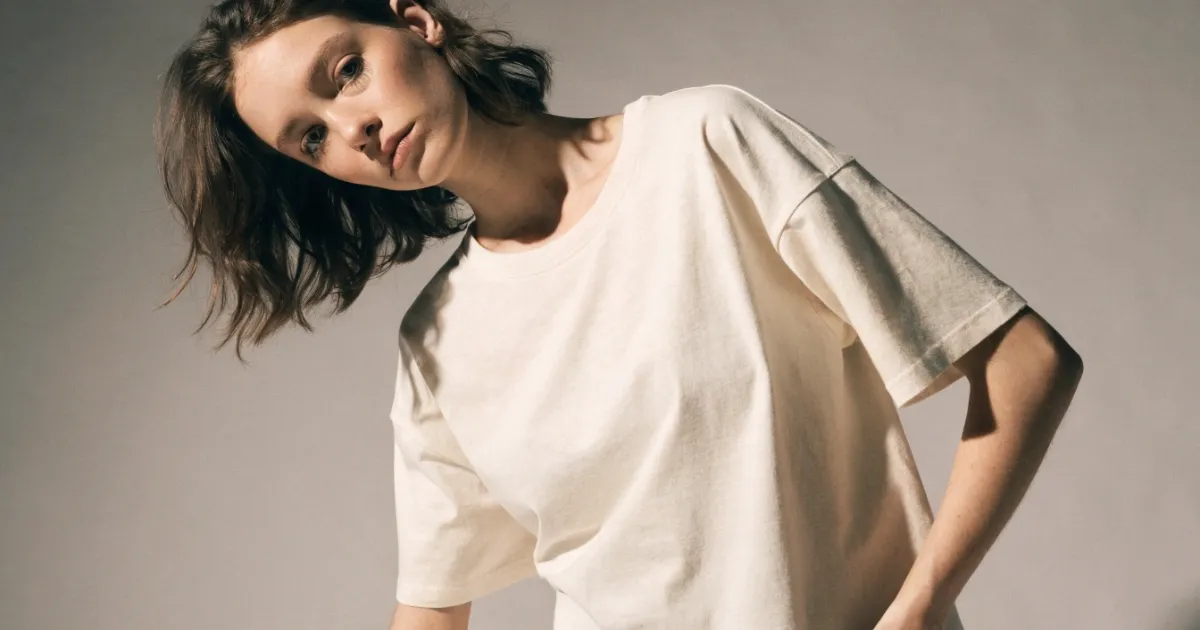
Category: Sleeve / Fit Hybrid Type
- What it is: A T-shirt where the shoulder seam sits lower than the natural shoulder line.
- Key features: Lower shoulder seam, looser upper-body feel, and a more relaxed visual shape.
- Best for: Casual styling, streetwear, and brands that want an easier relaxed silhouette without going fully oversized.
- What makes it different: The dropped seam changes the whole upper-body impression, making the tee look softer, roomier, and more current.
- Possible drawbacks or limitations: If the drop is too deep or the sleeve is too long, the tee can lose shape and look poorly fitted rather than intentionally relaxed.
12. Raglan Sleeve T-Shirt
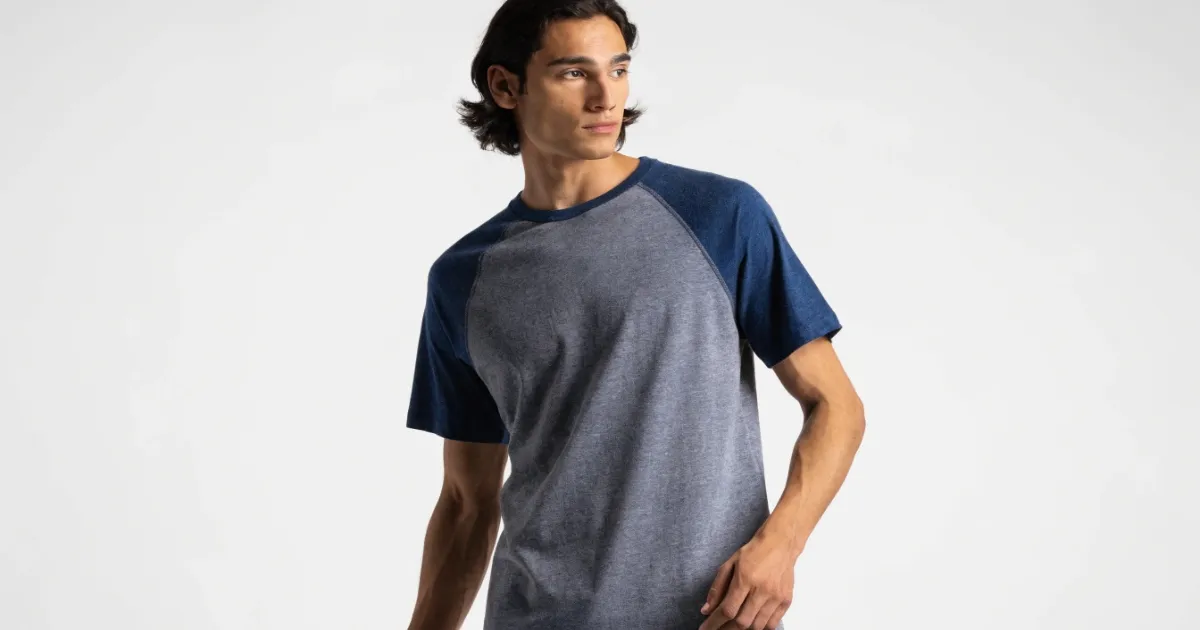
Category: Sleeve Type
- What it is: A sleeve style where the seam runs diagonally from underarm to neckline.
- Key features: No traditional shoulder seam; often contrast sleeves (“baseball tee” look).
- Best for: Sporty casual; broader shoulders; easy movement.
- What makes it different: The diagonal seam changes how the shoulder looks and how the tee moves.
- Possible drawbacks or limitations: Less “clean” under a blazer or structured jacket; seam placement can look off if sizing is wrong.
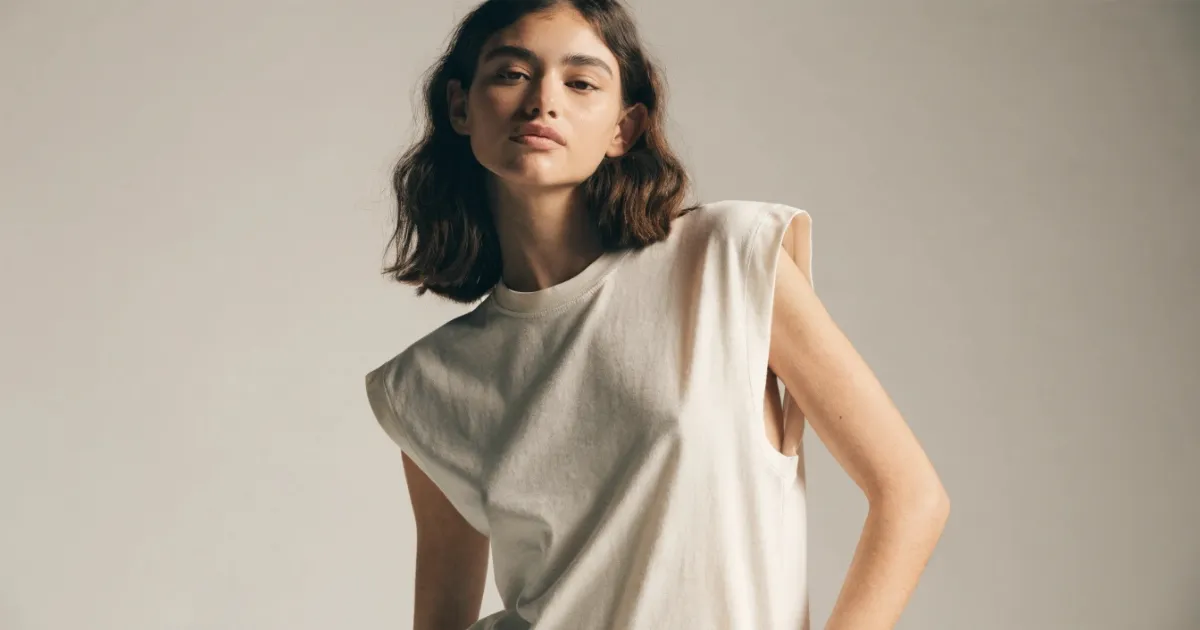
13. Sleeveless T-Shirt
Category: Sleeve Type
- What it is: A tee without sleeves (armholes finished).
- Key features: Cut-away sleeves; armhole binding/finish matters for durability.
- Best for: Summer heat; training; layering under overshirts.
- What makes it different: Maximum arm movement and ventilation.
- Possible drawbacks or limitations: Can look too casual for many settings; armholes can gape if fit is off.
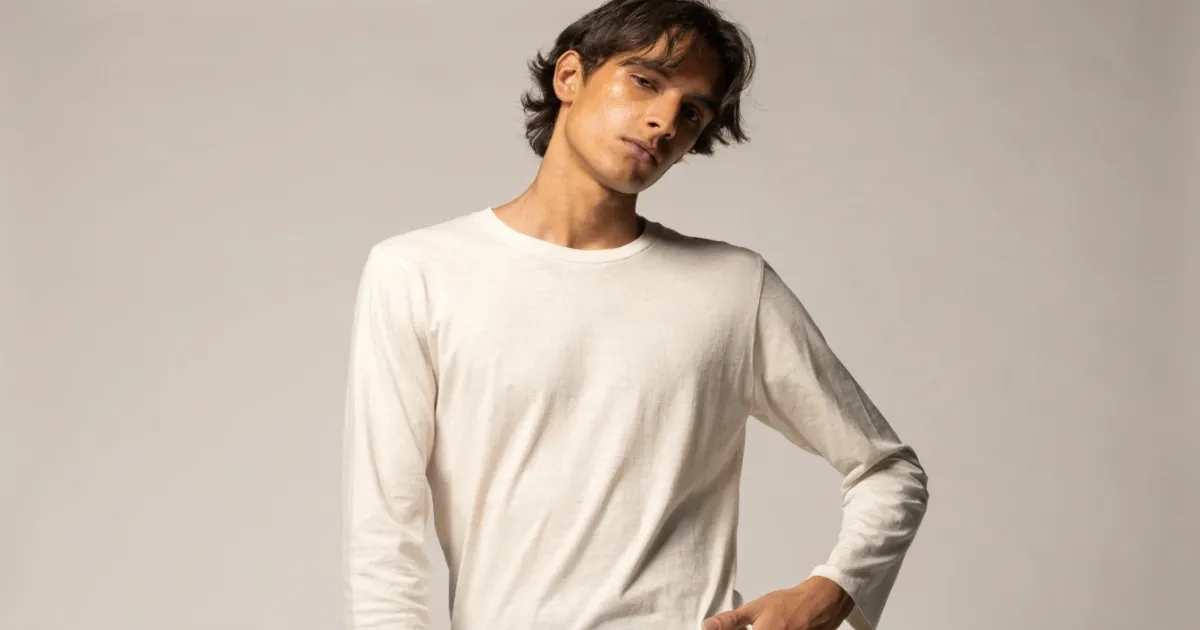
14. Long-Sleeve T-Shirt
Category: Sleeve Type
- What it is: A tee with full-length sleeves.
- Key features: Cuffs may be hemmed or ribbed; fabric weight matters more for comfort.
- Best for: Transitional seasons; layering; sun/bug protection.
- What makes it different: Feels more substantial than a short-sleeve tee without becoming a sweater.
- Possible drawbacks or limitations: Lightweight fabrics can twist in sleeves; heavy fabrics can feel bulky under jackets.
T-Shirt Types by Design and Function
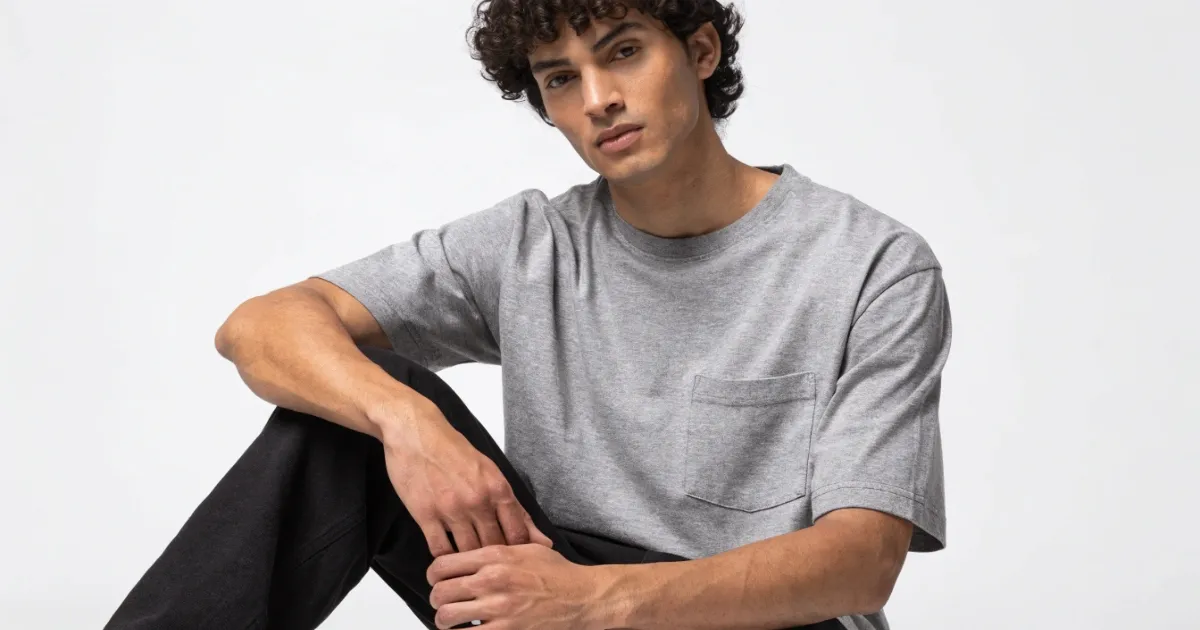
15. Pocket T-Shirt
Category: Design-Detail Type
- What it is: A tee with a chest pocket (usually left side).
- Key features: Patch pocket; can be functional or purely visual.
- Best for: Casual wear; adding interest to a plain outfit.
- What makes it different: The pocket breaks up the front panel visually.
- Possible drawbacks or limitations: Pockets can warp after washing, especially on lightweight fabrics, and can interfere with large chest prints.
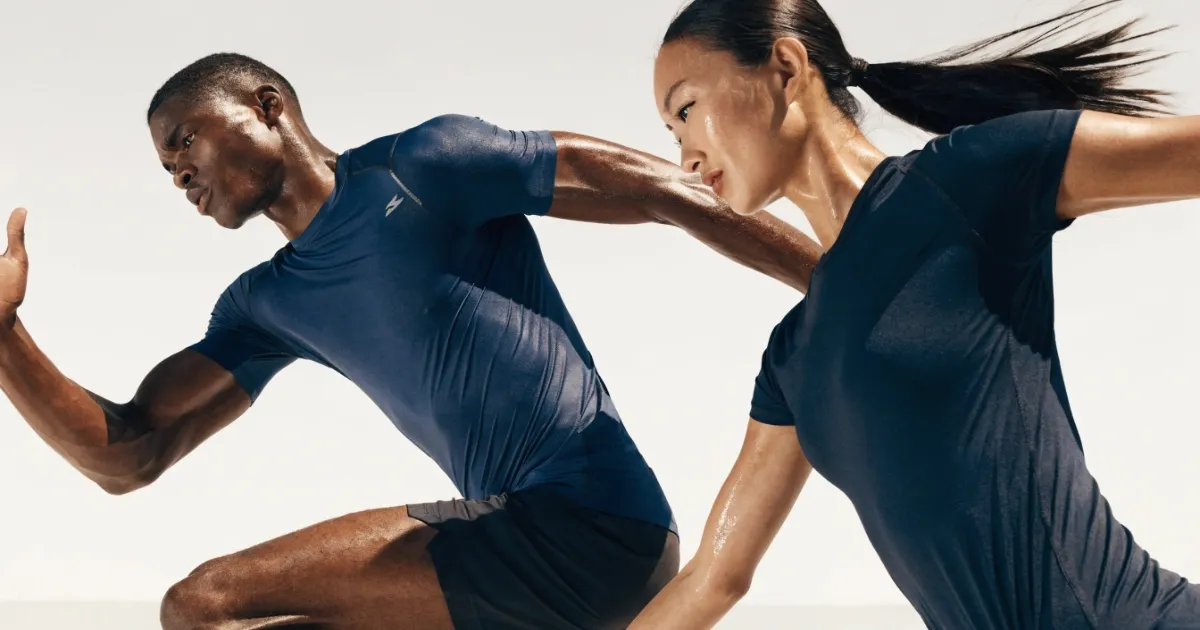
16. Performance T-Shirt
Category: Fabric / Function Type
- What it is: A T-shirt designed mainly for movement, sweat management, and repeated active use.
- Key features: Lightweight or technical fabric, faster drying3, better moisture handling, and easier maintenance.
- Best for: Sports, gym wear, uniforms, outdoor activity, and travel.
- What makes it different: Its priority is function first, rather than the traditional casual feel of a cotton tee.
- Possible drawbacks or limitations: Some performance tees feel less natural on the skin than cotton, and cheaper versions can look too synthetic for casual everyday styling.
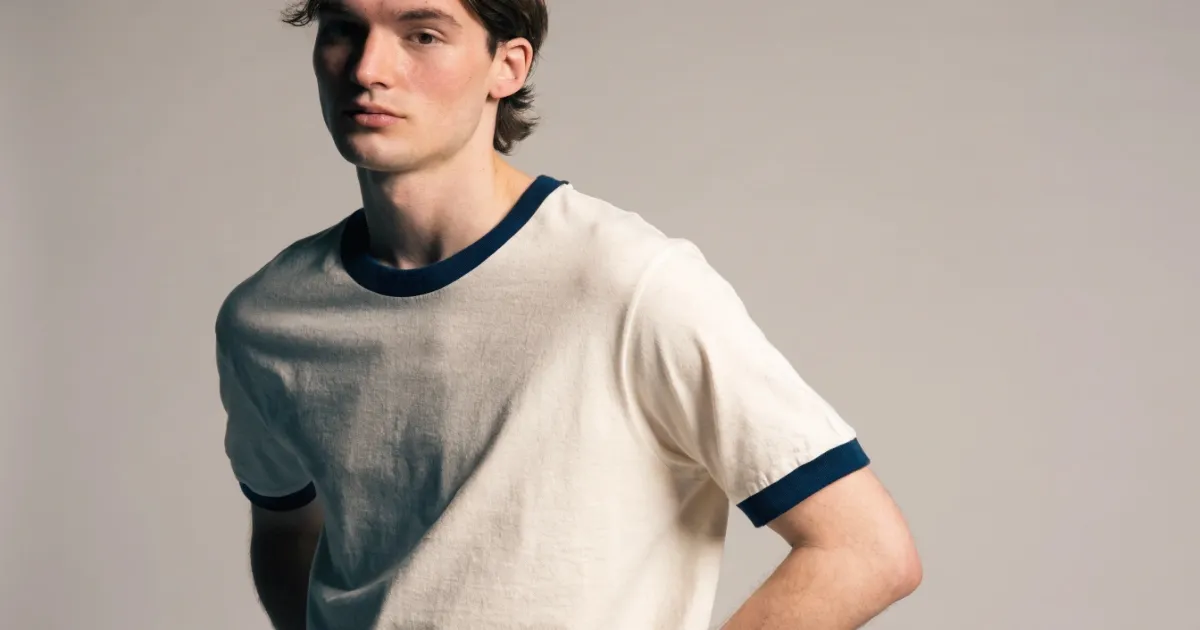
17. Ringer T-Shirt
Category: Design-Detail Type
- What it is: A tee with contrasting binding at the collar and sleeve hems.
- Key features: Contrast rib/binding details.
- Best for: Retro casual; adding visual detail without graphics.
- What makes it different: The contrast rib at the neck and sleeves gives the tee a clearer visual frame, which is why ringer styles often feel more styled than a plain basic tee.
- Possible drawbacks or limitations: Trim color matching and shrink behavior must be controlled, or the collar/sleeves can ripple after washing.
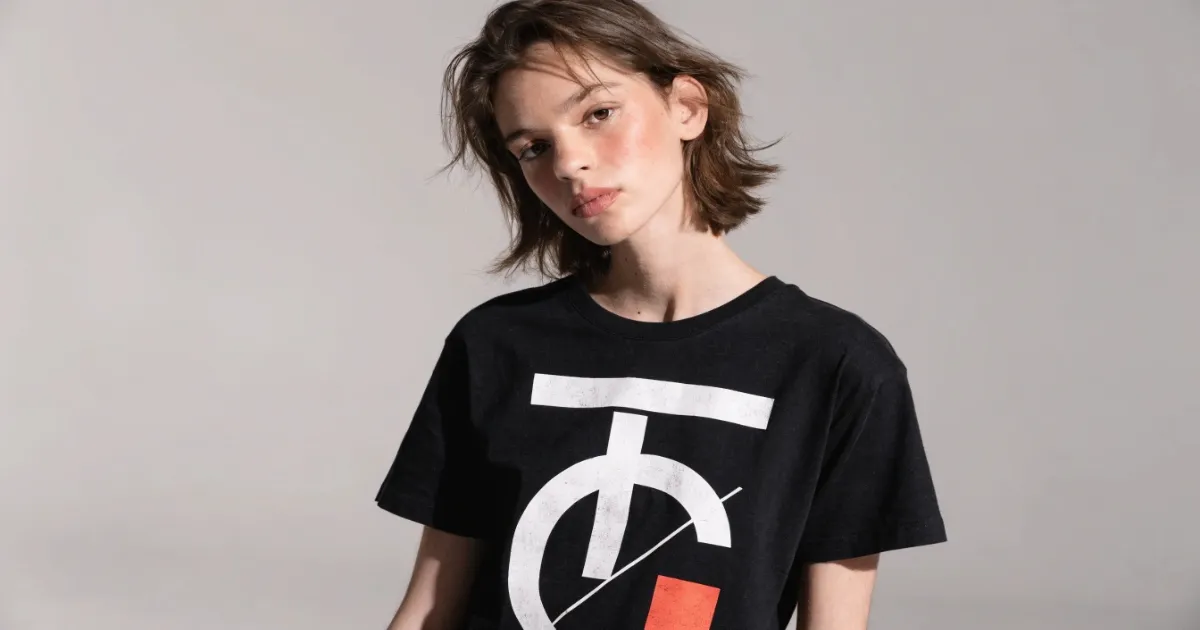
18. Graphic T-Shirt
Category: Design-Detail Type
- What it is: A tee featuring a printed graphic, logo, or illustration.
- Key features: Print placement and technique (screen print, DTG, etc.) impact feel and durability.
- Best for: Streetwear; brand building; expressive casual wear.
- What makes it different: In a graphic tee, the artwork may grab attention first, but the blank still decides whether the finished product feels cheap, average, or premium once worn.
- Possible drawbacks or limitations: Heavy prints can reduce breathability. Poor print choice on lightweight fabric can crack or distort over time.
Common mistake: people often judge graphic tees only by the artwork. But if the blank is weak, thin, unstable, or poorly shaped, even a strong design will still feel low quality once worn.
For brands: the blank matters as much as the artwork. A strong graphic placed on a weak tee still feels low quality. If the body shape, collar, or fabric does not support the concept, the print alone cannot create a premium result.
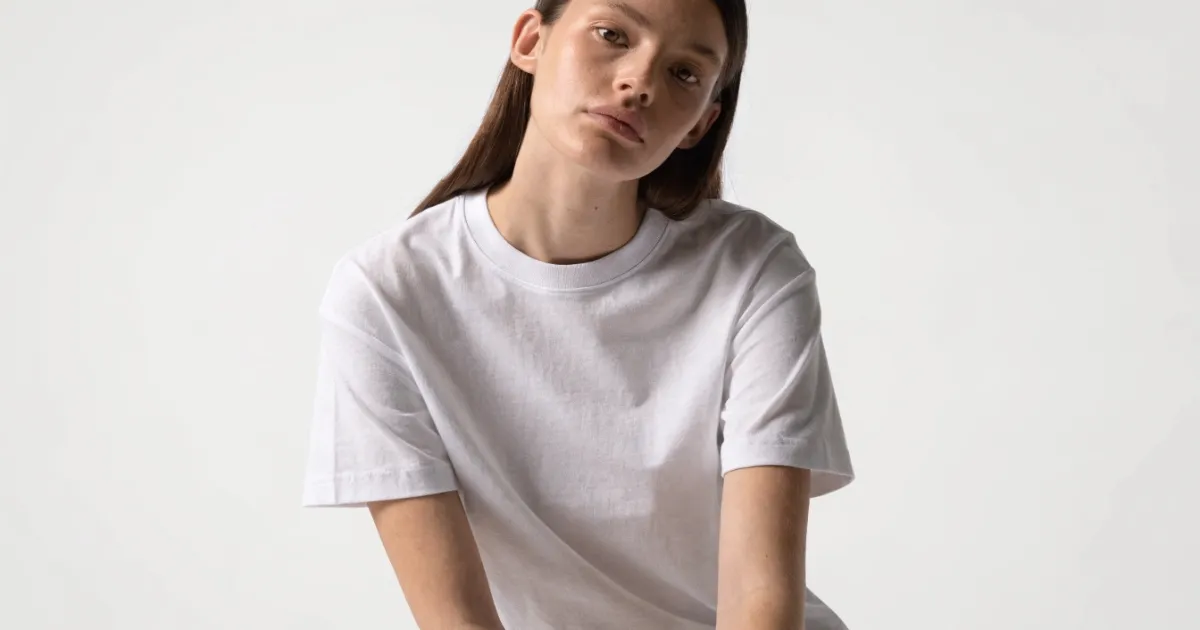
19. Plain T-Shirt
Category: Design-Detail Type
- What it is: A tee with no visible graphics—solid color or minimal branding.
- Key features: Fabric, fit, and construction quality become very noticeable.
- Best for: Wardrobe basics; minimal style; layering.
- What makes it different: A plain tee leaves nowhere to hide. Collar recovery, stitching consistency, fabric surface, and shrinkage control all become easier to notice when there is no print or trim detail to distract the eye.
- Possible drawbacks or limitations: Cheap plain tees look cheap fast—pilling, collar baconing, and fading show immediately.
For brands: plain tees are often the hardest product to fake with marketing. Without a graphic to distract the eye, buyers notice quality immediately. That makes plain tees one of the best tests of whether a factory can really deliver a clean, repeatable basic.
Manufacturing note: Plain tees look simple, but they are often the easiest place to spot weak quality control. Collar recovery, stitch balance, shrinkage control, and fabric surface all show immediately when there is no graphic to distract the eye.
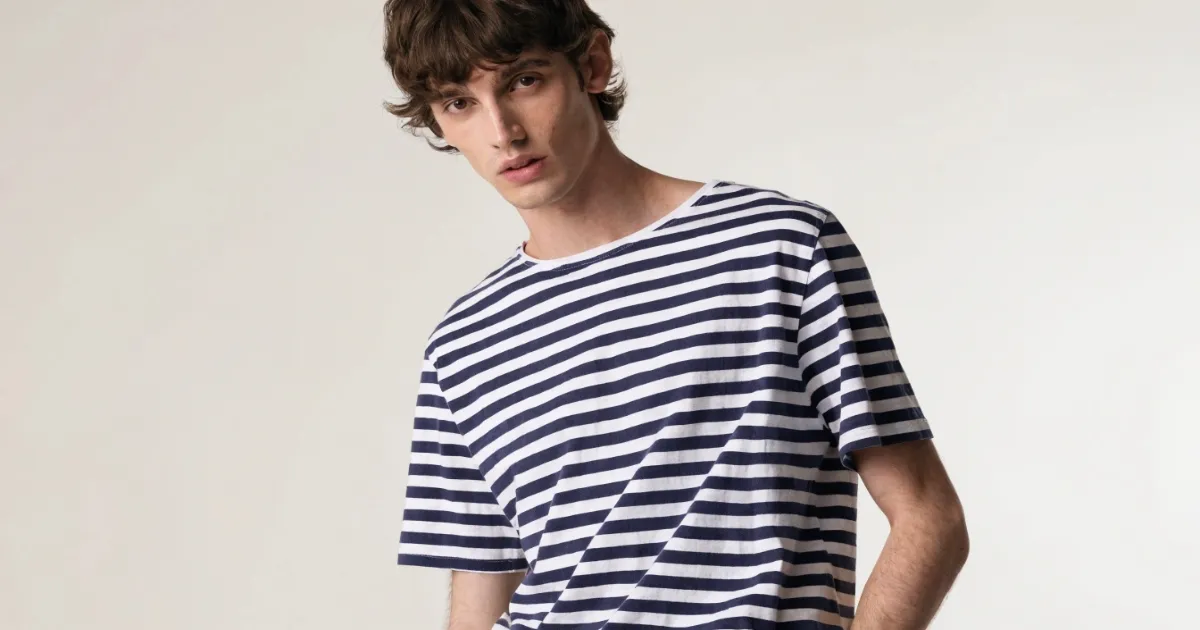
20. Striped T-Shirt
Category: Design-Detail Type
- What it is: A tee with horizontal or vertical stripes (yarn-dyed or printed).
- Key features: Stripe scale (thin vs bold) and alignment at seams.
- Best for: Casual outfits that need visual interest without graphics.
- What makes it different: Stripes change perceived proportions and can highlight fit.
- Possible drawbacks or limitations: Stripe matching at side seams adds cost and separates good manufacturing from sloppy production.
21. Heavyweight T-Shirt
Category: Fabric/Weight Type
- What it is: A tee made from thicker, denser fabric.
- Key features: Higher fabric weight (often described in GSM or oz/yd²); more structure.
- Best for: Streetwear, premium basics, cooler weather, tees that need to hold shape.
- What makes it different: Heavyweight tees usually hold more shape and sit slightly away from the body, which is why they often look sharper and more structured than lightweight tees in the same fit.
- Possible drawbacks or limitations: Can feel warm in hot climates. If the pattern is wrong, heaviness can amplify fit issues (tight collar, bulky sleeves).
Common mistake: many buyers think heavier automatically means better. But a heavyweight tee with the wrong neck rib, bulky sleeves, or a stiff body block can feel heavy without looking premium.
Manufacturing note: Heavyweight does not automatically mean premium. If the neck rib is too tight, the sleeve is too bulky, or the body block is too stiff, a heavyweight tee can feel heavy without looking refined.
For brands: heavyweight tees can support a premium or streetwear positioning, but only when the fit block, neck construction, and fabric behavior are all aligned. Otherwise, the product just feels heavy instead of elevated.
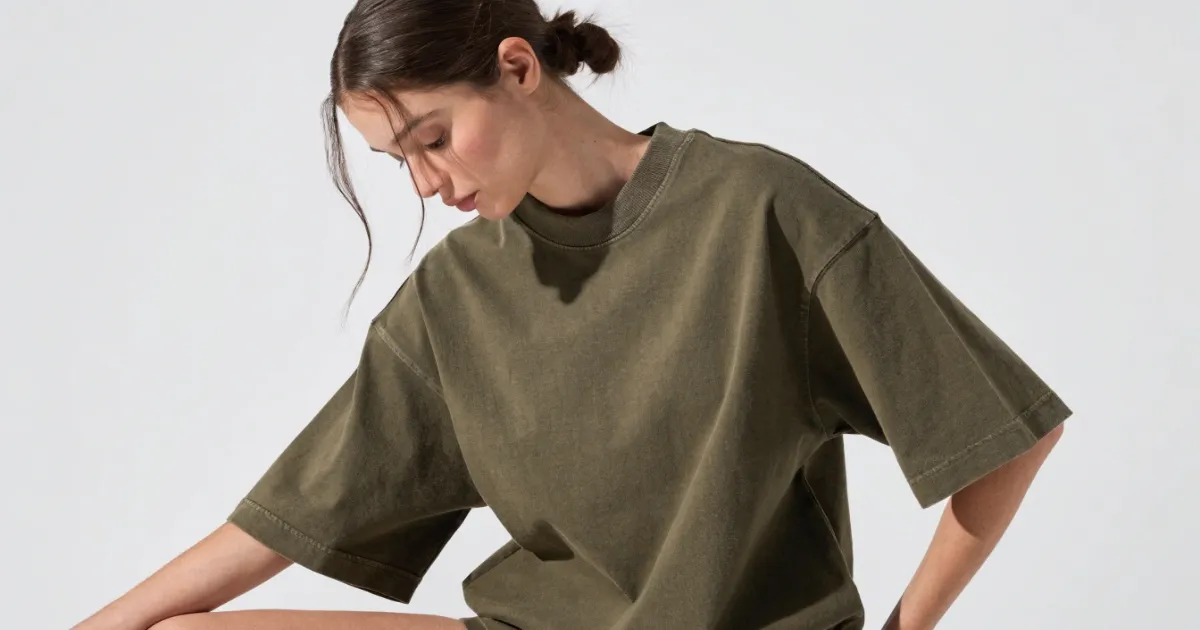
How to Choose the Right T-Shirt for Your Needs
If you remember one thing from this article, remember this:
start with purpose, then fit, then fabric, then design details.
Many buyers do the opposite.
They start with the name, or the look of a photo, and only think about fit and fabric after the purchase. That is one of the main reasons people end up with T-shirts that looked right online but felt wrong in real wear.
1) Start with the occasion
Ask yourself a simple question first:
Where will this T-shirt actually be worn?
- For daily basics, you need balance.
- For smart casual outfits, you need more structure.
- For summer, you need airflow and comfort.
- For streetwear, you need silhouette and fabric presence.
- For active use, you need function more than fashion detail.
A T-shirt that works well in one category can fail badly in another.
2) Then choose the fit
Once the use is clear, the next step is fit.
If you want a safe daily option, regular fit or relaxed fit is usually the most reliable.
If you want a cleaner line, slim fit may work better.
If you want a more directional or streetwear-driven look, oversized or boxy fit makes more sense.
A T-shirt can look correct on paper and still feel wrong on the body.
That is why fit should be judged by the shoulder, body ease, and length balance, not by the size label alone.
3) Then choose the fabric
After fit, fabric decides how the tee behaves in real life.
- Choose cotton if you want a classic casual feel and good breathability.
- Choose cotton blends if you want easier care and better shape stability.
- Choose performance fabrics if the tee needs to handle sweat, movement, or repeated active use.
- Choose lightweight fabrics if you want softness, airflow, and easier layering.
- Choose heavyweight fabrics if you want structure, a stronger silhouette, or a premium streetwear feel.
This is where many first-time buyers get it wrong.
They choose fabric by label only, instead of by the final effect they want.
On paper, two tees may sound similar. Once worn and washed, they can behave very differently.
If you’re developing a product line, don’t guess. Swatches and pre-production samples are cheaper than a warehouse of returns.
(If you want a transparent view of how a tee goes from fabric to finished product, Easson’s walkthrough on how T-shirts are made step by step can help you understand what changes when you adjust fabric and construction.)
4) Then consider design details
Design details come last because they should support the product, not rescue it.
A pocket, stripe, graphic, contrast rib, or placket can all add character.
But none of them will fix a weak fit or the wrong fabric.
That is why a well-made plain tee often beats a more decorated tee that is built on the wrong foundation.
If you're choosing T-shirts for a brand
If you are developing T-shirts for a brand, do not begin with trend words alone.
Start with:
- your target customer
- your selling price
- the main use case
- the silhouette you want to own
A first-drop basic tee, a streetwear graphic tee, and a performance tee may all look similar in a flat sketch.
But in development, they need very different priorities.
- For basic retail tees: prioritize wearable fit, stable fabric, and easy repeatability.
- For streetwear tees: prioritize silhouette, fabric weight, collar quality, and blank structure.
- For performance tees: prioritize comfort in movement, durability, and moisture handling.
For brands, wrong choices are more expensive.
A single bad fit decision or wrong fabric direction can lead to weak sampling, poor sell-through, or unnecessary rework in bulk.
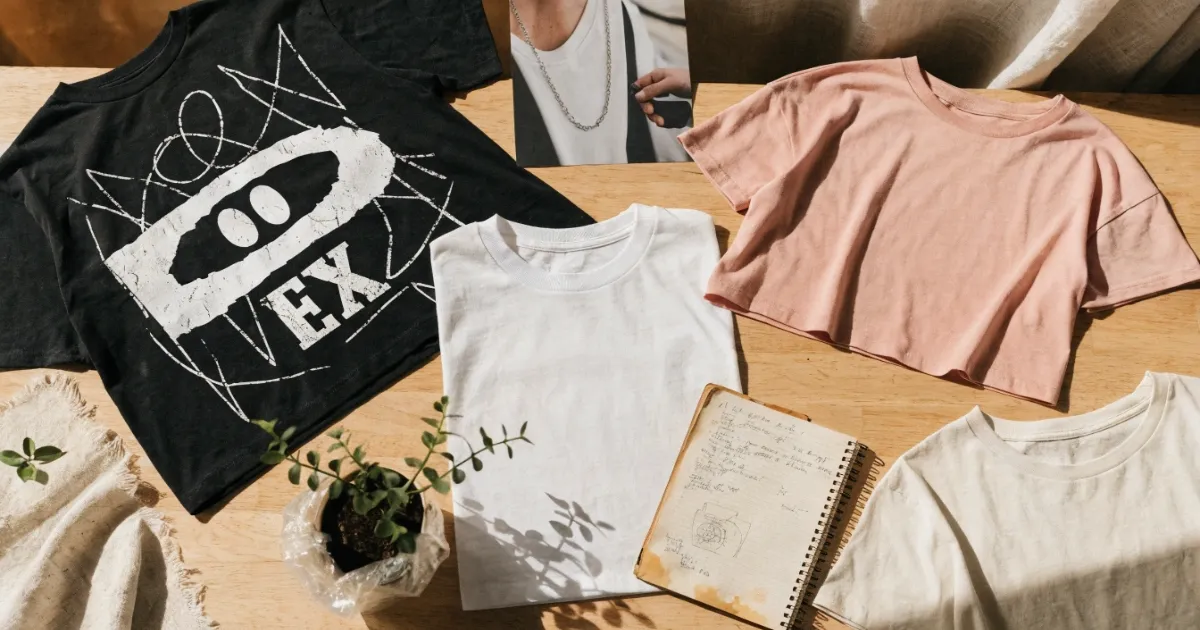
For Clothing Brands: How Style Affects Production
T-shirt style affects the pattern, fabric consumption, sewing operations, decoration compatibility, sampling difficulty, production cost, and quality-control requirements. A regular crew-neck T-shirt is generally easier to produce consistently than an oversized, boxy, raglan, Henley, or heavily decorated style.
For clothing brands, choosing a T-shirt style is not only a design decision. Each change to the neckline, shoulder, sleeve, body width, or length can affect how the garment is patterned, sampled, sewn, and graded across sizes.
Fit Changes the Pattern and Fabric Consumption
Regular, slim, relaxed, oversized, and boxy T-shirts require different pattern blocks.
A regular-fit T-shirt normally uses a balanced shoulder position, body width, sleeve opening, and garment length. It is often a practical starting point for basic collections because the proportions are familiar and easier to grade across a broad size range.
Oversized and boxy T-shirts require more deliberate pattern development. An oversized tee is not simply a regular T-shirt made one or two sizes larger. The shoulder drop, sleeve width, chest measurement, body length, and armhole shape must be adjusted together.
Boxy styles create a different challenge. They are usually wider and shorter in proportion, so small changes to body length or sleeve shape can noticeably affect the finished silhouette. These styles may also consume more fabric because of their wider pattern pieces, even when the garment is shorter.
Neckline Design Affects Sewing and Quality Control
The neckline is one of the first areas customers notice, especially on plain or minimally branded T-shirts.
A standard crew neck is relatively straightforward, but the rib width, stretch, recovery, and shrinkage must still be controlled. If the neck rib is too tight, it can pull the body fabric. If it is too loose, the collar may ripple or lose shape after washing.
Other necklines require additional attention:
- V-necks need an accurate and symmetrical center point.
- Scoop and boat necks require stable finishing to prevent stretching or gaping.
- Henley T-shirts add a front placket, buttons, reinforcement, and extra sewing operations.
- Polo styles require collar construction, placket alignment, and stronger shape control.
More complex necklines generally involve more components, additional workmanship, and more potential quality-control points.
Sleeve and Shoulder Construction Changes the Silhouette
Set-in sleeves, dropped shoulders, raglan sleeves, and sleeveless designs are built differently.
A standard set-in sleeve has a seam around the natural armhole. A dropped-shoulder T-shirt moves that seam farther down the upper arm, changing the sleeve angle and overall balance of the garment.
Raglan sleeves extend from the underarm to the neckline. This construction can improve freedom of movement and create a sporty appearance, but the diagonal seams must be balanced carefully. Contrast-colored raglan sleeves also require accurate color matching and seam alignment.
Sleeveless and cap-sleeve styles need well-shaped armholes. If the armhole is too large, it may gape. If it is too small, it can restrict movement or feel uncomfortable.
Fabric Must Support the Intended Style
The same pattern can look very different when made in different fabrics.
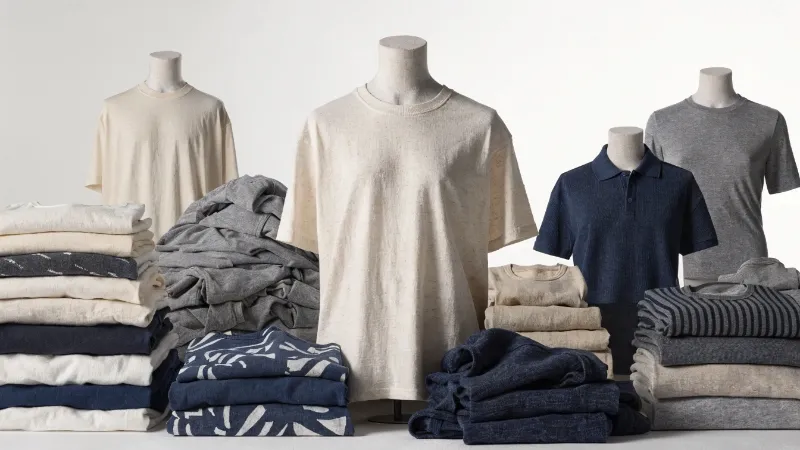
Lightweight jersey usually creates a softer, more fluid silhouette. It can work well for summer, layering, slim-fit, and relaxed T-shirts, but it may not provide enough structure for some oversized or boxy styles.
Midweight and heavyweight fabrics hold their shape more clearly, making them popular for premium basics and streetwear T-shirts. However, heavier fabric does not automatically create a premium product. The neckline, sleeve shape, seam construction, and pattern proportions still need to match the fabric.
Before bulk production, brands should evaluate:
- Fabric composition and GSM
- Shrinkage after washing
- Fabric twisting or distortion
- Colorfastness
- Pilling resistance
- Surface suitability for printing or embroidery
- Drape and shape retention
A fabric swatch can show color and handfeel, but a finished sample is still needed to confirm how the fabric works with the chosen silhouette.
Design Details Add Production Operations
Details such as pockets, contrast ribs, panels, graphics, embroidery, and custom trims can make a T-shirt more distinctive, but they also add production requirements.
For example:
- Pocket placement must remain consistent across sizes.
- Ringer T-shirts require matching or contrasting rib trims with compatible shrinkage.
- Large prints must suit the fabric weight, stretch, and surface.
- Embroidery may require backing or reinforcement to prevent distortion.
- Stripe patterns may need alignment at the side seams.
- Custom labels, neck prints, hangtags, and packaging add sourcing and approval steps.
These details should be confirmed before the final quotation because they can affect material cost, labor, MOQ, sampling time, and bulk-production lead time.
Production Priorities for Common T-Shirt Styles
| T-Shirt Style | Main Production Priority | Common Risk |
|---|---|---|
| Regular crew neck | Stable fit, collar recovery, shrinkage control | Twisted body or loose collar after washing |
| Slim fit | Accurate chest, waist, sleeve, and armhole measurements | Pulling lines or restricted movement |
| Oversized fit | Balanced shoulder drop, sleeve volume, width, and length | Looking like an incorrectly sized regular tee |
| Boxy fit | Controlled width-to-length proportion | Appearing too wide, short, or unbalanced |
| V-neck or scoop neck | Neckline symmetry and stability | Uneven shape, stretching, or gaping |
| Henley or polo | Placket and collar construction | Puckering, misalignment, or collar deformation |
| Raglan T-shirt | Sleeve seam balance and movement | Uneven diagonal seams or poor color matching |
| Graphic T-shirt | Blank quality and decoration compatibility | Cracking, distortion, heavy handfeel, or poor placement |
| Heavyweight T-shirt | Fabric structure, seam bulk, and collar balance | Feeling stiff or bulky rather than premium |
What Brands Should Confirm Before Sampling
Before asking a manufacturer to develop or quote a T-shirt, a brand should provide:
- The intended T-shirt style and target customer
- Reference images or a technical pack
- Target fit and base sample size
- Size chart and required size range
- Fabric composition and preferred GSM
- Color or Pantone references
- Print, embroidery, or other decoration details
- Logo dimensions and placement
- Label, hangtag, packaging, and trim requirements
- Estimated quantity per design and color
The clearer these details are, the easier it is for the manufacturer to select the correct pattern, fabric, construction method, and quotation basis. This also reduces unnecessary sample revisions before bulk production.
How Fabric Affects Comfort, Drape, and Use
Fabric is one of the biggest reasons two T-shirts that look similar on a screen can feel completely different in real life.
Most buyers talk about softness first, but softness alone is not enough to judge a tee well. A more useful way to think about fabric is to look at five real outcomes:
- breathability
- drape vs structure
- durability
- shape stability after washing
- how the fabric feels on the skin
These factors influence whether a tee works as a summer basic, a premium streetwear blank, a smart casual top, or a product that survives repeated washing3.
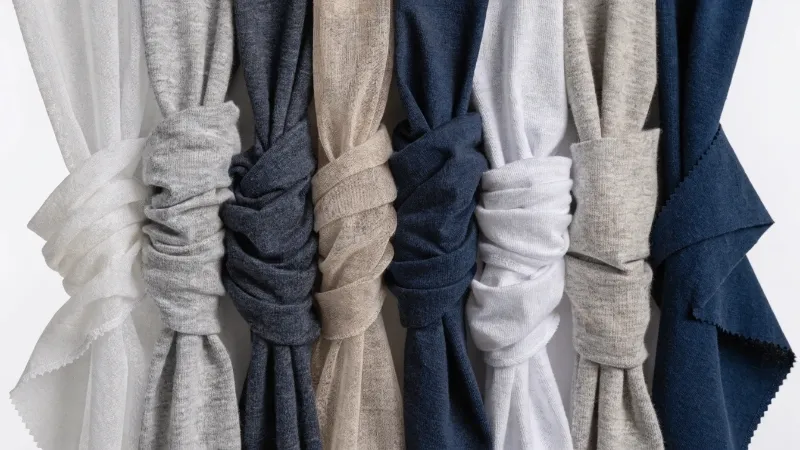
100% cotton
100% cotton remains the default choice for many T-shirts because it is breathable, familiar, and comfortable for everyday wear.
But not all cotton tees feel the same. Yarn quality, knitting method, finishing, and fabric weight all affect the result. Some cotton tees feel soft and fluid4. Others feel dry, crisp, or more structured.
This is why “100% cotton” by itself is not enough to tell you whether the tee will feel premium.
Best for: classic daily wear, natural-fiber basics, and buyers who prioritize comfort and breathability.
Less ideal for: products that need the easiest care, faster drying, or stronger shape retention.
Good choice for brands if: you want a classic positioning and your target customer expects a familiar cotton feel.
Cotton blends
Cotton blends are often more practical than people expect.
By blending cotton with polyester or other fibers, brands can improve recovery, reduce wrinkling, and make the tee easier to care for. For many real-world customers, that matters more than a fiber label alone.
This is especially useful in products that will be washed often and worn hard.
Best for: easy-care basics, uniforms, entry-level product lines, and customers who want less maintenance.
Less ideal for: brands that want a fully natural-fiber message or a more traditional cotton story.
Good choice for brands if: you want fewer complaints about shape loss, easier everyday care, and a safer first production run.
Polyester and performance fabrics
Performance fabrics are designed for use, not just feel.
They are often chosen for active wear, travel, uniforms, and moisture-heavy situations because they manage sweat better and usually dry faster than standard cotton jerseys.
That said, they do not behave the same way as cotton. Some performance tees feel slicker, some cling more easily, and some can feel warmer in still heat even if they handle sweat better during movement.
Best for: sports, active use, training, uniforms, and travel-focused products.
Less ideal for: buyers who want the most natural handfeel or a more classic casual T-shirt character.
Good choice for brands if: the product needs to perform during movement, frequent washing, or high-use environments.
Lightweight vs heavyweight T-shirts
Weight changes both feel and appearance.
A lightweight T-shirt usually feels cooler, softer, and more flexible. It is often the easier choice for hot weather or for customers who prefer a more fluid drape.
A heavyweight T-shirt usually feels more substantial and structured. It tends to hold its silhouette better, which is why it is popular in premium basics and streetwear-oriented products.
But heavier does not always mean better. A heavyweight tee in the wrong fit block can feel bulky, hot, and awkward instead of premium.
Lightweight is best for: hot climates, layering, drapey casual wear, and soft basics.
Heavyweight is best for: structured silhouettes, premium basics, cooler weather, and streetwear blanks.
Less ideal if: the climate, styling goal, or target customer does not match the weight.
Why fabric matters so much in buying and development
A plain tee exposes fabric quality immediately.
An oversized tee depends on fabric behavior to hold the right shape.
A graphic tee relies on the blank to support the print.
A smart casual knit top needs enough structure to stay neat.
This is why fabric should never be treated as a secondary detail.
For personal buyers, fabric determines whether the tee feels right after real wear and washing.
For brands, fabric determines whether the product behaves the way the concept promised.
If you are choosing T-shirts for a brand, a good rule is simple:
do not choose fabric only by fiber content. Choose it by the final effect you want on the body.
Final Thoughts: Focus on Fit, Fabric, and Purpose
There are many different types of T-shirts, but the name only tells one part of the story.
A crew neck can be slim or oversized.
A graphic tee can be lightweight or heavyweight.
A plain tee can feel premium or cheap depending on fabric, collar, and construction.
That is why the better way to choose a T-shirt is to look beyond the label.
For personal buyers, that means fewer disappointing purchases.
For brands, that means fewer costly mistakes in sampling and development.
The most reliable method is simple:
- start with purpose
- choose the right fit
- select the right fabric
- then add the details that support the product
If you approach T-shirts this way, you make better decisions whether you are buying for yourself or developing for a brand.
If you need help reviewing fit blocks, fabrics, or product details before moving into bulk production, working with an experienced apparel manufacturer can make the process much smoother.
Understand what a Henley shirt is, how the button placket works, and why it sits between a T-shirt and a polo. ↩
Get a quick overview of polo shirts, including collar structure, knit construction, and smart-casual use cases. ↩
Understand how textile washing tests evaluate shrinkage, color stability, fabric durability, and overall garment performance after laundering. ↩
Learn how performance fabrics manage sweat and moisture, and why synthetic fabrics are widely used in sports and activewear T-shirts. ↩