
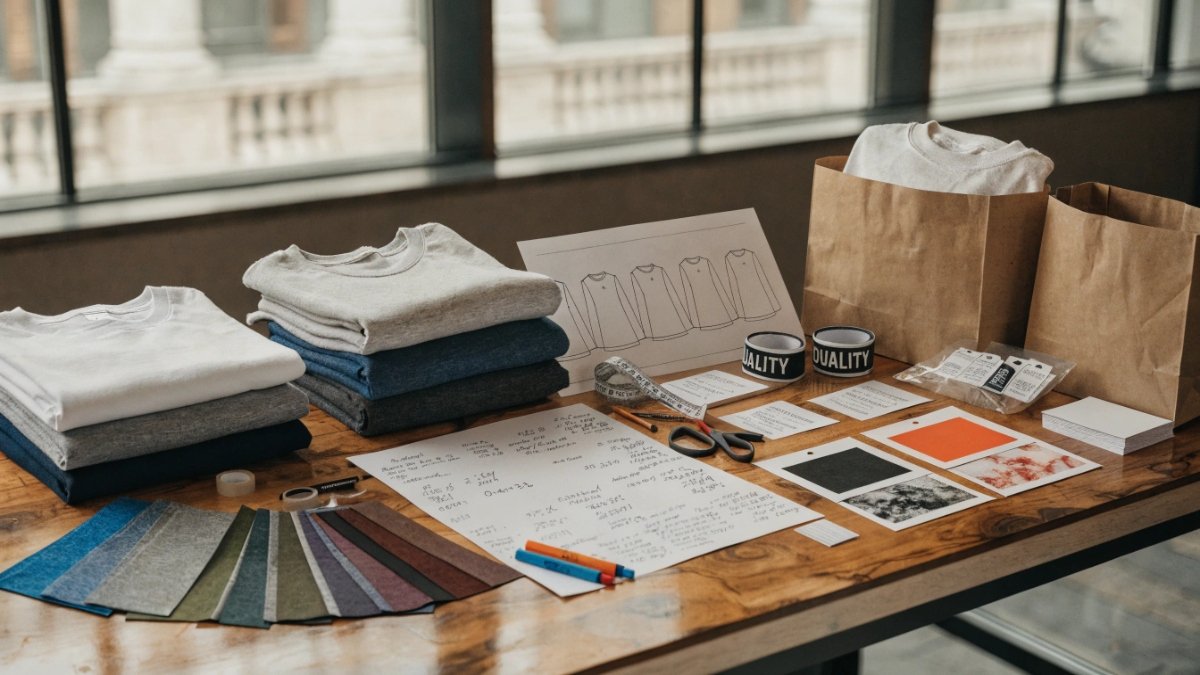
If you have ever asked two factories for the same t-shirt and received two very different prices, you are not alone. This is one of the most common problems new brand owners face when they start sourcing custom t-shirts.
The issue is not just the quote itself. The real issue is that many buyers compare prices without comparing the full product specification behind those prices. A t-shirt quote only becomes meaningful when you know exactly what fabric, weight, fit, decoration, trims, and packaging are included.
After more than 20 years in garment manufacturing, I can tell you that new buyers often focus on the wrong number first. They ask for the cheapest quote before they have even confirmed the fabric, GSM1, print method, label requirements, or packaging details. But a 160 GSM basic cotton tee, a 220 GSM heavyweight tee, and an oversized washed fashion tee are all “t-shirts,” and they should not be priced the same way.
This guide will help you look at t-shirt cost the way experienced manufacturers and serious buyers do: by understanding the cost structure behind the quote, not just the final number on the spreadsheet.
About the author / factory perspective:
This article is written from the perspective of a garment manufacturer with more than 20 years of production experience in knit apparel. Our team works with custom t-shirts, polos, hoodies, sweatshirts, and other private label garments for growing brands. Most of the cost advice in this guide comes from real factory-side work: quoting, sampling, sourcing fabric, checking decoration methods, and helping buyers avoid unnecessary cost mistakes before bulk production.
How Much Does It Cost to Make a T-Shirt in 2026?
Many buyers want a simple answer to this question, but in real production there is no single fixed price for a custom t-shirt. The cost depends on the spec. Fabric composition, fabric weight, fit, print method, order quantity, trims, packaging, and shipping terms all affect the final number.
As a rough reference, a simple custom cotton t-shirt with basic decoration will usually cost much less than a premium heavyweight fashion tee with oversized fit, special washes, custom labels, and more complex packaging. That is why experienced buyers do not compare quotes by piece price alone. They compare the full specification behind the price.
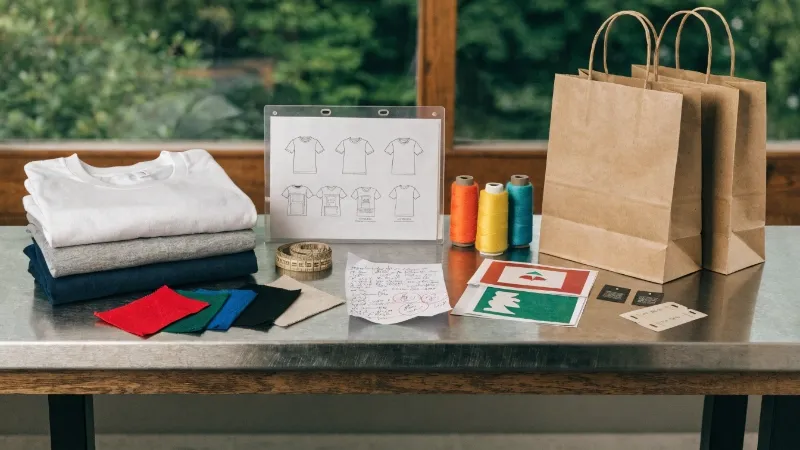
For example, these three products may all be described as “custom t-shirts,” but they are completely different from a costing point of view:
- a lightweight promotional tee
- a standard retail cotton t-shirt with chest print
- a heavyweight oversized streetwear tee with custom trims
Three Realistic Costing Scenarios
To make the price discussion more practical, here are three simplified examples. These are not universal prices, but they reflect the way a manufacturer typically thinks about cost.
For many new brands, budgeting becomes easier when you group t-shirts into basic, mid-range, and premium levels. This does not replace a formal quote, but it gives you a more realistic way to plan your product budget from the beginning.
| T-Shirt Type | Basic Spec Assumption | Typical Factory Cost Direction |
|---|---|---|
| Lightweight promotional tee | Lightweight cotton or cotton blend, simple fit, basic print, standard packaging, larger quantity | Usually the lowest-cost option |
| Standard retail custom tee | 100% cotton, medium GSM, regular fit, chest print, basic neck label, standard packaging | Mid-range cost level |
| Heavyweight fashion or streetwear tee | 220 GSM or similar heavyweight fabric, oversized fit, larger print area or embroidery, custom trims, better packaging | Usually the highest-cost option |
In real production, even one change in GSM, fit, print size, or packaging can move a style from one cost level to another. That is why buyers should never compare prices without comparing the spec first.
For budgeting purposes, many new brands find it helpful to think in levels rather than in one fixed number. A basic promotional t-shirt, a standard retail t-shirt, and a heavyweight fashion tee usually belong to three different budget levels, even before shipping is added.
If you want a useful quote, the first step is not asking for the lowest price. The first step is making sure the factory is quoting the same product you actually want to produce.
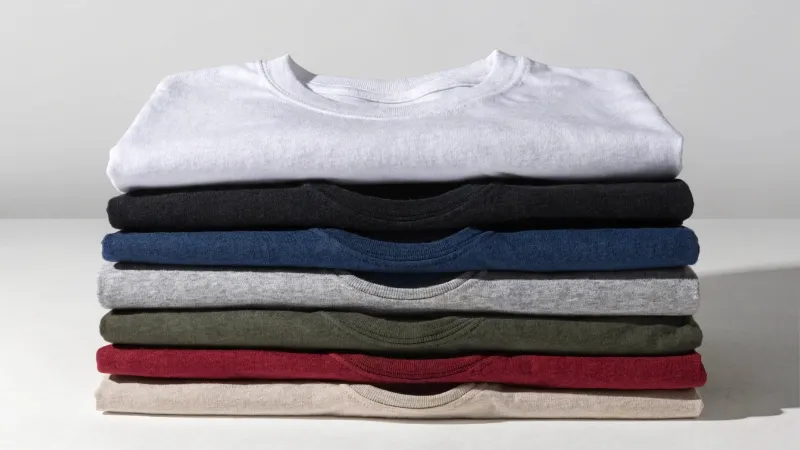
What Actually Determines the Cost of a T-Shirt?
Two t-shirts can look similar in photos and still have very different production costs. In real manufacturing, small changes in fabric, fit, print method, and order quantity can change the quote more than most new buyers expect.
In most factory quotes, the biggest cost drivers are fabric, order quantity, construction, decoration, and finishing details. Shipping terms and destination market can also affect the final landed cost. That is why two suppliers may quote very different prices even when the reference photo looks almost the same.
When a buyer asks me for a quote, the first thing I need is not a target price. I need the product details: fabric composition, GSM, sizing, fit, print placement, artwork size, label requirements, and quantity per color. Without that information, any quote is only a rough estimate. In our factory, sampling usually takes around 8-10 days, and simple styles can often move faster. But the timeline still depends on whether the fabric, artwork, sizing, and trim details are confirmed clearly at the beginning.
In real production, the cost difference between a basic blank-style tee and a premium branded tee usually comes from the spec sheet, not from the photo alone. That is why experienced buyers send clear product details first. It saves time, reduces misunderstandings, and leads to a much more accurate quote.
The Core Cost Drivers
| Cost Driver | What Changes the Price | Typical Impact |
|---|---|---|
| Fabric | Cotton type, blend, GSM, dyeing, finishing | High |
| Order Quantity | Total order qty, qty per color, qty per size | High |
| Construction | Oversized fit, custom pattern, stitching details | Medium-High |
| Decoration | Screen print, DTG, embroidery, wash effects | Medium-High |
| Trims & Packaging | Neck label, care label, hang tag, poly bag, custom packaging | Medium |
| Shipping Terms | EXW, FOB, air freight, sea freight, destination | Medium |
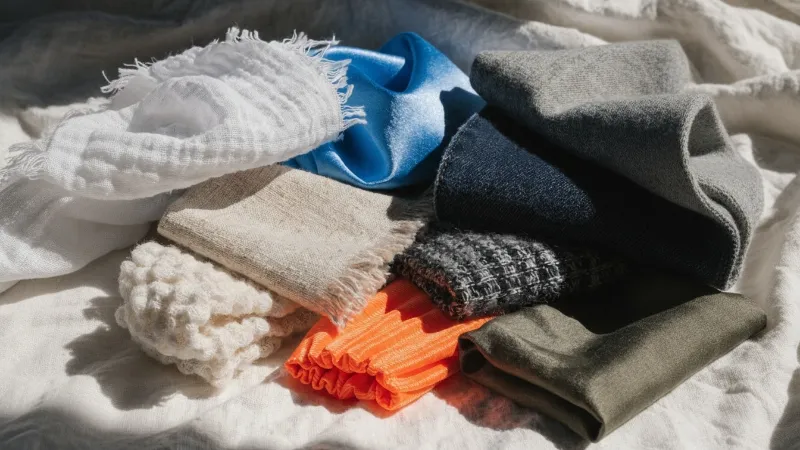
A Breakdown of T-Shirt Manufacturing Costs
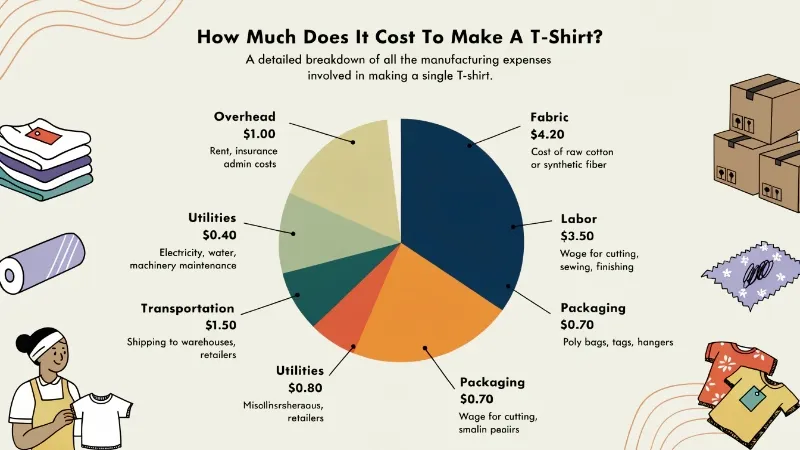
Ever received a quote that just says "$8 per shirt"? That number is almost meaningless without a full breakdown. You still need to know what fabric is included, what print method is included, what trims are included, and whether shipping is included or excluded.
In many projects, fabric is still the biggest cost component, but it is not the only one that matters. Cutting, sewing, printing, labels, packaging, and shipping can all change the final cost in a noticeable way. The exact ratio depends on the product. A simple basic tee and a custom branded tee may have very different cost structures even when the base garment looks similar.
One mistake I often see is buyers trying to reduce cost only through cheaper fabric. That sometimes lowers the quote, but it can also change the hand feel, shrinkage performance, durability, and customer perception of the final product. In many cases, it is smarter to control cost through the right product planning. Simplifying the print colors, reducing unnecessary trims, or using standard packaging can save money without hurting the product itself.
On the other hand, some details are worth paying for if they support your brand positioning. A better neck label, cleaner packaging, or a more stable fabric can make more sense than chasing the absolute lowest factory price.
Where Your Money Goes: A Sample Breakdown
| Cost Area | What It Usually Includes | Why Buyers Should Check It |
|---|---|---|
| Fabric | Main fabric, rib, dyeing or finishing | Usually the biggest variable in the quote |
| Cutting & Sewing | Cutting, sewing, ironing, basic labor | Affects workmanship and consistency |
| Decoration | Screen print, DTG, embroidery, washing | Often changes the price quickly |
| Trims | Neck label, care label, hang tag | Small items that add up |
| Packaging | Poly bag, size sticker, carton, custom packaging | Can be simple or highly customized |
| Shipping | Local delivery, FOB, air or sea freight | Must be separated from factory price |
A Simple Quote Example
Here is a more realistic way to think about a quote.
Let’s say a buyer wants a men’s custom t-shirt with these basic requirements:
- 100% cotton
- medium GSM fabric
- regular fit
- one chest print
- standard neck label
- standard poly bag
- medium-sized order
At that point, the factory still cannot rely on the reference image alone. We would usually need to confirm the exact GSM, print size, number of colors in the artwork, quantity per color, size breakdown, and shipping terms before giving a final number.
This is exactly why experienced buyers ask for a cost breakdown instead of comparing one supplier’s “piece price” against another supplier’s “piece price.” If the specs are not matched, the quotes are not truly comparable.
Why MOQ and Order Quantity Change the Price So Much
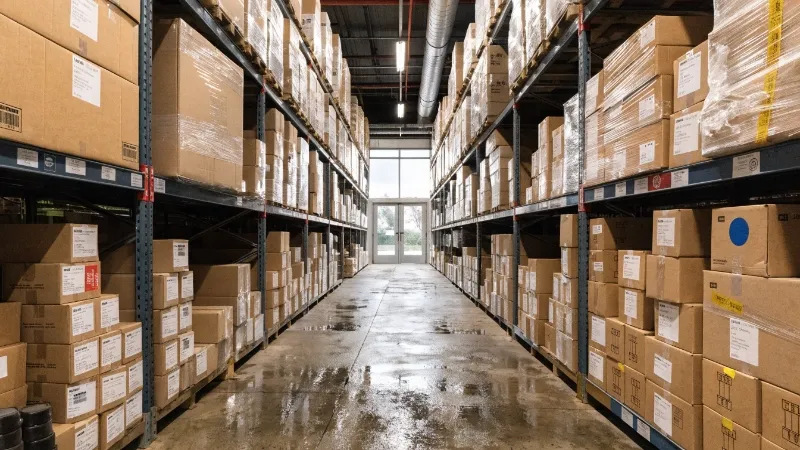
MOQ is one of the biggest reasons buyers get confused by t-shirt quotes. A low unit price may look attractive, but it often depends on a much larger order quantity than a new brand actually needs.
In general, larger orders reduce the cost per piece because the fabric purchase, pattern setup, printing setup, and production time are spread across more units. Smaller orders usually cost more per piece because those fixed costs are shared by fewer garments. That does not mean a bigger order is always the better decision. For a new brand, a smaller test run may be more expensive per piece but safer for cash flow and inventory control.
In our own production experience, a common MOQ for custom t-shirts is around 100-200 pieces per style, depending on the design and fabric. We can also support smaller runs such as 50 pieces for testing, but the unit price is usually higher because the setup cost is shared across fewer garments.
I have seen many new buyers focus only on getting the lowest unit price. The problem is that the lowest unit price often comes with a higher MOQ, fewer fabric options, or tighter production limitations. For an untested design, that can be risky. If the style does not sell well, the buyer may save money on paper but lose money in real inventory.
That is why many startup brands begin with a smaller run first. They use the first order to test the market, check customer feedback, and confirm whether the style is worth repeating at a larger quantity.
In many real projects, the first order is not only about lowering cost. It is also about testing fit approval, print execution, customer response, and reorder potential before scaling up.
The Smart Way: Small Batch, Fast Turnaround
A more practical approach for new brands is to start with a manageable quantity, especially when the style has not been tested before.
Yes, the first order may cost more per piece. But it gives the buyer a chance to test the fit, fabric response, sell-through rate, and customer feedback before committing to a much larger reorder.
Once the style is proven, the next order is usually easier to cost, easier to plan, and easier to scale. In real production, this is often a more sustainable way to grow than forcing a large first order just to chase a lower quoted price.
How Do Custom Details Increase Your T-Shirt Cost?
Custom details can raise the factory cost quickly, especially when they involve extra processes, more labor time, or special sourcing requirements.
Multi-color prints, embroidery, garment washing, custom-dyed fabric, branded trims, and premium packaging all add cost in different ways. That does not mean they are unnecessary. It means buyers should choose them based on brand positioning, not add them blindly.
For example, if a brand is positioned around sustainability, the buyer may choose certified cotton, water-based printing2, recycled packaging, or other materials that fit that brand story. In that case, the cost may be higher than a standard t-shirt program. But if those details are part of the brand’s value proposition, the buyer should evaluate them as part of product positioning, not just as extra factory cost.
Turning an Expense into a Brand Asset
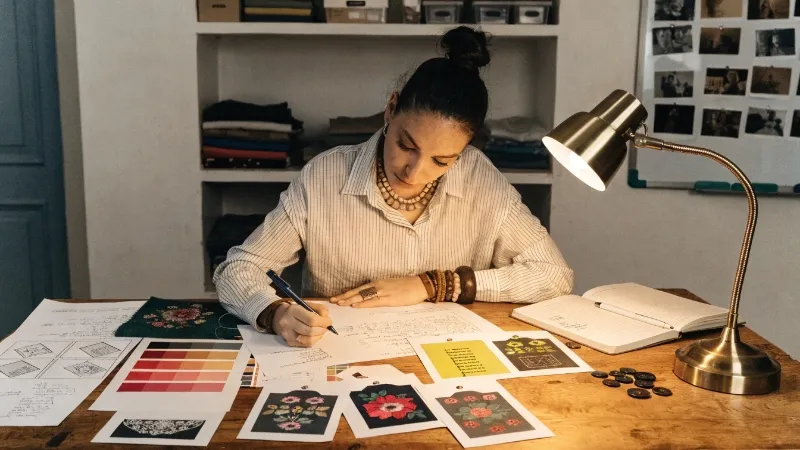
In practice, not every custom detail delivers the same value. Some upgrades are mainly visual, while others help the product feel more premium and consistent.
For many brands, the most useful upgrades are often the practical ones: a better fabric hand feel, cleaner print execution3, a well-made neck label, and packaging that matches the price point of the product.
The key is to choose details that support the product and the customer experience, instead of adding cost in areas the end buyer may not even notice. A good manufacturer should be able to tell you which details improve the product and which ones simply increase the quote.
How Can You Reduce T-Shirt Manufacturing Costs Without Hurting Quality?
Reducing cost does not always mean reducing quality. In many cases, it means simplifying the right details, improving communication, and choosing a more realistic product plan.
If you want to lower your t-shirt cost without damaging the product, start with the areas that usually create waste: unclear tech packs, too many revisions, unnecessary decoration, low quantities per style, and rushed shipping decisions.
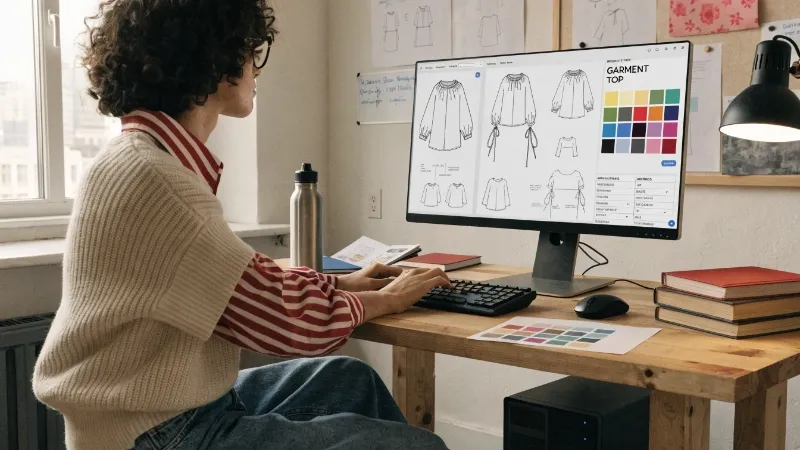
One of the most common hidden costs is repeated correction work. When the tech pack is unclear, the factory may have to guess the fit, print size, label placement, or construction details. That often leads to extra sample rounds, more communication, and longer lead times. A clear tech pack will not solve every problem, but it usually makes the project faster, more accurate, and easier to cost from the beginning.
Smart Cost-Saving Strategies
Clarify the product spec before sampling.
Confirm the fabric composition4, GSM, fit, artwork size, label details, and packaging before asking for a final quote.Keep decoration practical.
More print colors, large placements, embroidery, and special washes can all increase cost. Use them where they truly support the design.Build quantity around your best styles.
Very small quantities per color or per style usually push the unit price up. If possible, focus your budget on fewer, stronger styles.Separate factory price from shipping cost.
Some buyers think they are comparing factory quotes, but one supplier may include more services or different shipping terms than another. Always compare like for like.
These are the kinds of adjustments that lower cost in a practical way. They do not rely on cutting corners. They rely on better planning.
What Should You Ask a Manufacturer Before Requesting a T-Shirt Quote?
Before asking for a t-shirt quote, buyers should prepare the right information first. A good quote depends as much on the buyer’s brief as it does on the factory’s pricing.
Before requesting a quote, buyers should ask about MOQ, sample lead time, quality control steps, production capacity, and the factory’s experience with similar products. Just as important, they should also prepare their own product details clearly.
When a buyer only asks for the cheapest price, the conversation usually stays very shallow. But when the buyer asks about fabric, quality control, sample process, and production details, the quote becomes more useful and the project usually runs more smoothly.
A reliable supplier is not just someone who can give you a number quickly. It is someone who can understand the product, point out potential problems early, and produce the order consistently.
Before You Ask for a Quote, Prepare These Details
- reference images
- fabric composition
- target GSM
- quantity per style and per color
- size breakdown
- print or embroidery details
- label and packaging requirements
- shipping destination
The clearer the brief, the more accurate the quote. A clear brief also shortens back-and-forth communication, reduces unnecessary sample revisions, and helps the factory move into costing and sampling much faster.
From a factory point of view, buyers usually get the best results when they confirm the product details early. In many standard t-shirt projects, our sample lead time is around 8-10 days, and simple styles can sometimes be completed faster. That makes early communication especially important if the buyer wants accurate costing and a smooth sampling process.
Questions That Reveal a Great Partner
"What is your typical MOQ, and are you open to smaller test runs for new brands?"
This helps you understand whether the factory is a realistic fit for your stage."Can you explain your sampling process, including costs and turnaround times?"
A structured and transparent sample process usually leads to fewer surprises later."What quality control checkpoints do you have during and after production?"
This helps you understand how the factory controls consistency before the goods are packed."Can you source the fabric, trims, and packaging I need, or will some items require special sourcing?"
This reveals how much sourcing complexity may affect your timing and cost."What is your experience shipping to my market?"
This helps you judge whether the supplier understands logistics, documentation, and the practical issues involved in international orders.

Conclusion
In 2026, the cost to make a t-shirt is not just about finding the lowest quote. It is about understanding the spec behind the price, choosing the right quantity, and making product decisions that fit your market.
For buyers working with private label factories, the best results usually come from sharing clear product details early and working with a supplier that understands fabric sourcing, sampling, decoration, and bulk production as one connected process.
If you want a more accurate quote, prepare your product details clearly first. The better the brief, the better the costing process will be. For most brand owners, that single step already improves both the quote quality and the production process.
Learning about GSM helps buyers understand fabric weight and its impact on t-shirt quality and pricing. ↩
Water-based printing is eco-friendly and offers a softer feel, making it a great choice for sustainable brands. ↩
Cleaner print execution ensures high-quality visuals, making your product more appealing to customers. ↩
Knowing fabric composition helps in selecting the right material for durability and customer satisfaction. ↩