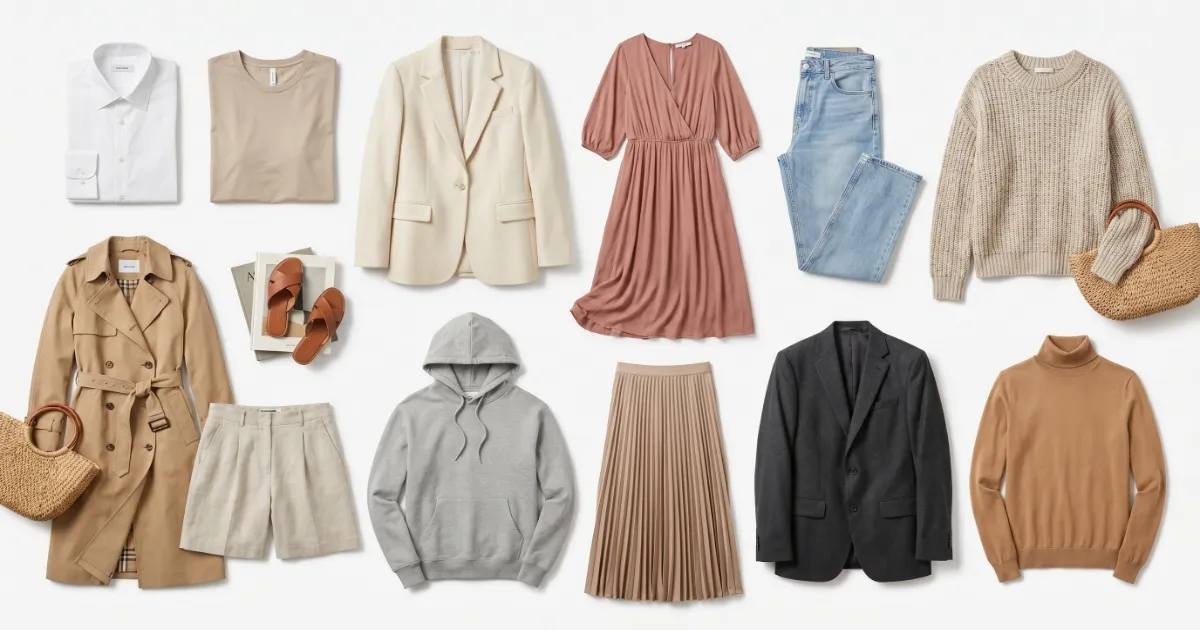
If you’ve ever stood in front of your closet thinking, “Okay… what kind of top is this?” you’re not alone. A lot of clothing feels familiar, but the names and categories can get blurry—especially when items look similar (like a sweater vs. a hoodie) or when stores label things differently.
This guide breaks down the most common types of clothing you’ll run into in everyday life—so you can name what you’re wearing and choose outfits with less guesswork. In other words, it’s a simple guide to everyday types of clothing you’ll see in most closets.
A useful way to think about clothing is this: every garment exists for a reason. Some pieces are made for comfort, some for warmth, some for structure, and some for movement. Once you start looking at clothing by purpose—not just by name—the categories become much easier to understand.
If you’re new to clothing terms, don’t worry about being “right” all the time. The goal is simply to recognize the most common clothing categories you’ll see in stores and conversations—and to know what to reach for when you’re getting dressed for real life.
Key Takeaway: You don’t need to memorize every term. Once you understand the main clothing categories (tops, bottoms, one-piece garments, outerwear, and function-based clothing), the rest gets much easier.
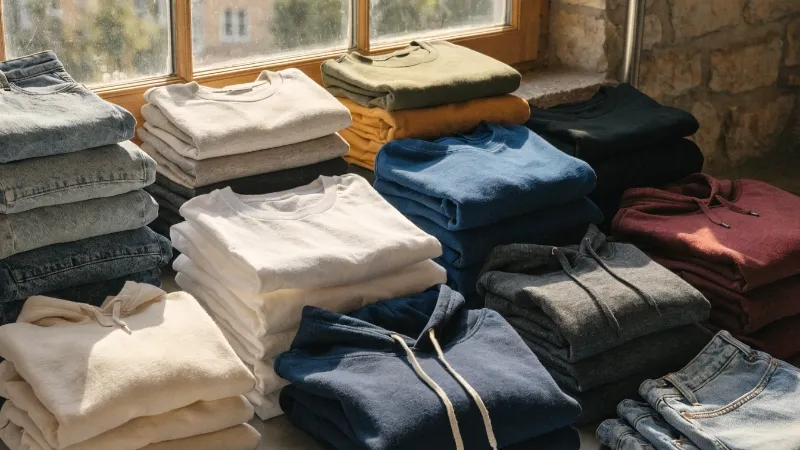
What Are the Main Types of Clothing?
Most clothing can be grouped into simple clothing categories based on where you wear it on your body and what job it does.
This article focuses on common clothing types you’ll see in everyday wear—not complex industry classifications or niche fashion terms. Think of it as a practical map of the most useful types of clothing for daily outfits.
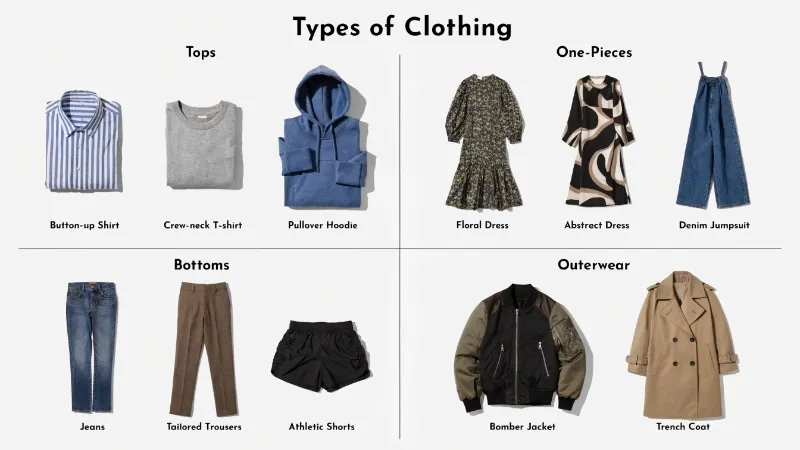
Here’s a simple framework you can keep in your head:
- Tops: What you wear on your upper body (T-shirts, shirts, sweaters, hoodies).
- Bottoms: What you wear on your lower body (jeans, trousers, shorts, skirts).
- One-piece garments: A full outfit in one item (dresses).
- Outerwear: Layers you put on over everything else (jackets, coats).
- Function-based clothing: Designed for a specific activity (activewear).
A helpful way to understand clothing types is to look at them from four angles: structure, purpose, formality, and seasonality. Structure tells you where the item is worn. Purpose tells you what problem it solves. Formality helps you judge when it is appropriate to wear. Seasonality tells you what kind of weather it is made for.
If you ever feel unsure, try building an outfit in this order: start with a base (top + bottom, or a dress), then add an outer layer if you need it, then adjust for purpose (for example, swap casual wear for activewear if you’ll be moving a lot).
Once you can place an item into one of those buckets, you’re already 80% of the way there—and reading clothing labels starts to feel a lot less mysterious.
Tops: T-Shirts, Shirts, Sweaters, and Hoodies
Tops are where most outfit “vibes” start. Swap your top and you can make the same pair of bottoms feel casual, polished, cozy, or sporty.
Below are four of the most common tops—and the small details that separate them.
T-shirts
A T-shirt is the go-to casual top: usually short-sleeved, easy-fitting, and worn by pulling it over your head.
When people wear it: errands, weekend plans, casual work settings, travel days, lounging at home.
What makes it different: T-shirts usually have no buttons and no collar. They’re meant to feel simple and relaxed.
A big reason T-shirts feel so easy to wear is the fabric. Many are made from knit cotton jersey, which gives them softness, flexibility, and comfort for everyday use. That is also why T-shirts work so well as a base layer.
Quick mental image: If it looks like you can fold it into a neat little rectangle and throw it in a backpack, it’s probably a T-shirt.
If you’re trying to build a small, versatile wardrobe, T-shirts are often the easiest “base layer” top. The same tee can work under a hoodie for casual wear, under a jacket for a cleaner look, or even under a sweater when you want warmth without bulk.
Shirts
In everyday conversation—especially in the U.S.—“shirt” can mean any top. But in most clothing categories, a “shirt” usually refers to a more structured piece, often with a collar and buttons (like a button-up).
When people wear it: work, dinners, events, or anytime you want to look a little more put-together without dressing up.
What makes it different: A typical shirt has a collar and a button front (or at least a partial button placket). It usually holds its shape more than a T-shirt.
That extra structure often comes from woven fabric rather than knit fabric. Woven materials tend to look neater and more defined, which is one reason shirts often feel more polished than T-shirts.
Easy upgrade tip: If you like the comfort of a T-shirt but want a cleaner look, a simple shirt in a solid color is one of the fastest ways to elevate casual wear.
Sweaters
A sweater is a warm top designed for cooler weather. It can be pullover-style or open in the front (like a cardigan), and it’s usually worn over a T-shirt or shirt.
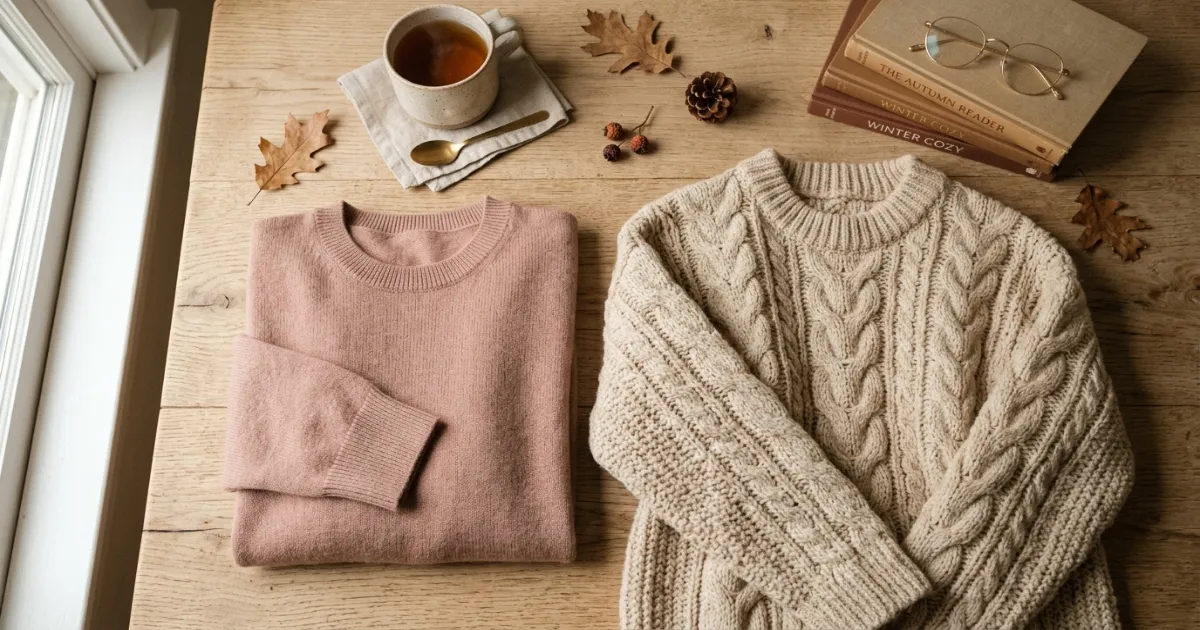
When people wear it: chilly mornings, offices with strong air conditioning, fall and winter days, casual-to-smart casual outfits.
What makes it different: A sweater is about warmth and a cozy feel—without looking sporty.
Common confusion: Some sweaters are thin and some are chunky. The thickness changes the vibe, but the category is still the same: it’s a warm layer that reads more “cozy” than “athletic.”
A useful way to think about sweaters is that they help with temperature control while still keeping an outfit neat. That is why they often feel easier to dress up than hoodies.
Hoodies
A hoodie is a casual, cozy top that usually has a hood (and often a front pocket). It’s built for comfort first.
When people wear it: lounging, school, travel, casual hangouts, cool evenings, relaxed streetwear looks.
What makes it different: The hood is the giveaway. Hoodies also tend to feel more sporty and informal than sweaters.
That hood changes more than the silhouette. It also changes the feeling of the garment, making it feel more relaxed, more casual, and more connected to streetwear and comfort-first dressing.
Practical note: If you’re choosing between a sweater and a hoodie for the same day, ask yourself what you need more—polish (sweater) or comfort + casual vibe (hoodie).
Hoodies are also great for layering on the move. If you’re traveling, running errands, or heading out early and coming home late, a hoodie is one of the most forgiving tops: it’s warm, it’s easy, and it doesn’t mind being stuffed into a tote bag.
Bottoms: Jeans, Trousers, Shorts, and Skirts
Bottoms are the foundation of most everyday outfits. They affect how formal you look, how comfortable you feel, and how easily you can move.
In many cases, bottoms set the tone of the whole outfit. Fabric, cut, and construction all influence whether something feels casual, polished, relaxed, or practical.
Here are four common bottom categories you’ll see everywhere.
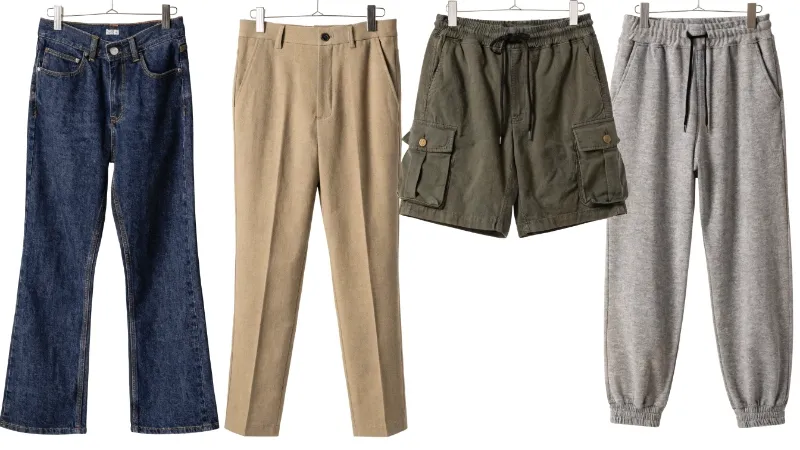
Jeans
Jeans are a type of pants made from denim (or denim-like fabric). They’re durable, casual, and one of the most common everyday wear staples.
When people wear them: daily errands, casual workdays, weekends, nights out, travel.
What makes them different: Jeans usually have that classic denim look—often blue, black, or gray—with sturdy seams and a more rugged feel.
That construction is part of what gives jeans their casual identity. They were built to be tough and practical, and that history still shows in how they look and feel today.
Why people like them: They hold up well, pair with almost any top, and can look casual or slightly dressed up depending on fit and color.
Trousers
“Trousers” is a broader, more polished category of pants. In the U.S., many people just say “pants,” but when clothing categories separate jeans from trousers, trousers usually means the more tailored styles.
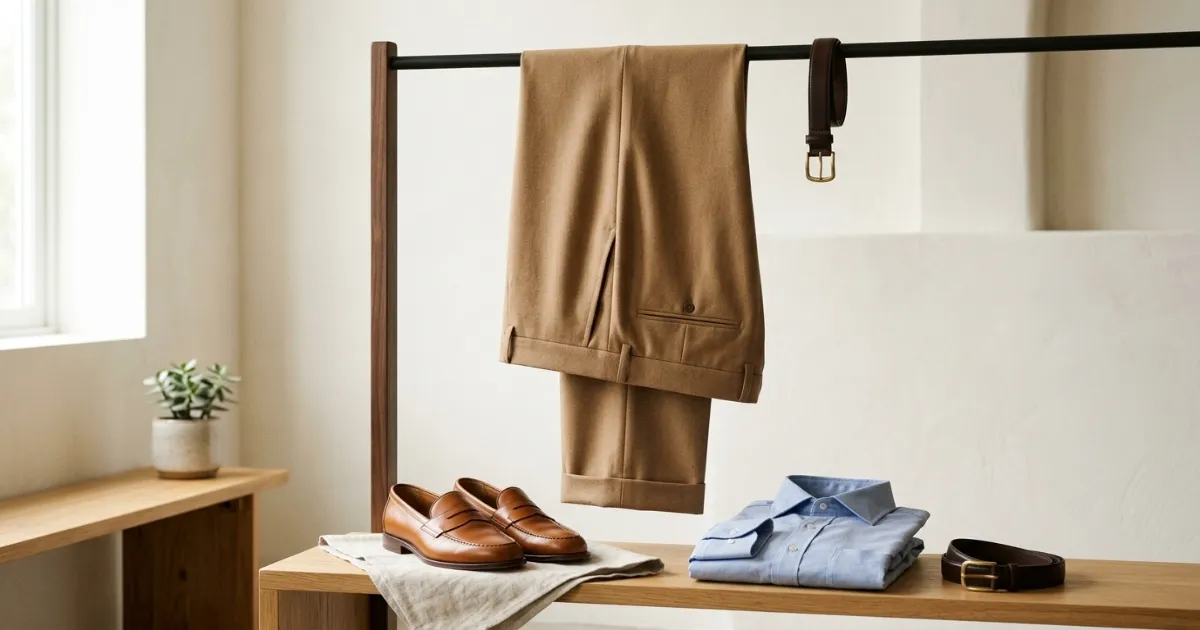
When people wear them: offices, business casual settings, dinners, occasions that call for a cleaner look.
What makes them different: Trousers tend to look smoother and more structured than jeans. They’re often designed to drape neatly rather than feel rugged.
The fabric also matters here. Trousers are often made from woven materials that look cleaner and more refined, which is why they tend to feel smarter and more formal than jeans.
Beginner-friendly shortcut: If it looks like something you’d naturally wear with a button-up shirt or loafers, it’s probably closer to trousers than jeans.
Shorts
Shorts are simply bottoms with a shorter leg length—designed for warm weather, movement, and comfort.
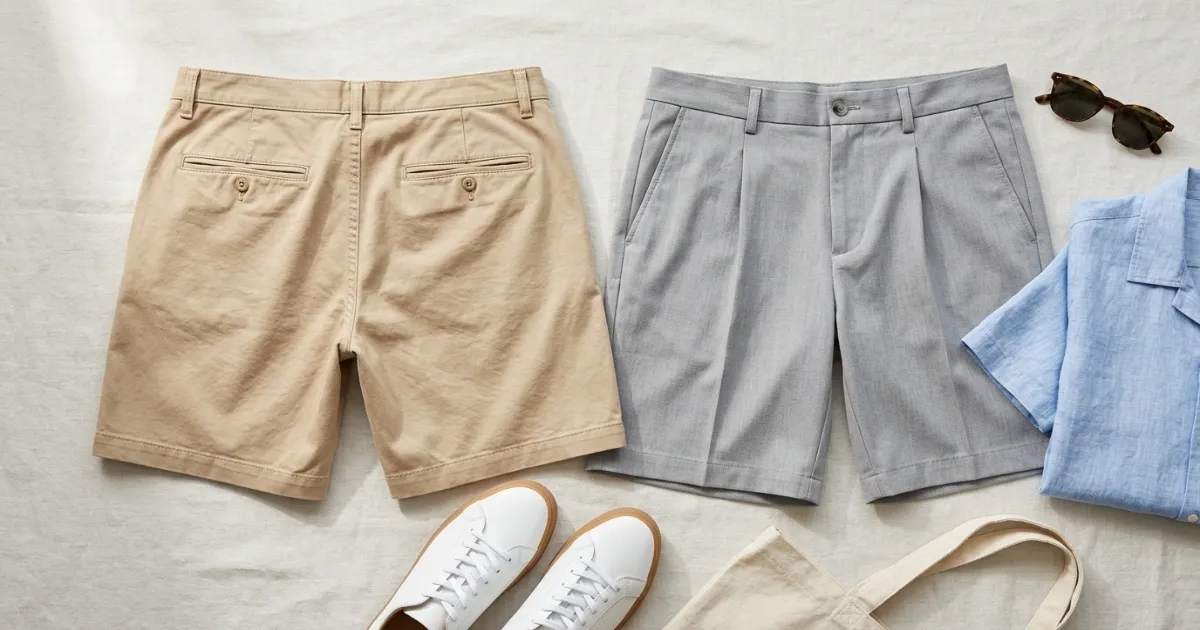
When people wear them: summer days, vacations, casual hangouts, sports, running errands in hot weather.
What makes them different: They expose the lower leg and are usually considered more casual (though some tailored shorts can look quite neat).
Practical tip: If you want shorts that feel less “gym” and more “everyday,” look for a cleaner fit and a simple waistband style.
Skirts
Skirts are bottoms that wrap around the waist and hang down in one piece—without separating into two legs.
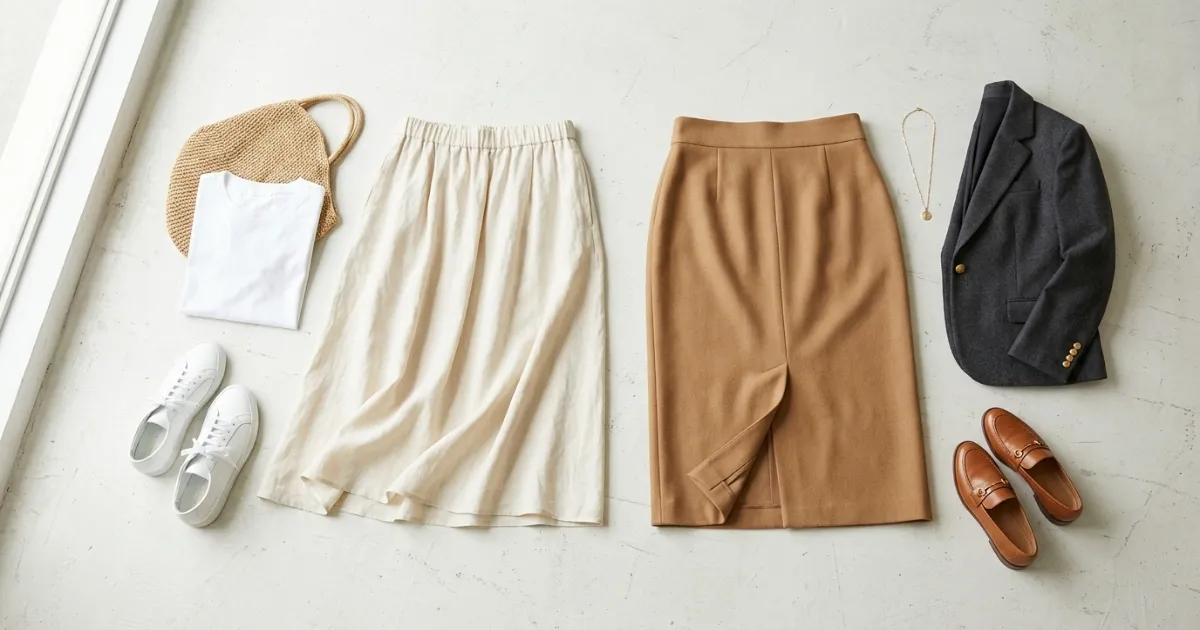
When people wear them: warm-weather outfits, casual to formal events, workwear (depending on dress code), evenings out.
What makes them different: The silhouette is the key. Skirts can be relaxed and flowy or structured and fitted, and that changes the overall look a lot.
Easy styling note: A skirt can feel casual with sneakers and a T-shirt, or more formal with a shirt and a jacket. The category stays the same; the styling does the heavy lifting.
One-Piece Clothing: Dresses Explained
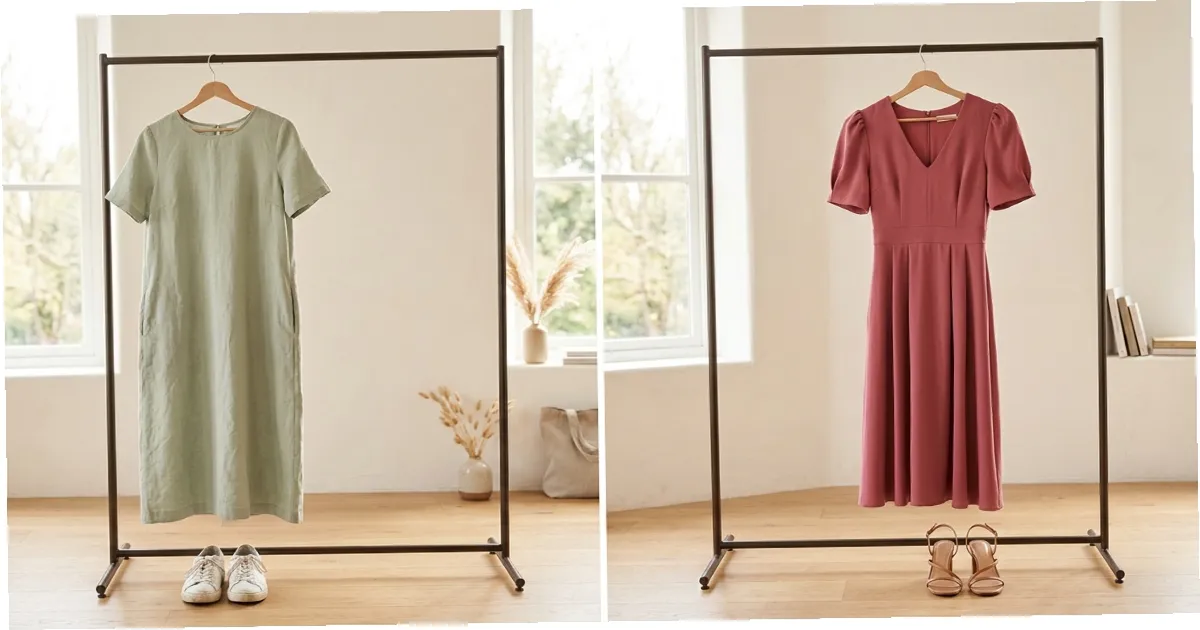
A dress is a one-piece garment that covers the body from the shoulders (or upper chest) down over the hips and legs.
When people wear it: everything from everyday casual wear to weddings—because dresses come in many cuts and fabrics.
What makes dresses easy is also what makes them flexible: small changes in fabric and shape can shift a dress from relaxed to formal.
If you are new to clothing categories, it helps to think of dresses as one item that can function like a full outfit. That is part of what makes one-piece clothing so practical. It removes some of the guesswork because the upper and lower parts are already built into one garment.
In other words, one-piece clothing often works as an efficiency solution. You are not just choosing a garment—you are choosing a ready-made outfit that can be styled up or down depending on the occasion.
Outerwear: Jackets and Coats
Outerwear is what you throw on when the temperature drops or the weather changes. It’s also the piece people notice first, because it sits on top of the outfit.
Jackets
A jacket is outerwear that usually ends around the waist or hips. It’s typically meant for mild to cool weather.
When people wear it: spring/fall, cool evenings, air-conditioned spaces, commuting.
What makes it different: Jackets are generally shorter and often lighter than coats.
That is also why jackets work well in transitional weather. They are useful when you need light warmth, wind protection, or an extra layer, but not full winter insulation.
Coats
A coat is longer and usually warmer. It often covers more of your body—sometimes down to mid-thigh or even the knee.
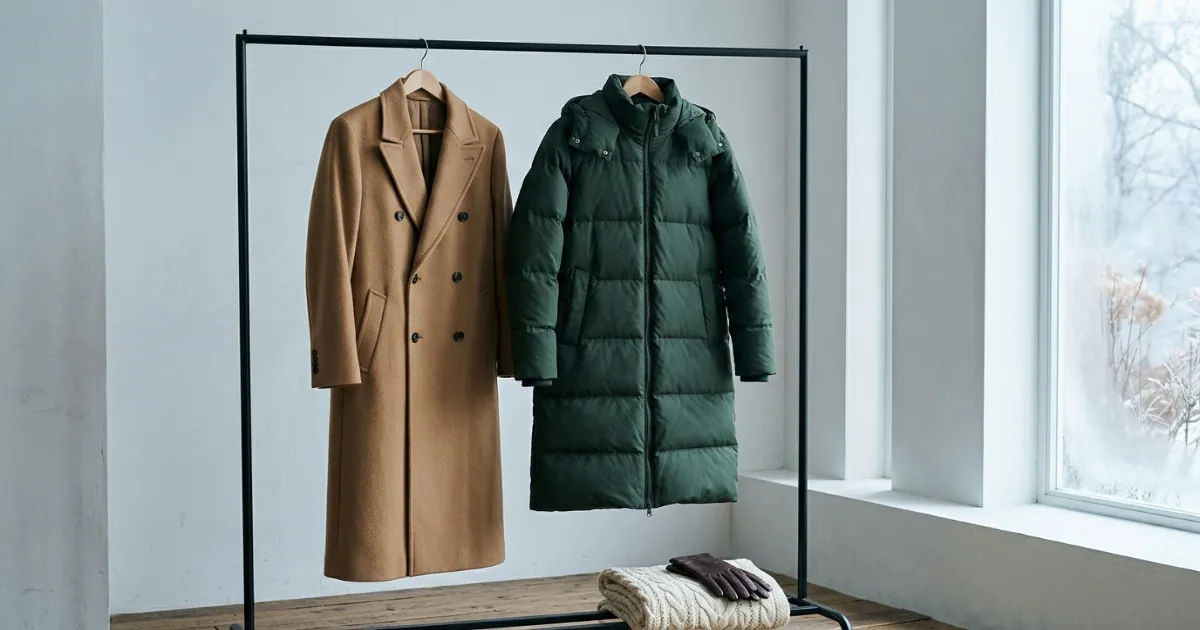
When people wear it: cold weather, winter, windy or rainy days (depending on the coat).
What makes it different: Coats are usually longer and more insulating than jackets.
A coat is the piece you rely on when the weather is truly cold. In that sense, the difference is not just style or length—it is also protection. Jackets help with a chill, while coats are built for real cold.
Special-Purpose Clothing: Activewear
Activewear is clothing designed for movement—exercise, walking, stretching, and generally being on the go.
When people wear it: workouts, runs, yoga, hiking, travel days, and increasingly as everyday casual wear (think “athleisure”).
What makes it different from standard casual clothing: activewear is built to help you move comfortably. It’s usually made to feel flexible and breathable, so it doesn’t fight your body when you bend, sit, or sweat.
Common activewear examples include leggings, sports bras, performance tees, joggers, and training shorts.
A simple way to think about it:
- Casual wear is for day-to-day life.
- Activewear is for day-to-day life plus movement.
How to Tell Similar Clothing Types Apart
Some clothing types look close enough that people use the words interchangeably. Here are simple, memorable ways to separate the most common mix-ups.
T-shirt vs Shirt
- T-shirt: no collar, no buttons, usually the most casual option.
- Shirt: typically has a collar and buttons, and looks more structured.
If you’re deciding what to wear: a T-shirt usually reads “weekend,” while a shirt leans more “work” or “going out.”
Sweater vs Hoodie
- Sweater: warmth without the sporty feel; often looks a bit more polished.
- Hoodie: has a hood (sometimes a big front pocket); relaxed, casual, sporty.
If you’re unsure: when the hood goes up, it’s a hoodie.
Jeans vs Trousers
- Jeans: denim look and feel; usually casual.
- Trousers: smoother, more tailored look; often closer to business casual.
A quick wardrobe test: if it pairs naturally with a blazer, it’s probably trousers. If it pairs naturally with sneakers and a tee, it’s probably jeans.
Jacket vs Coat
- Jacket: shorter, lighter, good for mild weather.
- Coat: longer, warmer, built for cold weather.
If you want an easy cue: coats cover more of your outfit and usually feel heavier in your hands.
How to Choose the Right Clothing Type for Everyday Wear
Once you understand the main clothing categories, choosing what to wear gets much simpler. In everyday life, being suitable often matters more than being fashionable. The right clothing type is usually the one that fits the situation, feels comfortable, and works with your day.
To choose the right clothing, always consider the occasion (where are you going?), the weather (what’s the temperature?), and your desired comfort. Answering these questions will guide you to the perfect item.
1) Start with the weather (it controls your layers)
- Hot day? Shorts, a T-shirt, and breathable layers make sense.
- Cool day? Add a sweater or hoodie.
- Cold day? Think coat-level warmth, not just a jacket.
You don’t need a complicated closet—just enough options to layer up or down.
2) Match the occasion (casual, smart casual, or formal)
If you’re not sure what the occasion calls for, a safe approach is to choose one piece that looks slightly more polished:
- Swap a T-shirt for a shirt.
- Swap a hoodie for a sweater.
- Swap jeans for trousers.
That single change often moves an outfit from “very casual” to “presentable,” without feeling overdressed.
3) Prioritize comfort where it matters most
Comfort isn’t just about softness. It’s also about how well you can move.
- Lots of walking or travel? Activewear or relaxed-fit bottoms can make the day easier.
- Sitting for long periods? Fabrics and fits that don’t pinch at the waist will matter more than you think.
A practical mindset: if you’ll be thinking about your clothing all day, it’s not the right choice.
4) Use your style preferences as the final filter
This is where “common clothing styles” come in. Two people can wear the same clothing types and look totally different.
If you like a clean, minimal look, you might lean on:
- solid T-shirts and shirts
- straight-leg jeans or simple trousers
- neutral outerwear
If you like a sporty look, you might reach for:
- hoodies
- activewear sets
- sneakers and easy layers
And if you like a dress-focused wardrobe, you might treat dresses as the base and build from there.
The point: the “right” clothing type is the one that fits your day and feels like you.
Final Thoughts
Clothing terms can feel confusing at first because many items overlap. But once you start sorting things by category (tops, bottoms, one-piece garments, outerwear, and function-based clothing) and purpose (warmth, comfort, formality, movement), it becomes surprisingly straightforward.
Use this guide as a quick reference the next time you’re shopping, packing, or building an everyday outfit. You’ll get better at spotting the differences—and the names will start to feel natural the more you use them.