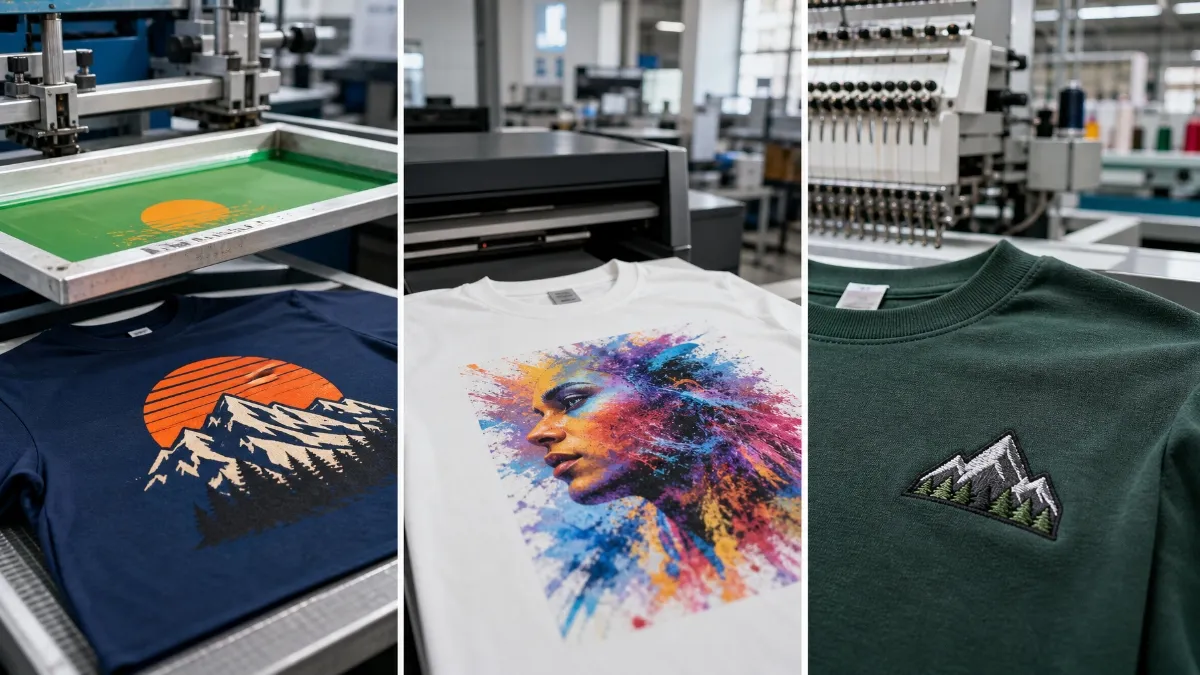
Choosing the wrong T-shirt customization method can affect more than production cost. It can change how your product feels, how long the design lasts after washing, and how customers judge your brand quality.
The right method depends on five things: order quantity, artwork complexity, fabric type, durability expectations, and brand positioning.
For most apparel brands, screen printing is best for bulk orders and bold graphics, DTG is best for small batches and detailed artwork, and embroidery is best for premium logos. Sublimation and heat transfer are also useful, but only in the right situations.
At Easson Apparel, as a custom T-Shirt manufacturer we do not choose a decoration method by looking at the design alone. We check the garment fabric, GSM, logo size, artwork details, order quantity, and target price before recommending a production method. A decoration method should work not only for one sample, but also for real bulk production.
Quick Answer: Which Customization Method Should Your Brand Choose?
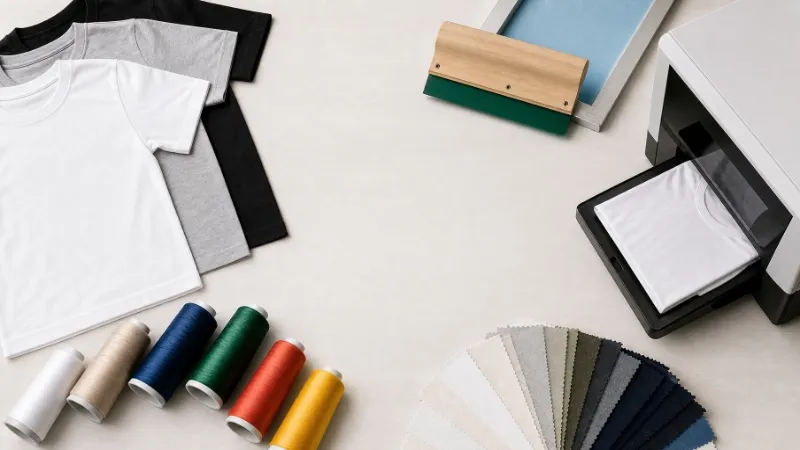
For simple bulk T-shirt graphics, choose screen printing. For small batches or full-color artwork, choose DTG. For premium logos on polos, hoodies, caps, or uniforms, choose embroidery. For polyester sportswear, sublimation may be better. For names, numbers, or small flexible runs, heat transfer can work.
| Brand Situation | Best Method | Why |
|---|---|---|
| 50–100 pcs startup test order | DTG or heat transfer | Lower setup risk |
| 100–300 pcs simple logo tees | Screen printing | Better cost efficiency |
| 300–500+ pcs repeat bulk order | Screen printing | Lower unit cost |
| Premium polo with small chest logo | Embroidery | Higher perceived value |
| Full-color photo artwork | DTG | Better for gradients and details |
| Polyester sports T-shirt | Sublimation | Best for light polyester graphics |
| Names and numbers | Heat transfer | Flexible for small runs |
A good method should match your business stage. A startup testing 50 pieces does not need the same method as a brand producing 1,000 repeat units. The best choice is not always the cheapest one today, but the one that supports your design, quality, and profit margin.
Need help choosing? Send us your artwork, fabric preference, and estimated quantity. We can suggest the most practical method before sampling.
Screen Printing vs. DTG vs. Embroidery: Decision Matrix
Screen printing gives the best bulk efficiency, DTG gives the most design flexibility, and embroidery gives the strongest premium feel. The best method depends on how you balance cost, durability, color detail, fabric, and brand value.
| Factor | Screen Printing | DTG Printing | Embroidery |
|---|---|---|---|
| Best order volume | 100 pcs and above | 1–100 pcs | 50 pcs and above |
| Best artwork | Bold logos and solid colors | Photos, gradients, full-color art | Small logos and simple text |
| Setup cost | Higher | Low | Moderate |
| Unit cost | Lower at bulk quantity | Stable per piece | Depends on stitch count |
| Hand feel | Slightly raised | Usually soft | Textured and raised |
| Durability | Very strong if cured properly | Good if processed correctly | Very strong |
| Best fabric | Cotton, blends, some polyester | High-cotton garments | Stable medium-to-heavy fabrics |
| Brand perception | Classic, streetwear, merch | Creative, modern, flexible | Premium, professional, heritage |
If your design is simple and your quantity is growing, screen printing is usually the most practical method. If your artwork has many colors and your order is small, DTG reduces setup risk. If your brand wants a premium logo, embroidery can make a basic garment feel more valuable. If you want to understand how fabric, MOQ, decoration, labels, and packaging affect your final quote, read our guide on T-shirt manufacturing cost.
For a general technical reference on cotton printing methods, CottonWorks has a useful guide to cotton printing types and techniques1.
What Is Screen Printing Best For?
Screen printing is best for bulk T-shirt orders with simple artwork, strong solid colors, and repeat production. It is ideal for brand logo tees, streetwear graphics, uniforms, event shirts, and merchandise.
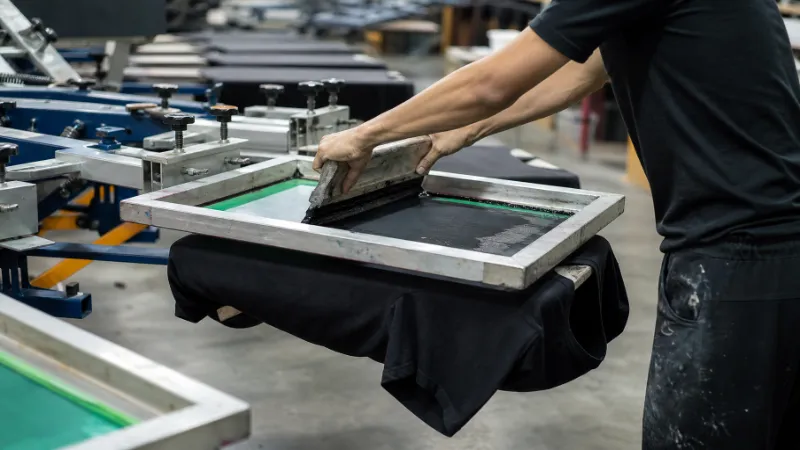
Screen printing uses a mesh screen to push ink onto the garment. Each color in the design usually needs its own screen, which creates setup cost. However, once the screens are ready, production becomes fast and efficient.
That is why screen printing becomes more cost-effective as the order quantity increases. A 20-piece order may feel expensive because the setup cost is spread across very few shirts. A 300-piece or 500-piece order can become much more profitable because the same setup cost is divided across many units.
Screen printing works especially well for:
- Brand logo T-shirts
- Streetwear graphics
- Band merch
- Corporate or event shirts
- Hoodie and sweatshirt prints
- Designs with 1–5 solid colors
- Repeat bulk production
It is less suitable for very small orders with complex artwork, photos, or many gradients. Those designs may require too many screens or complicated color separation.
Factory Insight:
For startup brands, we usually do not recommend screen printing for complex multi-color artwork under 50 pieces. The result can look good, but the setup cost may make the first test run too expensive. If the design sells well later, switching to screen printing for bulk production often makes more sense.
What Is DTG Printing Best For?
DTG printing is best for small-batch T-shirts, samples, full-color artwork, gradients, photo-style designs, and brands that want to test multiple designs without large inventory risk.
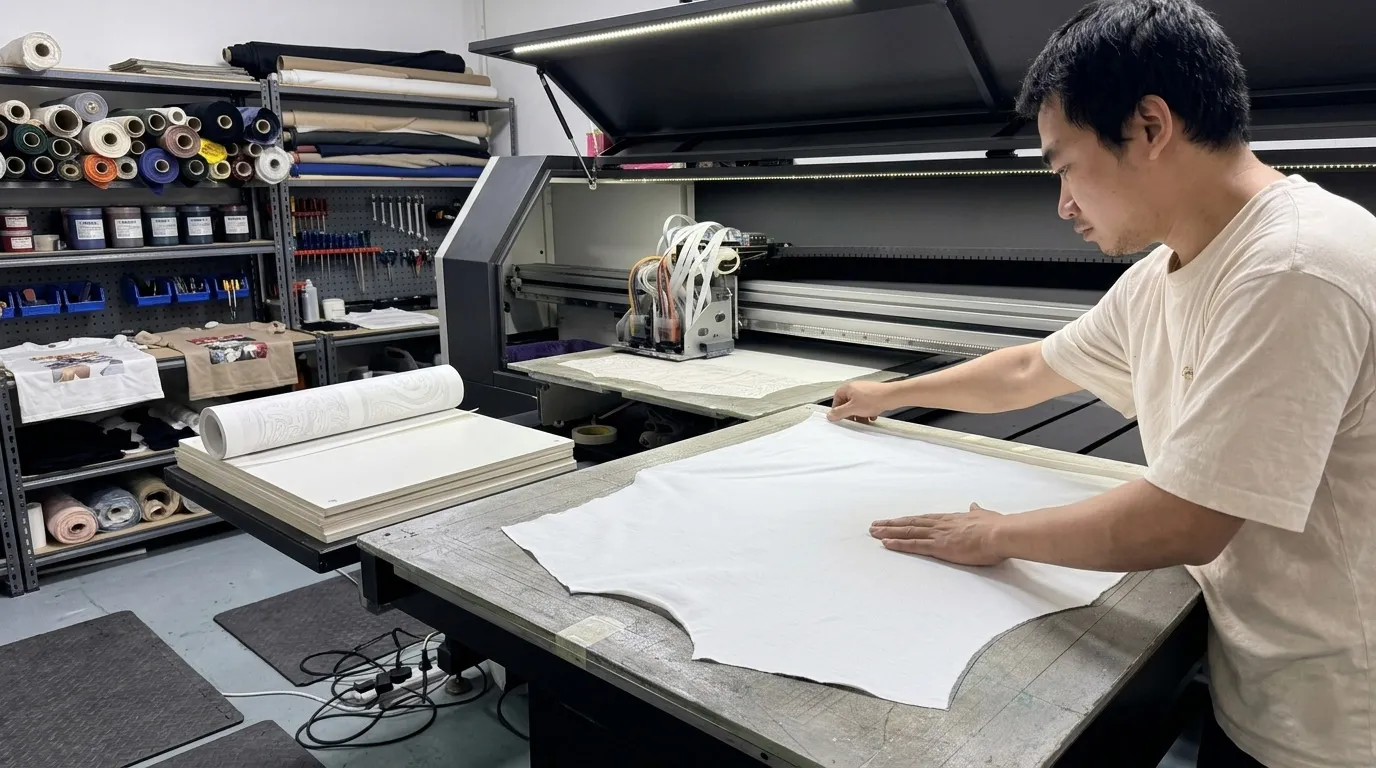
DTG means Direct-to-Garment printing. It works like a digital printer for clothing, spraying water-based ink directly onto the garment. Unlike screen printing, it does not require separate screens for each color.
This makes DTG useful for brands that want flexibility. A design with many colors can be printed from one digital file. For a new brand testing five or ten different designs, DTG can reduce the risk of over-ordering the wrong style.
DTG is commonly used for:
- Sample development
- Small T-shirt runs
- Online drops
- Full-color artwork
- Photo prints
- Gradients and shadows
- Limited-edition designs
However, DTG is more sensitive to fabric quality than many brands expect. It performs best on smooth, high-cotton garments. If the fabric surface has too much hairiness or loose fibers, the print may look less sharp. On dark garments, pretreatment and white ink handling are also important. For brands comparing cotton, polyester, and blends before printing, our cotton vs polyester T-shirts guide can help you choose the right fabric base.
Brother’s guide on selecting the right garment for DTG printing2 also explains why garment choice affects the final DTG result.
What Is Embroidery Best For?
Embroidery is best for premium logos, small chest marks, polo shirts, caps, hoodies, sweatshirts, uniforms, and products where the brand wants a more professional or higher-value look.
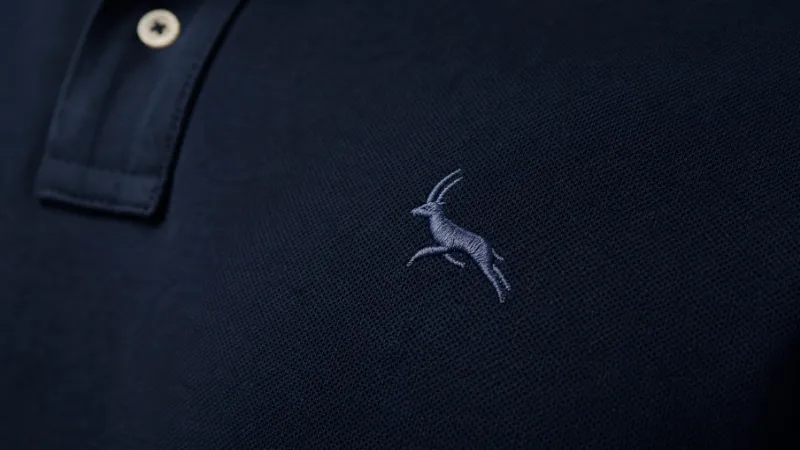
Embroidery uses thread to stitch the design into the fabric. This gives the logo texture, depth, and a more permanent feel. Customers can see and touch the difference.
Embroidery is a strong choice for:
- Polo shirts
- Caps
- Sweatshirts
- Hoodies
- Jackets
- Uniforms
- Premium basics
- Small chest logos
- Sleeve logos
- Minimal brand marks
Embroidery cost is mainly affected by logo size, stitch count, placement, and quantity. It is not priced the same way as printing. A small left-chest logo is usually practical. A large full-back embroidery design can become heavy, stiff, and expensive.
Embroidery also has design limits. Very small text may lose detail. Fine gradients cannot be reproduced like a digital print. Lightweight fabrics may pucker if the stitch density is too high.
Factory Insight:
For embroidery on T-shirts, fabric support matters. Very lightweight cotton can wrinkle around the logo. Medium-to-heavy cotton, polo pique, sweatshirt fleece, and structured knit fabrics usually give cleaner embroidery results. As a practical guideline, heavyweight cotton around 240gsm or above often supports embroidery better than thin T-shirt fabric. If you are not sure whether your T-shirt fabric is heavy enough for embroidery, our T-shirt GSM guide explains common lightweight, midweight, and heavyweight ranges.
Fabric Compatibility: Why Material Matters More Than Most Brands Think
A decoration method can only perform well when it matches the fabric. DTG needs the right cotton surface, embroidery needs fabric stability, sublimation needs polyester, and screen printing requires the correct ink system for the fabric.
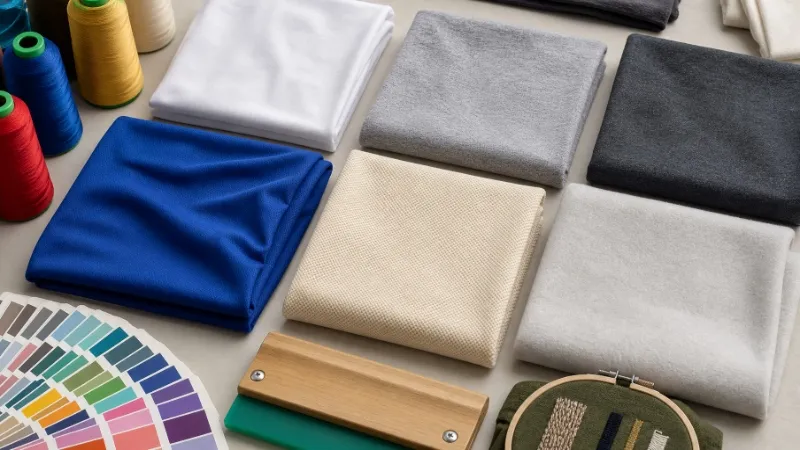
Many brands choose the artwork first, the method second, and the fabric last. In real production, this can create problems. A good method on the wrong fabric can still produce a poor sample.
| Fabric Type | Screen Printing | DTG | Embroidery | Sublimation | Heat Transfer |
|---|---|---|---|---|---|
| 100% cotton T-shirt | Very good | Very good if smooth | Good if GSM supports it | Not ideal | Good |
| Cotton/poly blend | Good | Depends on cotton content | Good | Limited | Good |
| Lightweight fabric | Possible | Risk of fuzzy result | Risk of puckering | Depends on fiber | Possible |
| Heavyweight cotton 240gsm+ | Very good | Good | Very good | Not ideal | Good |
| Polyester sportswear | Possible with right ink | Usually not ideal | Possible | Very good | Good |
DTG works best on high-cotton garments with a smooth surface. A loose or fuzzy fabric can make the print look less clear.
Screen printing is more flexible, but polyester may require special ink or anti-migration treatment to prevent dye migration.
Embroidery needs a stable fabric base. If the fabric is too light or too stretchy, the logo area may distort.
Sublimation works best on white or light-colored polyester because the dye bonds with polyester fibers. Sawgrass also provides useful sublimation tips3 for better results.
If you already have a fabric in mind, our team can help check whether it works better with screen printing, DTG, embroidery, sublimation, or heat transfer.
DTG vs. Screen Printing: Durability, Cracking, and Wash Performance
Screen printing usually offers stronger long-term durability for bulk graphic T-shirts, while DTG can also be good quality when fabric, pretreatment, curing, and washing care are handled correctly.
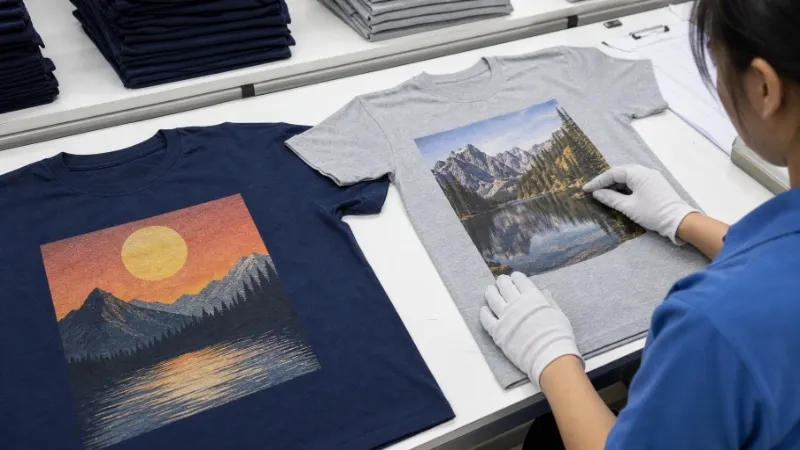
Durability is one of the biggest concerns for apparel brands. A print that looks good in a photo is not enough. It also needs to survive washing, stretching, and daily wear.
| Factor | Screen Printing | DTG Printing |
|---|---|---|
| Wash durability | Very strong if cured properly | Good if processed correctly |
| Cracking risk | Possible if ink is too thick or under-cured | Usually does not crack like plastisol, but may fade or wear |
| Color brightness | Strong for solid colors | Strong for detailed artwork |
| Hand feel | Can be thicker | Usually softer |
| Best use | Bulk orders and repeat production | Small runs and complex designs |
Screen printing durability depends heavily on curing. If the ink is under-cured, it may crack, peel, or wash poorly. A properly cured print can last a long time.
DTG usually does not crack in the same way as thick plastisol or vinyl because the ink is absorbed into the cotton fibers. However, poor pretreatment, weak curing, unsuitable fabric, or heavy white ink can still cause fading, roughness, or surface wear.
For textile wash performance, brands and labs may refer to standards such as AATCC TM614, an accelerated laundering test method used to evaluate colorfastness after washing.
Factory Insight:
Before bulk production, we normally check print placement, hand feel, color brightness, and washing performance. A good-looking sample is not enough if the print cannot hold up after repeated washing.
Screen Printing vs. DTG Cost: When Does Each Method Become Cheaper?
DTG is usually more practical for very small quantities because it has little setup cost. Screen printing becomes cheaper as quantity increases, especially for simple artwork with limited colors.
There is no fixed answer to “Is screen printing or DTG cheaper?” The answer changes with quantity, color count, print size, artwork complexity, and reorder plans.
Here is a simplified example for a two-color design:
| Quantity | DTG Cost Example | Screen Printing Cost Example | Usually Better Choice |
|---|---|---|---|
| 10 pcs | $12 × 10 = $120 | $120 setup + $4 × 10 = $160 | DTG |
| 50 pcs | $12 × 50 = $600 | $120 setup + $4 × 50 = $320 | Screen printing may win |
| 100 pcs | $12 × 100 = $1,200 | $120 setup + $4 × 100 = $520 | Screen printing |
| 300 pcs | $12 × 300 = $3,600 | $120 setup + $4 × 300 = $1,320 | Screen printing |
| 1,000 pcs | $12 × 1,000 = $12,000 | $120 setup + $4 × 1,000 = $4,120 | Screen printing |
This is only an example. Real pricing depends on the supplier, country, artwork, fabric, and finishing requirements. But the cost logic is clear: DTG is flexible for small runs, while screen printing becomes stronger as quantity grows.
If you are testing a design, DTG may reduce inventory risk. If the design becomes a bestseller, screen printing can improve your margin. For a deeper cost breakdown, including fabric, GSM, MOQ, trims, printing, packaging, and shipping, read our full guide on how much it costs to make a T-shirt.
Sublimation vs. Screen Printing and Heat Transfer vs. Embroidery
Sublimation is best for light polyester sportswear and all-over prints, while screen printing is better for cotton graphics. Heat transfer is practical for small runs, names, and numbers, while embroidery is stronger for premium logos.
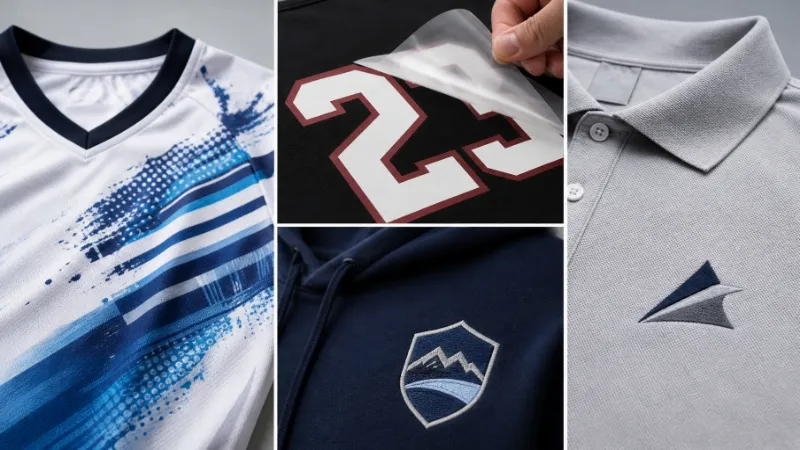
Sublimation and heat transfer are not always direct replacements for screen printing, DTG, or embroidery. They are specialized tools.
Sublimation vs. Screen Printing
| Factor | Sublimation | Screen Printing |
|---|---|---|
| Best fabric | White or light polyester | Cotton, blends, some polyester |
| Best design | All-over prints, sports graphics | Logos, bold graphics, solid colors |
| Hand feel | No raised print feel | Ink may sit on fabric surface |
| Durability | Very good on polyester | Very good when cured correctly |
| Limitation | Not ideal for dark cotton T-shirts | Less practical for many colors in small runs |
Sublimation is a strong option for polyester activewear, jerseys, and teamwear. For cotton T-shirt brands, screen printing or DTG is usually more relevant.
Heat Transfer vs. Embroidery
| Factor | Heat Transfer | Embroidery |
|---|---|---|
| Best use | Names, numbers, small runs | Premium logos |
| Setup cost | Low | Moderate |
| Hand feel | Depends on transfer type | Textured and raised |
| Durability | Depends on quality | Usually very strong |
| Brand perception | Practical and flexible | Premium and professional |
Low-quality heat transfers can peel or feel plastic-like. However, modern premium transfers can be useful for small runs or designs that are not economical for screen printing. Embroidery remains stronger when the goal is premium brand identity.
How Customization Method Affects Brand Value and Product Pricing
Decoration is not just a production cost. Screen printing can create a classic streetwear feel, DTG can support artistic designs, and embroidery can increase perceived value for premium branding.
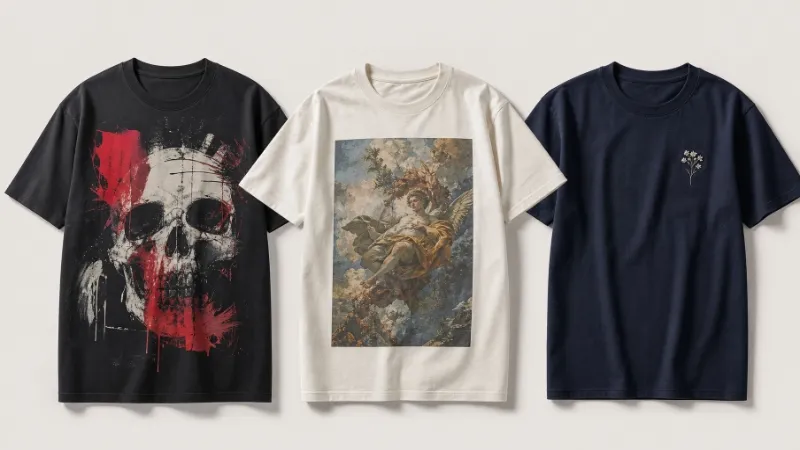
Two T-shirts can use the same fabric, but the decoration method can change how customers judge the product.
| Method | Customer Perception | Best Brand Fit |
|---|---|---|
| Screen printing | Classic, bold, familiar | Streetwear, merch, casualwear |
| DTG printing | Creative, detailed, artistic | Limited drops, art tees |
| Embroidery | Premium, textured, long-lasting | Polo, uniforms, luxury basics |
| Sublimation | Sporty, colorful | Activewear, teamwear |
| Heat transfer | Flexible and practical | Event wear, names, numbers |
A bold screen print can make a tee feel like authentic streetwear. A detailed DTG print can make it feel like wearable artwork. A small embroidered logo can make a basic polo or heavyweight tee feel more expensive.
The production cost difference may only be a few dollars, but the perceived value difference can be much higher. This is why many premium brands choose embroidery even when printing would be cheaper.
The method should support your retail price. If your brand wants to sell premium basics, the decoration must feel intentional, durable, and aligned with your positioning.
Factory Advice: How to Choose the Right Method Before Sampling
Before sampling, confirm your quantity, artwork complexity, fabric composition, GSM, target price, and brand positioning. These details help your manufacturer choose the most practical customization method.
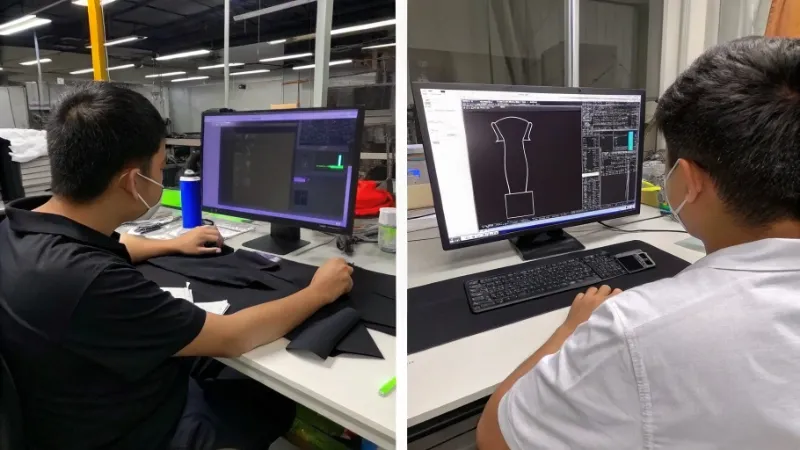
Before making a sample, answer these questions:
What is your first bulk quantity?
If it is 30–50 pieces, DTG or heat transfer may be more practical. If it is 100–500 pieces, screen printing may be better.How complex is your artwork?
Gradients, photos, and shadows usually fit DTG better. Simple solid-color logos usually fit screen printing or embroidery better.What fabric are you using?
A 180gsm cotton tee, a 240gsm heavyweight tee, a 320gsm hoodie fleece, and a polyester sports shirt behave differently during decoration.What is your target retail price?
Premium positioning may justify embroidery or specialty printing. Promotional T-shirts may need a simpler, cost-efficient print.Do you need exact brand colors?
Screen printing is usually stronger for Pantone matching because ink can be mixed to target specific colors. For textile color references, many brands use systems such as Pantone’s textile color system5.
Factory Process:
At Easson Apparel, we review artwork, fabric composition, GSM, logo size, order quantity, print placement, and target retail price before recommending a method. For uncertain cases, we suggest a sample or print test before bulk production.
Planning a custom T-shirt order? Share your artwork, quantity, target fabric, and branding details with Easson Apparel. We can help you choose the right customization method and prepare a sample for review.
Frequently Asked Questions
How to Tell if a Shirt Is Screen-Printed or DTG?
Screen printing usually has a slightly raised ink layer, especially on solid-color graphics. DTG usually feels softer because the ink is absorbed into the cotton fibers. If the design has photo-like details, gradients, or many colors, it is more likely to be DTG. If it has bold solid colors and sharp edges, it is more likely to be screen printed.
Which Printing Method Is Best for a T-Shirt?
For most cotton T-shirts, screen printing is best for bulk orders and bold graphics, DTG is best for small batches and complex artwork, and embroidery is best for premium logos. Sublimation is better for polyester sportswear, while heat transfer is useful for small runs, names, and numbers.
Is Screen Printing or DTG Cheaper?
DTG is usually more practical for very small quantities because it has little setup cost. Screen printing becomes cheaper as quantity increases, especially for simple designs with limited colors. The crossover point is often around 50–100 pieces, but it depends on artwork and supplier pricing.
Does DTG Printing Crack?
DTG usually does not crack like thick plastisol or vinyl because the ink is absorbed into the fabric. However, poor pretreatment, weak curing, unsuitable fabric, or heavy white ink can still cause fading, roughness, or surface wear.
Is DTG Printing Good Quality?
Yes, DTG can be good quality when used on the right fabric and processed correctly. It is especially strong for full-color artwork, photos, gradients, and small-batch designs. Smooth high-cotton fabric, proper pretreatment, and correct curing are important.
How Much Does Embroidery Cost?
Embroidery cost depends on logo size, stitch count, placement, quantity, digitizing fee, and fabric type. A small left-chest logo is usually much more affordable than a large back embroidery design.
Which Method Is Best for Premium Branding?
Embroidery is usually the strongest choice for premium branding because it adds texture, depth, and durability. For premium streetwear, screen printing can also work well when combined with heavyweight fabric, puff print, or high-density ink.
Can Screen Printing Match Exact Pantone Colors?
Screen printing is usually the strongest option for Pantone matching because ink can be mixed to target specific colors. DTG can get close, but exact Pantone matching may be harder. Embroidery uses thread libraries, so the factory selects the closest available thread color.
Should I Make a Sample Before Bulk Production?
Yes. A sample or print test is strongly recommended when using a new fabric, new artwork, new supplier, or new decoration method. It helps check print size, placement, color result, hand feel, fabric compatibility, embroidery tension, and wash performance.
Final Recommendation
Screen printing, DTG, and embroidery are not competitors where one is always better. They are different production tools.
For bulk orders with simple graphics, choose screen printing.
For small batches and complex artwork, choose DTG.
For premium logos and higher perceived value, choose embroidery.
For polyester sportswear, sublimation may be the right tool.
For small names, numbers, or flexible trial runs, heat transfer can be practical.
For more sourcing and production guides, explore our Resource Hub or visit our T-shirt manufacturer page to start your custom project.
The smartest decision comes from matching the method to your artwork, fabric, quantity, budget, durability needs, and brand positioning.
This resource explains major cotton printing methods, including flatbed and rotary screen printing. It helps readers understand why screen printing often requires separate screens for each color and why setup matters in bulk production. ↩
This guide explains how garment selection affects DTG print quality, including yarn type, surface smoothness, fabric fibers, finishing, and pretreatment. It helps readers understand why DTG works best on the right cotton fabric, not just any blank T-shirt. ↩
This resource provides practical sublimation tips, such as pre-pressing blanks, checking heat press temperature, and improving transfer results on polyester fabrics. It helps readers avoid common sublimation problems like ghosting, uneven color, and poor transfer quality. ↩
This standard explains accelerated laundering tests used to evaluate textile colorfastness after washing. It helps readers understand why wash testing matters before bulk production, especially for printed or dyed garments. ↩
This resource introduces Pantone’s textile color system for fashion, home, and interior products. It helps readers understand how brands and manufacturers communicate color standards more clearly during fabric, print, and embroidery development. ↩