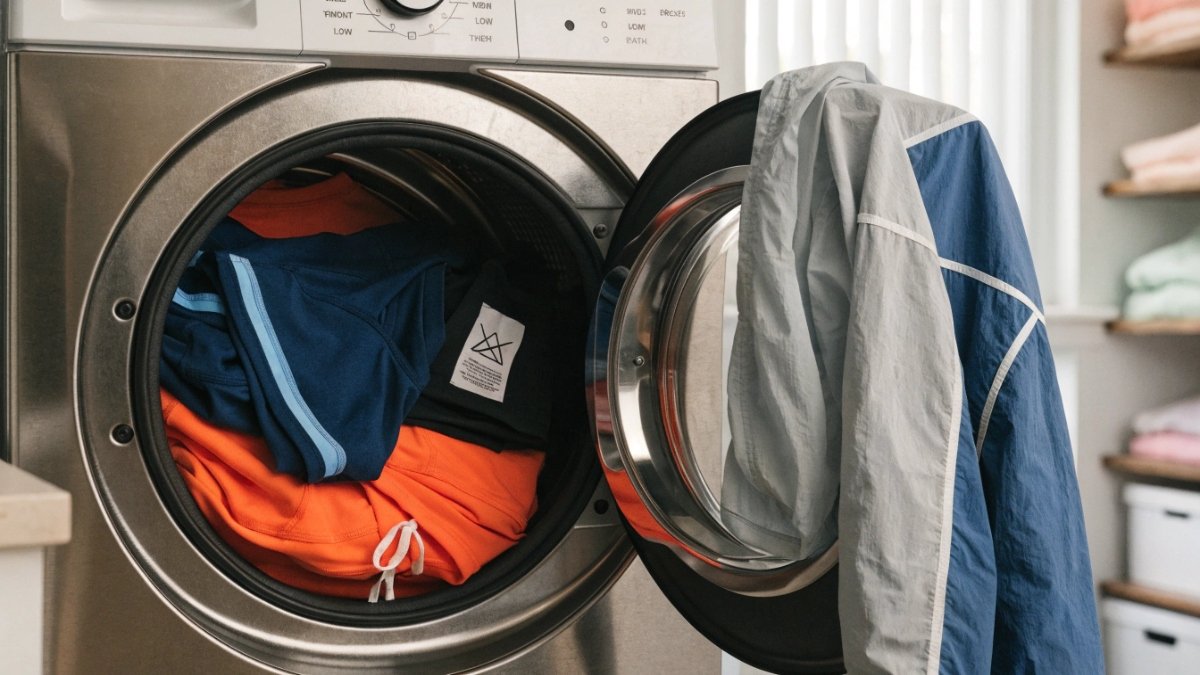
Nylon usually does not shrink in the dryer the way cotton does. But that does not mean it is safe under heat.
In real life, the bigger problem is often not dramatic shrinkage1. It is the garment coming out slightly twisted, shinier than before, less stretchy, or just “off” in fit. That is especially common with leggings, swimwear, lightweight shells, and anything that contains elastane, bonded trims2, or printed details.
If you are here because you want a simple answer, here it is: nylon can go wrong in the dryer even when it does not technically shrink much. This guide will show you what actually happens, which nylon garments are most at risk, and the safest way to dry them without ruining shape, stretch, or surface finish.
Does nylon shrink in the dryer?
Mini-summary: Nylon usually will not shrink dramatically like cotton, but dryer heat can still make it fit smaller, lose stretch, or come out misshapen—especially if the garment contains elastane, coatings, bonded trims2, or heat-sensitive prints.
The short answer is: yes, nylon can change in the dryer—but usually not in the neat, predictable way people expect from cotton shrinkage.
What often happens is this:
- the fabric relaxes and resets under heat
- stretch components weaken before the nylon itself fails
- seams, tape, prints, or coatings react badly to tumbling and heat
- the garment comes out looking or fitting slightly wrong, even if the size tag did not “change”
That is why many people say, “It did not exactly shrink, but it does not fit the same anymore.”
From a practical care standpoint, treat nylon in two categories:
- Simple 100% nylon garments: often lower risk, but still better on low heat only
- Nylon blends or technical garments: much higher risk, especially if they contain elastane, lamination, bonded hems3, or transfer prints4
If you want the safest baseline, use low heat only for simple nylon pieces, and default to air drying for nylon garments with stretch or technical construction.
For a plain-language refresher on what polyamide/nylon is (and why it’s so common in performance clothing), see Easson Apparel’s guide: What Is Polyamide Fabric? Properties, Uses, Pros and Cons.
What usually goes wrong with nylon in heat (it’s not always shrink)
Mini-summary: Most “dryer damage” on nylon looks like warping, lost stretch recovery, surface shine, or trim/adhesive failure—not a neat, predictable shrink.
When people say a nylon garment was “ruined” by the dryer, they usually do not mean it came out child-sized. More often, they mean one of these things: the waistband no longer snaps back, the surface looks slightly shiny, the legs twist after washing, the hem starts waving, or a bonded area begins to bubble. In other words, the garment may still be wearable, but it no longer looks or performs the way it did before.
Shape distortion (twist, waviness, puckering)
Tumble motion plus warmth can relax knits and shift seams. You’ll notice it on leggings, fitted tops, lightweight nylon knits, and lined garments.
Loss of stretch recovery (it feels baggy)
If your garment includes elastane, dryer heat can weaken it. The garment may still stretch, but it won’t snap back the same way.
Shiny patches or glazing
Smooth nylon faces can develop a glossy “heat shine.” That’s a surface change, not dirt. Once it happens, it’s hard to reverse.
Delamination, peeling, bubbling5
Laminated shells and bonded garments rely on films and adhesives. Heat can soften those bonds, leading to bubbling5 or lifting.
Print and trim breakdown
Rubberized logos, reflective elements, and certain prints can age faster with repeated dryer cycles.
Nylon garments that are most at risk
Mini-summary: The more “extra parts” your nylon garment has—elastane, coatings, bonding, prints—the less forgiving it is in a dryer.
Not all nylon garments carry the same dryer risk. In practice, the pieces that cause the most complaints are usually not the simplest ones. A basic 100% nylon windbreaker is often more forgiving than a fitted nylon-spandex legging, a shell with seam tape, or a garment with bonded hems3 and heat-transfer graphics. The more engineered the garment is, the less margin for heat mistakes you usually have.
High-risk #1: nylon + elastane (spandex)
This is the most common problem category in everyday wardrobes (activewear, swim, shapewear).
If you’ve searched “nylon spandex care”, this is why the advice is usually stricter: elastane is heat-sensitive, and it’s often the first component to lose performance.
This is where people most often think the garment “shrunk,” when what really happened is that the stretch system was damaged. The item may feel tighter in one area, looser in another, or less stable overall. That is why activewear and swimwear often look fine at first glance but wear noticeably worse after repeated dryer use.
- Elastane is heat-sensitive.
- Heat damage shows up as fit drift: knees bag out, waistbands roll, straps lose tension.
If the label allows “tumble dry low,” it may still be allowed—but air drying is usually the best way to preserve recovery.
High-risk #2: laminated or coated nylon (shells, rainwear)
The outer nylon may survive, while the membrane/film and adhesives suffer. If you see seam tape inside or the fabric feels film-like, treat dryer use as high risk unless the label explicitly allows it.
High-risk #3: bonded hems3, seam tape, glued trims
Bonding reduces bulk and looks clean. It’s also more vulnerable to repeated heat.
High-risk #4: rubber prints, reflective details, heat transfers
These can crack, wrinkle, or change texture with heat and tumbling.
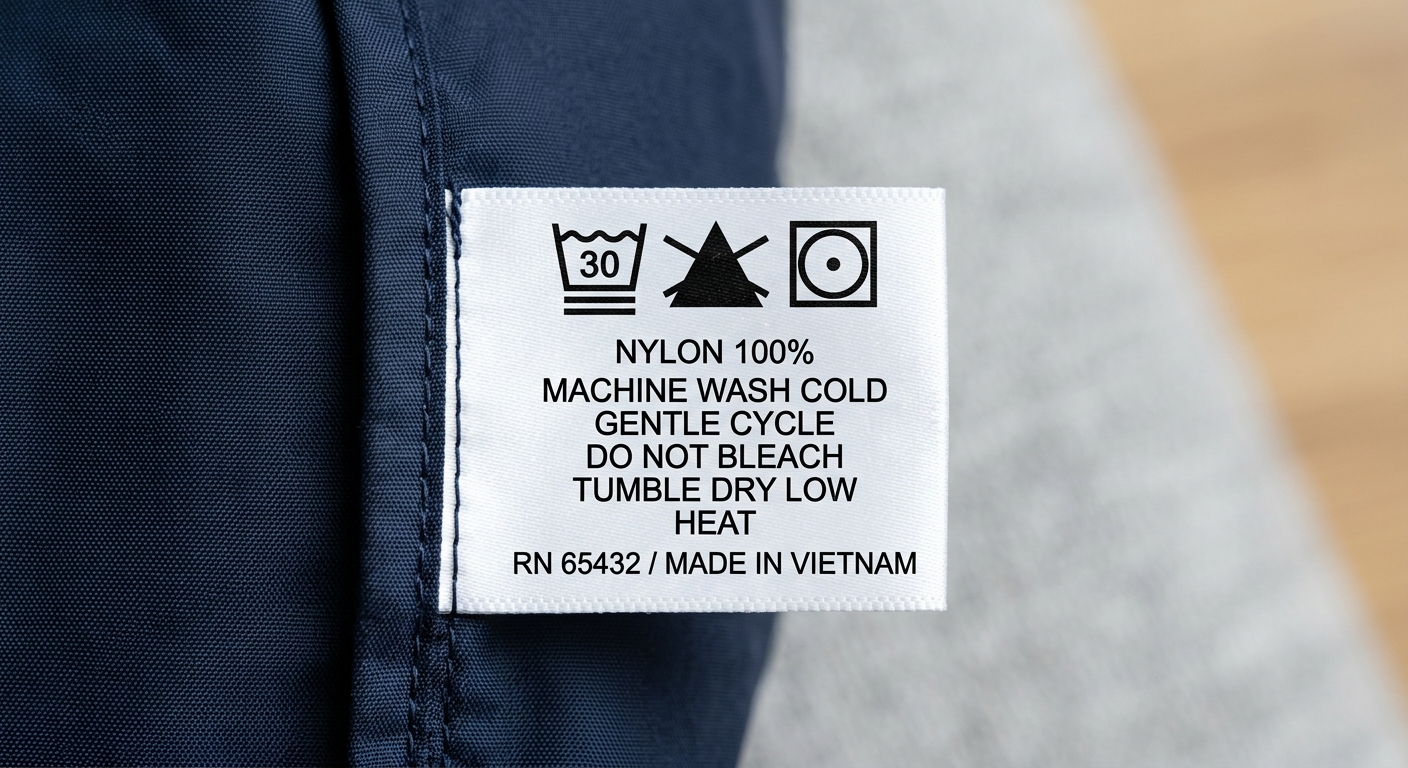
Read the care label like a pro (and what to do if it’s missing)
Mini-summary: The care label is your best “source of truth” because it reflects the whole garment—fiber %, finishes, trims, and construction—not just the word “nylon.”
Two garments can both say “nylon” and behave completely differently:
- One is 100% nylon with minimal trims.
- Another is a nylon/elastane blend with bonded hems3, prints, seam tape, and a membrane.
In the U.S., care instructions are regulated under the FTC Care Labeling Rule (16 CFR Part 423), which is one reason labels are worth taking seriously.
If you want the manufacturing-side explanation of why brands separate branding labels and care/content labels, Easson Apparel covers it in Private Label Hoodies Meaning: What It Really Means for Clothing Brands.
| If your garment is… | Most reliable drying choice | Dryer setting (if you must) | What you’re protecting |
|---|---|---|---|
| 100% nylon, simple construction | Air dry or tumble low | Low / Delicates, short cycle | Shape + surface finish |
| Nylon + elastane (leggings, swim) | Air dry preferred | Low only, remove damp | Stretch recovery |
| Laminated/coated shell, rainwear | Follow label strictly; air dry safest | Only if label explicitly allows | Membrane + adhesives |
| Bonded hems / seam tape | Avoid dryer | If allowed, very low + short | Bond strength |
| Printed/rubberized trims | Air dry or low | Low, inside-out | Print durability |
The safest way to dry nylon (step-by-step)
Mini-summary: If you want the lowest risk outcome, wash gently and air dry (hang or flat) so you avoid prolonged heat exposure and trim damage.
This is the method I recommend when you care about fit and lifespan.
Step 1: Identify the “weakest link”
Don’t treat “nylon” as the whole story. Check for elastane %, seam tape, coatings, bonded hems3, and prints.
Done when: you know what part of the garment is most heat-sensitive.
Step 2: Wash without heat spikes
If you’ve asked “does nylon shrink in hot water,” you’re thinking in the right direction. Hot water plus agitation is when you’re most likely to see shape changes—especially in blends.
- Cool or cold water is safer than hot.
- Gentle cycle for knits and activewear.
- Use the recommended detergent amount and rinse well.
Done when: the garment is clean without being “cooked” in hot water.
Step 3: Remove water without twisting
Twisting distorts knits and can torque seams.
- Press in a towel.
- Smooth seams and hems while damp.
Done when: it’s damp, not dripping, and already roughly in shape.
Step 4: Dry in the right position
- Hang: good for many woven shells and windbreakers.
- Lay flat: better for heavy knits, elastane blends, and anything that might stretch under its own weight.
Done when: hems and straps look normal—no pulled edges, no stretched points.
If you must use a dryer: the “low heat, low time” protocol
Mini-summary: If the dryer is non-negotiable, keep temperature and time low, reduce abrasion, and stop while slightly damp—then finish in open air.
This is how you minimize damage when you’re short on time.
1) Pick the lowest heat setting you have
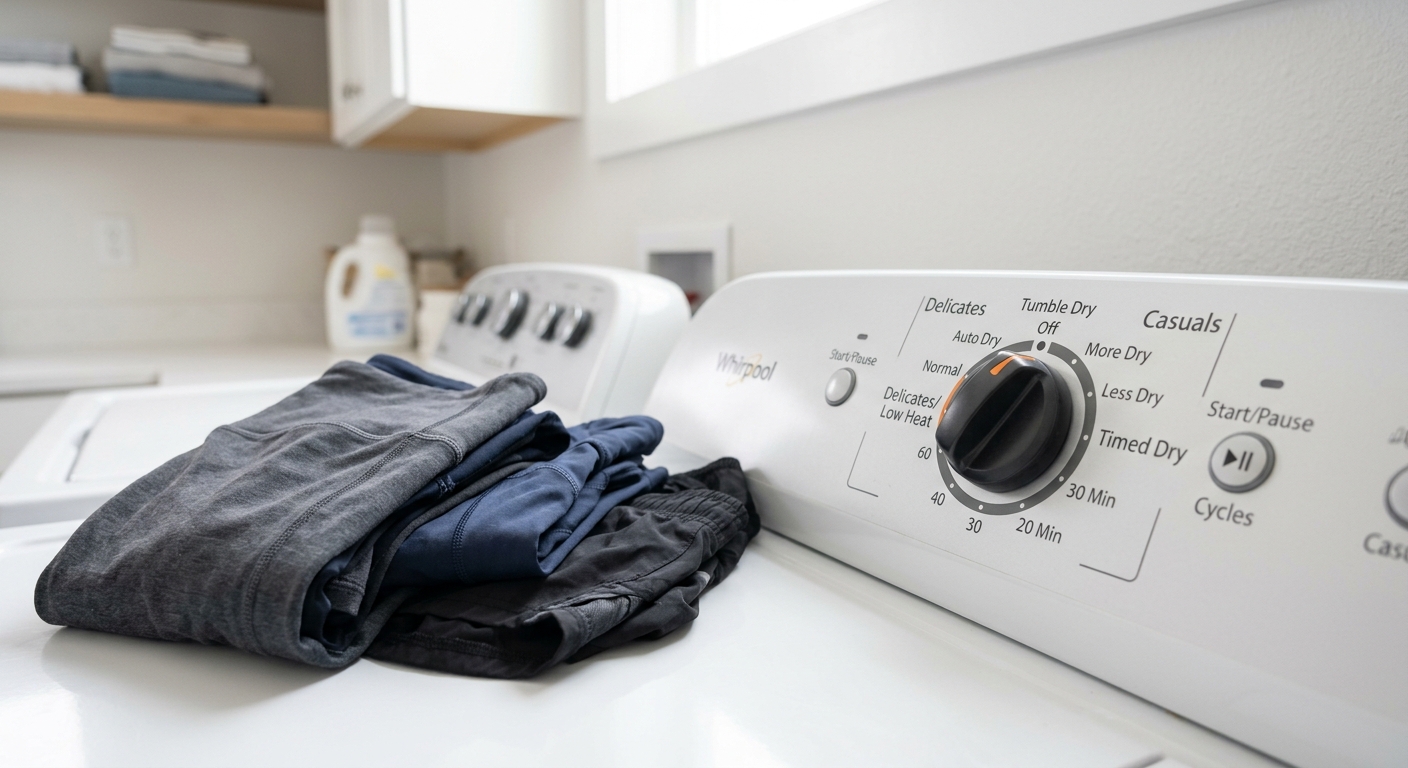
Look for “Low,” “Delicates,” or “Air Fluff.6” Avoid “High,” “Sanitize,” or towel cycles.
2) Use short cycles and check early
Nylon often dries quickly. Don’t run a full long cycle out of habit.
3) Reduce friction
- Turn garments inside-out.
- Use a mesh laundry bag for lightweight pieces.
- Don’t tumble nylon with heavy items like jeans and towels.
4) Pull it out at 90–95% dry
Finishing on a hanger or flat reduces total heat exposure.
Common mistakes that ruin nylon fast
Mini-summary: Most nylon “ruining” comes from speed habits: high heat, overdrying, and washing/drying nylon with abrasive loads.
Use this as a quick self-audit:
- High heat because it’s faster → most common cause of shine, warping, and cooked elastane.
- Overdrying (even on low) → nylon is dry, but it keeps tumbling hot.
- Mixing with heavy items → friction increases pilling/snags; hardware can catch.
- Too much detergent or softener → residue can affect performance finishes and hand-feel.
- Ignoring trims → elastics, seam tape, prints can fail before the nylon does.
Pro Tip: If you’re drying activewear, set a timer for the first 10–15 minutes. The biggest damage happens after the garment is already dry.
Quick troubleshooting: what to do if it already shrank, warped, or got shiny
Mini-summary: You can sometimes fix mild tightness or waviness with re-wetting and reshaping, but heat damage to elastane, coatings, or glazing is usually permanent.
Don’t throw a “damaged” nylon item back into the dryer to fix it. That often makes the problem worse.
| Symptom you see | Most likely cause | What you can do safely at home | What usually won’t come back |
|---|---|---|---|
| Slight tightness / feels a bit smaller | Heat + moisture relaxed and then set | Re-wet in cool water, towel-press, reshape, air dry flat | Perfect original size if elastane was damaged |
| Wavy hem or twisted seams | Warm tumbling distortion | Light steam from a distance, reshape while damp, air dry | Completely perfect seam alignment (sometimes) |
| Shiny patch / heat shine | Overheating/glazing | Reduce future heat and friction; wash inside-out | The original matte surface |
| Waistband/knees feel baggy | Elastane fatigue | Prevent further damage: air dry only | Full stretch recovery |
| Bubbling/peeling in a shell | Adhesive/lamination7 weakened | Stop using heat; consider professional repair | Original lamination7 strength |
If you’re trying to judge whether a garment is likely to hold up long-term (or whether a brand’s quality is consistent), a simple wash test tells you a lot. Easson Apparel explains what to look for—shrink, pilling, fading—in How to Tell If a Hoodie Is High Quality Before You Order in Bulk?.
Key takeaways
Mini-summary: Keep nylon away from high heat and prolonged drying. When in doubt, trust the care label and default to low-risk drying.
- Pure nylon doesn’t usually shrink dramatically, but dryer heat can still distort shape and damage finishes.
- Nylon + elastane is the most heat-sensitive everyday mix—air drying best preserves fit.
- The care label is your tie-breaker because it’s written for the whole garment, not just the fiber name.
- If you must tumble dry: low heat, short time, remove slightly damp, then finish air drying.
- Overdrying is a silent killer for performance and appearance.
Next steps
Mini-summary: If you’re building or buying nylon-heavy products, treat care as part of quality—and get clarity on fabric blend and construction before you commit.
If you’re developing nylon activewear, swimwear, or shell jackets and you want to reduce customer complaints (shrink, wave, shine, delamination7), Easson Apparel can help you choose fabric blends and constructions that match real-world care habits. You can also browse more manufacturer-written fabric and care guides in the Resource Hub.
Understanding fabric shrinkage helps you avoid common laundry mistakes and preserve your garments' fit and quality over time. ↩
Understanding bonded trims helps you care for garments with advanced construction, ensuring durability and avoiding damage from heat exposure. ↩
Understanding bonded hems can help you choose garments with cleaner finishes and better durability, especially for activewear and technical clothing. ↩
Understanding transfer prints can help you care for garments with these details, ensuring their durability and avoiding damage during washing or drying. ↩
Understanding bubbling in nylon garments helps prevent damage to expensive items like shells and rainwear, ensuring longer-lasting performance. ↩
Understanding the Air Fluff setting can help you safely dry nylon garments without heat damage, preserving their shape and stretch. ↩
Understanding lamination helps you care for garments with bonded or coated layers, ensuring they last longer and maintain their original quality. ↩