
Are you struggling to pick the perfect fabric for your next T-shirt collection? Many brands face this question before sampling: which material feels better, lasts longer, and works best with printing?
The best T-shirt fabric is not simply the softest or most expensive one. It is the fabric that fits your product’s purpose, design, printing method, price point, and wash performance. Before choosing fabric, I guide clients to think about how the T-shirt will actually be worn, printed, washed, and reordered.
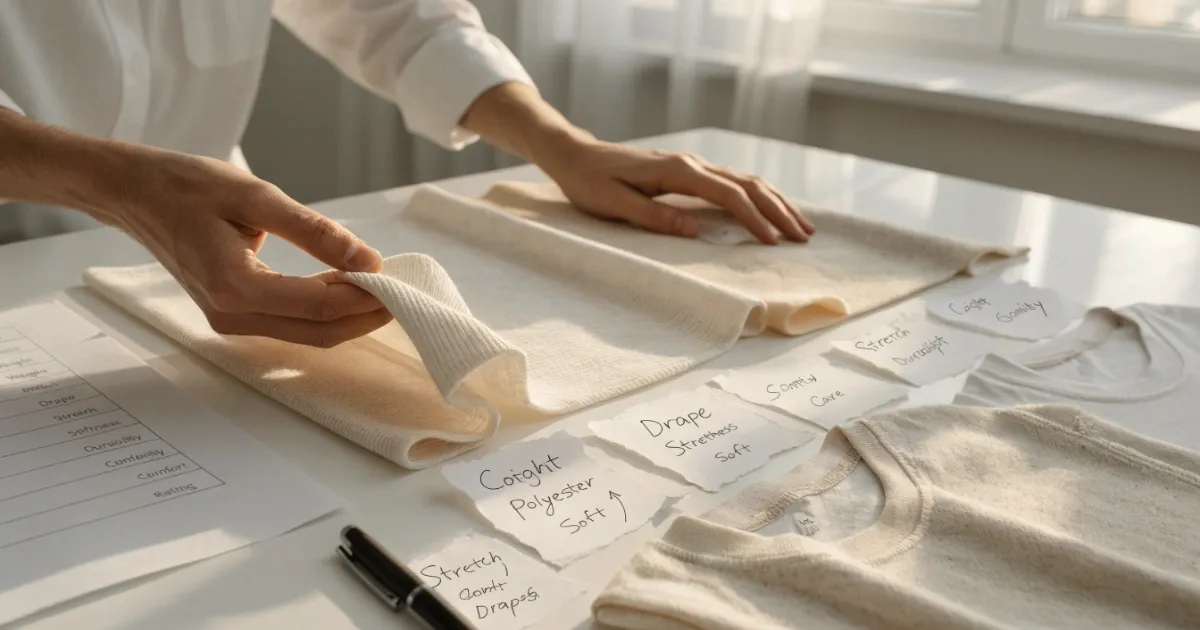
Fabric choice shapes almost everything in a T-shirt. It affects comfort, fit, drape, durability, print quality, and even how customers judge your brand. A fabric may feel nice as a swatch, but it still needs to perform as a finished garment.
In this guide, I will share practical fabric selection advice from a manufacturing point of view, so you can choose the right material before sampling and avoid common production problems later.
What Is the Best Fabric for T-Shirts?
Many new brands ask me: “What is the best fabric for T-shirts?” It is a good question, but it is not complete.
There is no single best T-shirt fabric for every product. The right choice depends on the T-shirt’s purpose, target wearer, design style, printing method, price range, and how the garment performs after washing.
Take the most common example:
For most everyday T-shirts, cotton or cotton-rich fabrics are usually safe choices. They feel comfortable, breathe well, and work with many printing methods.
For sportswear, polyester blends often perform better because they dry faster and hold shape well.
For premium fashion T-shirts, Pima cotton1, Supima cotton, modal blends2, tri-blends3, or heavyweight cotton4 can create a more elevated product.
That is why I usually ask clients a few questions before recommending fabric:
- Is this an everyday basic T-shirt or a high-end retail piece?
- Is it for summer wear, streetwear, sportswear, or promotional use?
- Will it use a large print, a small logo, embroidery, or no decoration?
- Is the fit regular, slim, fitted, boxy, or oversized?
- What retail price do you expect customers to pay?
- Will this style need repeat orders?
These answers matter. A fabric that works well for a lightweight summer tee may not work for a structured oversized T-shirt. A soft tri-blend may feel premium, but it may not print as sharply as a smooth cotton jersey. A heavy fabric may look expensive, but it may feel too warm for daily wear in hot markets.
I often see brands equate softness with quality. But a T-shirt being soft does not always mean it is high quality. If a fabric is too soft, it might not hold its shape well after washing. In one case, a brand chose an ultra-soft modal fabric, but after washing, shrinkage exceeded 8% and caused size inconsistency in bulk production.
A reliable T-shirt fabric should not only feel good in the hand. It should also control shrinkage, resist twisting, keep the neckline stable, support the print, and remain consistent in bulk production.
Quick Comparison: Common T-Shirt Fabrics
There are many T-shirt materials, but most brand decisions start with a few common fabric families.
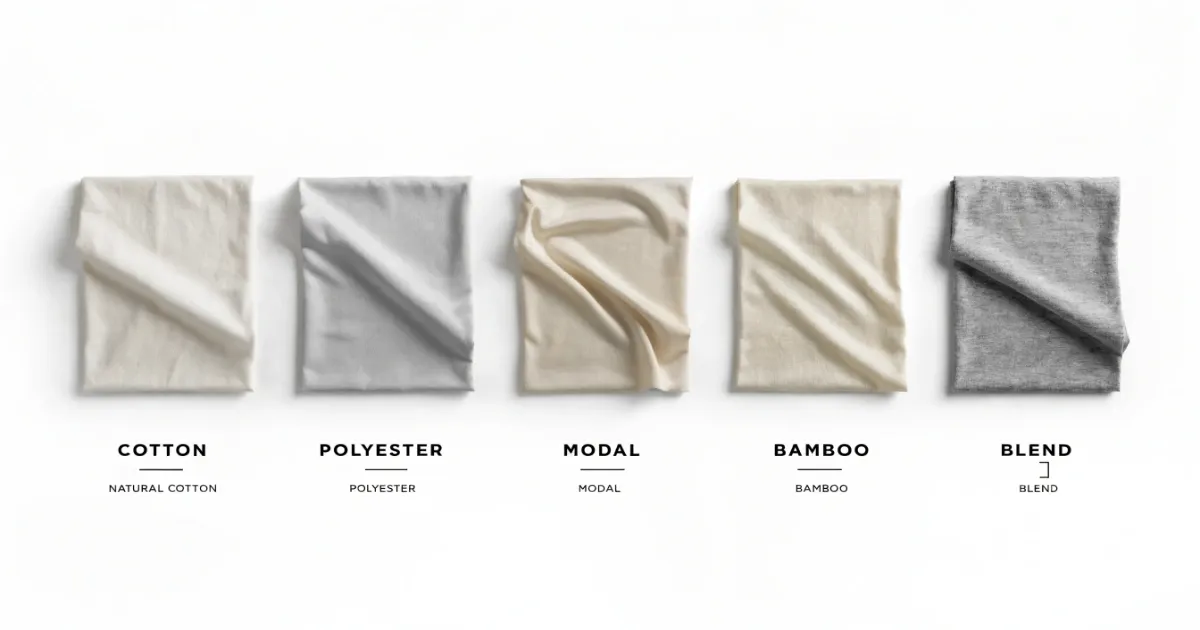
This table compares popular T-shirt fabrics, their best uses, and practical manufacturing notes to help you make a better choice before sampling.
| Fabric | Best For | Manufacturer's Note |
|---|---|---|
| 100% Cotton | Everyday basics, casual wear, screen printing | Popular, breathable, and easy to source. Quality varies, so shrinkage, color fastness, and fabric surface should be checked before bulk production. |
| Combed Cotton | Softer basics, better retail tees | Smoother and softer than regular cotton. It gives a cleaner surface for printing and usually feels more refined. |
| Ring-Spun Cotton | Retail-quality T-shirts | Soft, smooth, and comfortable. Often used for brands that want a better hand feel without moving into very expensive fabrics. |
| Cotton/Poly Blend | Workwear, merch, everyday tees | More stable after washing and often more durable. It balances cotton comfort with polyester strength, but the hand feel is less natural than 100% cotton. |
| Tri-Blend | Premium softness, vintage feel | Usually made from cotton, polyester, and rayon. Very soft and drapey, but print testing is important because results may differ from standard cotton. |
| Polyester | Activewear, sports tees, sublimation | Durable, quick-drying, and suitable for sublimation. It can feel less natural than cotton and may need finishing to improve comfort. |
| Modal Blend | Premium lifestyle tees | Very soft, smooth, and drapey. Good for elevated casualwear, but cost and wash stability should be tested. |
| Spandex Blend | Fitted tees, activewear | Adds stretch and recovery. Useful for fitted styles and movement, but it can affect dyeing, printing, and cost. |
This table is only a starting point. Two fabrics with the same fiber content and GSM can still feel very different. Yarn quality, knit structure, dyeing, finishing, and washing all affect the final T-shirt.
That is why I do not recommend approving fabric based only on the fabric name. A “100% cotton T-shirt” can feel soft and stable, or rough and unstable, depending on how the fabric is made.
Best Fabric for Everyday T-Shirts
For most brands, the everyday T-shirt is a core product. It needs to be comfortable, durable, easy to care for, and stable enough for repeat orders.
The best fabric for everyday T-shirts balances comfort, breathability, cost, wash performance, and consistency. For many brands, 100% cotton, combed cotton, ring-spun cotton, or cotton/poly blends are practical choices.
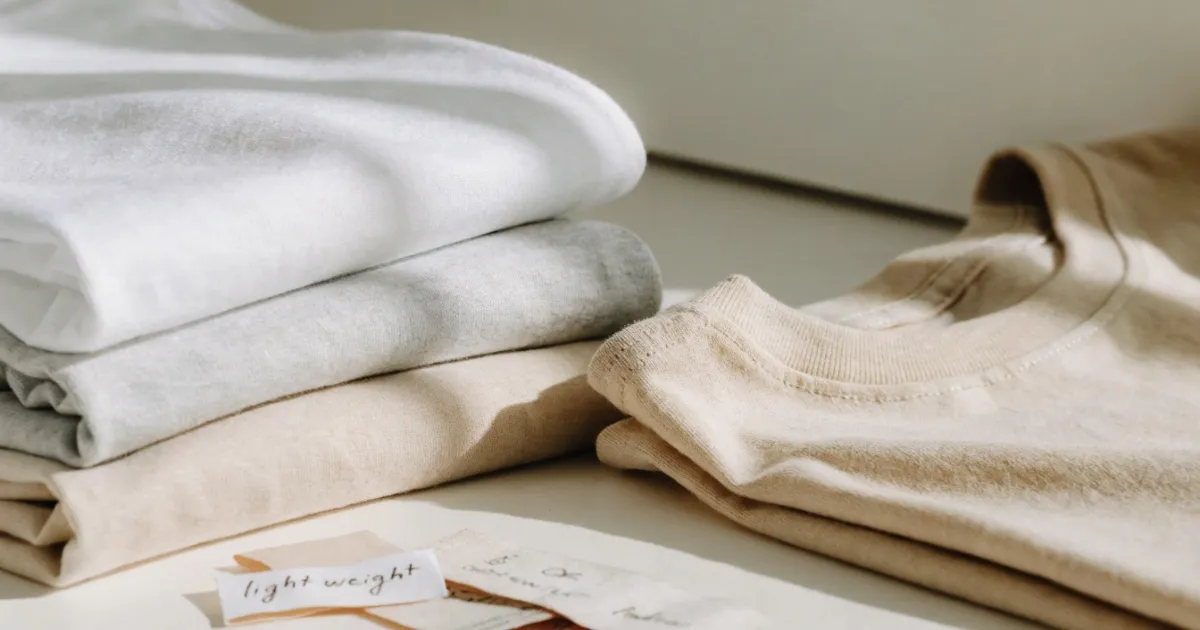
When clients ask about everyday T-shirts, I usually tell them not to chase extremes. A daily tee does not need to be the softest, thickest, or most unusual fabric. It needs to work well for real customers, real washing, and repeat production.
For standard casual T-shirts, 100% cotton jersey is often a safe choice. It is breathable, comfortable, and suitable for most common printing methods. Combed cotton or ring-spun cotton can improve hand feel and surface smoothness, making the T-shirt feel more refined. If the brand wants better durability and reduced shrinkage, a cotton/poly blend or CVC fabric can also be a good option.
For a first T-shirt collection, I often recommend starting with a proven fabric instead of something too special. A reliable basic fabric is easier to source, easier to sample, easier to print, and more stable in bulk production.
Consistency is especially important for everyday T-shirts. If the first batch feels soft, the second batch feels stiff, and the third batch shrinks more than expected, customers will lose trust. For daily basics, a brand does not only need a good first order. It needs fabric that can be repeated with stable color, hand feel, shrinkage, and fit.
Best Fabric for Premium T-Shirts
Many brands want to develop a premium T-shirt, but “premium” does not always mean the same thing.
Premium T-shirts usually follow two directions: soft and drapey, or heavyweight and structured. The right fabric depends on what kind of premium experience your brand wants to create.

1.The first direction is the soft, drapey premium T-shirt. These products focus on smooth hand feel, comfort against the skin, and a more fluid look. Fabrics such as modal blends, tri-blends, Pima cotton, and Supima cotton can work well here. Modal blends can feel silky and smooth. Tri-blends can create a soft, slightly vintage feel. Pima and Supima cotton use longer fibers, which can help create smoother and stronger yarns with less pilling tendency.
2.The second direction is the heavyweight, structured premium T-shirt. These T-shirts feel more substantial and often look stronger on the body. For this style, we may use heavyweight cotton, compact cotton5, or cotton jersey in the 220–280 GSM range. These fabrics give the T-shirt more body and help support the shoulder line, sleeve shape, and hem.
The key point is this: premium is not just a fabric name. A premium T-shirt depends on the full garment result, including fabric feel, drape, neckline finish, shoulder seams, stitching, and wash performance.
Some premium T-shirts feel luxury because they are soft and fluid. Others feel premium because they are thick, structured, and stable. The fabric should support your brand’s design language, not just sound expensive on a label.
Best Fabric for Oversized and Streetwear T-Shirts
Oversized and streetwear T-shirts are not made by simply enlarging a regular T-shirt pattern. The fabric must support the shape.
For oversized and streetwear T-shirts, fabric weight and structure matter more than softness alone. If the fabric is too light, the garment may look loose and shapeless instead of intentionally oversized.

I have seen brands use lightweight fabric for oversized designs, then wonder why the garment looks weak after sampling. The problem is often not the pattern alone. It is the fabric.
If the fabric is too light, the shoulder line may collapse. The hem may lose shape. The neckline may become loose. After washing, the T-shirt can look sloppy instead of structured. In the worst case, it feels more like sleepwear than streetwear.
For oversized and streetwear T-shirts, I usually suggest fabrics with more body, such as:
- 220–280 GSM cotton jersey
- Heavyweight cotton
- Compact cotton
- Washed cotton with enough structure
- Cotton/poly blends for better stability
The goal is not to make the T-shirt as heavy as possible. The goal is to find the right balance between weight, structure, comfort, and market fit. A 260 GSM T-shirt may feel premium for streetwear, but it may be too warm for some markets. A 180 GSM fabric may be comfortable, but it may not hold a boxy fit well.
A good oversized T-shirt should look intentional. The fabric should help maintain the shoulder shape, sleeve volume, neckline, and hem after washing and wearing.
Best Fabric for Printed T-Shirts
Printing can make or break a T-shirt design. But print quality depends heavily on fabric choice.
The best fabric for printed T-shirts depends on the printing method. Fabric composition, surface smoothness, absorbency, and heat resistance all affect print color, durability, hand feel, and wash performance.
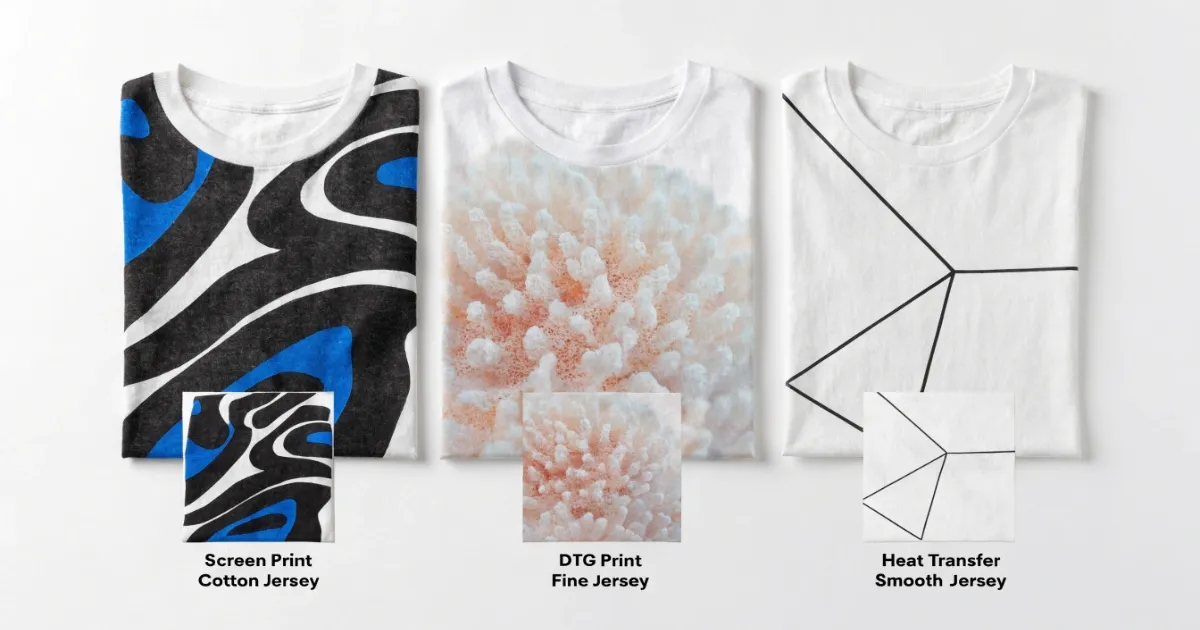
One common mistake is choosing the artwork first and the fabric later. In real production, the fabric, artwork size, and printing method should be discussed together.
For screen printing and DTG, cotton and cotton-rich fabrics are often strong choices. Cotton’s absorbent cellulose structure works well with many textile printing systems and can support good color development when properly processed. Smooth cotton or combed cotton usually gives a cleaner print surface than rough or highly textured fabric.
For DTF, the fabric range is wider. Cotton, polyester, and blends can all work, but hand feel and film thickness should be tested, especially for large prints. For sublimation, polyester is the main choice. Sublimation needs synthetic fibers to bond properly, so it does not perform well on 100% cotton. For embroidery, medium to heavier fabrics are usually safer because thin fabrics may wrinkle or pull around the embroidery area.
Fabric also affects print feel. A large print on a lightweight fabric can feel heavy. A textured tri-blend may create a softer vintage look but may not show fine details as clearly as smooth cotton jersey. Dark fabrics, large graphics, and premium retail products should always be tested before bulk production.
My advice is simple: choose the fabric and printing method together before sampling. This helps avoid dull colors, cracking, poor adhesion, heavy hand feel, or inconsistent bulk results
Best Fabric for Sports and Activewear T-Shirts
Sports and activewear T-shirts need more than softness. They need performance.
For sports and activewear T-shirts, the best fabrics should manage moisture, dry quickly, breathe well, stretch with movement, and remain durable after repeated washing.
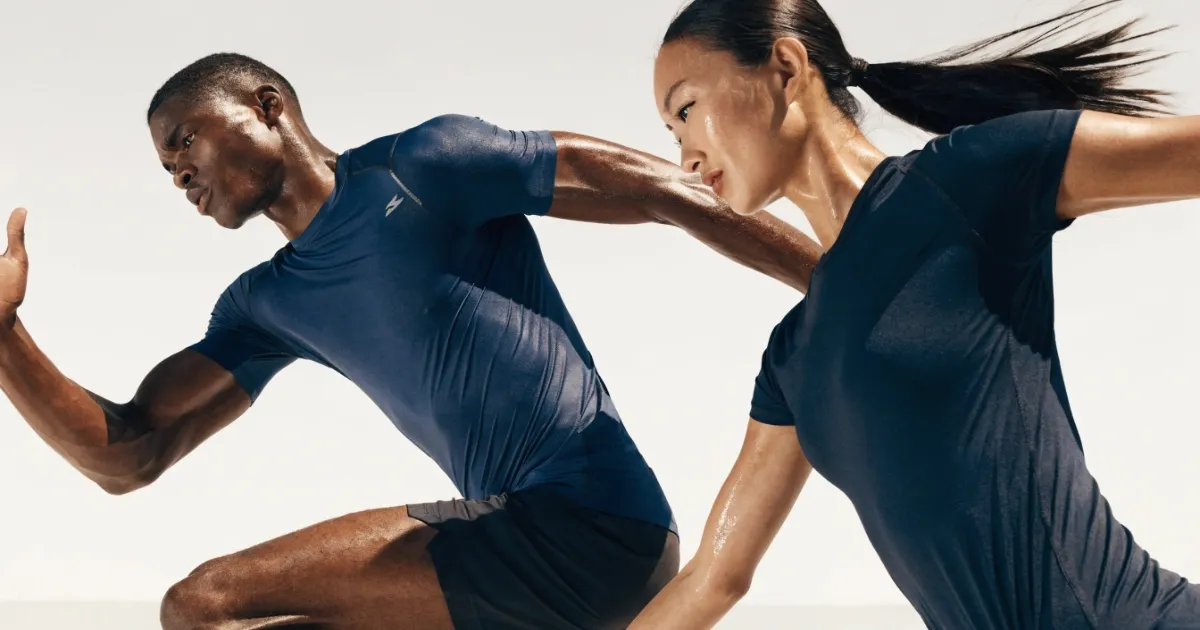
When developing activewear, I shift the conversation from hand feel to function. The fabric should support movement, sweat control, comfort, and long-term use.
Polyester is a common choice6 because it is durable, dries quickly, and can support moisture-wicking finishes. Nylon is also strong and smooth, often used in performance apparel. Spandex, elastane, or Lycra can be added when the garment needs stretch and recovery. Even a small percentage can improve movement and fit.
For activewear, fabric structure also matters. Bird-eye mesh, interlock7, and other knit constructions can change breathability, stretch, opacity, and hand feel. Moisture-wicking finishes, anti-odor treatments, and UV protection can also be considered depending on the product.
I usually do not recommend 100% cotton for serious sports T-shirts. Cotton absorbs sweat but holds onto moisture8, so it can become heavy and uncomfortable during activity. It may work for casual athleisure, but for performance use, polyester blends or nylon blends are usually more practical.
A sports T-shirt should be tested during movement, not only as a swatch. Stretch recovery, seam comfort, breathability, and sweat management all affect whether the final garment performs well.
How GSM Changes the Feel of a T-Shirt
GSM is one of the most common numbers brands ask about when choosing T-shirt fabric.
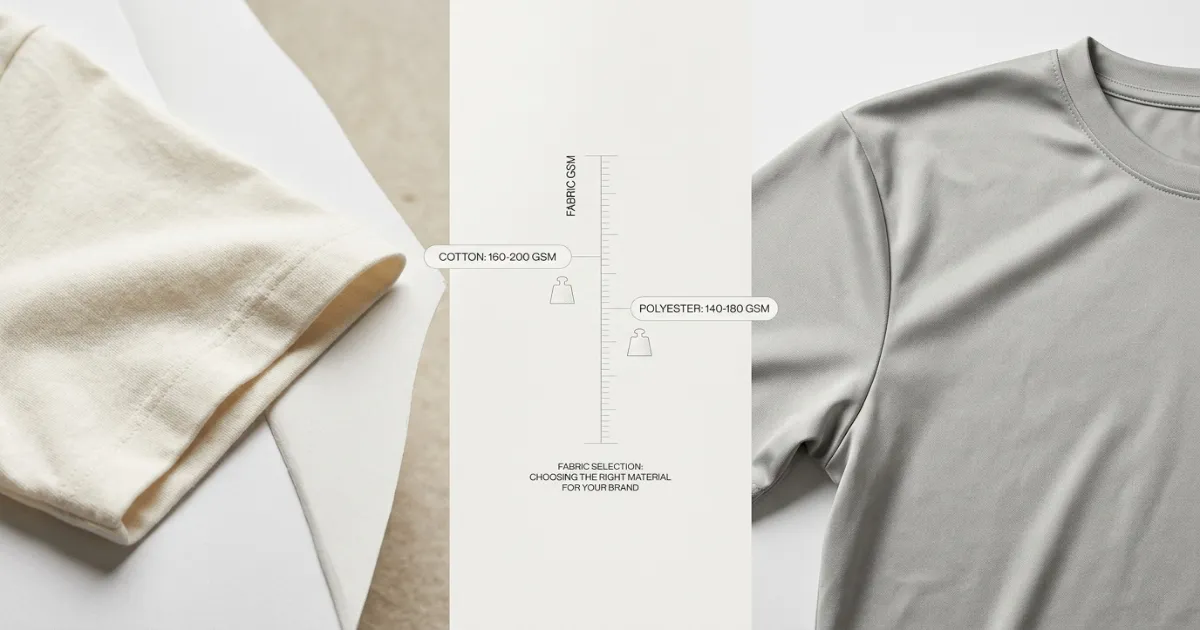
GSM means grams per square meter9. It measures fabric weight and affects how a T-shirt feels, drapes, holds shape, and is perceived by customers. But GSM is not the same as quality.
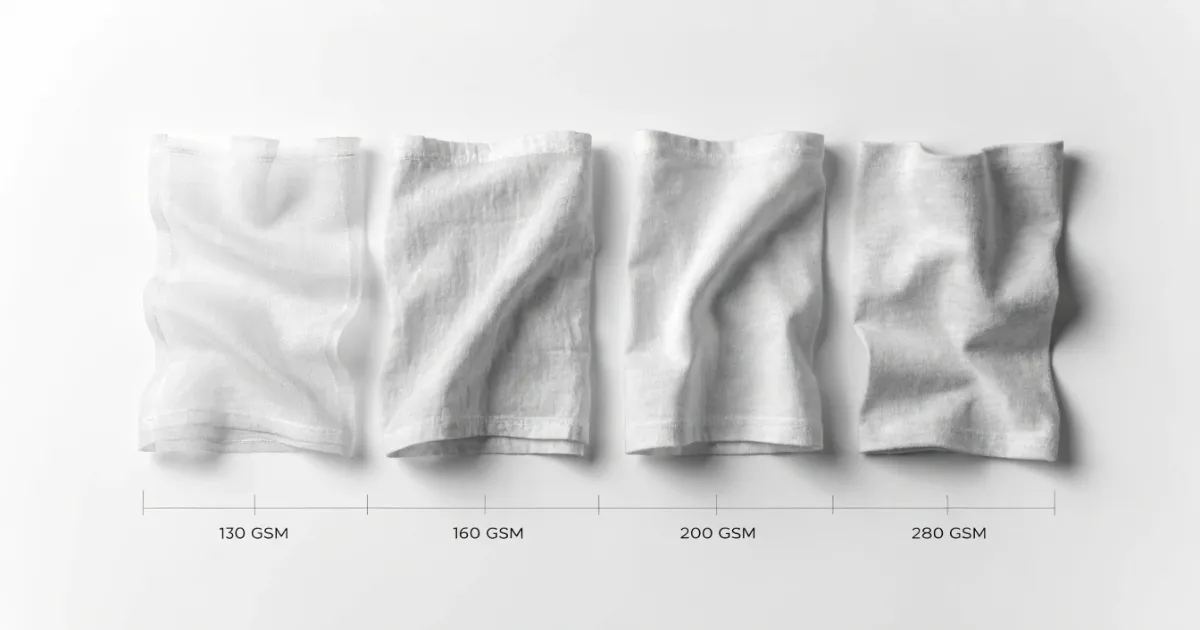
For T-shirts, common GSM ranges include:
| GSM Range | Feel | Common Use |
|---|---|---|
| 140–160 GSM | Light, breathable, airy | Summer T-shirts, budget tees, promotional tees |
| 160–200 GSM | Balanced, comfortable | Everyday T-shirts, retail basics |
| 200–240 GSM | More substantial | Better basics, premium casual tees |
| 240–280 GSM | Heavy and structured | Oversized, streetwear, boxy T-shirts |
| 280 GSM+ | Very heavy | Niche heavyweight styles, special streetwear products |
Higher GSM usually means a heavier and more structured fabric. This can help an oversized or boxy T-shirt hold its shape. It can also create a stronger premium feeling. But heavier fabric may feel warmer, cost more, and may not suit every market.
Lower GSM fabric is lighter and more breathable. It can be good for summer wear, layering, and price-sensitive products. But if the fabric is too light, it may feel thin, look transparent, or fail to support certain fits.
The important point is that GSM alone does not define quality. A 220 GSM T-shirt can feel soft and premium, or stiff and uncomfortable. Yarn quality, knit density, dyeing, finishing, washing, and fabric recovery all influence the final result.
When I help brands choose GSM, I always connect it to product purpose. A lightweight summer tee, a premium retail basic, and a heavyweight streetwear tee should not use the same GSM just because one number sounds better.
How to Choose T-Shirt Fabric Before Sampling
Choosing fabric before sampling is one of the most important decisions in T-shirt development. It can save time, reduce cost, and prevent production problems later.
To choose the right T-shirt fabric before sampling, define the product purpose, target wearer, fit, price range, decoration method, and wash expectations first. Then choose the fabric composition and GSM that support those needs.

Before sampling, I usually help clients go through these questions:
- What is the product purpose? Is it an everyday tee, premium fashion tee, sports T-shirt, streetwear piece, uniform, or promotional item?
- Who is the target customer? A budget merch buyer, gym user, streetwear customer, and premium retail customer all expect different fabric performance.
- What fit are you developing? Slim, fitted, regular, oversized, and boxy styles need different fabric weights and recovery.
- What is your target price? Fabric choice must match your cost structure and retail positioning.
- How will the T-shirt be decorated? Screen printing, DTG, DTF, sublimation, and embroidery all have different fabric requirements.
- What wash performance do you need? Shrinkage, twisting, pilling, color change, neckline recovery, and print durability should be tested.
It is also important to communicate with your manufacturer early. At Easson Apparel, we use more than 21 years of garment production experience to help brands compare fabric options before sampling. Many fabrics feel good as swatches, but the real test comes after cutting, sewing, printing, washing, and fitting.
I once had a client who told me about a previous supplier. The samples looked good, but during bulk production, delivery became unstable. They were promised 1,000 T-shirts in 20 days, but after 35 days, the factory was still rushing to finish the order. The T-shirts also had quality problems: unstable color, high shrinkage, stretched necklines, and inconsistent prints. These issues can damage a brand quickly.
For first-time T-shirt collections, I usually recommend starting with 100% cotton, combed cotton, or a cotton/poly blend. These fabrics are easier to manage, easier to print, and more stable for repeat orders. The safest fabric is often not the most unusual one. It is the fabric that is comfortable, printable, available, cost-effective, and consistent in bulk production.
Conclusion
The best fabric for T-shirts is not universal. It depends on your product’s purpose, fit, print method, price point, and wash performance.
For everyday T-shirts, cotton and cotton-rich fabrics are usually safe choices. For premium tees, you may choose soft modal blends, tri-blends, Pima cotton, or structured heavyweight cotton. For sportswear, polyester or nylon blends often perform better. For oversized streetwear, fabric weight and structure are key.
If you are developing a T-shirt collection, confirm the fabric, GSM, fit, and print method before sampling. At Easson Apparel, we help brands compare fabric options, test print compatibility, and reduce production risks before bulk orders.
"An Experiment and Simulation Study on the Tensile Behavior ... - PMC". Textile research on cotton fiber quality shows that longer staple length is associated with stronger, more even yarns and reduced yarn hairiness, supporting the use of extra-long-staple cottons such as Pima in smoother premium knit garments. Supports: The source should explain that longer cotton staple length, including extra-long-staple cottons such as Pima, is associated with improved yarn strength, smoothness or reduced hairiness, and potentially lower pilling in finished fabrics.. ↩
"10 Types of Fabric and Textiles - The Miami School of Fashion ...". Textile-science literature on regenerated cellulose fibres describes modal as having a soft hand, smooth handle, and drape characteristics that support its use in comfort-oriented apparel blends. Supports: Modal fibers and modal-blend fabrics are commonly described in textile literature as soft, smooth, and drapable, supporting their use in premium comfort-oriented T-shirts.. ↩
"Understand Your Fibers | Textiles - University of Georgia". A neutral textile-science reference defining tri-blend knit fabrics as cotton/polyester/rayon or cotton/polyester/viscose blends, and describing the softness and drape contributed by cellulosic fibers such as rayon, supports the use of tri-blends for soft, drapey premium T-shirts. Supports: The source should explain that tri-blend T-shirt fabrics commonly combine cotton, polyester, and rayon/viscose, and that the blend can provide softness, drape, comfort, and a worn-in or vintage-style hand feel.. ↩
"The Influence of bending rigidity on drape coefficient of selected ...". Textile-engineering studies describe fabric areal density, thickness, and bending rigidity as key determinants of drape and shape behavior in apparel fabrics, supporting the use of heavier cotton knits when a T-shirt is intended to have more body and structure. Supports: The source should explain that fabric mass per unit area, thickness, bending rigidity, and knit structure influence drape, stiffness, and the ability of a garment to maintain a structured silhouette.. ↩
"Enhancing the quality of elastane-cotton core yarn by compact ...". Research on compact-spun cotton yarn indicates that compact spinning can reduce yarn hairiness and improve yarn strength compared with conventional ring-spun yarn, supporting its use where smoother and more stable knitted fabrics are desired. Supports: A suitable source should explain that compact spinning reduces yarn hairiness and can improve yarn strength or evenness, which helps justify compact cotton as a smoother, more stable option for structured T-shirt fabrics.. ↩
"Influence of Functional Finishes and Polyester Type on Comfort ...". Textile-science sources describe polyester as a strong, low-moisture-regain synthetic fiber, properties that help polyester fabrics dry quickly and make them suitable for performance apparel when engineered with moisture-management finishes. Supports: The source should explain that polyester fibers are strong and hydrophobic or low in moisture regain, which contributes to durability and quick drying, and that polyester fabrics are commonly used in sportswear with moisture-management finishes.. ↩
"TRL - Knits - Textile Research Lab - Pratt Institute". Textile science references describe interlock as a weft-knit construction whose loop arrangement and fabric geometry influence mechanical and comfort-related properties, including stretch, thickness, air permeability, cover, and handle. Supports: The source should explain that knit construction, including interlock and mesh structures, affects fabric properties such as stretch, dimensional stability, air permeability, thickness, opacity, and tactile feel.. ↩
"Stay Cool: Top Fabrics to Wear to Survive the Summer Heat". Textile science research describes cotton as a hydrophilic cellulosic fiber with higher moisture regain than common synthetic fibers such as polyester, helping explain why cotton garments absorb perspiration readily and may remain wet longer during exercise. Supports: The source should explain that cotton is hydrophilic, has higher moisture regain than polyester or nylon, absorbs perspiration readily, and tends to dry more slowly, which can reduce comfort during vigorous activity.. ↩
"Pounds to GSM Converter Paper: The Ultimate Guide to ...". A textile reference source defines GSM as grams per square meter, a standard unit used to describe fabric mass per unit area. Supports: GSM is an abbreviation for grams per square meter and is commonly used to express the mass or weight of fabric per unit area.. ↩