
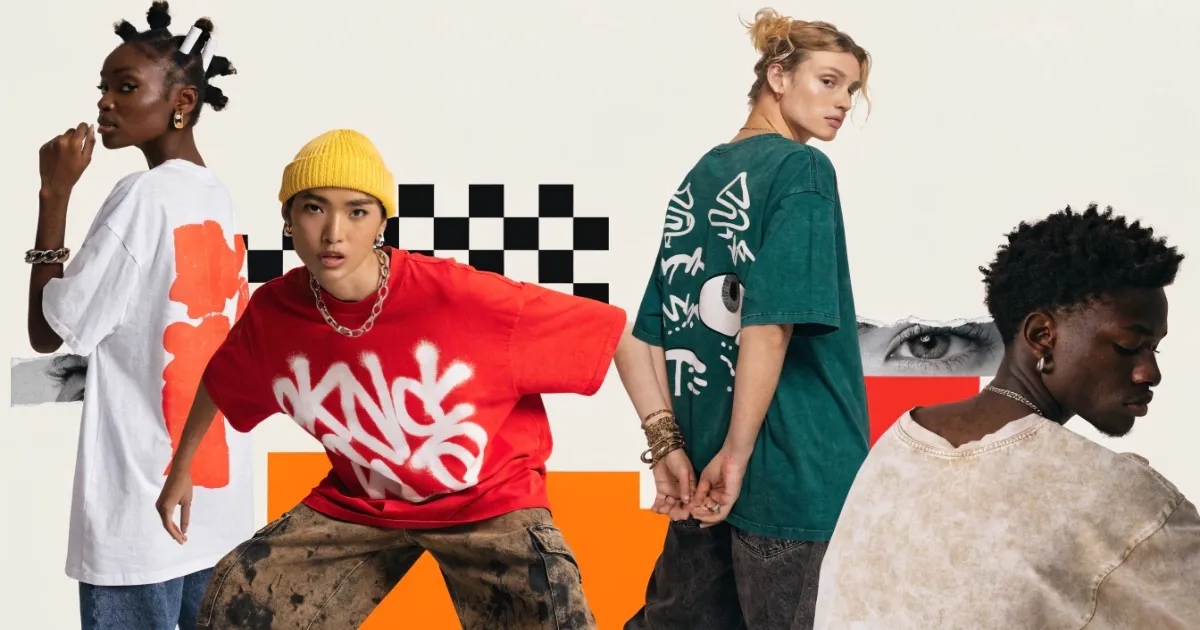
T-shirts are no longer just thin basics with a logo on the chest. In 2026, the styles getting the most attention feel wider, heavier, more graphic, and more intentional. Oversized fits, boxy cuts, large back prints, vintage washes, and streetwear-inspired shapes are becoming the styles many brands use to build stronger visual identity.
The top T-shirt trends in 2026 are oversized fits, graphic T-shirts, streetwear shapes, heavyweight cotton, boxy cuts, vintage washes, minimalist logo tees, performance fabrics, cropped and baby tees, and sustainable premium cotton. The strongest products are not only trendy in photos. They also match the right fabric weight, fit, print method, and production process.
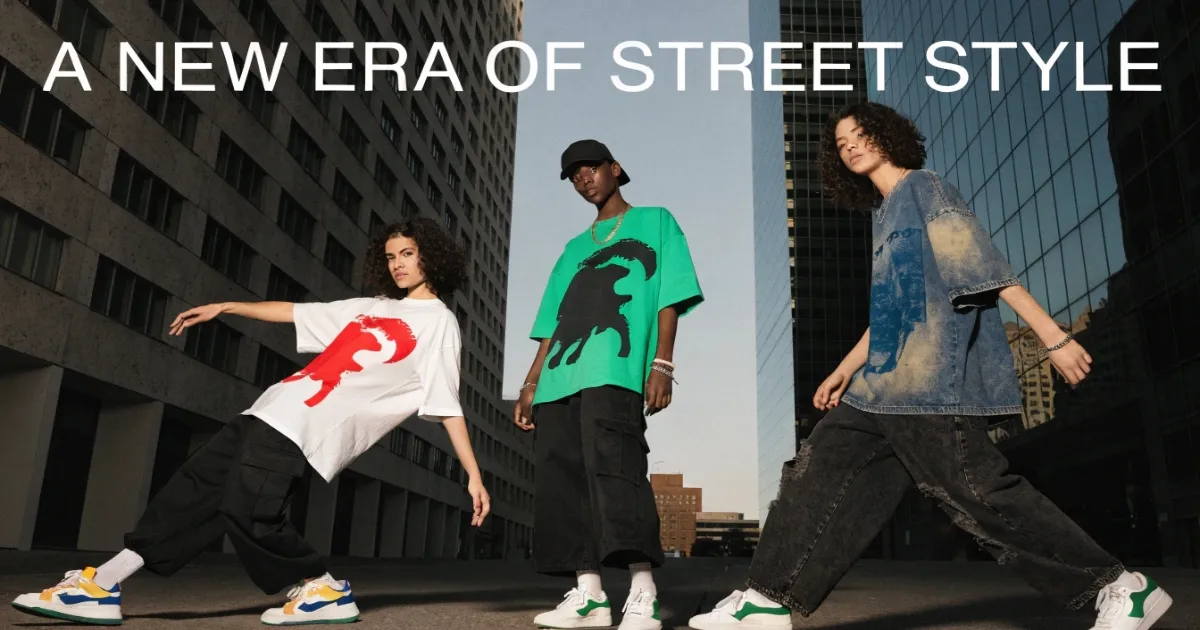
I have made T-shirts for many years in our factory in Humen, Dongguan. I have seen one clear change: brands no longer win with a cheap blank and a flat print. A T-shirt now needs shape, weight, texture, and a clear brand feeling. If the fabric is too thin, the fit is weak, or the print feels stiff, customers notice it quickly. That is why I look at every T-shirt project from four sides: fit, fabric, color, and process.
Quick Comparison: 10 T-Shirt Trends in 2026
Many buyers see many trend words online. That creates confusion. If a brand chooses the wrong trend, the product can miss its target customer.
I use a simple comparison table when I speak with brand owners. It helps them stop chasing every trend. It also helps them choose one clear direction. In my factory work, the mistake I see often is not a bad design. The mistake is a mismatch. A brand wants a luxury feeling, but it chooses a cheap 160 GSM fabric. A streetwear brand wants structure, but it chooses a slim fit. A graphic brand wants strong artwork, but it uses a flat print method. The table below is how I explain the basic choice.
| Trend | Best Fit | Best Fabric Weight | Best Process | Best For |
|---|---|---|---|---|
| Oversized T-shirts | Drop shoulder | 240-300 GSM | Screen print, puff print | Streetwear, high-street |
| Graphic T-shirts | Relaxed or oversized | 220-260 GSM | DTG, discharge, screen print | Music, art, culture brands |
| Streetwear T-shirts | Boxy oversized | 260-300 GSM | Back print, acid wash | Vibe brands |
| Heavyweight T-shirts | Structured | 260-300 GSM | Garment dye, embroidery | Premium basics |
| Boxy Fit T-shirts | Wide chest, short length | 220-280 GSM | Small logo, wash | Men and women |
| Vintage Washed T-shirts | Loose | 220-260 GSM | Acid wash, enzyme wash | Retro brands |
| Minimalist Logo T-shirts | Slight drop shoulder | 220-240 GSM | Embroidery, silicone label | Designer basics |
| Performance T-shirts | Athletic relaxed | 160-220 GSM | Heat transfer, bonded trim | Active lifestyle |
| Cropped and Baby Tees | Cropped slim or boxy | 180-240 GSM | Small print, rhinestone | Women’s fashion |
| Sustainable Premium Cotton | Unisex | 200-240 GSM | Water-based print | Eco brands |
What T-Shirt Styles Are Popular in 2026
Many brands still ask for slim-fit T-shirts. That can be risky. In 2026, slim basics no longer lead the casual market.
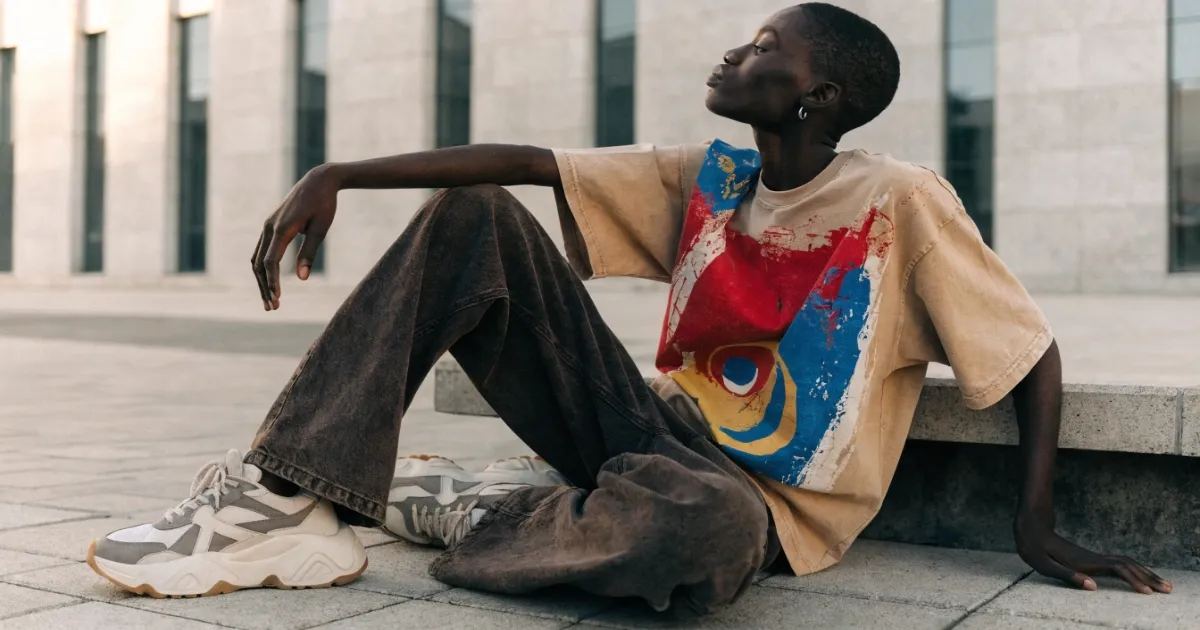
The market is moving away from tight, thin T-shirts in many casual and streetwear categories. The old slim fit has not fully disappeared, but it is now a smaller choice. It works for some corporate programs or basic wholesale items. It does not lead fashion. The main shape is now wider. The shoulder seam drops lower. In some 2026 samples, the sleeve opening almost reaches the elbow. This creates a relaxed street look. It also makes the T-shirt feel more expensive when the fabric has enough weight.
For women’s and high-street markets, I see one strong style growing fast. It is the boxy cropped T-shirt. The body length is shorter, but the chest width is wider. This gives a street feeling and still makes the body proportion look longer. It works well with wide-leg pants, cargos, and denim.
| Popular Style | Main Feature | Why Customers Like It |
|---|---|---|
| Oversized | Wide body, low shoulder | Comfortable and strong street look |
| Boxy cropped | Short length, wide chest | Better body proportion |
| Heavyweight | Thick and structured | Premium touch |
| Vintage washed | Old and faded effect | More character |
| Graphic | Big back print | Strong brand story |
What Makes a T-Shirt Trendy in 2026?
Some brands think a T-shirt becomes trendy only because of the graphic. That is not enough. Customers now judge the whole product.
In 2026, a trendy T-shirt needs strong visual design, proper fabric weight, good hand feel, and premium process details. I usually see visual design as 40% of the value. Fabric weight, fit, wash, print texture, and sewing quality make up the other 60%.
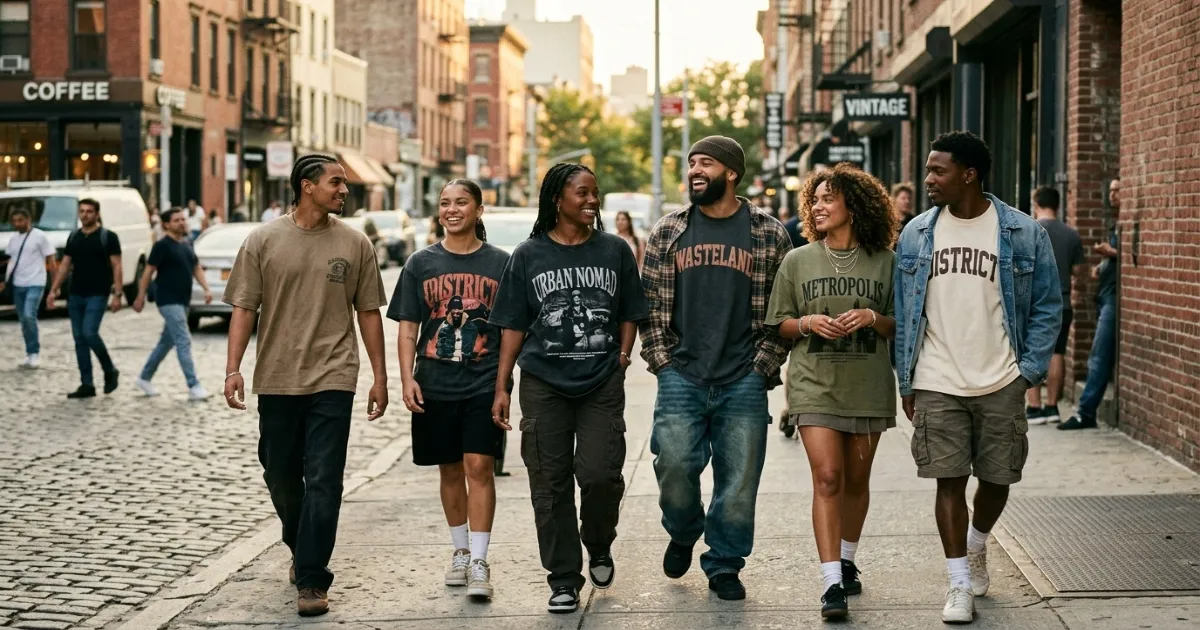
I believe fabric weight is king in 2026. A 140-160 GSM T-shirt now feels too thin for many fashion brands. It can still work for low-cost events or hot-weather basics, but it can look cheap in a premium clothing line. For many streetwear and high-street brands, 220–300 GSM is a stronger range because it helps the shape hold better. This weight helps the drop shoulder hold its shape. It also keeps the fabric away from the body. That gives the T-shirt a firm and clean outline.
Process is also very important. A print cannot only look good in a photo. It should also feel interesting by hand. Puff print, high-density print, silicone print, garment dye, acid wash, and vintage wash can increase the perceived value. I had two U.S. clients contact me last week. One wanted to print Jesus artwork on a vintage washed T-shirt. Another wanted a Michael Jackson inspired graphic with a very special design style. Both projects showed me the same thing. The artwork matters, but the wash and print process decide if the T-shirt feels real.
| Factor | Common 2026 Direction | My View |
|---|---|---|
| Fabric weight | 220-300 GSM | Gives shape and value |
| Fit | Drop shoulder or boxy | Makes the style current |
| Graphic | Big back, small front | Easy to sell and easy to recognize |
| Print texture | Puff, high-density, discharge | Adds premium feeling |
| Wash | Acid, enzyme, garment dye | Gives vintage depth |
Why T-Shirts Remain a Core Product for Brands
Some founders ignore T-shirts because the item looks simple. That is a mistake. A simple product can reveal the full strength of a brand.
T-shirts remain a core product because they are easy to wear, easy to style, and easy to repeat. A good T-shirt helps a brand test fit, fabric, printing, pricing, and customer taste before it expands into hoodies, sweatshirts, or full collections.
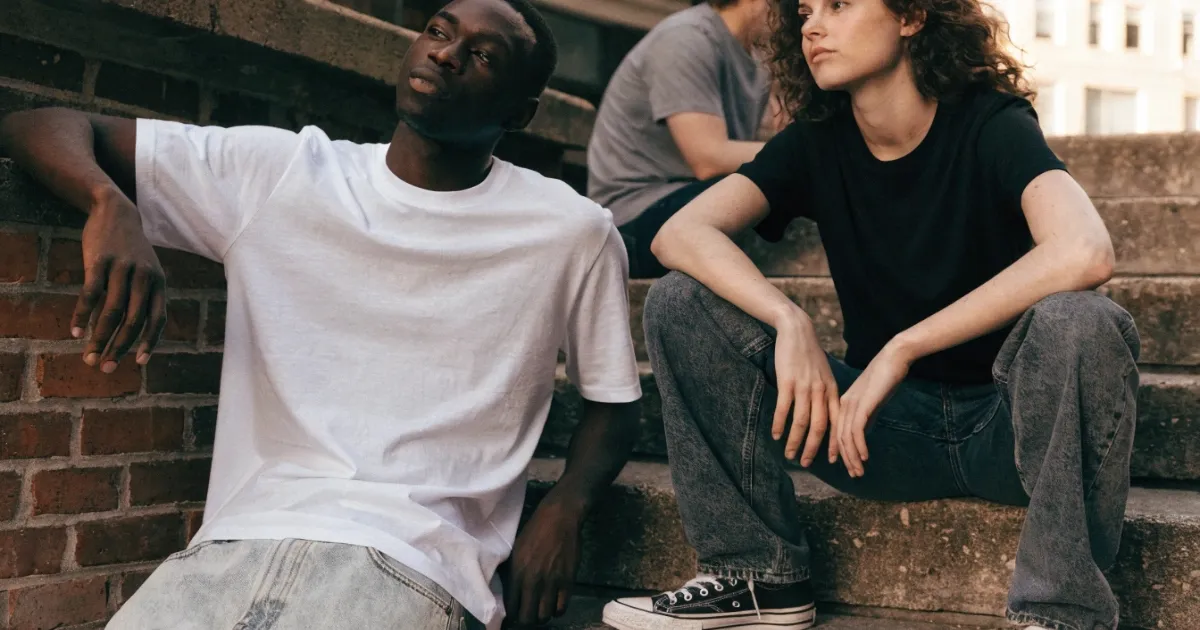
I always tell new brand owners that a T-shirt is not only a basic item. It is a test of the whole supply chain. The pattern must be right. The fabric must match the price point. The neck rib must stay flat after washing. The print must not crack. The color must not bleed. The packaging must fit the brand image. If a factory cannot help with a T-shirt, it may not help well with more complex items.
For a startup brand, T-shirts also help control risk. The size range is easier than jackets. The cost is lower than outerwear. The development time is shorter than cut-and-sew collections. A brand can test two or three fits, then reorder the strongest one. A wholesale buyer can also use T-shirts as entry products. If the market accepts the T-shirt, the buyer can add hoodies, sweatpants, and polos later.
| Brand Goal | Why T-Shirts Help |
|---|---|
| Test a new design | Lower cost and faster sample |
| Build brand identity | Print, label, and fit show style clearly |
| Improve repeat orders | Customers buy basics again |
| Enter wholesale | Easy product for retailers to understand |
| Build full collection | T-shirts connect with hoodies and bottoms |
10 T-Shirt Trends
Many trend lists only show pictures. That can be exciting, but it does not help a brand turn an idea into a real product. A good T-shirt trend should be wearable, clear in design, and possible to control in production.
Here is my classification of the top ten T-shirt trends for 2026:
1. Oversized T-Shirts
Oversized T-shirts are one of the strongest styles in 2026, especially for streetwear, creator brands, and unisex collections. The fit usually has a lower shoulder seam, a wider chest, a longer sleeve, and a more relaxed body. But a good oversized T-shirt is not just a larger regular T-shirt.
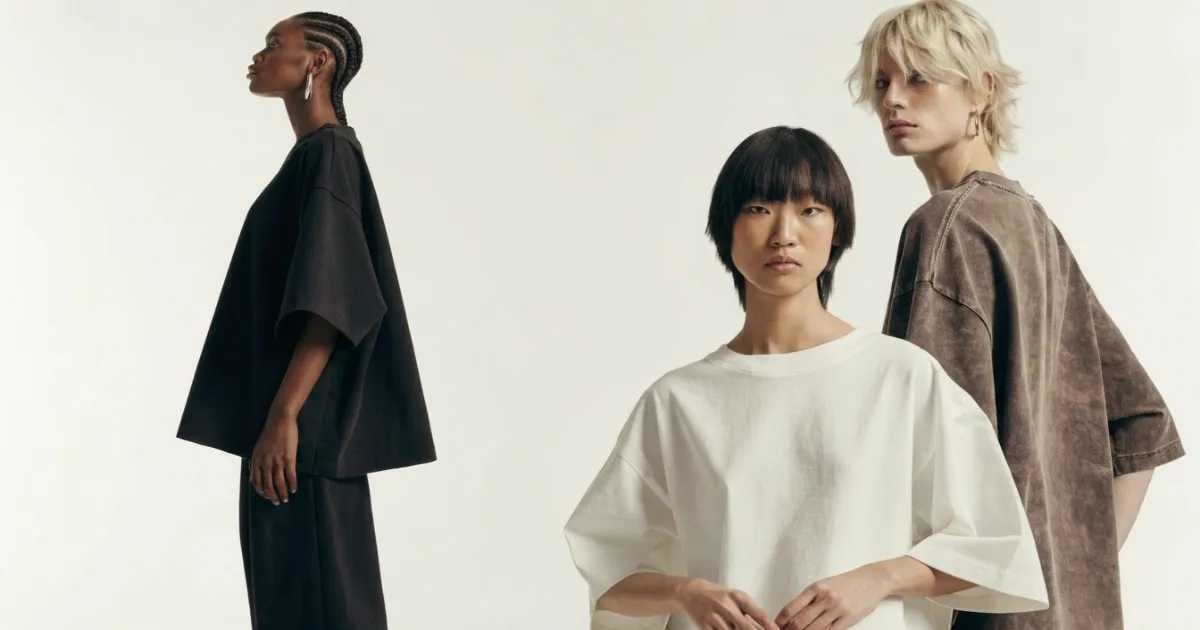
The key is proportion. If the body is too long, the style can look lazy. If the chest is wide but the sleeve opening is too small, the fit feels unbalanced. For many oversized styles, 240–300 GSM cotton works better because the fabric has enough weight to hold the shape. Thin fabric can collapse on the body and make the product feel cheaper than the design suggests.
2. Graphic T-Shirts
Graphic T-shirts are back, but the layout has changed. One layout we continue to see in 2026 sample requests is a small front logo paired with a larger back graphic. The back print can show Y2K digital style, gothic dark style, hand-drawn graffiti, religious art, music culture, or vintage photo effects.
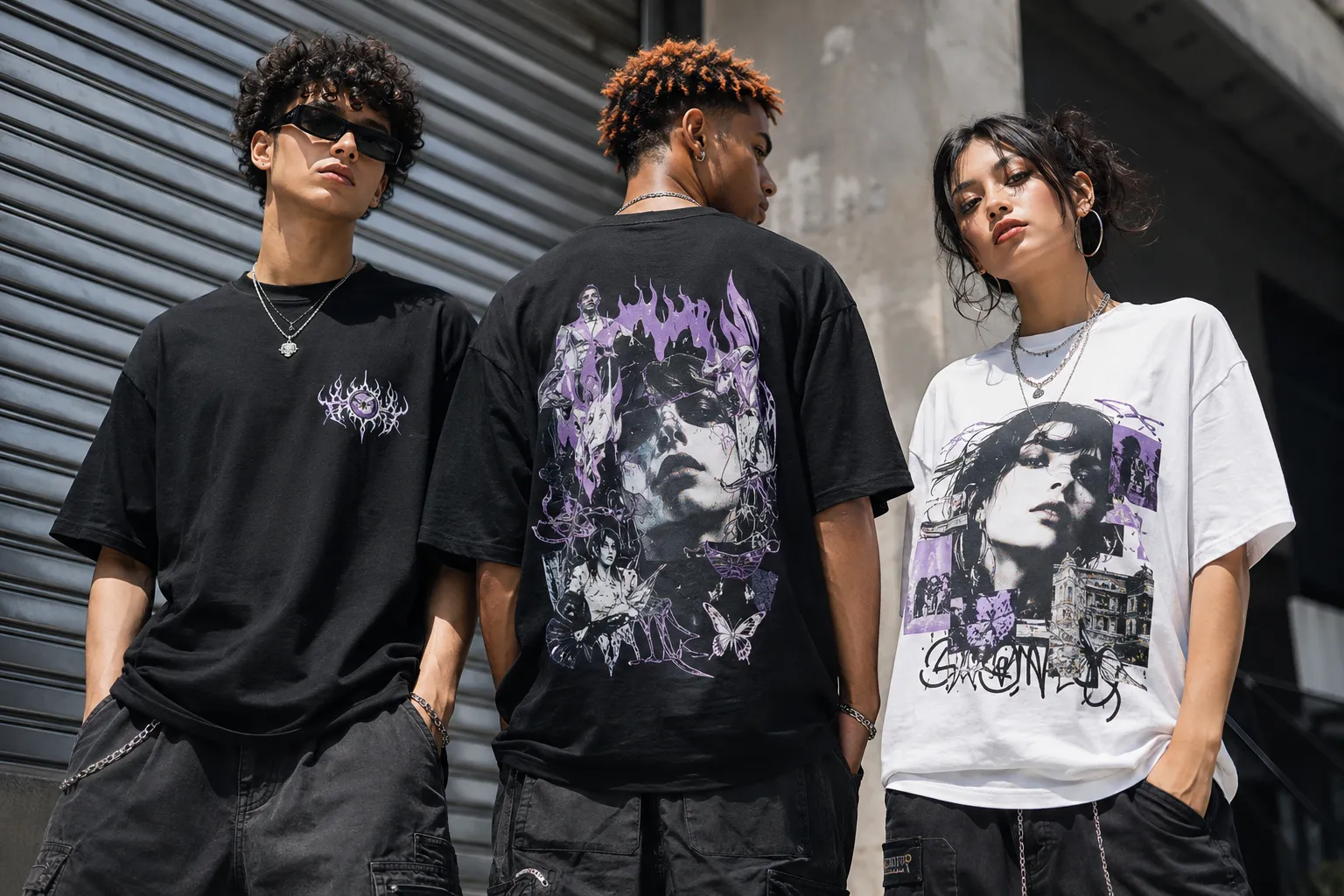
I pay close attention to print method here. A large rubber print on the back can feel like plastic. It can also trap sweat. For big artwork, I prefer discharge print, digital direct print, or soft-hand screen print when the design allows it.
3. Streetwear T-Shirts
Streetwear T-shirts need shape first. I usually work with drop shoulder, boxy body, and heavyweight cotton. Color can be black, washed charcoal, faded brown, cream, gray, or dusty blue. In our recent streetwear inquiries, washed charcoal, faded brown, cream, gray, and dusty blue have appeared more often than bright neon colors. Washed and aged colors feel more 2026.
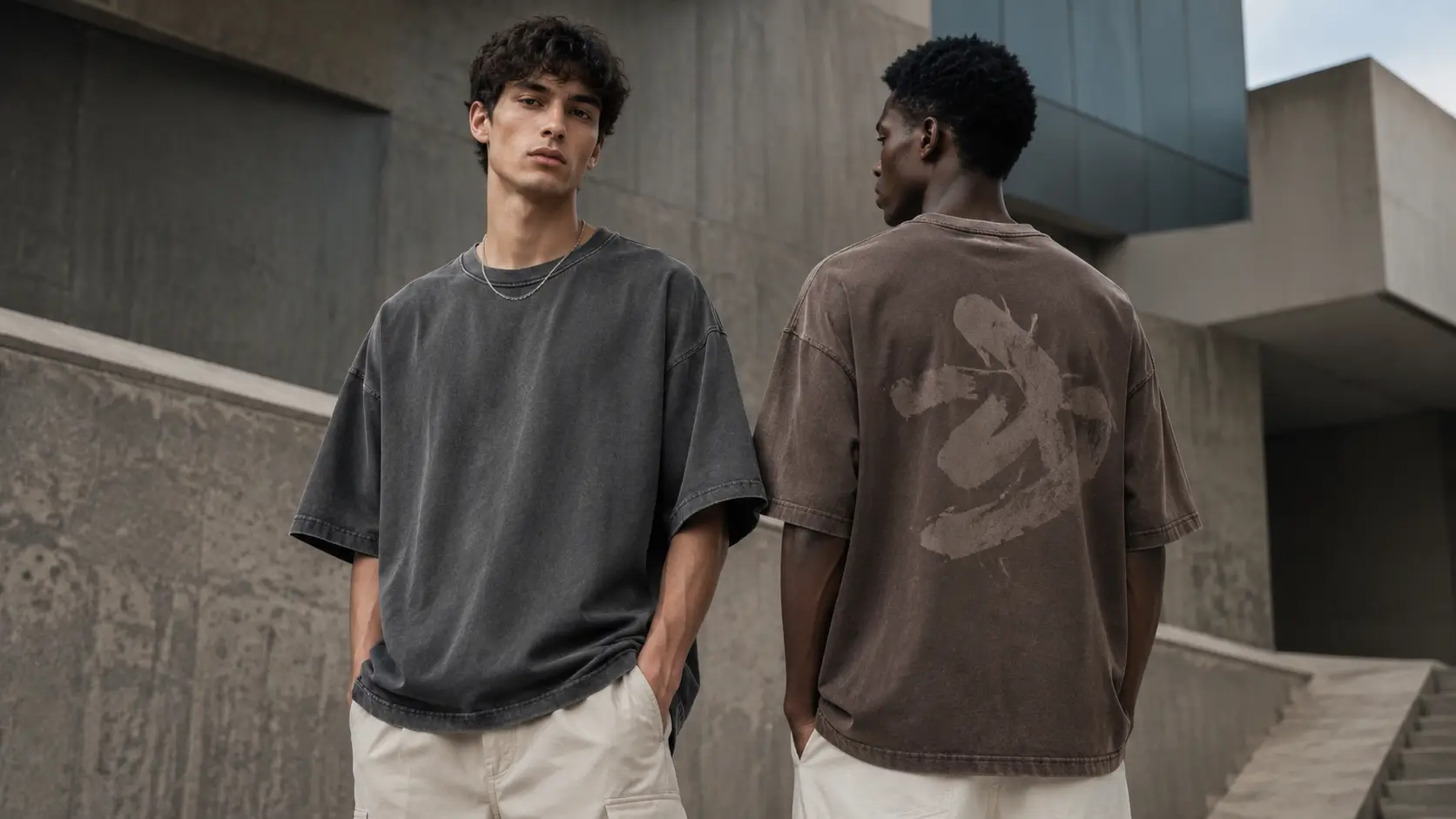
For brands, streetwear T-shirts work best when fit, color, wash, and graphic placement support the same message. A large back print on a weak blank will not feel premium. A heavy blank with no shape will also feel unfinished. The strongest streetwear T-shirts usually combine heavyweight fabric, a controlled oversized fit, and a clear visual detail such as a back graphic, puff print, acid wash, or tonal logo.
4. Heavyweight T-Shirts
Heavyweight T-shirts are now a key product for premium basics and streetwear blanks. They feel more structured in hand and can make a simple design look more valuable. For many fashion brands, 220–300 GSM is a practical range, depending on the target market and season.
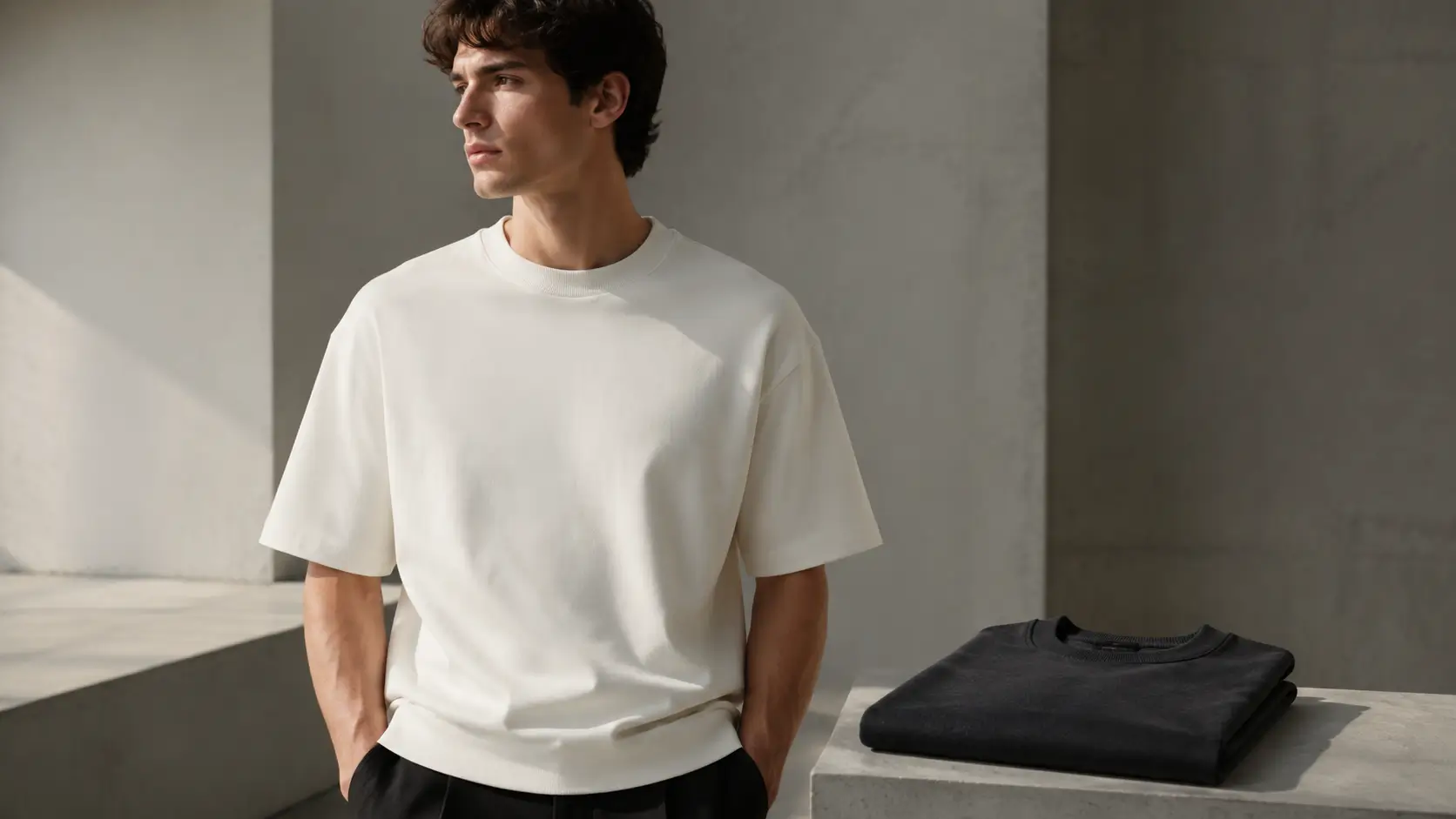
But heavier is not always better. A 300 GSM T-shirt can feel rough if the yarn quality and finishing are poor. Some fabrics look thick but feel stiff after washing. For a premium heavyweight T-shirt, I care about GSM, yarn, softness, shrinkage, neckline stability, and how the fabric drapes on the body. The goal is structure, not discomfort.
5. Boxy Fit T-Shirts
Boxy fit T-shirts are different from regular oversized T-shirts. Oversized usually means a bigger overall shape, while boxy means a wider chest, shorter body length, and cleaner square proportion. This fit works for men’s streetwear, women’s high-street fashion, and modern unisex basics.
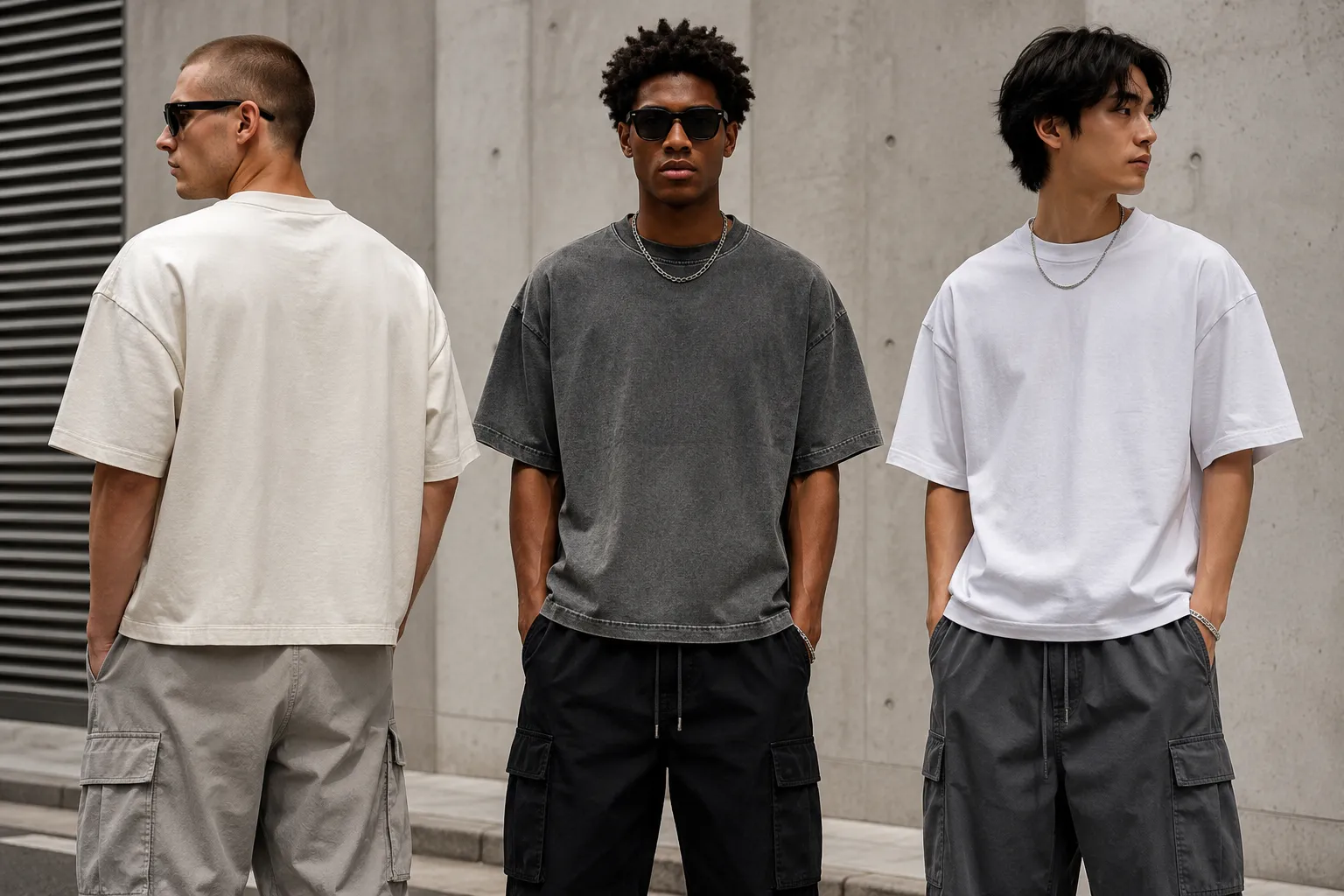
The most important detail is body length. One or two centimeters can change the whole look. If the body is too long, it becomes a normal oversized tee. If it is too short without enough width, it can look like a cropped style by mistake. For boxy T-shirts, brands should check shoulder width, chest width, sleeve opening, and body length together instead of adjusting only one measurement.
6. Vintage Washed T-Shirts
Vintage washed T-shirts are popular because they make a new product feel like it already has a story. Acid wash, enzyme wash, pigment dye, garment dye, and sun-faded effects can all create a more worn-in look. This is useful for retro brands, music-inspired collections, streetwear drops, and lifestyle labels.
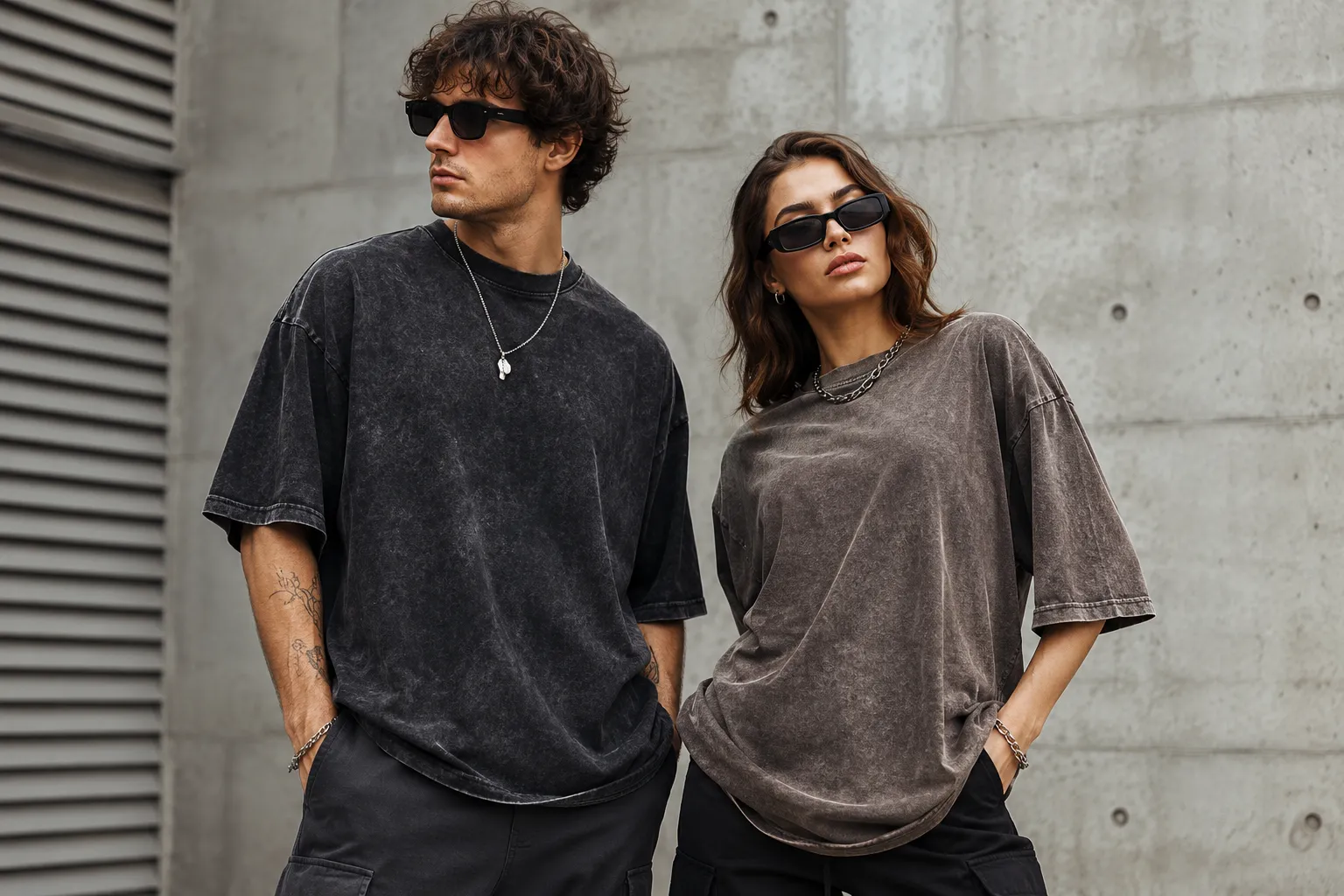
The production risk is color control. Washed colors can change after bulk washing, and different fabric batches may react differently. Prints can also change after washing, especially when the artwork sits on pigment-dyed or heavily washed fabric. For this trend, sample testing is very important. Brands should approve the wash effect, shrinkage, print hand feel, and final color before bulk production.
7. Minimalist Logo T-Shirts
Minimalist logo T-shirts are not boring when they use good fabric. A small embroidery, small silicone badge, or tonal logo can look premium. This trend is good for designer basics, quiet luxury, and higher-end casual brands.
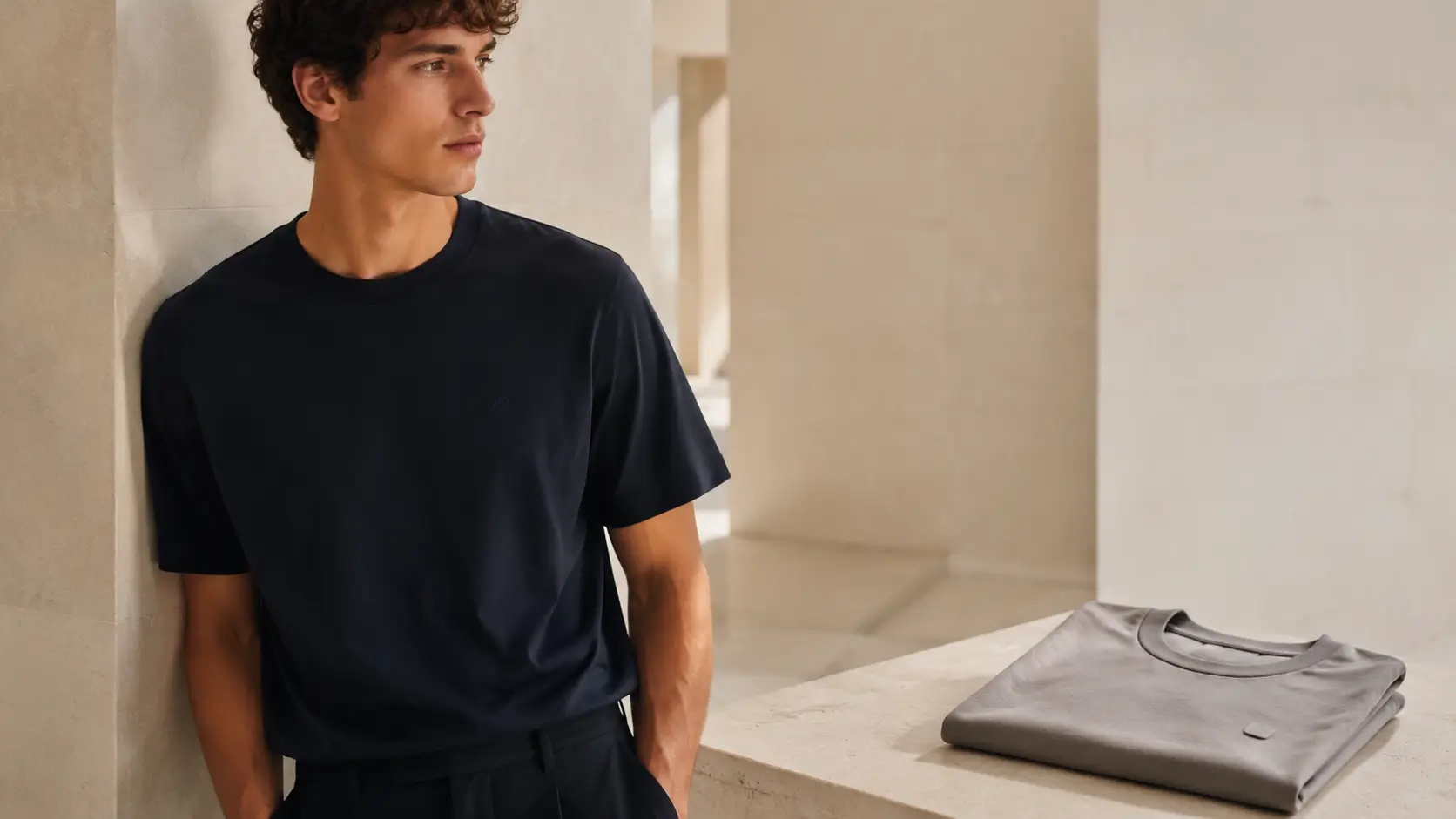
This trend works well for designer basics, quiet luxury, premium casualwear, and lifestyle brands. The risk is that a poor blank has nowhere to hide. If the neck rib waves, the shoulder seam twists, or the fabric feels thin, the whole product looks cheap. For minimalist T-shirts, fabric quality and construction matter more than decoration.
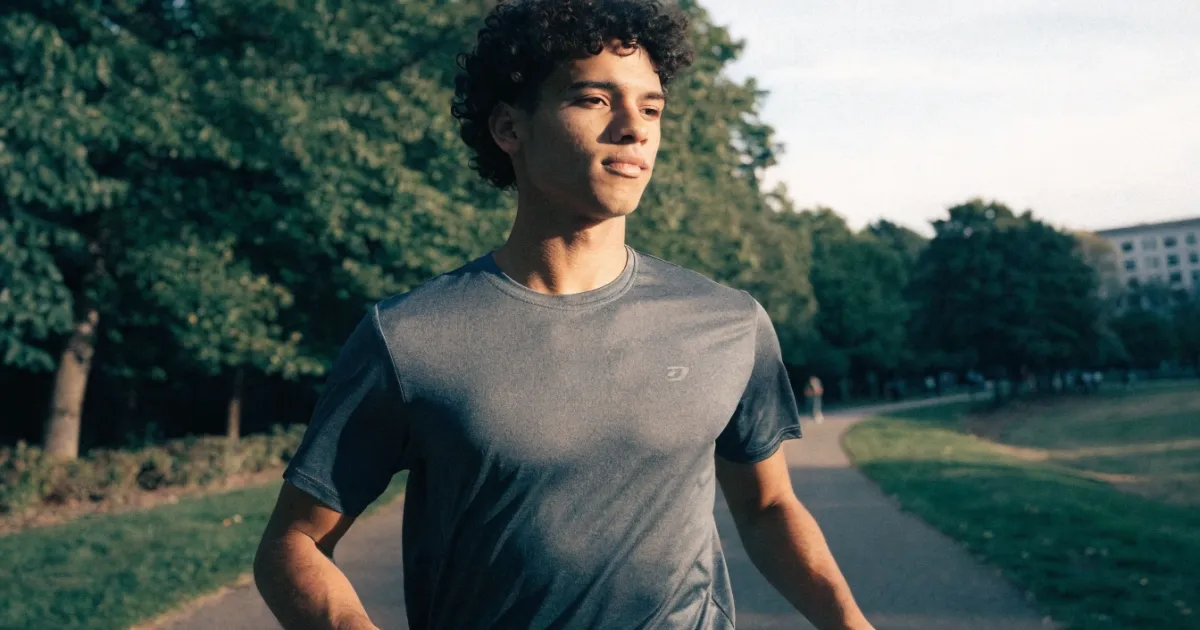
8. Performance T-Shirts
Performance T-shirts are still important for active lifestyle brands. They use moisture-wicking fabric, stretch blends, or cotton-poly blends. They are less streetwear and more functional. I think they work best when the design is clean and the fit is not too tight.
9. Cropped and Baby Tees
Cropped tees and baby tees are strong for women’s fashion, Y2K-inspired brands, festival collections, and high-street labels. The fit can be slim, shrunken, or boxy cropped. Common details include small chest prints, cute retro logos, rhinestone details, contrast binding, and soft stretch fabrics.
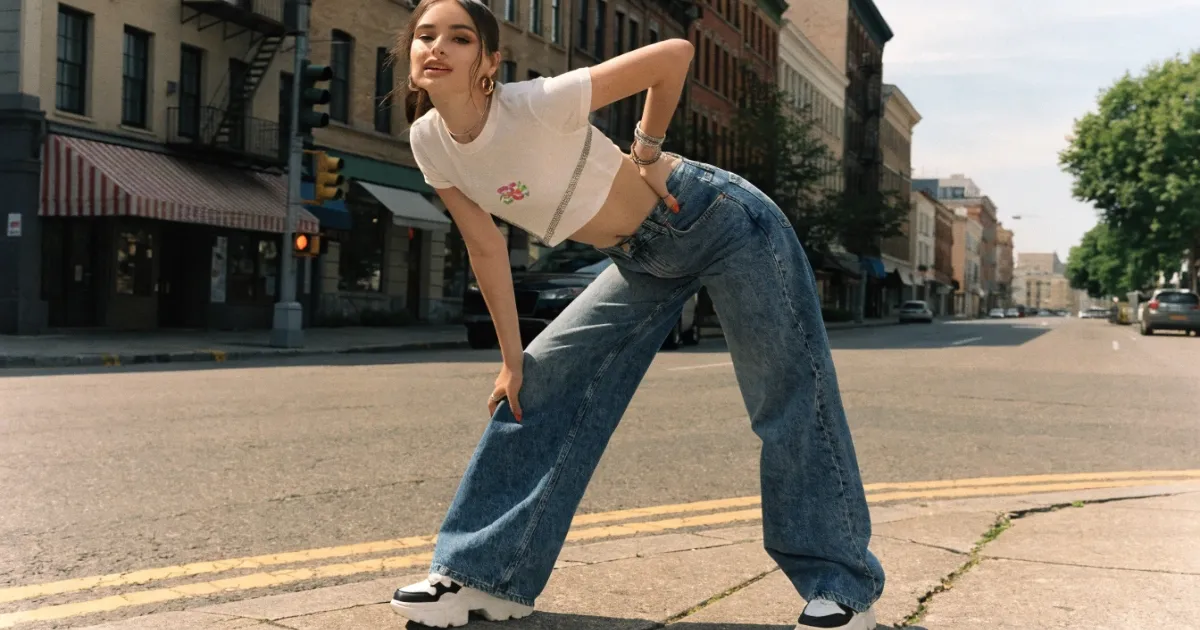
The challenge is size grading. A cropped T-shirt is very sensitive to body length, chest width, sleeve length, and fabric recovery. If the fabric stretches out too much, the product loses shape. If the body length is not controlled, the style can look too short in larger sizes. For this trend, brands should review more than one sample size before bulk production.
10. Sustainable and Premium Cotton T-Shirts
Sustainable and premium cotton T-shirts are important for brands that want a cleaner, more responsible product story. This can include organic cotton, recycled blends, water-based prints, better dyeing choices, and longer-lasting construction. But a sustainable T-shirt needs more than a green label.
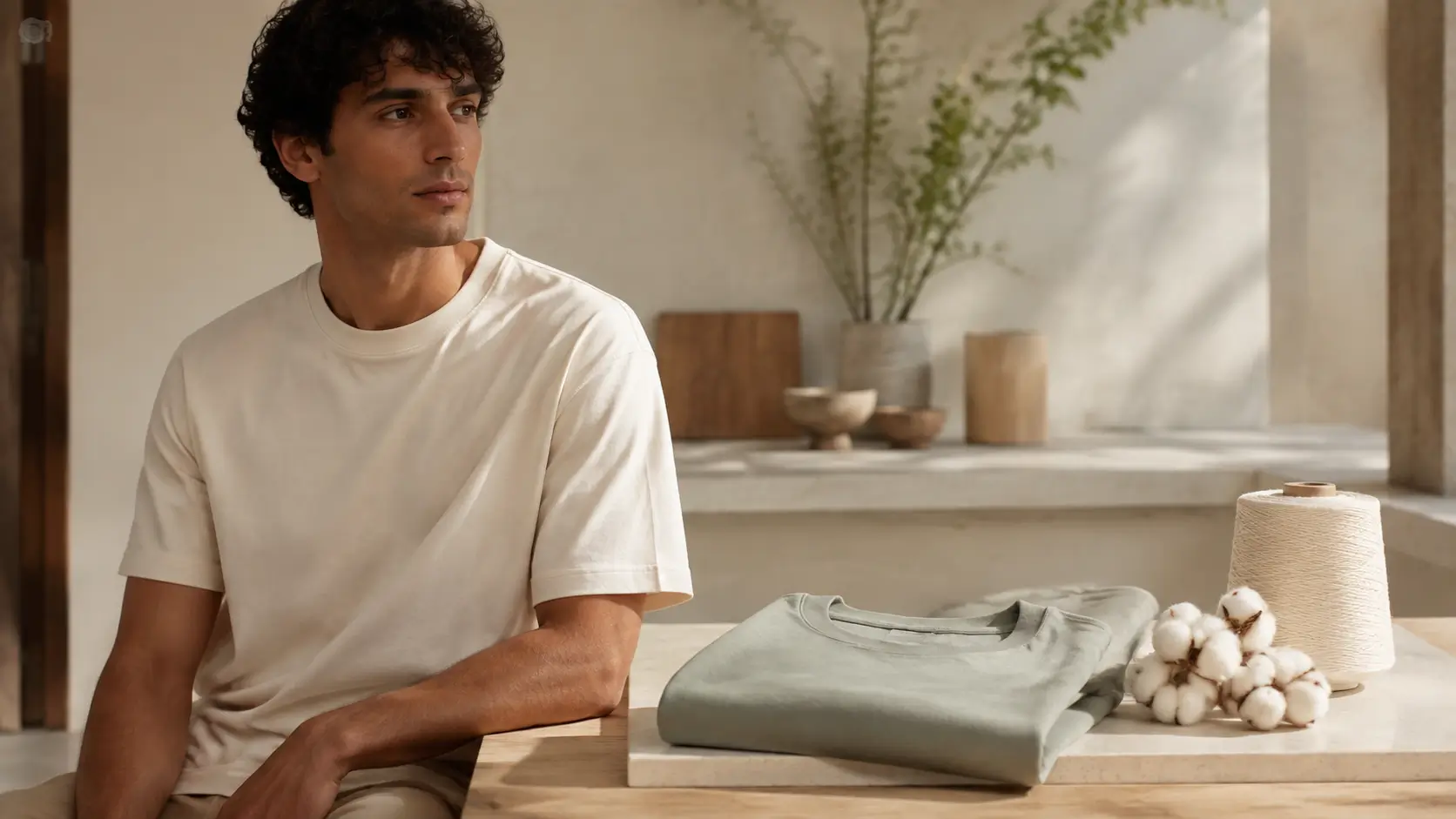
The product should still feel good, fit well, and survive repeated washing. If a T-shirt lasts longer, keeps its shape, and uses verified materials, it creates more real value for the customer. Brands should also be careful with sustainability claims. If you want to mention organic cotton, recycled fibers, or certified materials, the supply chain should be able to provide the right proof.
| Trend | My Production Focus |
|---|---|
| Oversized | Shoulder drop, sleeve length, neck strength |
| Graphic | Print hand feel and artwork scale |
| Streetwear | Shape, wash, heavy cotton |
| Heavyweight | Yarn quality and softness |
| Boxy | Width and body length balance |
| Vintage washed | Wash test and color control |
| Minimalist | Fabric quality and small details |
| Performance | Stretch, recovery, and drying |
| Cropped | Length control and size grading |
| Sustainable | Material proof and durable finish |
Which T-Shirt Colors and Graphics Are Trending in 2026?
Key visual directions in 2026 include faded colors, retro sportswear details, bold typography, and Y2K-inspired graphics. These can be combined with oversized, boxy, heavyweight, or cropped fits.
Recent fashion coverage points to retro striped T-shirts and baseball tees as current casual styles. The return of ringer T-shirts, with contrast collars and sleeve trims, also shows how vintage sportswear is influencing new collections.
For graphics, current custom-print reports highlight faded pastels, handwritten graphics, bold typography, and retro travel designs. Y2K and 1990s-inspired graphics also remain useful directions for streetwear and youth-focused brands.
| Direction | Production Focus |
|---|---|
| Faded colors | Garment dye or pigment dye; approve wash samples |
| Retro stripes and ringer trims | Use contrast rib or yarn-dyed stripes |
| Hand-drawn graphics | DTG or water-based screen print for a softer hand feel |
| Bold typography | Screen print, puff print, or high-density print |
| Y2K and retro graphics | Test artwork scale and print hand feel before bulk production |
The best approach is to choose one clear visual direction, then match it with the right fit, fabric weight, and print method. A trend should look good in the final sample—not only in a digital mockup.
How to Choose the Right T-Shirt Trend for Your Brand?
Many brands want to use every hot trend. That makes the collection unclear. A customer needs to understand the brand in seconds.
I choose the right T-shirt trend by matching brand DNA, target customer, price point, and production method. A streetwear brand should not use the same fabric and fit as a minimalist designer brand. A sustainable brand also needs different material and print choices.
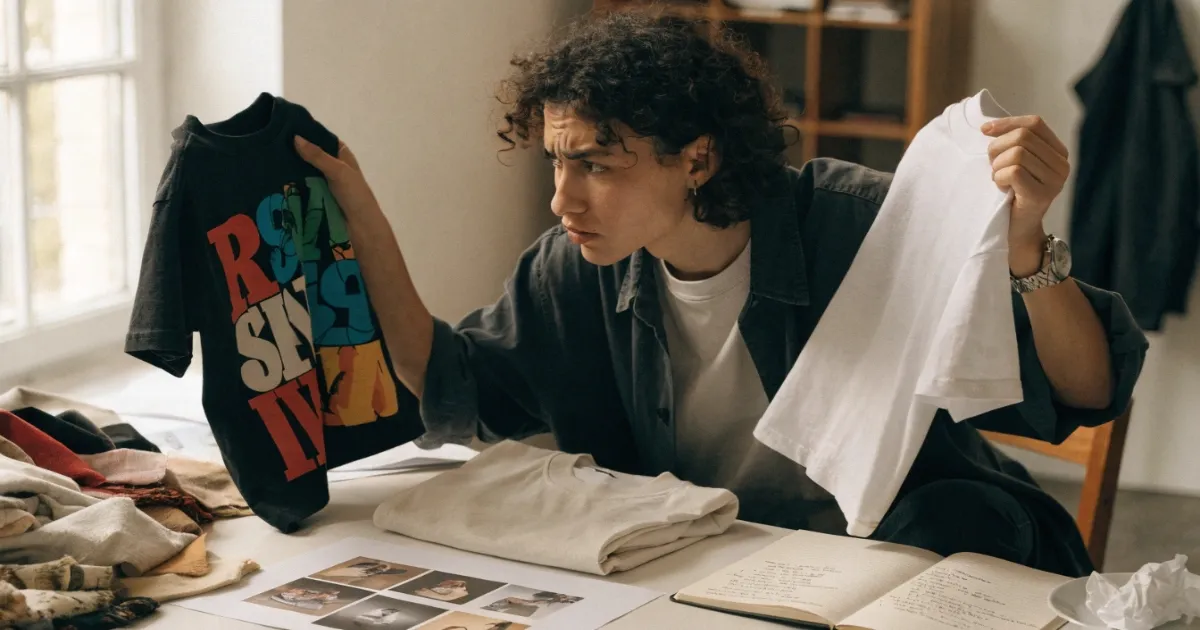
When I help a customer develop T-shirts, I first ask about the brand position. I do not start with fabric only. I ask who will wear it, where they will wear it, and what price the brand wants to sell at. A high-street vibe brand needs a strong visual product. It may use oversized boxy fit, 260-300 GSM cotton, puff print, acid wash, or large back screen print. The product must look powerful in photos.
A luxury minimal brand needs another path. It may use a slight drop shoulder, cleaner fit, 220-240 GSM long-staple cotton, mercerized cotton, small front embroidery, or high-density silicone logo. The product must feel clean and expensive in hand.
An eco-focused brand needs a third path. It may use unisex fit, 200-240 GSM organic cotton, recycled fiber blends, water-based print, or discharge print. The product must feel responsible and comfortable.
| Brand Type | Fit I Recommend | Fabric I Recommend | Process I Recommend |
|---|---|---|---|
| High-street / streetwear / vibe | Super drop shoulder, boxy | 260-300 GSM coarse cotton double yarn | Puff print, large back screen print, acid wash |
| Luxury minimal / designer | Slight drop shoulder, clean fit | 220-240 GSM long-staple or mercerized cotton | Small embroidery, silicone logo |
| Eco-focused | Unisex neutral fit | 200-240 GSM organic cotton or recycled blend | Water-based print, discharge print |
Which T-Shirt Trend Should Your Brand Choose
Some brands copy a competitor because it looks successful. That can fail fast. A copied trend without brand fit often feels empty.
Your brand should choose the T-shirt trend that fits your customer’s lifestyle and price expectation. I recommend oversized heavyweight graphics for streetwear, clean premium cotton for designer basics, boxy cropped fits for women’s fashion, and organic cotton basics for eco brands.
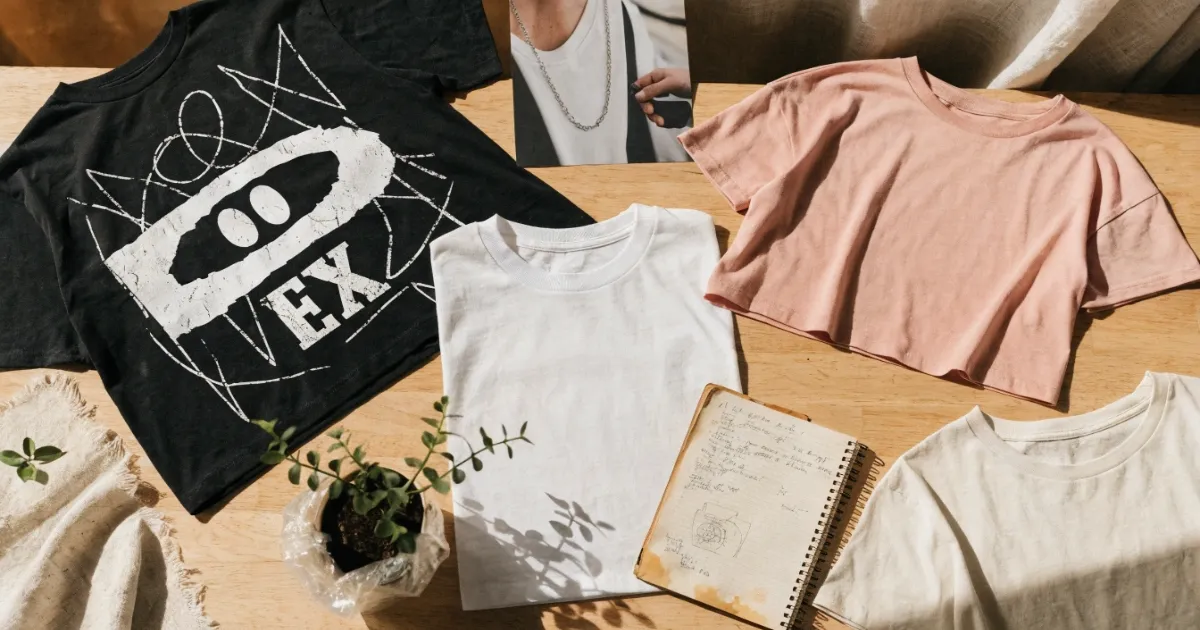
I would not choose a trend only because it is popular. I would choose it because it supports the brand story. If your customer follows street culture, music, and social media styling, I would test oversized graphic T-shirts first. I would use large back artwork and a small chest mark. I would make the first sample in black, washed gray, or cream. These colors are easier to style.
If your customer wants quiet premium basics, I would avoid loud graphics. I would focus on cotton quality, neck shape, stitching, and hand feel. A small logo can be enough. If your customer is women’s high-street, I would test boxy cropped T-shirts and baby tees. I would pay attention to body length and shoulder width because one centimeter can change the look.
For wholesale buyers, I would build a small range. I would not make ten random styles. I would make three fits, three colors, and two graphic levels. This keeps production clear and gives buyers enough choice.
| If Your Brand Is | I Would Start With | I Would Avoid |
|---|---|---|
| Streetwear | Oversized graphic, heavyweight, washed | Thin slim basic |
| Designer basics | Minimal logo, premium cotton | Large loud print |
| Women’s high-street | Boxy cropped, baby tee | Overlong body |
| Eco brand | Organic cotton unisex tee | Heavy plastic print |
| Wholesale brand | Core colors and repeatable fits | Too many untested designs |
Common T-Shirt Development Mistakes to Avoid
A T-shirt looks simple during design. It becomes difficult during bulk production. Small mistakes can ruin customer trust after washing.
The most common T-shirt development mistakes are choosing GSM without checking yarn quality, using weak neck ribs on heavy oversized styles, and placing large plastic-feel prints on the back. These mistakes cause rough hand feel, neck deformation, poor breathability, cracking, and bad reviews.
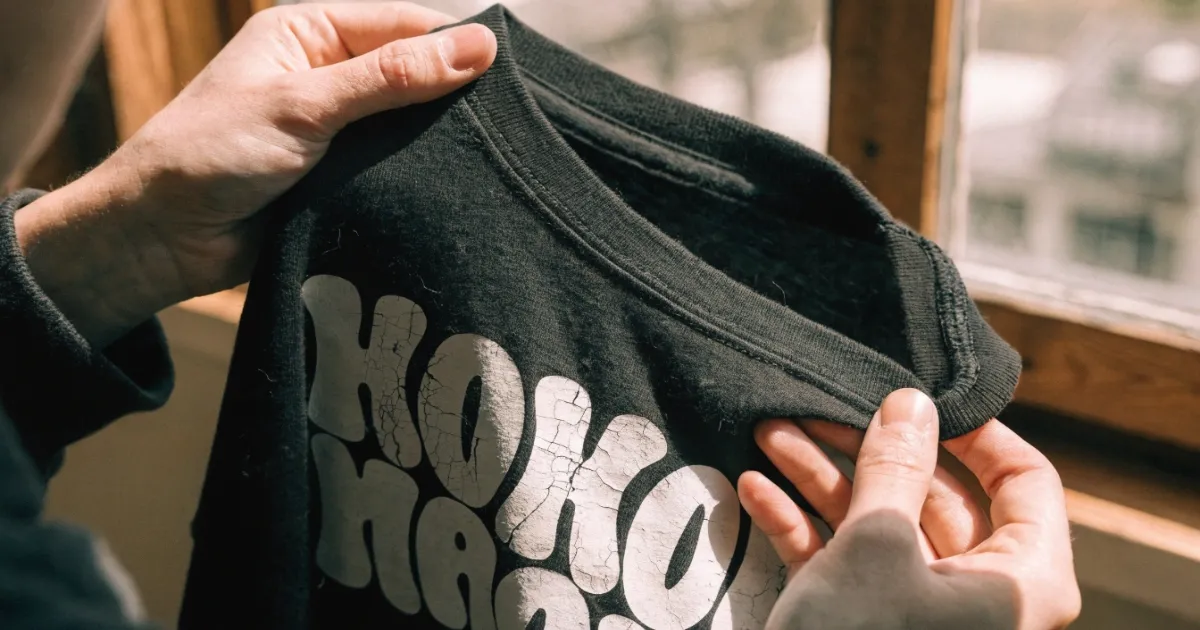
I have learned some lessons from manufacturing. I call them supply chain lessons because they are not always visible in design files. The first mistake is chasing high GSM without checking yarn, composition, and finishing. Many brands say they want 300 GSM. But if the yarn is rough and the finishing is poor, the T-shirt feels like cardboard. A 21s double yarn fabric can be strong, but it still needs good washing and softening. Heavyweight should not mean uncomfortable.
The second mistake is ignoring the neckline. Oversized T-shirts use more fabric. The body is heavier. If the neck rib is too thin, or if there is no double-needle reinforcement, the neckline can wave after two washes. I have seen this damage brand trust quickly. I prefer thicker rib, shoulder tape, and clean topstitching for heavy styles.
The third mistake is using a large traditional plastisol or rubber print on the back without thinking about breathability. In summer, it can feel like a plastic board. For 2026, I prefer DTG, discharge print, water-based screen print, or softer methods for large graphics.
| Mistake | What Happens | How I Avoid It |
|---|---|---|
| Only chasing GSM | Fabric feels rough and stiff | Check yarn, hand feel, wash, softening |
| Weak neck rib | Neck becomes wavy | Use thick rib, shoulder tape, double-needle |
| Large plastic back print | Poor breathability and cracking | Use DTG, discharge, or soft-hand print |
| No wash test | Size and color change | Test shrinkage before bulk |
| Wrong fit grading | Larger sizes look strange | Review full size set |
Typical T-Shirt Production Timeline
Many new brands expect bulk T-shirts in a few days. That creates pressure and errors. Good development needs a clear timeline.
A typical custom T-shirt production timeline takes about 3 to 6 weeks after design confirmation. Sampling usually takes 7 to 14 days. Fabric and trim preparation, printing, cutting, sewing, washing, inspection, and packing take another 2 to 4 weeks depending on quantity and process.
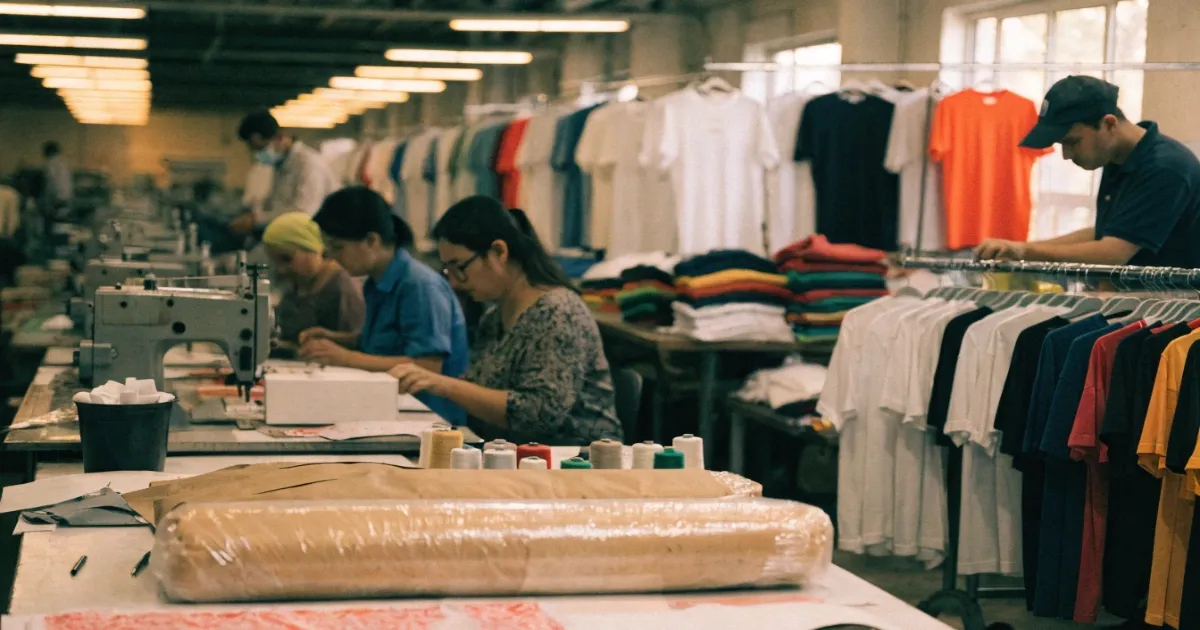
I like to explain the timeline early because it prevents misunderstanding. A basic T-shirt with ready fabric can move fast. A heavyweight washed T-shirt with custom print needs more time. If the fabric needs dyeing, the timeline grows. If the graphic needs strike-off testing, the timeline grows again. If the T-shirt needs acid wash or garment dye, I always plan extra time for color control and shrinkage testing.
For a new brand, I usually suggest starting with a prototype sample first. This checks fit, fabric, and general feeling. After that, I make a pre-production sample. This checks final print, label, wash, packing, and measurement. Bulk production should start only after approval. This process may feel slow, but it protects the brand.
| Stage | Typical Time | My Main Check |
|---|---|---|
| Tech pack and details check | 1-3 days | Fit, size chart, fabric, print files |
| Fabric sourcing | 3-7 days | Weight, color, hand feel |
| First sample | 7-14 days | Pattern, fit, construction |
| Print or wash test | 3-7 days | Color, hand feel, durability |
| Pre-production sample | 5-10 days | Final approval before bulk |
| Bulk production | 14-30 days | Cutting, sewing, printing, washing |
| QC and packing | 2-5 days | Measurement, defects, labels |
I also tell clients to keep communication simple and fast. A clear tech pack saves days. A clear Pantone color saves rework. A vector artwork file saves print mistakes. A confirmed label position saves confusion in sewing. In my experience, many delays do not come from the factory floor. They come from unclear decisions before production starts.
FAQs
The most common T-shirt questions in 2026 are about trending styles, oversized fits, graphic prints, fabric choice, heavyweight value, print methods, and production time. I answer these based on brand position, target customer, material choice, and the real production process.
What T-shirt styles are trending in 2026?
The main T-shirt styles trending in 2026 are oversized T-shirts, graphic T-shirts, streetwear T-shirts, heavyweight T-shirts, boxy fit T-shirts, vintage washed T-shirts, minimalist logo tees, performance T-shirts, cropped and baby tees, and sustainable premium cotton T-shirts. Oversized, graphic, heavyweight, and washed styles are especially strong for streetwear, creator brands, and high-street collections.
Are oversized T-shirts still popular in 2026?
Yes, oversized T-shirts are still popular in 2026. The fit is becoming more intentional, with dropped shoulders, wider bodies, longer sleeves, and controlled body length. A good oversized T-shirt should not look like a regular T-shirt in a larger size. It needs proper proportion, stronger fabric, and a neckline that can hold its shape after washing.
Are graphic T-shirts back in style?
Yes, graphic T-shirts are becoming more visible again, especially in streetwear, music, art, creator, and event merch collections. One of the strongest layouts is a small front logo with a large back print. The artwork is important, but the print method matters too. Large graphics should be tested for hand feel, wash durability, breathability, and cracking before bulk production.
What fabric is best for premium T-shirts?
The best fabric for premium T-shirts is usually high-quality cotton in the 220–300 GSM range, depending on the fit, season, and brand position. Long-staple cotton, compact cotton, mercerized cotton, and heavyweight jersey can all work well. GSM alone is not enough. A premium T-shirt should also have good softness, surface quality, shrinkage control, neckline stability, and comfortable drape.
What print method is best for graphic T-shirts?
The best print method for graphic T-shirts depends on the artwork, fabric color, order quantity, and target hand feel. Screen printing works well for strong colors and bulk orders. DTG is useful for detailed artwork and smaller runs. Discharge print and water-based print can give a softer feel. Puff print or high-density print works when the brand wants raised texture.
How long does custom T-shirt production take?
Custom T-shirts usually take 3 to 6 weeks after design confirmation. Simple styles with ready fabric can be faster. Heavyweight fabric, custom dyeing, vintage wash, large graphics, labels, and special packing can add time. I prefer a clear sample stage and pre-production approval before bulk production starts.
Conclusion
T-shirts in 2026 are moving toward better fabric, stronger shape, richer graphics, and more thoughtful production details. Oversized, graphic, streetwear, heavyweight, washed, and premium cotton styles all have room to grow, but the final result depends on how well the trend matches the fit, fabric, print method, and target customer.
For clothing brands, the best T-shirt is not always the most complicated one. It is the one that feels clear, wearable, and consistent with the brand. A strong T-shirt can help you test a new idea, build a first collection, or create a repeatable core product.
If you are developing oversized T-shirts, graphic T-shirts, streetwear blanks, heavyweight basics, or vintage washed tees, you can send us your design idea, reference photo, target GSM, quantity, size range, and label requirements. We can help you review the fit, fabric, print method, sample route, and production details before bulk production.