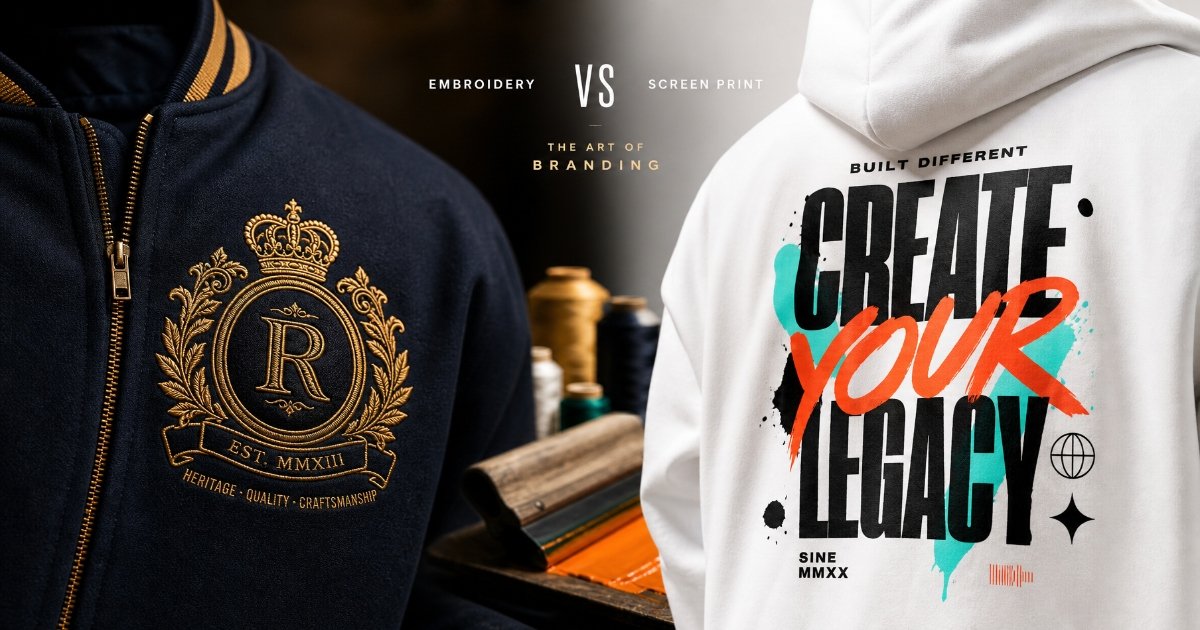
For custom apparel brands, the choice between embroidery and screen printing affects more than decoration. It changes how the garment looks, feels, washes, and represents your brand. This guide compares both methods from a practical manufacturing perspective, so you can choose the right option before sampling or bulk production.
For custom apparel, embroidery offers a premium, durable, 3D look ideal for small logos on structured items like polos or caps, while screen printing often becomes more cost-efficient for large-area designs on T-shirts and hoodies, especially when the order quantity is high enough to spread out setup costs.
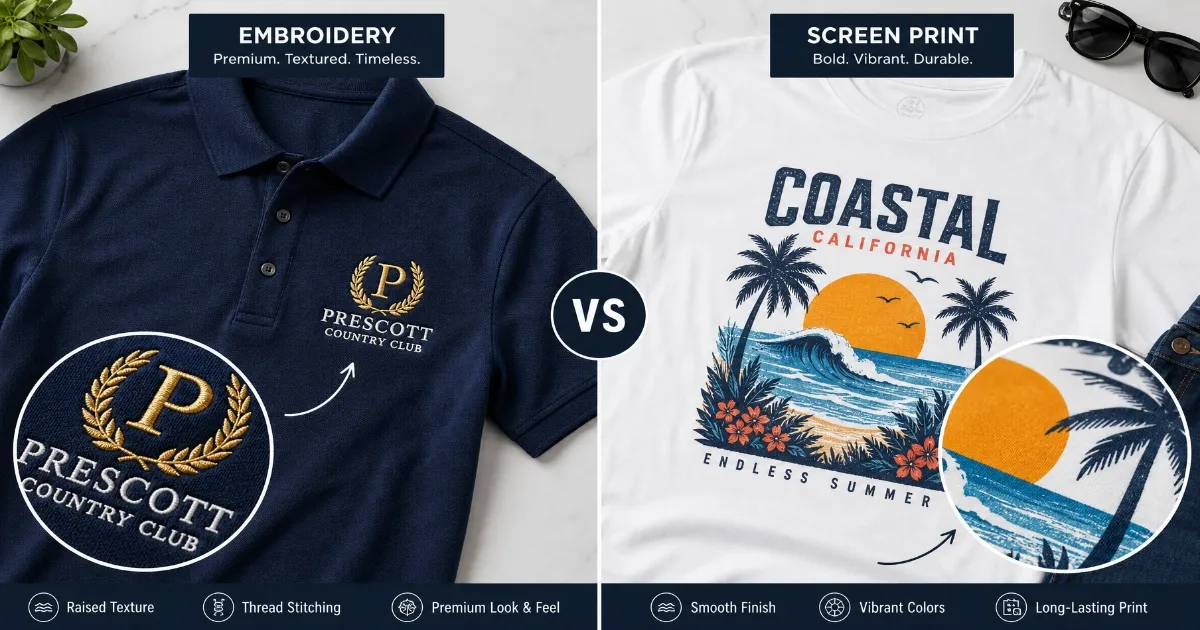
Embroidery and screen printing are two of the most common decoration methods in custom apparel. This article compares them from a manufacturing perspective, helping you choose the right method for your fabric, design, budget, and production plan.
Is Screen Printing or Embroidery Better for Apparel Branding?
Embroidery and screen printing create very different first impressions. Embroidery usually feels more premium and permanent, while screen printing gives brands more room for bold graphics, color, and seasonal design stories.
Neither screen printing nor embroidery is inherently "better" for branding; the ideal choice depends on your brand's aesthetic, target product, and desired customer perception. Embroidery often conveys a more premium and traditional feel, while screen printing is usually better for colorful, graphic, or trend-driven designs.
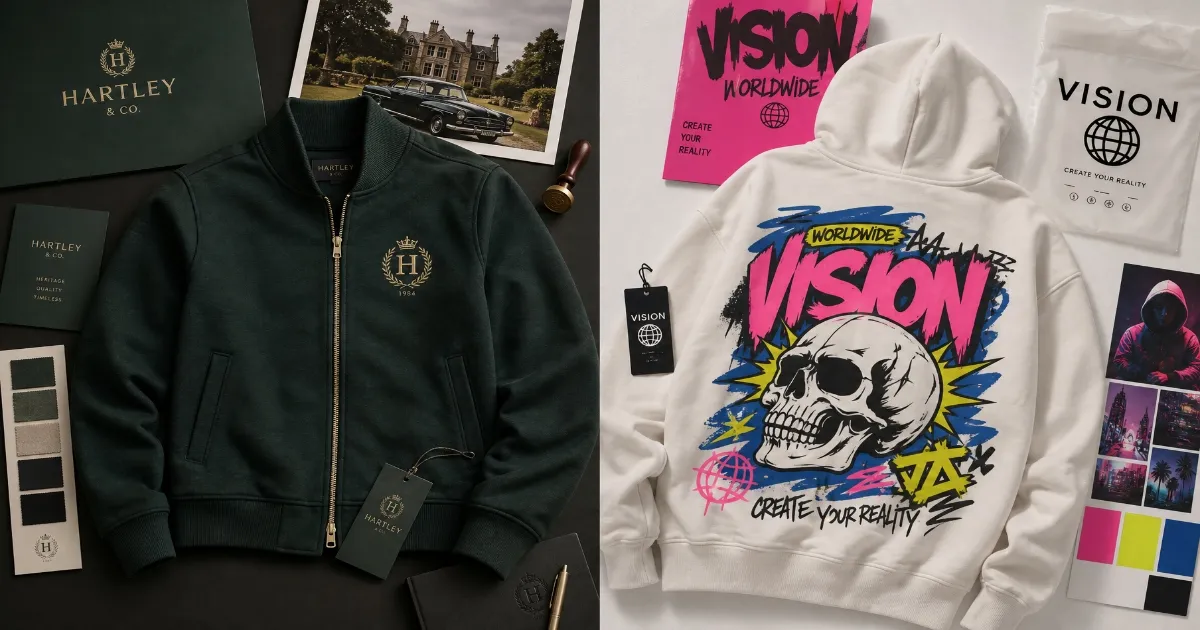
When I talk to new brands, they often ask which method is "better" for their image. My answer is always the same: it depends entirely on what your brand stands for and who your customers are. For instance, if your brand aims for a high-end, professional, and durable image, embroidery often becomes your main choice for key identifiers. It inherently conveys a sense of quality and craftsmanship. I’ve noticed that brands using embroidery for their core logos often want to differentiate themselves as offering a premium product. The raised, textured look of embroidery gives a garment a perceived higher value, making it perfect for exclusive collections or products positioned at a higher price point. On the other hand, if your brand is going for a youthful, creative, and fashion-forward vibe with flexible cost control, screen printing is often a strong option for that, especially when the artwork needs color, scale, and flexibility. It allows for vibrant colors, intricate designs, and bold statements that appeal to a trend-conscious audience.
I’ve seen screen printing used brilliantly for seasonal collections, limited-edition drops, or street-style apparel where visual impact and versatility are key. Sometimes, we even see brands combine both. This blended approach, where an embroidered small logo meets a large screen-printed graphic, helps achieve both a "high-end feel" and "large area design" impact, a strategy I've noticed many successful overseas brands adopting.
What Is Embroidery
Embroidery is one of the most recognizable ways to add a logo or brand mark to apparel. It is often chosen when a brand wants texture, structure, and a more refined look on items such as polos, caps, sweatshirts, or uniforms.
Embroidery decorates fabric with thread, creating a textured and often durable design when stitch density, backing, and fabric stability are properly controlled.
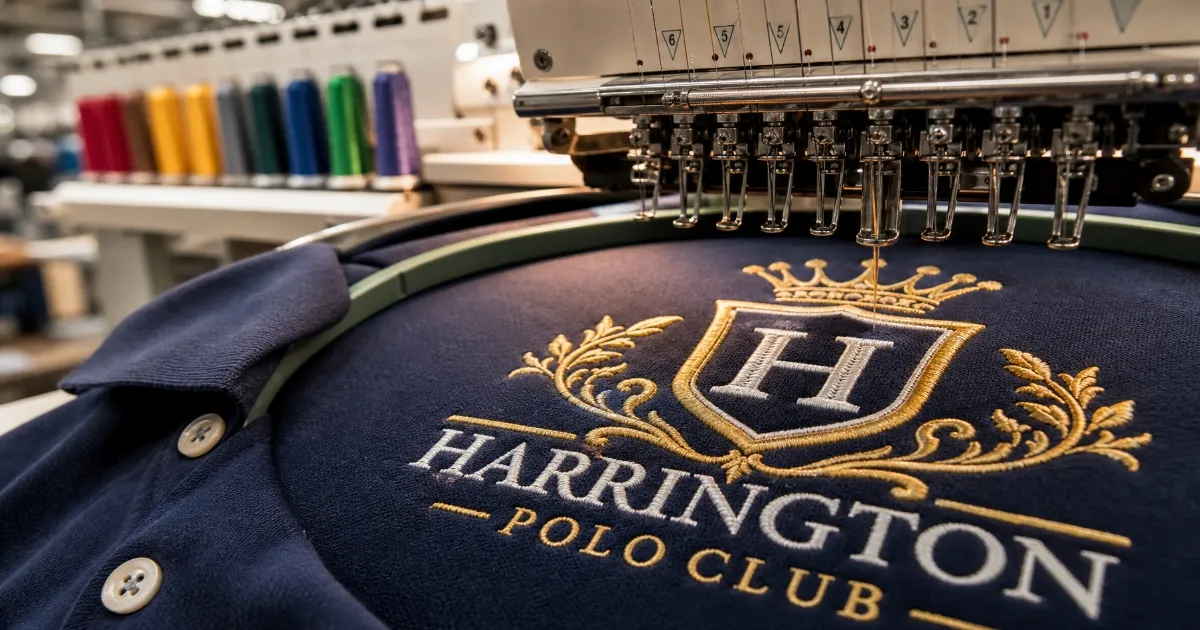
In modern apparel production, embroidery combines traditional stitching with digital digitizing and machine control. The process starts when your logo or design is "digitized," meaning the artwork is converted into a stitch file using professional embroidery digitizing software. This means converting your artwork into a stitch file that an embroidery machine can read. Then, the garment is placed in a hoop to hold the fabric taut. Finally, the machine uses multiple needles and threads to stitch the design directly onto the fabric. What makes embroidery so appealing is its three-dimensional quality and tactile feel. It creates a raised, tactile look that printing usually cannot reproduce in the same way.
I always point to it for a sense of permanence and quality. When we work with knitted fabrics like cotton, CVC, or French Terry, especially thinner ones, we always consider how embroidery might pull or distort the material. We often need to adjust the stitch density, making it less dense, or add a special backing material behind the embroidery to prevent the fabric from puckering or being pulled out of shape during the stitching process. This attention to detail ensures the final product looks crisp and lasts. For items like polo shirts and button-down shirts, I've found that small embroidered logos on the chest or sleeve truly elevate the garment, giving it a professional and distinguished feel.
What Is Screen Printing
Screen printing is widely used for custom T-shirts, hoodies, sweatshirts, and streetwear because it can cover larger areas with strong color and a smooth graphic effect. It is especially useful when the design needs visual impact rather than raised texture.
Screen printing is a printing technique where ink is pushed through a mesh screen onto the fabric, similar to the basic screenprinting process used in printmaking, but adapted for apparel production.
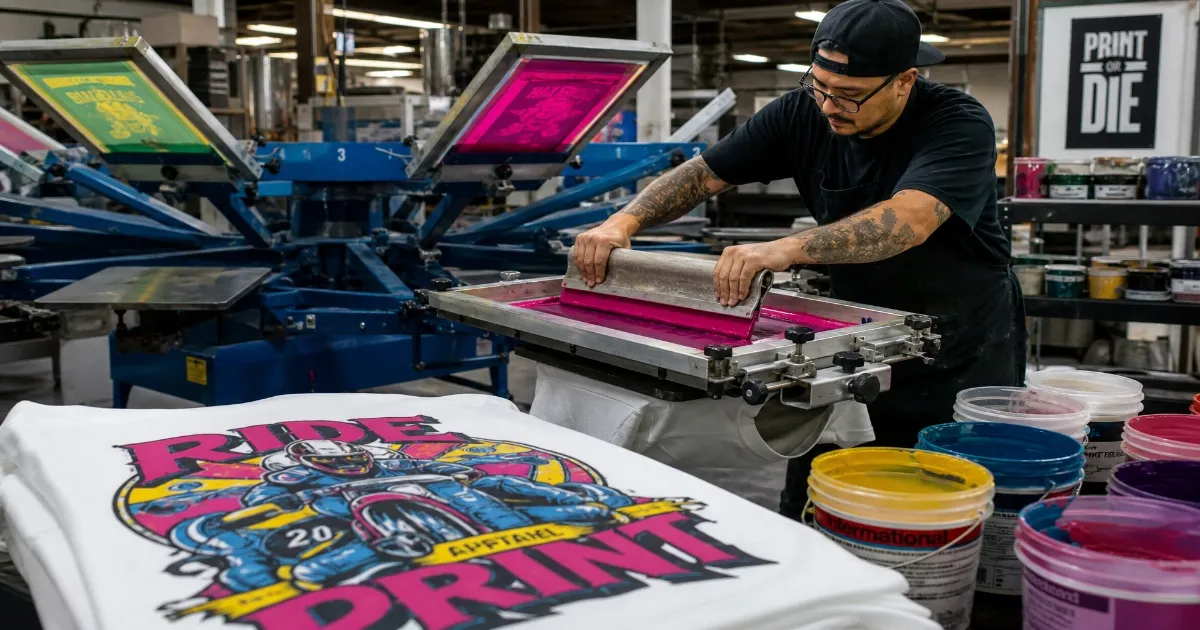
In my factory, screen printing is a very common process for creating eye-catching designs. It begins by creating a stencil, or "screen," for each color in your design. A fine mesh screen is stretched over a frame, and your design is exposed onto it, leaving open areas where ink can pass through. The garment is then placed on a printing press, and ink is pushed through the screen's open areas onto the fabric with a squeegee. After each color is applied, the garment typically goes through a dryer or curing unit to set the ink, making it durable and washable. This multi-step process allows for incredibly vibrant colors, sharp details, and the ability to print large, complex graphics across the entire garment.
For thicker fabrics, like heavy cotton hoodies, we can use a thicker ink application in screen printing to ensure full coverage and a bold look. But for lightweight, stretchy materials, it's crucial to ensure the fabric is laid completely flat and taut during printing; otherwise, the print can come out uneven or crack easily. Sometimes, for very thin or highly elastic fabrics, I might even suggest heat transfer as an alternative to achieve the desired effect without compromising the fabric's integrity. I find t-shirts and hoodies, especially when featuring large, intricate patterns, multiple colors, or smooth gradients, are perfectly suited for screen printing because of its versatility and smooth finish.
Embroidery vs Screen Printing: Key Differences at a Glance
Before choosing a decoration method, brands should compare more than appearance. The right choice depends on texture, artwork size, fabric type, durability expectations, comfort, cost structure, and order quantity.
The main differences between embroidery and screen printing lie in their application (thread vs. ink), texture (3D vs. flat), durability, cost structures, and aesthetic appeal, making them suitable for different garment types and brand needs.
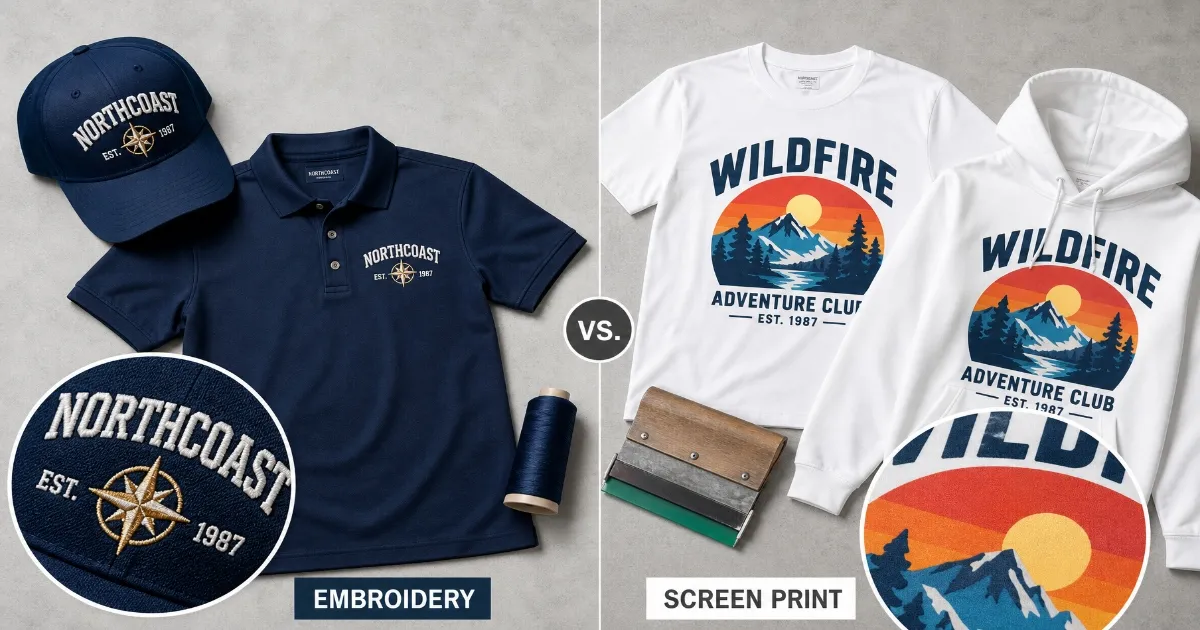
In production, these differences matter because each method reacts differently to fabric weight, artwork size, and order quantity. Each method has its unique advantages and specific use cases. Here’s how I usually break it down for our clients:
| Feature | Embroidery | Screen Printing |
|---|---|---|
| Application | Thread stitched onto fabric | Ink pressed through a mesh screen |
| Texture | Raised, 3D, tactile | Smooth, flat |
| Durability | Very high, wash-resistant, no cracking/fading | High, depends on ink/cure, may crack over time |
| Look | Premium, classic, professional, sophisticated | Modern, vibrant, artistic, casual, bold |
| Detail | Good for bold lines, simple shapes; limited fine detail, small text, and gradients | Excellent for fine lines, intricate, complex designs, and gradients |
| Feel | Adds weight/stiffness (especially large designs), can be abrasive without backing | Lightweight, soft hand (depending on ink type and print thickness) |
| Colors | Limited number of thread colors per design, exact color matching can be tricky | Wide range of vibrant colors, excellent for color matching and multi-color designs |
| Cost Structure | Primarily based on stitch count, number of colors, and digitizing fee | Primarily based on number of colors, print area, and screen setup fees |
| Best For | Logos, crests, small designs on structured items, workwear, uniforms | Large graphics, detailed artwork, fashion apparel, band tees, promotional items |
Factory Decision Table: Which Method Should You Choose?
| Situation | Better Choice | Factory Reason |
|---|---|---|
| Small chest logo on polo | Embroidery | More premium and stable on structured fabric |
| Large front graphic on T-shirt | Screen printing | Softer hand feel and better for large artwork |
| Hoodie with brand logo + back graphic | Both | Embroidery for identity, print for visual impact |
| Lightweight 160–180 GSM T-shirt | Screen printing | Dense embroidery may cause puckering |
| Heavyweight 350+ GSM hoodie | Both | Fabric can support embroidery, print also works well |
In our production process, we usually do not choose embroidery or screen printing based on appearance alone. We first check the garment type, fabric GSM, logo size, artwork complexity, order quantity, and final wearing experience. A method that looks good on a digital mockup may still need adjustment after sample testing.
Best Method by Garment Type: T-Shirts, Polos, Hoodies, and Caps
The same logo can perform differently on different garments. A small embroidered chest logo may look excellent on a polo shirt, but the same embroidery may feel too stiff on a lightweight T-shirt. That is why garment type should be one of the first things brands consider. The best decoration method often depends on the garment type: embroidery excels on structured items like polos, jackets, and hats for a premium feel, while screen printing is ideal for large, vibrant designs on t-shirts and hoodies where a smooth finish is desired.
This is one of the first points we check during sample development because garment type directly affects the final look, feel, and comfort of the decoration.
- Polo Shirts and Dress Shirts: For polo shirts and button-down shirts, embroidery is usually the strongest choice for small logos. A small logo on the chest or shoulder just gives a professional, high-end, and three-dimensional look. It conveys a sense of quality and durability that perfectly suits these more structured garments. In my experience, applying large screen prints to these types of fabrics can often make the material feel stiff and sometimes even interfere with the garment's natural drape and comfort.
- T-shirts and Hoodies: When it comes to t-shirts and hoodies, especially for large patterns, complex multi-color designs, or gradients, screen printing is often the more practical choice. It allows for vibrant, expansive artwork that can cover significant areas without adding much weight or stiffness. While you can use embroidery for smaller logos or simple text on these items, particularly on lighter t-shirts, embroidery can sometimes cause wrinkling or pull the fabric, making it less comfortable to wear over time.
- I once bought a t-shirt from an original brand called "WINDERFLIES." Their logo was a large butterfly, covering almost two-thirds of the shirt. It looked unique, but wearing it, I found the large embroidered design actually scratched my skin. It turned out they skipped the backing process, which normally puts a thin, paper-like layer behind the embroidery to protect the skin. While the logo was creative, for such a large area, I'd strongly recommend screen printing to avoid discomfort. Or, if they insisted on embroidery, the logo should have been much smaller to keep that premium feel without sacrificing comfort.
- Hats and Accessories: For hats and other accessories, embroidery is usually the safest and most common choice. It creates that fantastic three-dimensional texture that looks so good on caps, beanies, and bags. Screen printing, on the other hand, struggles to get a smooth, even pattern on curved or stiff materials like caps, making embroidery the superior choice for these items.
- Impact of Fabric Weight: I've also noticed that fabric weight plays a big role. For knit fabrics, like the cotton and French Terry we often use, thinner materials are more prone to distortion with embroidery. We sometimes have to reduce the stitch density or add a proper backing to prevent the fabric from being pulled out of shape. Screen printing, though, has different adaptations. For thick fabrics, we can use a heavier ink application. For light, stretchy fabrics, we need to ensure the garment is perfectly flat during printing, or sometimes we even suggest heat transfer if elasticity is a major concern to ensure the print holds up well.
Design Compatibility: Logo Size, Fine Lines, Gradients, and Color Details
Not every digital logo translates well onto fabric. Fine lines, tiny text, gradients, color count, and artwork size can all change the final result, especially when moving from a flat mockup to a real garment. Embroidery excels with simpler, bolder designs, clear lines, and a limited color palette for a textured, traditional look, whereas screen printing offers superior compatibility for intricate details, fine lines, smooth gradients, and a wide array of vibrant colors with a flat finish.
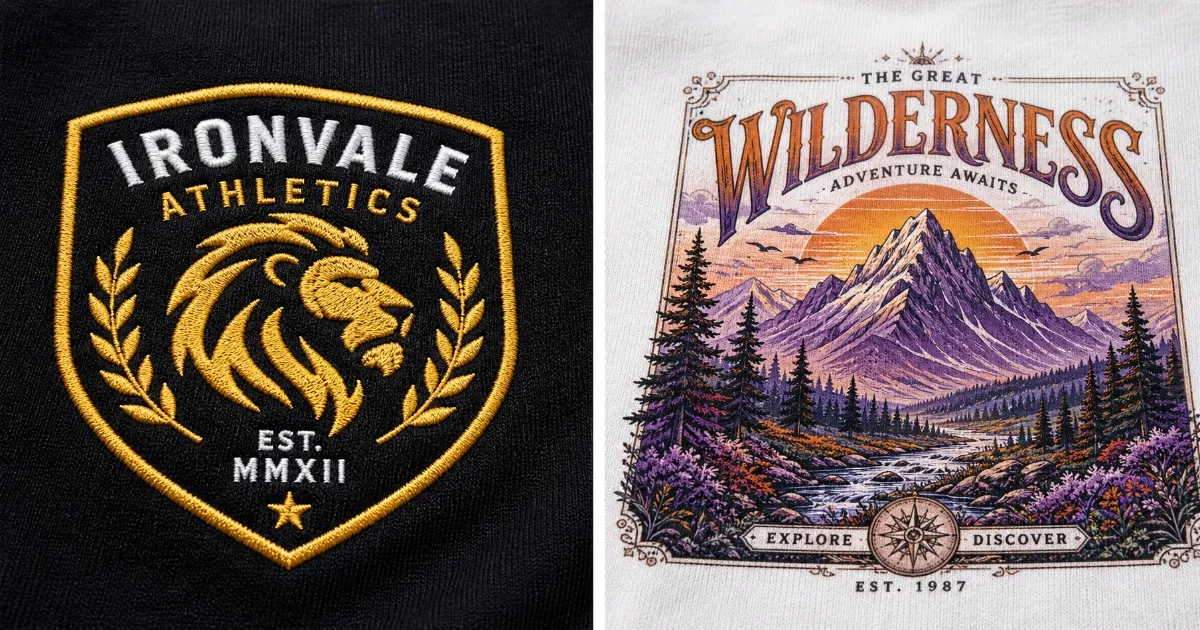
From my experience, the characteristics of your design are paramount in choosing the right decoration method. What looks fantastic on paper might not translate well to fabric if the wrong technique is chosen.
For embroidery, it’s all about stitches, and that means certain limitations. Embroidery works best with designs that are relatively simple and bold. If your logo has very fine lines, tiny text (anything under about a quarter-inch tall), or intricate details, embroidery can struggle to reproduce them clearly. The threads themselves have a certain thickness, and trying to stitch something too small often results in a blurred or blob-like appearance. It also doesn't handle gradients or subtle color blends well; colors are typically applied as solid blocks of thread. So, if your brand's identity relies on a classic, robust logo with a limited color palette and a solid shape, embroidery is a strong contender.
Screen printing, however, is where complex designs truly shine. Because it uses ink, screen printing is usually better than embroidery for fine details, but the final clarity still depends on fabric surface, mesh, ink, artwork separation, and production control. We can reproduce very fine lines, small text, and highly intricate patterns with precision. It's also the go-to method for designs with gradients, shadows, or photo-realistic elements, as we can use halftones to create smooth transitions between colors. The color vibrancy in screen printing is also exceptional; we can match specific Pantone textile color standards and use a wide array of inks to make your design pop. While each color requires a separate screen setup, the result is a flat, smooth graphic that seamlessly integrates with the fabric, making it ideal for large, visually rich designs that demand precision and a broad color spectrum.
What Lasts Longer, Screen Print or Embroidery?
Durability is one of the main reasons brands compare embroidery with screen printing. A decoration method should not only look good on the first sample; it should also hold up after washing, stretching, and repeated wear. For brands that care about wash durability, sample testing should go beyond a visual check. standardized laundering tests can help evaluate how the garment and decoration perform after repeated washing.
Generally, embroidery offers superior long-term durability, resisting fading, cracking, and peeling better than screen printing, especially when properly executed; screen print longevity heavily depends on ink quality, curing, and wash care.
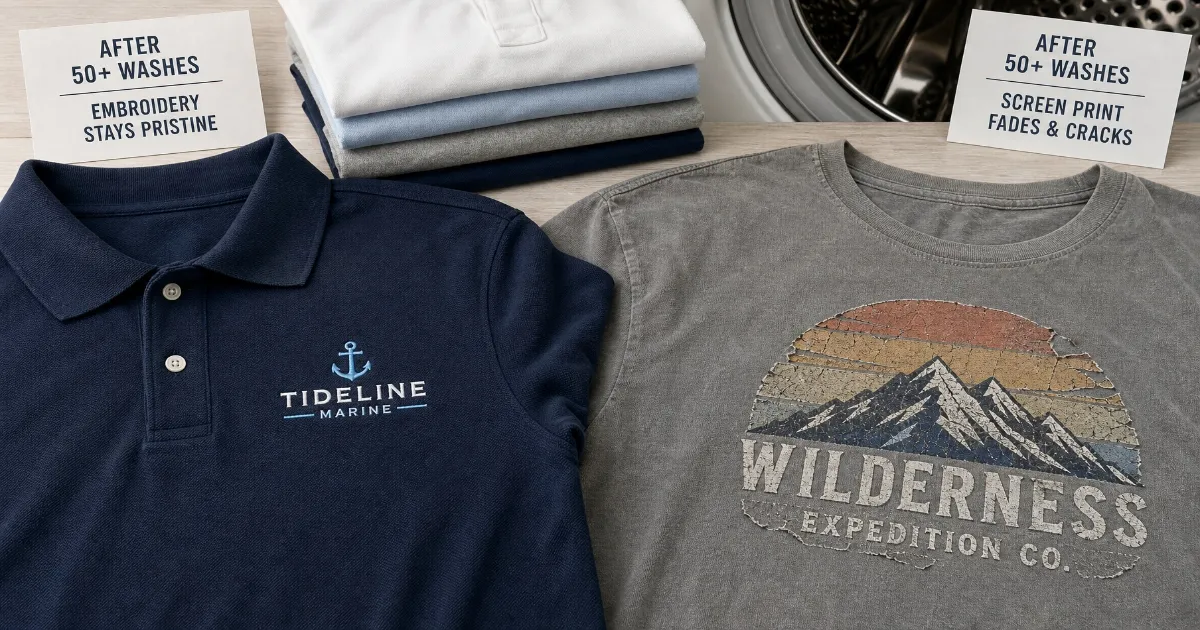
When it comes to how long your branded apparel will last, especially after many washes, this is a major concern for both us as manufacturers and for you as a brand owner. You want your customers to trust your product.
In most production cases, embroidery has a durability advantage for small logos because the thread is stitched into the fabric instead of sitting on top like ink. The threads are physically stitched into the fabric, making them highly resistant to fading, cracking, or peeling over time. This makes embroidery ideal for items that need to withstand a lot of wear and washing, like corporate uniforms, workwear, or team apparel where longevity is a top priority. We've often seen embroidered logos outlast the garment itself.
Screen printing's durability, however, really depends on the ink type and the curing process. Using the right ink system and proper curing temperature and time can improve wash durability. With modern plastisol or water-based inks and proper heat setting, screen prints can be very durable. However, compared to embroidery, after many washes, you might still see some minor cracking, fading, or softening of the print, especially if the garment is stretched repeatedly. We've also observed that on high GSM, thick hoodies, screen prints might show cracking or fading after repeated washing if the ink doesn't have enough flexibility, whereas embroidery generally holds up better against garment shrinkage without showing stress.
From a user experience perspective, embroidery adds local weight to the garment. On a thin t-shirt, a large embroidered design can feel stiff or even heavy over time, and without proper backing, it can be uncomfortable. Screen printing, on the other hand, is generally flat and light, which makes it ideal for street style or large graphic prints where comfort and flexibility are key.
Cost, MOQ, and Lead Time: What Brands Should Consider Before Ordering
Cost is not only about which method is cheaper per piece. For apparel brands, the real question is how stitch count, color count, setup fees, artwork size, MOQ, and lead time affect the total production plan. Cost for embroidery depends on stitch count and complexity, while screen printing costs are driven by color count and print area; Embroidery may have a lower decoration setup burden for small logos, but the overall apparel MOQ still depends on fabric sourcing, garment style, trims, and production planning.
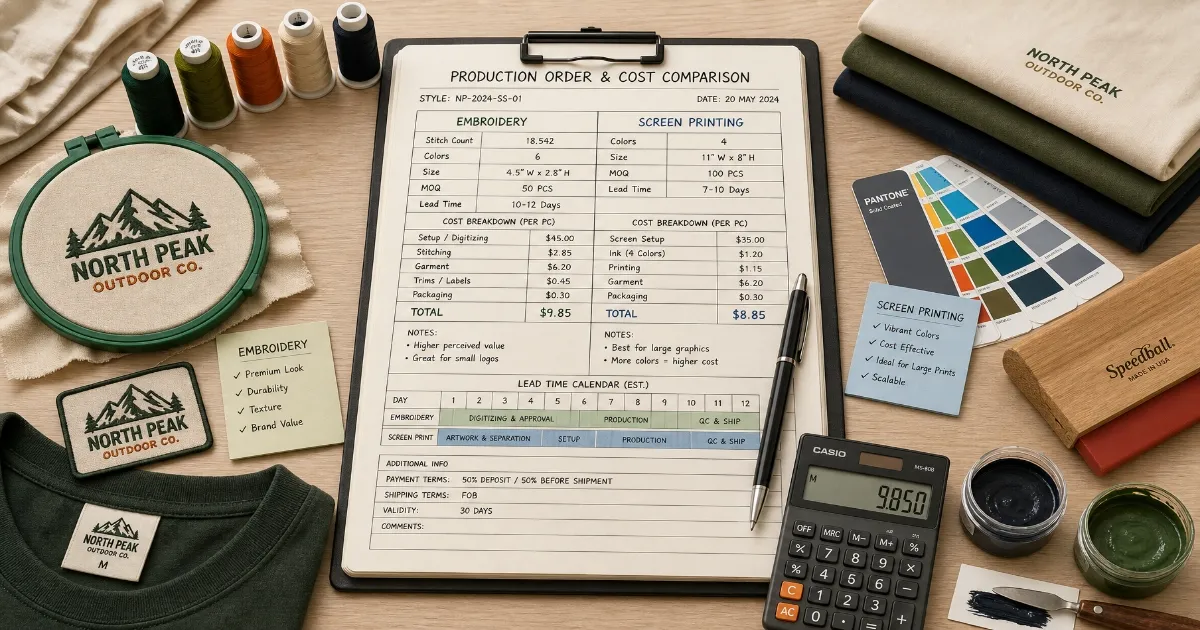
When clients ask me about pricing, they often wonder, "Embroidery looks so good, it must be expensive, right? What’s the cost difference with screen printing? Is embroidery expensive?" It’s a common question, and I always explain that each method has a distinct cost structure.
For embroidery, the cost is usually calculated based on several factors:
- Design complexity: More intricate designs require more planning.
- Stitch count: This is the biggest factor. More stitches mean more thread and more machine time.
- Number of colors: While not as impactful as screen printing, more thread color changes can add a small amount.
- Digitizing fee: There's a one-time fee to convert your artwork into a stitch file.
- Fabric backing: Adding a backing to stabilize the fabric adds a small material cost.
- Placement difficulty: Unusual or challenging placement might add a bit to the labor cost.
For screen printing, the cost structure is different:
- Number of colors: Each color in your design requires a separate screen, so more colors mean higher setup costs.
- Print area: Larger prints use more ink and take more time.
- Order quantity: The more pieces you print, the lower the per-piece cost becomes as setup costs are spread out.
- Screen setup fee: A fixed cost for creating each screen.
- Ink type: Specialty inks (e.g., metallic, puff) can be more expensive.
- Fabric adaptability: Some fabrics require special inks or processes.
When it comes to minimum order quantities (MOQ), I've seen that for smaller batches, say 50 to 200 pieces, embroidery can sometimes be more cost-effective than screen printing. This is because screen printing has higher fixed costs for screen creation and color mixing upfront. These initial setup costs are spread out over larger quantities. However, for larger orders, screen printing often becomes more economical, especially for large designs where setup costs can be spread across more pieces. However, multi-color prints still need separate screens, so artwork complexity should be checked before pricing. The per-piece cost drops significantly once those initial setup fees are amortized across thousands of units.
Lead times for both processes can vary. Embroidery often requires less setup time per batch if the digitizing file is ready, but very complex designs with high stitch counts can still be time-consuming. Screen printing needs time for screen preparation, but once setup, printing can be very fast for large quantities. It's always best to discuss your specific project with us to get an accurate timeline, as factors like current factory load, design complexity, and material availability all play a role.
Production Risks Brands Often Overlook
Some decoration problems only appear after sampling, washing, or wearing the garment. Fabric distortion, print cracking, dye migration, rough backing, and poor placement can all affect the final product even when the artwork looks good on screen.
Brands often overlook critical production risks like fabric distortion with embroidery on thin materials, ink adhesion issues on specific screen-printed fabrics, and the uncomfortable feel of large designs without proper backing, impacting overall garment quality and wearer comfort.
In real production, both embroidery and screen printing can create strong results, but several risks are often missed before sampling. These oversights can lead to unexpected quality issues down the line.
One significant risk we constantly monitor is how different fabrics react to decoration. For instance, with knit fabrics like cotton, CVC, or French Terry, especially those with lower GSM (grams per square meter), embroidery can easily pull and distort the material if the stitch density is too high or if proper backing isn't used. This can lead to a wavy or puckered finish around the design that significantly cheapens the look of the garment. It's a subtle detail, but one that customers notice.
Then there's the issue of fabric shrinkage after washing. While embroidery generally handles garment shrinkage well because the threads are integrated, we've seen screen prints on high GSM, thick hoodies sometimes crack or fade after repeated washing if the ink isn't flexible enough to move with the fabric or if it wasn't perfectly cured. This means your beautifully designed product might not look its best after only a few washes, potentially disappointing your customers and eroding brand trust.
Finally, and this is a big one for customer satisfaction, is the user experience regarding comfort. I recall the "WINDERFLIES" shirt experience I shared earlier. A large embroidery, without proper backing (often a thin, paper-like fusible web applied to the back), can feel rough and scratchy against the skin. This isn't just a minor issue; it directly impacts comfort and can turn a customer off from wearing your brand's product. For screen printing, while generally smoother, the wrong ink type or a very thick print can still affect the fabric's hand feel, making it less comfortable, particularly on thinner T-shirts. These comfort factors are often overlooked but are absolutely crucial for repeat business and building long-term brand loyalty.
Final Recommendation: How to Choose the Right Method for Your Brand
The best choice depends on what the garment needs to achieve. Before confirming embroidery or screen printing, look at the product category, fabric weight, logo size, artwork complexity, target price, and how the customer will wear the garment.
Choose embroidery if your priority is a premium small logo, long-term brand identity, polos, caps, uniforms, or structured garments. Choose screen printing if your priority is large artwork, bold colors, graphic T-shirts, hoodies, streetwear, or better cost control for larger runs.
Before confirming either method, review the garment type, fabric GSM, logo size, artwork complexity, order quantity, and wearing comfort. A design that looks good on a digital mockup may still need adjustment after sample testing.
If you are not sure whether your logo should be embroidered or screen printed, send us your artwork, fabric idea, garment type, and estimated quantity. Our team can review the design and suggest the most suitable decoration method before sample development.
FAQ
Can I use embroidery for very small text or fine details?
Embroidery generally struggles with very small text (below about 0.25 inches) and extremely fine details, as individual stitches become visible, which makes the design lose clarity. Screen printing is much better suited for intricate designs and small, legible text.
Is screen printing always cheaper than embroidery?
Not always. For small orders (e.g., 50–200 pieces), embroidery might be more cost-effective because screen printing has higher upfront setup costs for creating screens for each color. For large volumes (500+ pieces), screen printing usually becomes significantly cheaper per piece. These are not fixed rules. A large dense embroidery can be expensive even at small quantities, while a one-color screen print can be cost-effective earlier than a complex multi-color print.
Does embroidery feel stiff on lightweight T-shirts?
Yes, a large or dense embroidery design can make lightweight t-shirts feel stiffer and heavier in the embroidered area. It can also cause puckering or slight distortion of the fabric. For thin fabrics and large designs, screen printing offers a lighter, smoother feel, which is often more comfortable.
How does fabric type affect the choice between the two methods?
Knitted fabrics, especially thinner ones like light cotton jerseys, can distort with embroidery if not done carefully, often requiring lower stitch density or proper backing to maintain fabric integrity. Screen printing adapts well to various fabrics, though thick inks are best for heavy fabrics, and heat transfers might be needed for very stretchy or delicate materials.
Can I achieve vibrant, photo-realistic designs with embroidery?
Embroidery is not ideal for photo-realistic artwork because thread cannot reproduce smooth gradients, shadows, and tiny tonal changes as naturally as printing. For photo-style graphics, screen printing, DTG, or DTF may be more suitable depending on the fabric, quantity, and final effect you want.