
Starting a private label hoodie brand can be exciting, but many new brands quickly run into practical problems such as high minimum order quantities, long lead times, inconsistent quality, and unclear costing.
If you are building a startup clothing brand, launching a hoodie line is not only a design decision. It is also a sourcing, product development, and supply chain decision. The more clearly you plan your product, target customer, and manufacturing process, the easier it is to avoid costly mistakes later.
Common Challenges
| Challenge | Description |
|---|---|
| Minimum Order Quantities (MOQs) | Many factories require high MOQs, which can make it difficult for new brands to test the market with small runs. |
| Lead Times | Sampling and bulk production may take longer during peak seasons or when custom materials are involved. |
| Quality Control | Inconsistent quality can happen when fabric lots vary or production checks are not done carefully. |
| Financial Risks | Bulk orders require upfront investment, so poor demand forecasting can create cash flow pressure. |
| Legal Considerations | Design ownership, logo use, and unclear contracts can create avoidable legal and business risks. |
You need to understand current hoodie trends, define a clear product direction, and work with a reliable manufacturer that can support your brand as it grows.
Key Takeaways
- Define a clear brand identity before developing your hoodie styles.
- Understand your target market so you can choose the right fit, fabric, and price point.
- Learn how private label hoodie manufacturing works before placing bulk orders.
- Request samples and compare manufacturers carefully before committing to production.
- Start with a manageable order quantity and build a scalable supply chain over time.
Brand and Market
Brand Identity
You need a strong brand identity to stand out in a crowded apparel market. Before you develop designs, ask yourself what your hoodie line should represent and why customers should choose it over similar products.
Focus on these key elements:
- Product direction: Are you building a streetwear line, a premium basics brand, an athleisure label, or a niche community brand?
- Visual identity: Use colors, graphics, trims, and logo treatments that match your brand message.
- Quality level: Decide whether you want to compete on affordability, premium feel, or a balance of both.
- Fit and sizing: Offer fits and size ranges that reflect your customer base, not just current trends.
- Supplier alignment: Work with a manufacturing partner who understands your product goals and can deliver consistent results.
A strong brand identity makes your products easier to remember and easier to market. It also helps you make better decisions during sampling, pricing, and launch.
Target Customer
Knowing your target customer shapes almost every decision you make, from fabric selection to packaging style.
| Demographic Category | Examples |
|---|---|
| Age | Teenagers, young adults, middle-aged consumers |
| Gender | Unisex, male, female |
| Income Level | Budget-friendly, mid-range, premium |
Go beyond age and income. Think about how your customer shops, what matters to them, and how they will wear your hoodie.
For example, your target customer might be:
- students who prefer oversized streetwear styles
- creators or niche communities looking for identity-driven graphics
- premium basics buyers who care more about fabric handfeel and fit
- active consumers who want comfort, durability, and easy care
When you understand your customer clearly, it becomes easier to choose the right weight, fit, decoration method, and price range.
Hoodie Trends
Current Styles
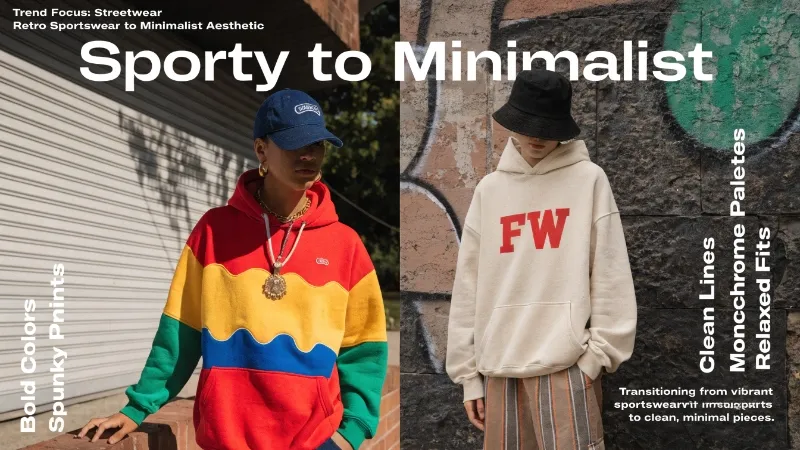
You need to stay updated with hoodie trends, but trends should support your brand strategy, not replace it. A product line usually performs better when it combines market relevance with a clear point of view.
Some popular hoodie directions include:
| Hoodie Style | Description |
|---|---|
| Vintage sports logos | Nostalgic graphics inspired by the ’80s and ’90s, popular with retro and streetwear audiences. |
| Minimalistic typography | Clean text-based designs that work well for modern basics and understated branding. |
| Nature-inspired illustrations | Graphics and earthy color palettes that appeal to customers interested in outdoor, lifestyle, or eco-conscious brands. |
You can use these styles as inspiration, but your final collection should still reflect your own customer and price point.
Trending Colors
Color direction changes every year, but some tones remain commercially useful across seasons. In recent collections, acid black, rich brown, hot red, and soft pastels have all remained relevant in different market segments.
- Acid black works well for streetwear, washed looks, and graphic-heavy styles.
- Rich brown feels warmer and more mature, especially for autumn and premium casualwear.
- Hot red creates visual impact and suits statement products or seasonal drops.
- Soft pastels are often used for youth-focused, lifestyle, or spring collections.
Choose colors that match your brand identity and your customer’s wardrobe habits.
Tip: Before confirming bulk production, test color swatches or sample garments whenever possible. A color that looks strong on screen may perform differently on the actual fabric.
Eco and Tech Features
Many customers now look for hoodies that offer either better sustainability, more function, or both.
Common options include:
- organic cotton
- recycled polyester
- bamboo or blended sustainable fibers
- moisture-wicking finishes
- hidden pockets
- media-friendly construction details
- specialty trims or functional closures
Not every brand needs these features. The key is to choose features that fit your target market and price structure rather than adding complexity just to sound innovative.
How Private Label Hoodie Manufacturing Works
Private label hoodie manufacturing allows brands to sell hoodies under their own name while production is handled by a specialized garment manufacturer. Instead of building your own factory, you work with an experienced manufacturer that manages sourcing, sampling, production, and packaging based on your requirements.
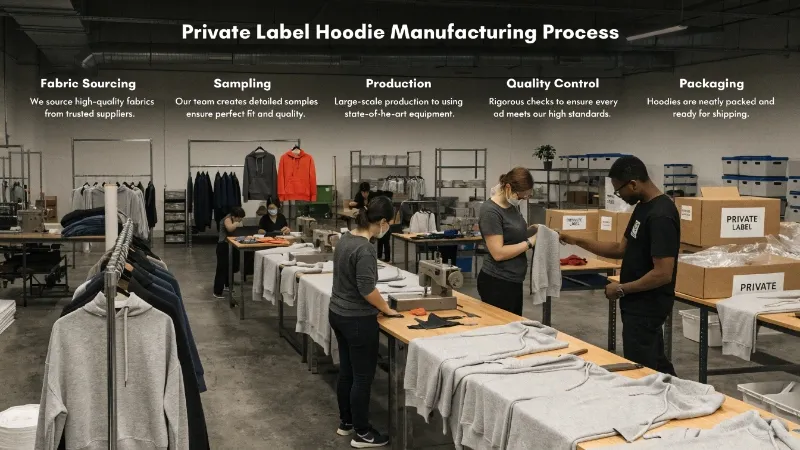
The process usually follows several structured stages.
1. Tech Pack and Design Specifications
The process starts with a tech pack. This acts as the production blueprint for the hoodie and should include:
- design sketches
- measurements and size chart
- fabric requirements
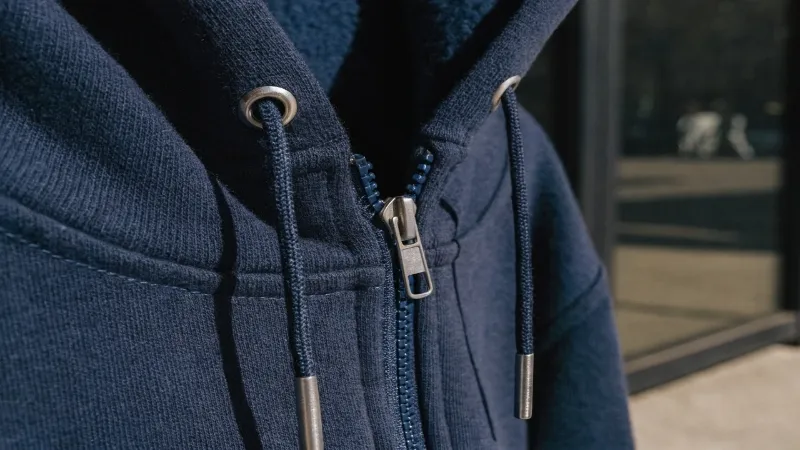
- rib, drawcord, zipper, or trim details
- artwork placement
- label and packaging instructions
The clearer your tech pack is, the fewer avoidable mistakes you will face during development.
For B2B buyers, this is one of the most important steps. In practice, unclear tech packs often lead to sample revisions, delays, and cost changes later in the process.
Artwork files also need to be clear and accurate. We have seen cases where a client sent design files that were not clear enough, and the initial review was not strict enough. After production, the final result did not meet the client’s expectations. To reduce this risk, always send high-resolution and accurate artwork files instead of unclear screenshots or rough references.
2. Sampling and Prototype Development
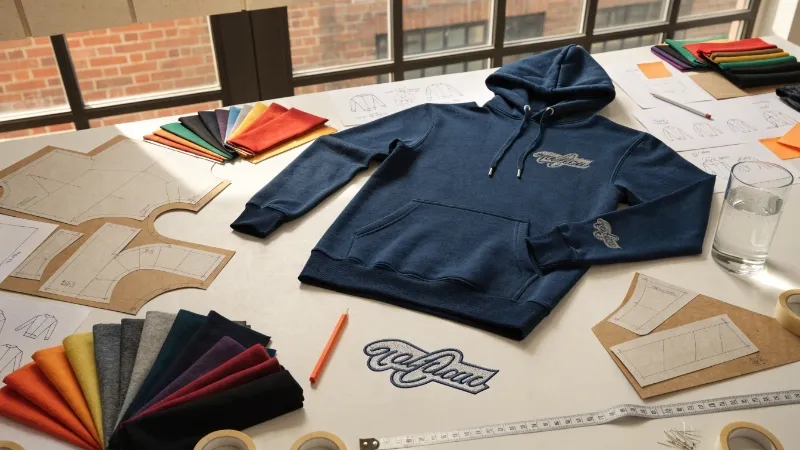
Once the tech pack is reviewed, the factory develops samples. These often include:
- Proto sample – verifies the basic design, materials, and overall direction
- Fit sample – checks measurements, shape, and pattern corrections
- Pre-production (PP) sample – the approved final version used as the bulk production reference
At our factory, a simple hoodie sample usually takes around 8–12 days, while a more complex style often takes around 15–20 days, depending on fabric sourcing, trims, embroidery, printing details, and construction complexity.
For startup brands, the sample stage is where most important product decisions happen. It is also the best stage to correct fit, fabric feel, logo size, and construction details before bulk production begins.
3. Bulk Production
After the PP sample is approved, bulk production begins. This stage usually includes:
- fabric cutting
- sewing and assembly
- printing or embroidery
- labeling
- packaging
A reliable factory should organize production in a way that keeps quality stable from one batch to the next. For buyers, this means you should not only ask about lead time, but also how the factory manages production consistency and inspection.
For regular hoodie orders, our standard bulk lead time is usually around 25–35 days after the final details are confirmed. Exact timing still depends on fabric readiness, order quantity, decoration method, and production schedule.
4. Quality Control and Inspection
Quality control is a critical part of hoodie production. Most factories conduct checks during and after production.
Many apparel manufacturers use the AQL inspection system, which helps define acceptable defect levels before shipment. However, B2B buyers should not rely on AQL alone. It is also useful to confirm:
- measurement tolerance
- print or embroidery placement tolerance
- shade consistency
- stitching quality
- packaging accuracy
This reduces misunderstandings and helps both sides work with the same quality standard.
5. Packaging and Shipping
After production is complete, hoodies are folded, labeled, packed, and prepared for shipment based on brand requirements.
Products may be shipped to:
- warehouses
- fulfillment centers
- brand offices
- distributors
- retail partners
A typical private label hoodie production cycle, from approved sample to shipment, often takes around 4–8 weeks depending on order quantity, fabric availability, decoration complexity, and factory capacity.
For B2B buyers, it is also important to confirm shipping terms early, especially if you need to compare EXW, FOB, or delivered pricing.
Hoodie Design
Unique Concepts
You can make your hoodie line more memorable by focusing on design details that reflect your brand instead of copying what is already common in the market.
Some useful design approaches include:
| Design Technique | Description |
|---|---|
| Typography | Hand-lettered or well-structured typography can create a clear brand voice and strong shelf appeal. |
| Embroidery | Embroidery adds texture and perceived value, especially for premium or understated branding. |
| Clean Graphics | Minimal, well-executed graphics often perform better than overcrowded designs. |
Tip: Small design choices such as embroidery density, print texture, logo size, and garment wash can significantly affect how premium the final hoodie feels.
You should also think about what the hoodie offers beyond appearance. A product can stand out because of fit, fabric weight, softness, practicality, or how well it supports a specific brand identity.
Materials and Fit
The material you choose affects comfort, durability, drape, warmth, and final cost.
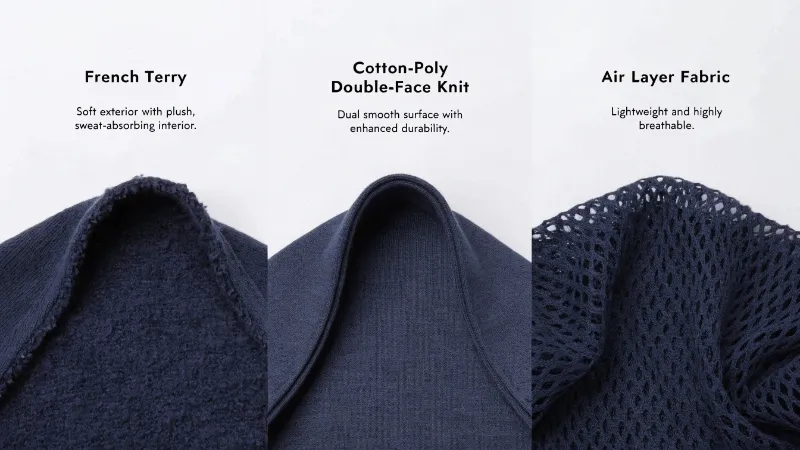
At our factory, some of the most common hoodie fabrics include:
- French terry
- cotton-poly double-face knit
- air layer fabric
These fabric directions work for different positioning, seasons, and price levels.
| Fabric Direction | Recommended Use | Key Benefits |
|---|---|---|
| 400 gsm+ heavyweight brushed 100% cotton | High-end streetwear / autumn-winter collections | Strong structure, better silhouette support, premium handfeel, and the highest markup potential |
| Combed cotton French terry | Daily casualwear / spring-autumn collections | Comfortable, breathable, softer drape, and suitable for refined mid-to-high-end minimalist styles |
| High-density cotton-poly CVC | Performance-inspired / all-season programs | Better fiber stability, quicker drying performance, and a practical balance between durability and cost |
In actual product development, we usually recommend fabric based on three factors: style direction, end use, and target cost.
- For high-end streetwear and colder seasons, we usually recommend 400 gsm+ heavyweight brushed cotton. Its firmer body helps support oversized or boxy silhouettes, and it generally offers the strongest premium positioning.
- For light daily wear and spring-autumn collections, we often recommend combed cotton French terry. It focuses more on comfort and drape, making it suitable for clean, mid-to-high-end casual styles.
- For sports-function or all-season products, we commonly recommend high-density cotton-poly CVC. It takes advantage of fiber stability and quicker drying performance, helping brands balance durability, practicality, and cost control.
We also commonly develop hoodies in different weight ranges depending on product positioning:
| Hoodie Weight Category | Common GSM Range | Typical Use |
|---|---|---|
| Lightweight sweatshirts | 280–330 gsm | Transitional weather, lighter casualwear, entry-level programs |
| Standard hoodies | 350 gsm+ | Mainstream hoodie developments, balanced warmth and structure |
| Heavyweight hoodies | 450–800 gsm | Premium streetwear, oversized styles, statement products |
A few common material considerations:
- Cotton feels soft and breathable, but may shrink or wrinkle more easily if the fabric and finishing are not well controlled.
- Fleece or brushed constructions are warm and commercially versatile, making them popular for lifestyle and winter products.
- Cotton-poly blends often offer a practical balance of cost, durability, and stability.
- Heavyweight fabrics usually increase material cost, shipping cost, and perceived value at the same time.
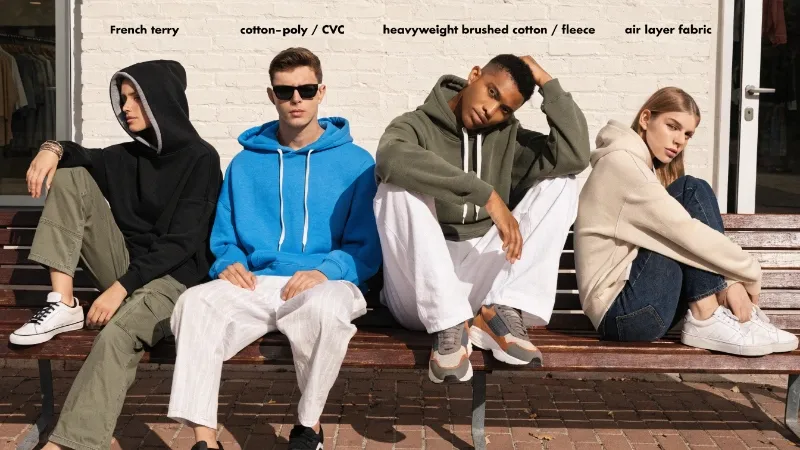
Contrast-color hoodie designs also need extra care during development. We have seen cases where a client chose a color-blocked design, but the fabric combination was not suitable. After production, the light-colored fabric picked up color from the darker fabric. Even after improving the fabric selection later, lighter panels could still be affected to some degree. This is why contrast-color styles should be tested early with the actual fabric combination, not approved only from digital mockups.
Fit is just as important as fabric. Popular fit directions include:
| Fit Type | Key Characteristics | Best For |
|---|---|---|
| Oversized | Generous volume through the body and sleeves with a longer, more relaxed silhouette. | Streetwear, layering, trend-driven collections |
| Boxy Fit | Wider chest and shoulders with a straighter or slightly cropped shape. | Structured fashion and modern premium casualwear |
| Drop Shoulder | Lower shoulder seam that creates a relaxed visual and comfortable movement. | Oversized aesthetics and casual comfort |
The best choice depends on your target market. In practice, many brands fail not because the hoodie looks bad, but because the fit and fabric do not match the customer’s expectations.
In simple terms, style defines the structure, end use defines the fiber choice, and target cost defines the GSM. This is one of the most important principles when developing a competitive hoodie line.
Printing and Embroidery Options
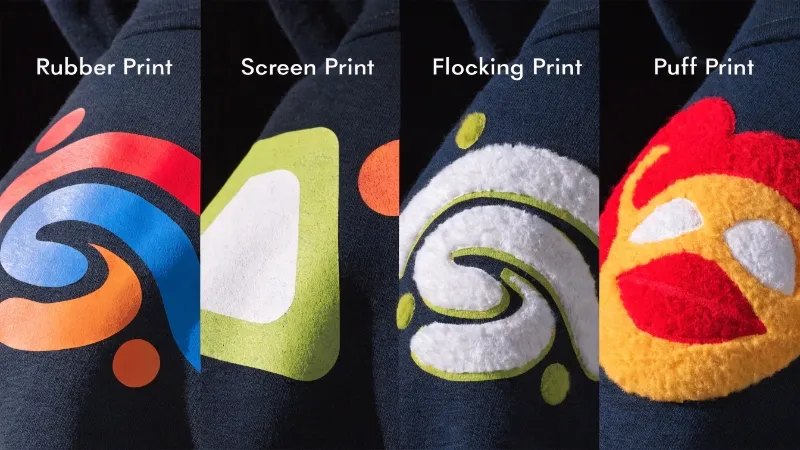
Decoration method plays a big role in both product appearance and production cost. At our factory, some of the most common hoodie decoration techniques include:
Common Printing Options
- rubber print
- screen print
- flocking print
- puff print
Each technique creates a different effect. Screen print is widely used for solid and scalable graphic production. Flocking adds texture and a soft raised surface. Puff print gives dimension and is popular in modern streetwear. The best choice depends on your design style, budget, garment color, and target price point.
Common Embroidery Options
- flat embroidery
- appliqué embroidery
- 3D embroidery
- bead chain embroidery
Embroidery usually adds perceived value, but stitch density, size, and placement all influence price and production time. For B2B buyers, it is important to choose the decoration method based not only on visual effect, but also on scalability and commercial practicality.
Collection Planning
Planning your collection gives your brand direction and helps production run more efficiently.
Before launch, decide:
- how many styles you want to release
- how many colorways each style should have
- whether your first drop should focus on hero products or a wider range
- how each item fits your brand story
You might group your hoodies by theme, such as:
- streetwear
- premium basics
- eco-conscious
- technical or performance-led
- community or niche identity products
A first launch is often stronger when it focuses on one or two clear hero styles rather than too many options. This makes sampling, costing, marketing, and inventory planning easier to manage.
Note: Strong collections usually have one signature piece that represents the brand clearly. This can become your lead product for both sales and brand recognition.
How to Source a Reliable Hoodie Manufacturer
Research Options
Before starting production, you need to identify manufacturers that match your product type, order size, quality level, and communication needs.
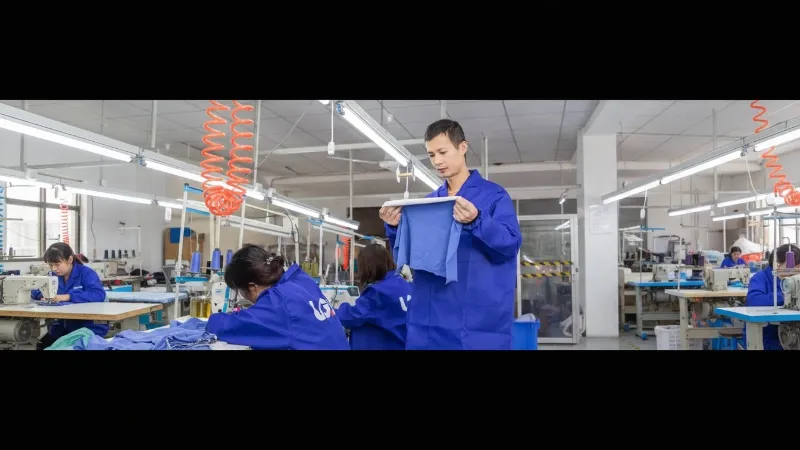
Common research channels include:
- verified B2B sourcing platforms
- direct factory websites
- referrals from industry contacts
- trade fair introductions
- supplier directories
Look for manufacturers that already produce the kind of hoodie you want to make, rather than general factories that accept any category.
Tip: A factory that understands private label development is usually more helpful than one that only offers basic cut-and-sew production.
Sample Evaluation
Request samples from your shortlisted manufacturers and review them carefully.
When evaluating samples, pay attention to:
- fabric quality and handfeel
- fit accuracy
- consistency of measurements
- print or embroidery execution
- construction details
- turnaround time
- communication efficiency
- labeling and packaging support
- ability to follow instructions
- willingness to revise problems
B2B buyers should also ask practical questions such as:
- Is the MOQ per style, per color, or total order?
- Is the fabric stocked or made to order?
- How many sample revisions are included?
- Is size grading included?
- Can labels, hangtags, and packaging be supplied together?
- How does the factory handle defects or claims?
These questions often tell you more than a sales pitch.
Compare Costs
Compare costs across both regions and order quantities. Lower price does not always mean lower total cost if delays, rework, or quality issues create problems later.
| Region | Average Labor Cost per Hoodie |
|---|---|
| China | $3 – $6 |
| Vietnam | $4 – $7 |
| Turkey | $5 – $8 |
| USA | $10 – $20 |
| Order Quantity | Fabric Cost per Unit | Labor Cost per Unit | Total Cost per Unit |
|---|---|---|---|
| 100 | $6 | $5 | $20 – $35 |
| 500 | $5 | $4 | $15 – $25 |
| 1,000 | $4.50 | $3.50 | $12 – $20 |
| 5,000+ | $4 | $3 | $10 – $15 |
When comparing quotations, make sure you understand what is included. The same hoodie can vary significantly in price depending on:
- GSM or fabric weight
- brushed or non-brushed inside
- garment wash
- print size and technique
- embroidery stitch count and embroidery type
- custom trims
- labels and hangtags
- packaging requirements
- trade terms and delivery scope
Choose a manufacturer based on fit, reliability, and commercial sense, not just the lowest quote.
MOQ Considerations
MOQ affects both risk and unit cost, so it should be discussed early.
At our factory, the regular MOQ for hoodies is 100 pcs per color. This gives new brands more flexibility than very high-volume production models, while still keeping production practical.
For new brands, it is important to understand that MOQ is not only a quantity issue. It also affects fabric utilization, trim sourcing, color options, and final unit cost. A lower MOQ can reduce risk, but it often comes with a higher cost per piece.
Easson Apparel Partner
For brands looking for a private label hoodie manufacturer, companies like Easson Apparel can support the full development process, including fabric sourcing, sample making, bulk production, and private label customization.
A strong manufacturing partner should not only produce the hoodie, but also help reduce avoidable mistakes during development.
How Much Does It Cost to Manufacture Hoodies
The cost of manufacturing hoodies depends on materials, order quantity, decoration method, labor, and shipping terms. Understanding these cost drivers helps brands build better budgets and price products more realistically.
Fabric and Material Costs
Fabric is usually the largest cost component in hoodie production. Common options include:
- French terry
- cotton-poly double-face knit
- air layer fabric
- other cotton or blended sweatshirt fabrics
In most cases, heavier fabrics cost more because they use more yarn and increase overall garment weight. Fabric finishing, dyeing method, and specialty treatments can also affect cost.
As a general rule, a 280–330 gsm sweatshirt and a 450 gsm or 600 gsm heavyweight hoodie will not sit in the same cost bracket, even if the design looks similar on paper.
Decoration and Customization
Branding details also influence the final price. Common customization options include:
- rubber print
- screen print
- flocking print
- puff print
- flat embroidery
- appliqué embroidery
- 3D embroidery
- bead chain embroidery
- woven labels
- hangtags
- custom packaging
The more complex the decoration, the higher the likely cost and the greater the impact on lead time. For example, large embroidery areas, special embroidery styles, or multiple print placements usually require more time and cost than a simple chest logo.
Order Quantity and Price Logic
Most manufacturers set an MOQ to keep production efficient.
Typical hoodie MOQs often look like this:
- 100 pcs per color for brands that need a more flexible starting point
- larger quantities for brands that want lower unit prices or more efficient fabric usage
Larger orders usually reduce the cost per unit because fabric purchasing, cutting, and line setup become more efficient.
For new brands, it is important to understand that a low MOQ is helpful, but it often means a higher unit price. Lower risk and lower cost do not always happen at the same time.
Manufacturing Location
Production costs also vary depending on where the hoodies are made.
For example:
- China offers competitive pricing, flexible supply chains, and large production capacity.
- Vietnam is known for garment expertise and stable production quality.
- Turkey offers shorter transit times for European markets.
The right location depends on your priorities. Some buyers value lower cost, while others care more about lead time, communication speed, or easier logistics.
Typical Cost Range
For many private label hoodie brands, production costs often fall between $10 and $35 per hoodie, depending on the construction, fabric quality, decoration complexity, order size, and packaging requirements.
This range is broad for a reason. A basic hoodie and a heavyweight premium hoodie are not costed the same way, even if they look similar in a photo.
Brand Assets
Logo and Visuals
Your visual identity shapes how your brand is perceived. A hoodie can look completely different in value depending on logo placement, scale, decoration method, and overall balance.
When developing visuals, think about:
- logo placement
- size and proportion
- embroidery vs print
- color contrast
- garment color compatibility
- brand consistency
A small chest logo can feel clean and premium. A large front or back graphic may feel stronger for streetwear or community-led branding. Neither is automatically better. The right choice depends on your audience.
Tip: Test logo placement and scale on real samples before confirming bulk production. Something that looks good in a mockup may not look balanced on the actual garment.
Labels and Packaging
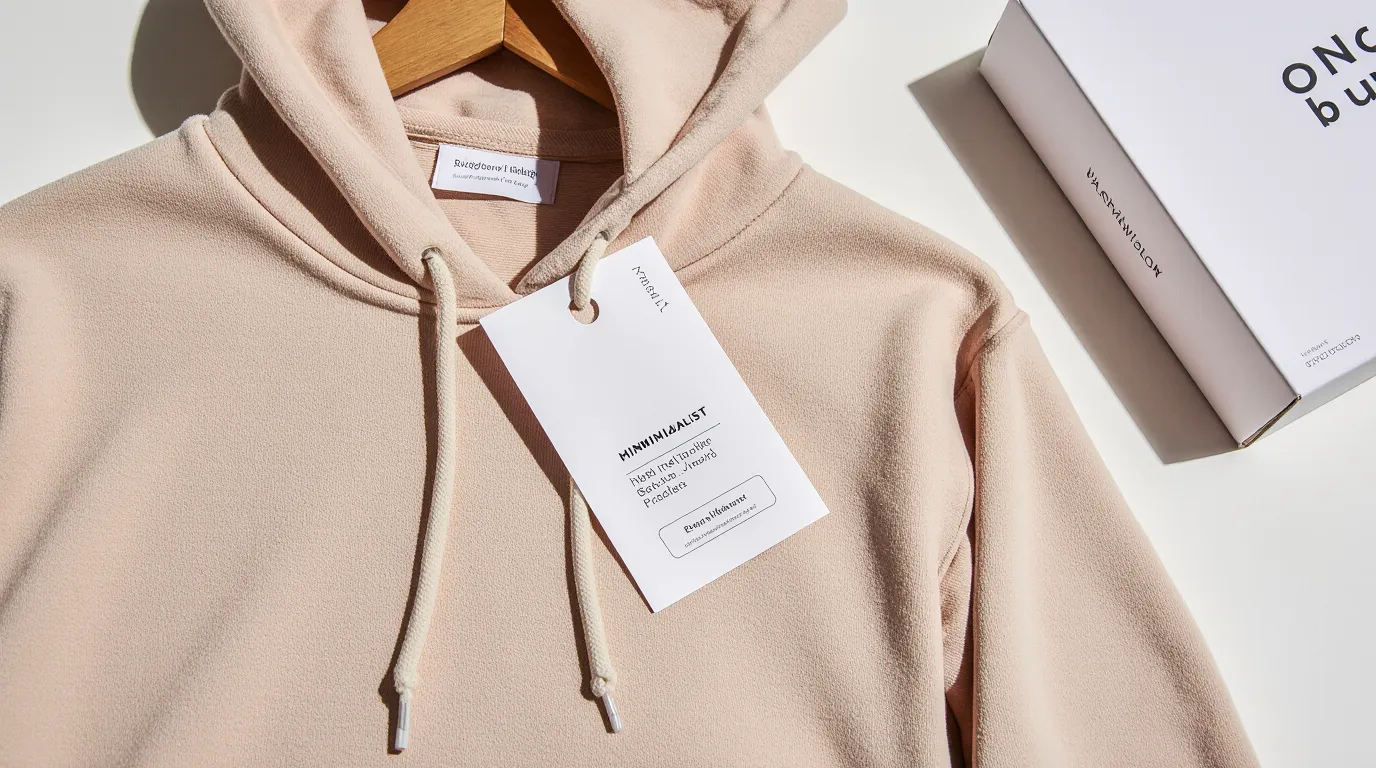
Labels and packaging add value beyond protection. They also help shape how professional your brand feels at first touch.
| Packaging Type | Benefits |
|---|---|
| Kraft paper or recycled poly mailers | Durable, customizable, and aligned with modern branded shipping needs |
| Compostable cellulose bags | Eco-friendly and useful for brands with sustainability messaging |
| FSC-certified cardboard boxes | Secure and suitable for premium or higher-volume packaging systems |
| Lightweight puncture-resistant mailers | Practical for direct-to-customer shipping |
| Custom printed designs | Support stronger unboxing experience and better brand presentation |
Choose packaging based on your sales channel, budget, and customer expectation. A DTC brand, a wholesale brand, and a premium label may all require different packaging priorities.
Brand Story
A clear brand story helps customers understand what your brand stands for and why your products exist.
Successful hoodie brands often build around one or more of these ideas:
- authenticity
- comfort
- quality
- community
- identity
- culture
- lifestyle
For B2B product planning, your brand story is not just a marketing paragraph. It affects your product direction, decoration style, price point, and even packaging choices.
Launch and Feedback
Launch Plan
A strong launch plan helps turn product development into actual sales.
Before launch, prepare:
- your drop date
- your product photography
- your product descriptions
- your website or sales channel
- your pricing structure
- your inventory plan
- your marketing content
You can build momentum through email, social content, early access, and limited drops. After launch, track results closely.
| Metric | Description |
|---|---|
| Conversion rate | Shows how many visitors become buyers |
| Customer acquisition cost | Shows how much you spend to get each customer |
| Shopping behavior metrics | Includes cart abandonment rate and average session time |
Review these numbers regularly. A launch is not only about selling your first batch. It is also about learning what should be improved in the next run.
Order Fulfillment
Choosing the right fulfillment method affects delivery speed, cost control, and customer experience.
| Fulfillment Method | Advantages | Best For |
|---|---|---|
| Self-Fulfillment | Full control over packaging and quality checks | Small brands starting out |
| Print-on-Demand | Low inventory risk and fast testing | Very early-stage testing |
| Professional Custom Production | Better consistency and stronger brand presentation | Brands preparing to scale |
| Third-Party Logistics (3PL) | Outsourced storage and shipping efficiency | Brands with growing order volume |
Self-fulfillment or small-batch management may work well in the beginning, but as order volume grows, operational efficiency becomes more important. Choosing the right fulfillment setup early can prevent shipping issues and customer dissatisfaction later.
Customer Feedback
Customer feedback helps you improve product-market fit and reduce repeat mistakes.
You can collect feedback through:
- social media comments
- product reviews
- post-purchase surveys
- customer service messages
- repeat buyer conversations
Look for patterns in areas such as:
- fit
- softness
- warmth
- shrinkage
- print feel
- logo placement
- packaging
- delivery experience
Good feedback loops help you make better product decisions for your next drop instead of guessing what customers want.
Final Thoughts
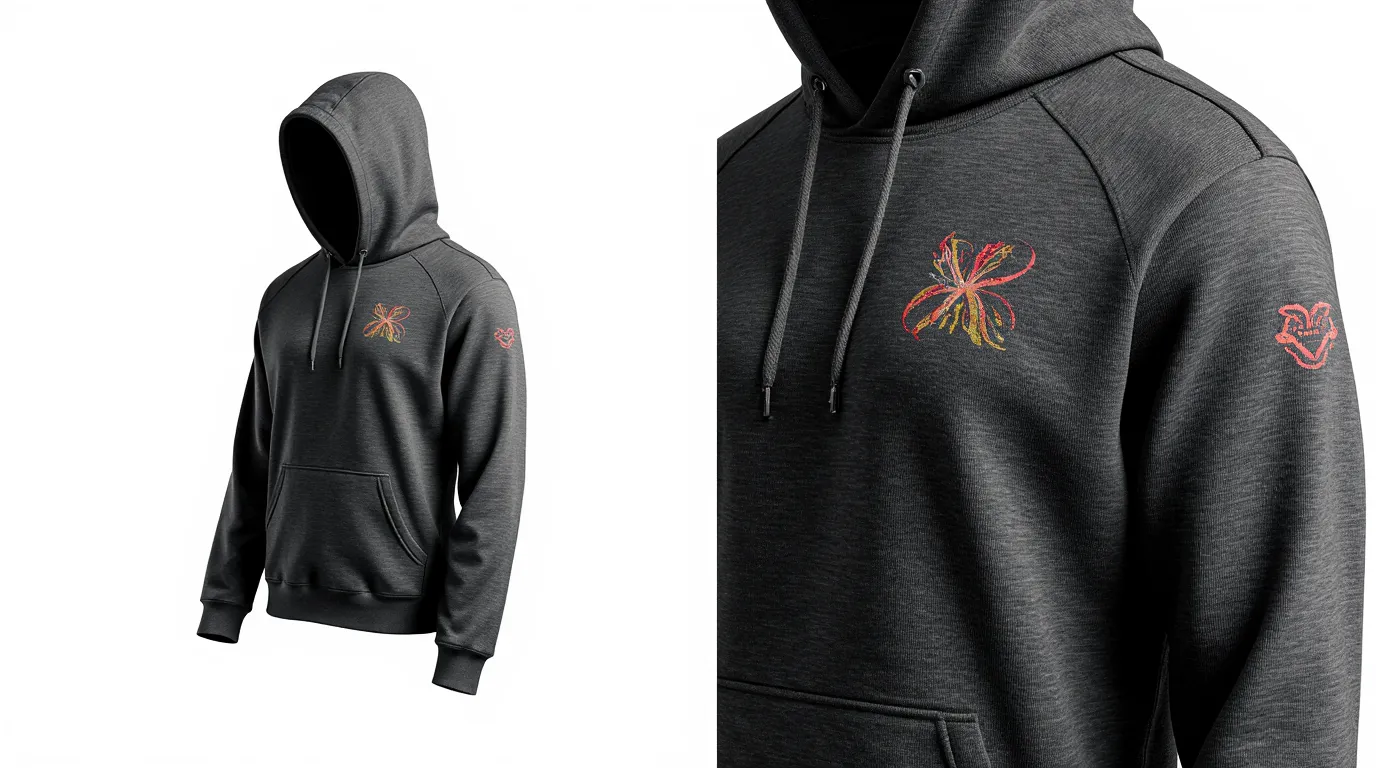
You can launch a successful private label hoodie line by following a clear process and making informed decisions at each stage.
Focus on:
- a strong brand direction
- the right target customer
- commercially sensible product choices
- reliable manufacturing support
- quality sampling and review
- practical launch planning
Choose quality materials based on your customer and price point, not just trends.
| Fabric Direction | Best Use Case |
|---|---|
| 400 gsm+ heavyweight brushed 100% cotton | High-end streetwear and autumn-winter premium collections |
| Combed cotton French terry | Daily casualwear, spring-autumn programs, and refined minimalist styles |
| High-density cotton-poly CVC | Performance-inspired hoodies and practical all-season programs |
Start with a manageable order, test your samples carefully, refine your product details, and improve each release based on real feedback.
If you are planning to develop a private label hoodie line, working with an experienced manufacturing partner can make the process more efficient and reduce risk from the beginning.
FAQ
What is a private label hoodie?
A private label hoodie is produced by a manufacturer but sold under a brand’s own name. The brand controls the logo, design direction, labels, packaging, and marketing, while the factory handles product development and manufacturing.
How much does it cost to manufacture hoodies?
For many private label brands, hoodie production costs often range from $10 to $35 per piece, depending on fabric, fit, decoration, quantity, and packaging.
What is the typical MOQ for hoodie manufacturers?
MOQ varies by factory, but at our factory, the regular hoodie MOQ is 100 pcs per color for standard developments.
How long does hoodie sampling usually take?
At our factory, a simple hoodie sample usually takes around 8–12 days, while a more complex hoodie sample often takes around 15–20 days, depending on fabric sourcing, trims, and decoration details.
How long does bulk hoodie production usually take?
For regular hoodie orders, our standard bulk lead time is usually around 25–35 days after final approval, depending on fabric readiness, quantity, and production complexity.
What fabrics do you commonly use for hoodie production?
Some of our most common hoodie fabrics include French terry, cotton-poly double-face knit, and air layer fabric. Common weight ranges include 280–330 gsm for lighter sweatshirts, 350 gsm+ for standard hoodies, and 450–800 gsm for heavyweight developments.
What printing and embroidery options are commonly used for custom hoodies?
Common printing options include rubber print, screen print, flocking print, and puff print. Common embroidery options include flat embroidery, appliqué embroidery, 3D embroidery, and bead chain embroidery.
How do I choose the right hoodie fabric for my brand?
A practical rule is this: style defines the structure, end use defines the fiber choice, and target cost defines the GSM. For high-end streetwear, 400 gsm+ heavyweight brushed cotton is often the best fit. For daily casualwear, combed cotton French terry is a strong option. For performance-inspired or all-season programs, high-density cotton-poly CVC usually offers better balance.
How do I choose a reliable hoodie manufacturer?
Review sample quality, communication speed, production capability, MOQ structure, timeline consistency, and how well the factory follows your instructions. It is also helpful to ask how they handle revisions, defects, artwork review, and packaging support.
What are common mistakes when developing custom hoodies?
Two common mistakes are approving unclear artwork files and overlooking fabric risks in contrast-color designs. Poor artwork can lead to disappointing print or embroidery results, while unsuitable dark-and-light fabric combinations may create color transfer problems on lighter panels.
Can I start a hoodie brand with a small budget?
Yes. Many brands start with a smaller run, test one or two hero styles, and improve step by step. Starting small helps reduce risk, but you should still plan your product, costing, and supplier selection carefully.