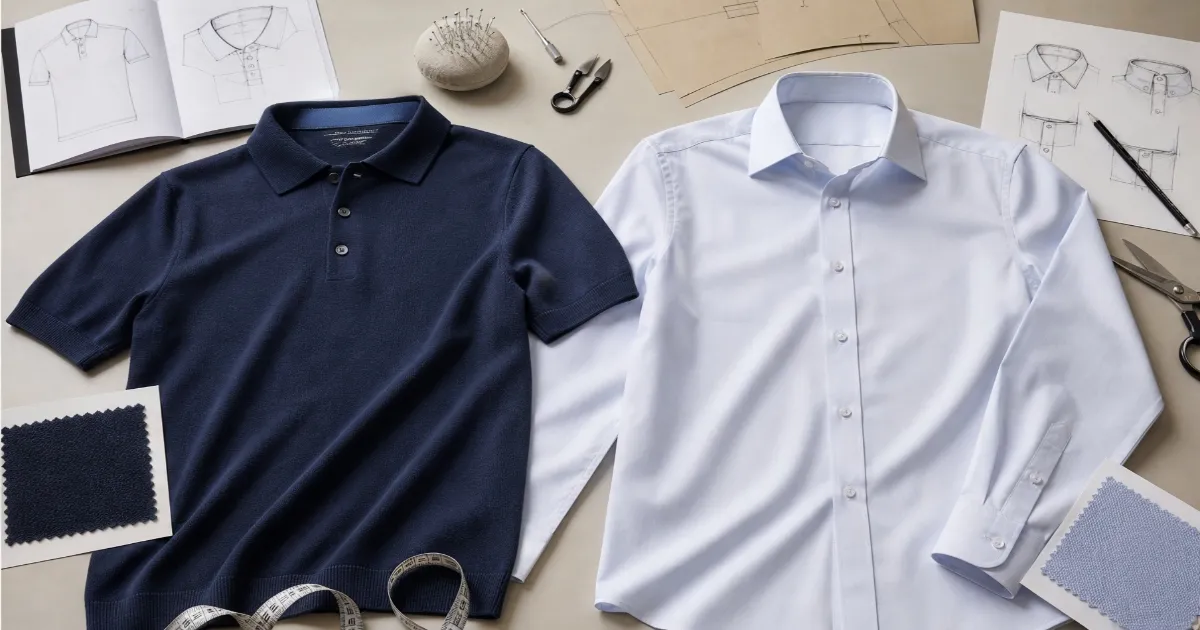
Yes—a polo is a type of collared shirt. “Collared shirt” is a broad term for any shirt with a collar, including polo shirts, dress shirts, Oxford shirts, and button-down shirts. A polo is usually a knitted pullover with a soft collar and short button placket, while a dress shirt is typically a woven, full-button shirt with more structure and formality.
A polo shirt is a knit garment with a soft, stretchy fabric and a partial button placket. A collared dress shirt is a woven garment with a rigid structure and a full-length button front. They share a collar, but they are built differently and serve different purposes.
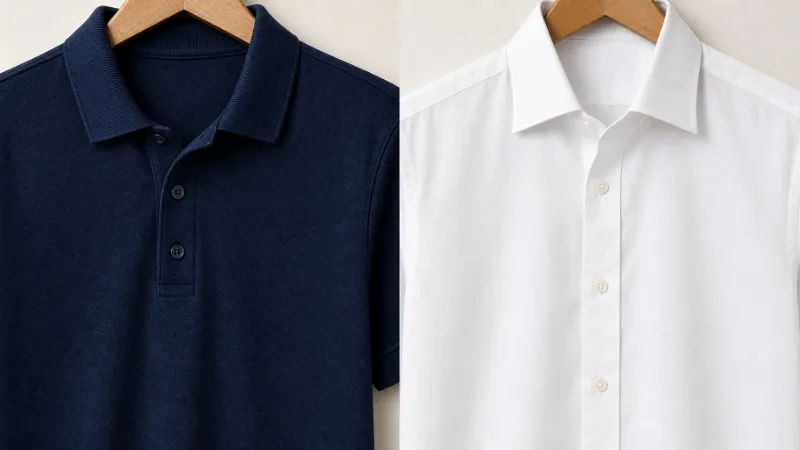
Both shirts have a collar. Both can work in a semi-professional setting. But the moment you look closer, the differences are obvious. The fabric feels different. The fit moves differently. And the message each one sends is completely different. Let me break this down for you piece by piece.
Is a Polo Considered a Collared Shirt?
You have probably heard someone use "collared shirt" to mean both a polo and a dress shirt at the same time.
Yes, a polo is technically a collared shirt because it has a collar. But in most dress code contexts, "collared shirt" usually refers to a woven dress shirt. A polo occupies its own category: smart casual, with a soft collar that folds naturally and sits close to the body.
This confusion creates real problems. Someone tells you the event is "collared shirts only." You show up in a polo. The host is in a button-down Oxford. You are not wrong, but you are also not quite right.
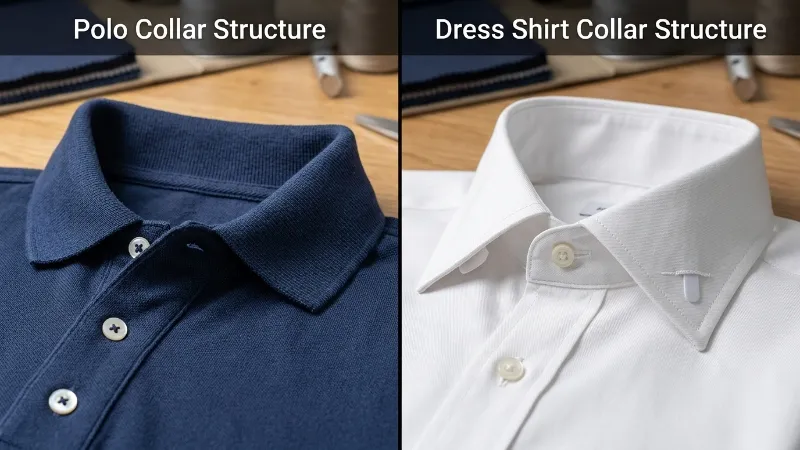
The collar is where the two shirts look most similar. But even the collars are built differently. A polo collar is usually made from rib knit or self-fabric knit, which makes it softer and more flexible than a fused woven collar. It is soft, it folds on its own, and it has no internal support. A dress shirt collar is woven, pressed, and usually reinforced with an internal stay or interlining. It stands upright on its own. It holds its shape all day, even after hours of wear.
So yes, a polo has a collar. But calling it a "collared shirt" in a formal setting will confuse people. In everyday language, these two garments live in separate categories.
What Makes a Polo a Polo?
| Feature | Polo Shirt | Collared Dress Shirt |
|---|---|---|
| Collar material | Same knit as body | Separate woven piece with lining |
| Collar structure | Soft, self-folding | Stiff, structured, stays upright |
| Button placket | Partial (2–3 buttons at chest) | Full-length from collar to hem |
| How you put it on | Pull over your head | Open the front, button up |
| Collar stays | None | Often has removable metal stays |
The polo was designed for movement. The dress shirt was designed for presence.
Fabric Clash: Knits vs. Woven
Most people never think about how their shirt was made. But the making process changes everything about how the shirt feels and behaves.
A polo shirt is made from knit fabric, most commonly piqué cotton. The yarn is looped together in a way that creates stretch. A dress shirt is made from woven fabric, like poplin or Oxford cloth, where threads cross over each other in a tight grid. Most traditional woven shirt fabrics have little natural stretch unless elastane or mechanical stretch is added..
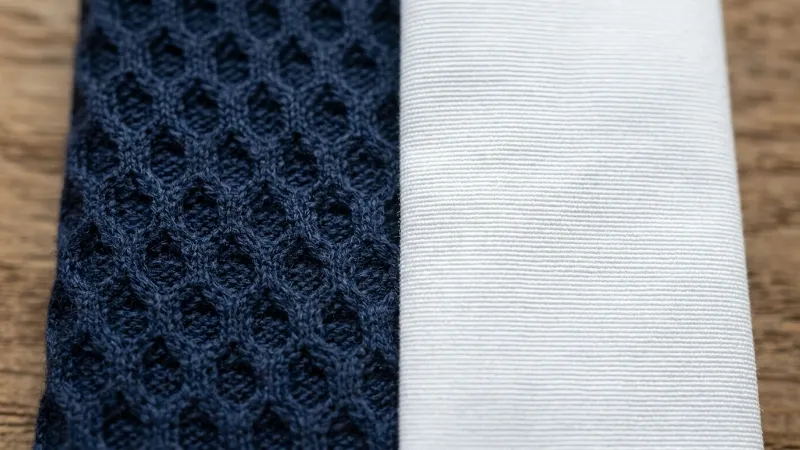
I work with both fabric types every day at our factory. The difference in how they behave on a cutting table, on a sewing machine, and on a human body is enormous.
Factory Note:
For polo shirts, we usually check fabric handfeel, shrinkage, collar recovery, and embroidery stability before bulk production. A polo may look simple, but poor fabric recovery can make the collar curl or the placket twist after washing.
For brands developing polos or other knit tops, understanding fabric structure is also important when choosing a custom T-shirt manufacturer or polo shirt supplier.
Piqué Knit: The Polo Fabric
Piqué (say it like "pee-KAY") is the most common polo fabric. If you look closely at a polo shirt, you will see a pattern of tiny raised squares or dots on the surface.1 That texture is the piqué weave. It creates small air pockets across the fabric, which is why polo shirts feel breathable even in warm weather.
The knit structure also means the fabric stretches in multiple directions. You can scrunch a polo shirt into a ball, stuff it in a bag, pull it out three hours later, and shake it once. It will look nearly the same as before. No iron needed.
Woven Fabric: The Dress Shirt Material
Woven fabric is built on a grid. Threads go over and under each other in rows, like the weave pattern on a basket. This creates a stable, flat surface with very little give.
| Fabric Type | Stretch | Wrinkle Resistance | Typical Use | Surface Feel |
|---|---|---|---|---|
| Piqué Knit | High (multi-direction) | High | Polo shirts | Textured, slightly raised |
| Poplin Woven | None | Low | Dress shirts | Smooth, flat |
| Oxford Cloth | None | Medium | Casual dress shirts | Slightly textured, heavier |
| Jersey Knit | High | High | T-shirts, casual tops | Smooth, soft |
Woven fabric holds a sharp crease well. That is useful for dress shirts because it makes the collar and cuffs look clean and precise. But the same property means that without ironing after washing, a dress shirt will look wrinkled and untidy. The fabric does not forgive you the way a polo does.
Fit and Structural Differences
The fabric is not the only thing that separates these two shirts. The way each garment is cut and constructed tells you exactly what it was designed to do.
A polo shirt is cut like an athletic top, with a relaxed body and minimal shaping. A dress shirt is cut with more structure, including a fitted torso, defined shoulders, and a stiff collar that stands away from the neck. The polo moves with your body. The dress shirt holds its own shape.
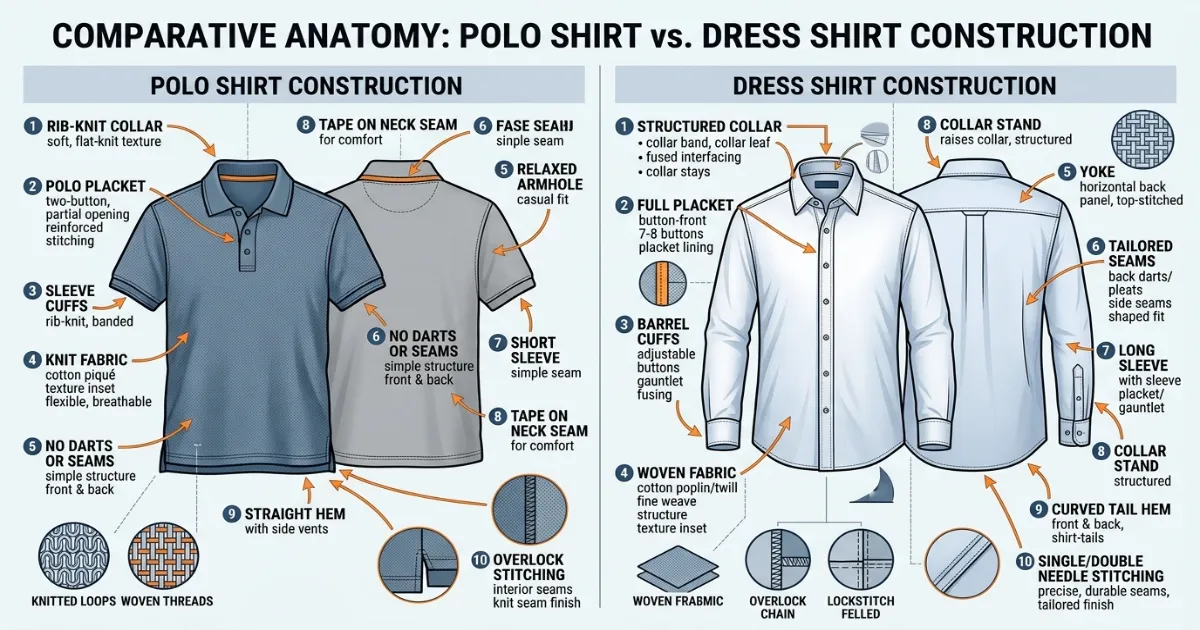
When I hold a polo shirt flat on a table, the fabric drapes softly. When I hold a dress shirt the same way, the collar stands up on its own. That one difference tells you everything about how each garment was designed to be worn.
The Placket Tells the Story
The button placket is the strip of fabric down the front where the buttons sit. On a polo, the placket runs from the collar down to about the mid-chest. It has two or three buttons. You leave the shirt buttoned, pull it over your head like a T-shirt, and adjust the collar after.
On a dress shirt, the placket runs the full length of the garment, from the collar all the way to the hem. You open it completely to put the shirt on, then button each button from bottom to top or top to bottom.
Structural Breakdown by Component
| Shirt Component | Polo Shirt | Dress Shirt |
|---|---|---|
| Collar support | No internal structure | Collar stays, interlining, or fusing |
| Button placket length | Half (chest only) | Full (collar to hem) |
| Sleeve style | Short, ribbed cuff | Short or long, with or without cuff buttons |
| Side seams | Often straight cut | Often curved for a more tailored fit |
| Hem shape | Straight or slightly curved | Usually curved, longer at the back |
| Fabric at seams | Stretches with movement | Holds its shape, no give |
The dress shirt creates a silhouette that looks put-together even before you button it. The polo creates comfort first, then style.
Dress Codes: When to Wear Which?
This is where most people make mistakes. The fabric and structure of each shirt are designed for specific settings. Getting it wrong does not just look off. It sends the wrong signal.
A polo shirt fits best in smart casual settings: weekend work, golf, outdoor events, and casual business meetings. A dress shirt fits formal and professional settings: job interviews, client meetings, formal dinners, and any event that requires a tie or jacket.

I tell this to every brand owner I work with when they are planning their product line. The shirt you produce needs to match the lifestyle your customer is actually living.
Reading the Dress Code Correctly
Dress codes are often vague. "Smart casual" means different things in different cities and industries. But there is a simple rule that works almost everywhere.
If the occasion involves a tie, wear a dress shirt. If it does not, a polo can often work. If you are unsure, the dress shirt is always the safer choice.
When Each Shirt Works
| Occasion | Polo Shirt | Dress Shirt |
|---|---|---|
| Job interview | Not recommended | Yes |
| Friday office (casual) | Yes | Optional |
| Golf or outdoor sport | Yes | No |
| Client lunch (professional) | Depends on industry | Yes |
| Formal dinner | No | Yes |
| Summer outdoor party | Yes | Too formal |
| Business conference | Acceptable in tech/creative | Preferred in finance/law |
| Wearing with a tie | Not designed for it | Yes |
The polo shirt is the king of smart casual.2 It makes you look put-together without looking stiff. The dress shirt is the right choice when the stakes are higher and you need people to take you seriously from the moment you walk in.
Factory Note:
In polo shirt sampling, small changes in shoulder width, sleeve opening, and body length can change the entire look. For startup brands, we usually recommend confirming one fit sample before opening size grading.
Why This Difference Matters for Brands and Buyers
If you are building a clothing brand or sourcing garments for resale, the polo vs. dress shirt decision is not just about style. It is a manufacturing and business decision.
Polo shirts have higher tolerance for size variation because the knit fabric stretches. This makes them easier to produce at scale and easier to sell across a wide range of body types. Dress shirts require exact sizing and precise construction because woven fabric has no stretch and no room for error.

I have worked with dozens of small and mid-sized brands over the years. The ones who start with polos almost always have fewer sizing complaints and fewer returns in their first season. The knit fabric forgives small variations in cutting and sewing. The dress shirt does not.
The Business Case for Starting with Polos
A polo shirt in a size medium might fit someone who is 170 cm and slim, and also work for someone who is 175 cm with a broader chest. The fabric stretches. The relaxed cut helps. There is room for variation.
A dress shirt in a size medium has to be exact. If the chest measurement is one centimeter too small, the customer cannot button it. If the collar is half a centimeter too tight, it is uncomfortable all day. Every size has to be precisely graded and checked.
Branding Potential: Polo vs. Dress Shirt
| Branding Feature | Polo Shirt | Dress Shirt |
|---|---|---|
| Chest embroidery | Excellent surface, logo looks clean | Possible but less common |
| Print placement | Good, fabric holds print well | Works, but less stretch to consider |
| Private label tag | Standard, easy to produce | Standard, easy to produce |
| Perceived brand value | Smart casual, accessible, sporty | Professional, formal, premium |
| MOQ flexibility | Higher tolerance, easier to start small | Tighter tolerances, harder to cut MOQ |
| Size range complexity | Lower complexity | Higher complexity per SKU |
If you are a new brand and you want to launch a product that looks good, photographs well, and does not cause sizing headaches in your first production run, start with a polo. Add dress shirts later when your size grading and quality control process is solid.
Sourcing & Manufacturing for Brands
Finding the right factory for your polo shirts or dress shirts is not the same process. The machinery, skills, and fabric sourcing for knit garments are completely different from woven garments.
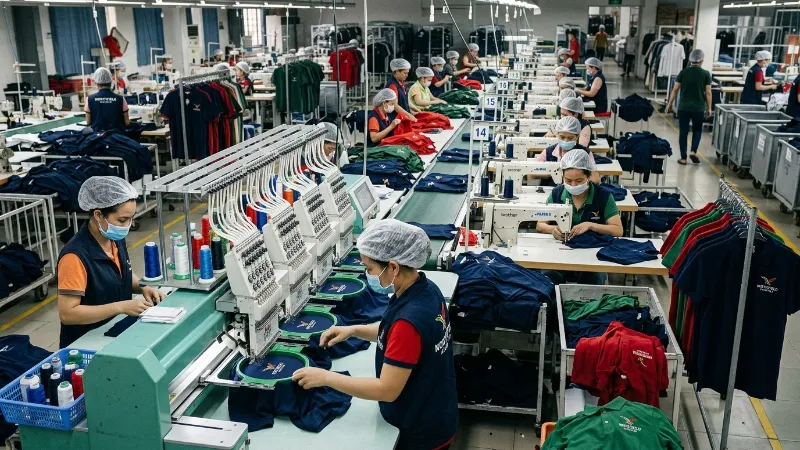
Polo shirts are knit garments and should be sourced from factories that specialize in knitwear. These factories have the right machines, fabric suppliers, and workers trained to handle knit construction. Quality problems are more likely when a factory does not have experience with the fabric category, machines, and construction methods required for that garment.
What to Look for in a Polo Shirt Manufacturer
When you are evaluating a custom polo shirt manufacturer for production, ask these questions directly:
| Evaluation Point | What to Ask | Why It Matters |
|---|---|---|
| Fabric sourcing | Do you source piqué fabric directly from mills? | Fabric quality controls the final feel and durability |
| Sample capability | Can you develop a sample from my tech pack or reference sample? | Samples tell you the factory's actual skill level |
| MOQ | What is your minimum order quantity per style per color? | Small brands need flexibility to test the market |
| Embroidery | Do you have in-house embroidery machines? | Chest logo embroidery is a core branding element for polos |
| Lead time | What is your standard production lead time? | Planning your launch calendar requires this number |
| Quality control | What QC process do you use before shipping? | This protects your returns rate and brand reputation |
At our factory in Dongguan, men's knitwear is our main production strength. We produce polo shirts, T-shirts, sweatshirts, hoodies, and other knitted garments, backed by over 21 years of garment manufacturing experience.
That said, we can also help brands develop woven shirt styles when the project matches our sourcing and production capabilities. Knit polos and woven dress shirts follow different production logic, so we review each woven project carefully before moving forward. We check the fabric type, construction method, MOQ, sample details, finishing standards, and expected quality level. When everything is clear, we can coordinate the right production resources and manage the process for the brand.
If you are planning a polo shirt line and want to understand your options, reach out directly. We are used to working with startups and brands who are still figuring out their product direction.
Frequently Asked Questions
Is a polo shirt a collared shirt?
Yes. A polo is a collared shirt because it has a collar. However, it is a specific type of collared shirt, usually made from knit fabric with a short button placket.
What is a collared shirt?
A collared shirt is any shirt designed with a collar around the neckline. This category includes polo shirts, dress shirts, Oxford shirts, button-down shirts, and some casual overshirts.
Is a polo shirt the same as a dress shirt?
No. A polo is usually a knit pullover with a soft collar and partial placket. A dress shirt is generally woven, has a full button front, and is more formal.
Can a polo shirt be worn to a formal event?
In most cases, no. A polo is smart casual, not formal. For interviews, client meetings, or events with a dress code, choose a dress shirt. In creative or tech industries, a clean polo may be acceptable for low-stakes meetings, but it is rarely the right choice for truly formal events.
What fabric is most common in polo shirts?
Piqué cotton is the most common fabric. It has a textured surface, good breathability, and holds its shape well after washing. Some performance polos use polyester piqué or cotton-polyester blends for extra moisture-wicking and durability.3
Why do polo shirts not wrinkle as much as dress shirts?
The knit construction allows the fabric to stretch and recover. This means creases do not set the way they do in woven fabric.4 Woven fabric holds the shape of a fold, which is why dress shirts wrinkle easily and need ironing.
Can I embroider a logo on a polo shirt?
Yes. The firm, flat surface of a polo chest is one of the best surfaces for embroidery. It holds the stitching cleanly, and the result looks precise and high-quality. This is one reason polo shirts are popular for corporate branding and uniform programs.
What is the minimum order quantity for polo shirts from a factory?
This depends on the factory. Large factories often require 500 to 1,000 pieces per style per color. Smaller or more flexible manufacturers can work with 100 to 300 pieces for startups. Always confirm MOQ before requesting a sample.
Is a polo shirt considered business casual?
Yes, in most industries. A polo shirt in a solid color or simple pattern is widely accepted as business casual attire. Pair it with chinos or tailored trousers and clean shoes, and it fits most modern workplace dress codes outside of formal industries like law or finance.
Conclusion
Polo shirts are knit, stretchy, and built for comfort. Dress shirts are woven, structured, and built for formality. Know the difference, and you will always wear the right one.
"Polo shirt - Wikipedia", https://en.wikipedia.org/wiki/Polo_shirt. Piqué is a weaving style of cotton fabric, characterized by a raised parallel cord or fine ribbing; the term derives from the French word for 'quilted' or 'backstitched,' and the fabric's textured surface is produced by a dobby or Jacquard loom attachment. Evidence role: definition; source type: encyclopedia. Supports: The definition and structural characteristics of piqué fabric, including its raised surface pattern and knit construction.. Scope note: General textile encyclopedias describe piqué construction but may not quantify its market share as the most common polo fabric. ↩
"Smart casual - Wikipedia", https://en.wikipedia.org/wiki/Smart_casual. Fashion historians and dress code guides consistently categorize the polo shirt as a foundational smart casual garment, occupying a middle register between formal dress shirts and casual T-shirts, and widely adopted in workplace, leisure, and sporting contexts from the mid-20th century onward. Evidence role: expert_consensus; source type: encyclopedia. Supports: The polo shirt's recognized position within smart casual dress codes.. Scope note: Smart casual is an informally defined dress code category with no universal standard; the polo's placement within it reflects broad consensus rather than a codified rule. ↩
"Thermo-Physiological Comfort Properties of Sportswear with ...", https://pmc.ncbi.nlm.nih.gov/articles/PMC8624076/. Polyester fibers are hydrophobic and transport moisture away from the skin through capillary action rather than absorption, resulting in faster drying times and reduced fabric weight during perspiration; polyester also exhibits greater tensile strength and abrasion resistance than cotton, contributing to improved garment durability in performance applications. Evidence role: mechanism; source type: research. Supports: That polyester and cotton-polyester blend fabrics provide superior moisture-wicking and durability compared to 100% cotton in performance apparel.. Scope note: Moisture management performance varies significantly by fabric construction, yarn count, and finishing treatments; fiber type alone does not determine wicking performance. ↩
"TRL - Knits - Textile Research Lab - Pratt Institute", https://textileresearchlab.pratt.edu/construction/knits. The elastic recovery of knit fabrics is attributed to the geometric flexibility of their interlocked yarn loops, which can deform under stress and return to their original configuration upon release, thereby preventing the permanent crease formation observed in woven structures. Evidence role: mechanism; source type: research. Supports: That the interlocking loop structure of knit fabrics provides elastic recovery that resists permanent crease formation.. ↩