
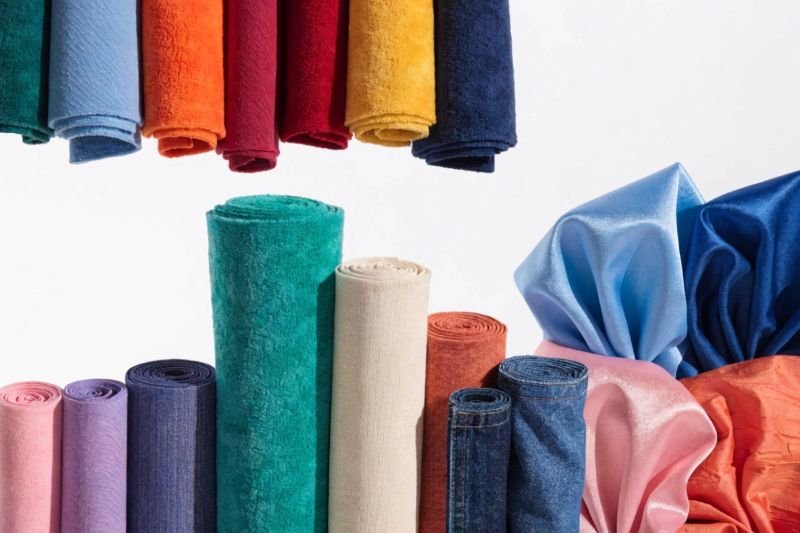
Struggling to pick fabrics for your new brand? It's a confusing process, and a wrong choice can cost you. Let us help you make the right decision from the start.
The best fabric depends entirely on your brand's market position. For high-end brands, use premium 100% cotton French terry1. For mid-range, a cotton/polyester blend2 works well. Budget brands should consider fabrics with higher polyester content3 to maintain healthy profit margins.
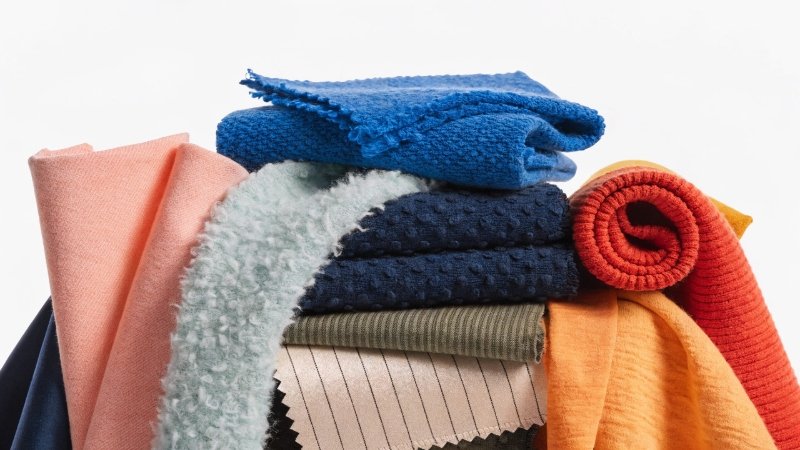
I've been running Easson Apparel, my clothing factory, for over 21 years. One of the first questions I always get from startup founders is, "What's the best fabric to use?" The truth is, there is no single "best" fabric. The right choice is different for every brand. It all comes down to your target customer and the price you want to sell at. Thinking about it this way makes the decision much simpler. Let's break down the options so you can choose with confidence for your first collection.
Best Fabrics for Startup Clothing Brands: A Practical Guide
Want a simple guide to choosing fabrics? The options seem endless and can feel overwhelming. This guide breaks down your best choices based on your brand's market position.
For a high-end hoodie, choose a heavy, twisted-yarn 100% cotton French terry. For a mid-range product, a CVC (Cotton/Poly) blend offers a great balance of quality and cost. For budget-friendly items, a higher polyester blend is more profitable and practical.
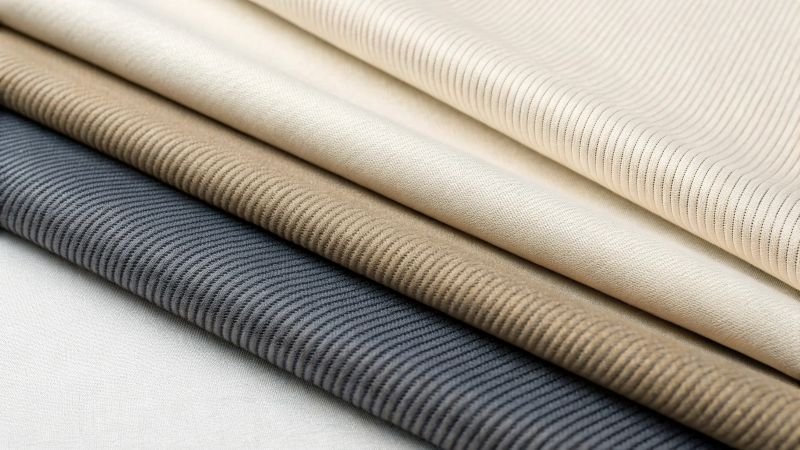
Choosing your fabric is about defining your brand's place in the market. You need to match the fabric to your customer's expectations and your price point. There is no right or wrong answer, only what is suitable for your business goals. I always tell my clients to think about their brand in three main categories: high-end, mid-range, or budget-focused.
High-End Brands
If you are building a premium brand, your customers expect superior quality. They will pay more for it. For products like hoodies and sweatshirts, you should use 100% cotton French terry. But not just any cotton. You want one made with "twisted yarn." This means each thread is twisted before being woven, making the yarn stronger and more resilient. The resulting fabric is denser, smoother, and feels incredible. It costs more, but the quality justifies the price.
Mid-Range Brands
For a mid-range brand, you need to balance quality and cost. A cotton-polyester blend is a perfect solution. This is often called CVC (Chief Value Cotton)4 when there is more cotton than polyester. This fabric gives you some of the softness of cotton with the durability and lower cost of polyester. It's a workhorse fabric that performs well and keeps your products accessible.
Budget-Focused Brands
If your strategy is to compete on price, you have to protect your profit margins. Using 100% premium cotton is not a good business decision here. Instead, you should look at fabrics with a higher polyester content3 or even 100% polyester. These materials are much less expensive, which allows you to offer a lower retail price and still run a profitable business.
Here is a simple table to help you decide:
| Brand Position | Recommended Fabric | Key Benefit |
|---|---|---|
| High-End | 100% Cotton (Twisted Yarn) | Superior feel, premium perception |
| Mid-Range | Cotton/Polyester Blend (CVC) | Balanced quality, durability5, and cost |
| Budget | High-Polyester Blend | Low cost, high profit margin |
How Does Fabric Choice Impact Hoodie Quality and Cost?
Are you worried that your fabric choice will destroy your profits? A cheap-feeling fabric can ruin your brand's reputation, but a very expensive one can make your hoodies unprofitable.
Fabric is the single biggest factor in your hoodie's final cost and perceived quality. A premium 100% cotton feels luxurious but is expensive. A blend lowers the cost but changes the feel. Your choice directly tells customers what your brand stands for.
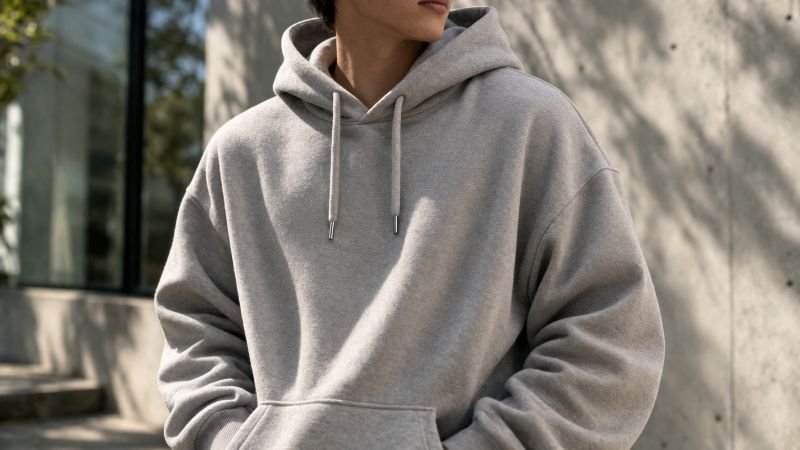
When we manufacture a hoodie for a client, the fabric often accounts for more than half of the total production cost. This is why your choice is so important. A higher fabric cost is not always a bad thing. It usually means you are getting something better. A more expensive fabric might have a special weave, a unique finish, or be made from higher-quality raw materials. For example, the difference between a standard cotton and a twisted-yarn cotton6 is huge. The twisted-yarn fabric resists pilling, feels smoother, and holds its shape better after washing. The customer will notice this difference.
The Link Between Cost and Quality
Think of it like this: your fabric choice sends a direct message to your customer.
- High Cost, High Quality: Using a heavy, 400gsm 100% cotton French terry7 tells your customer, "This is a premium, long-lasting garment." The hoodie will feel substantial and luxurious. They will understand why it has a higher price tag.
- Medium Cost, Good Quality: Using a 320gsm CVC fleece8 tells your customer, "This is a reliable, everyday hoodie." It feels soft and comfortable, it's durable, and it's priced fairly. This is great for growing brands that want to build a loyal following.
- Low Cost, Standard Quality: Using a 280gsm polyester-rich blend9 tells your customer, "This is an affordable, stylish option." The focus is on the price and design, not necessarily on the fabric's natural feel. This is common for fast-fashion or promotional items.
I had a client once who wanted to make the "best hoodie ever." We sourced an amazing twisted-yarn organic cotton for him. The cost per hoodie was high, but his brand was all about ultimate quality. His customers loved it, and his brand grew because he delivered exactly what he promised. Your fabric choice is your promise to the customer.
Should I Use 100% Cotton or a Blend for My First Collection?
Can't decide between 100% cotton and a blend? This is a critical decision for your first launch. Get it wrong, and you might deal with customer complaints or low sales.
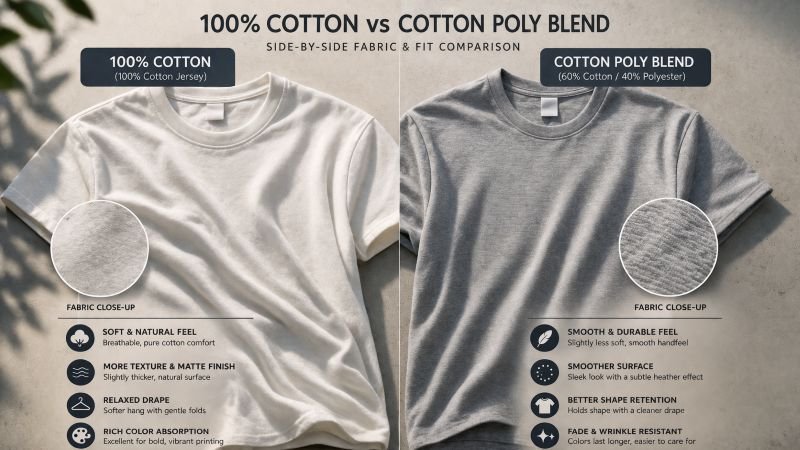
Choose 100% cotton if your brand message is about natural materials10, premium quality, and soft comfort. Choose a cotton/polyester blend2 if you need better durability, less shrinkage, and a more accessible price point for your customers. It depends on your brand identity.
This is one of the most common questions for new brands, especially for core products like T-shirts, sweatshirts, and hoodies. Both options are great, but they serve different purposes. As a manufacturer, I see brands succeed with both. The key is to be intentional with your choice. You must understand the pros and cons of each material and align them with what you want your brand to be known for. Don't just pick one without thinking.
A Head-to-Head Comparison
Let's break down the real-world differences between these two popular options. I've seen how these fabrics perform over thousands of production runs.
100% Cotton: This is a natural fiber. It's known for being soft, breathable, and gentle on the skin. This makes it a fantastic choice for loungewear11 and high-end casual wear. However, cotton is more prone to wrinkling and can shrink if not cared for properly. It also tends to be more expensive than blends. If your brand is focused on sustainability12 or a pure, natural feel, cotton is the way to go.
Cotton/Polyester Blend: This fabric combines natural cotton with synthetic polyester. The result is a material that is more durable, wrinkle-resistant13, and shrink-resistant14 than pure cotton. Blends also hold their color better over time and are generally less expensive. This makes them ideal for activewear15, workwear, or any garment that needs to be extra tough. The trade-off is that they are less breathable16 and may not feel as "natural" as 100% cotton.
Here’s a quick table to summarize:
| Feature | 100% Cotton | Cotton/Polyester Blend |
|---|---|---|
| Feel | Very soft, breathable, natural | Smooth, can be less breathable |
| Durability | Good, but can wear out faster | Excellent, very resistant to wear & tear |
| Care | Can shrink and wrinkle easily | Resists shrinking and wrinkling |
| Cost | Higher | Lower |
| Best For | Premium T-shirts, loungewear, baby clothes | Hoodies, activewear, everyday basics |
A few years ago, a startup client wanted to make T-shirts. They were targeting a young, active audience. They initially wanted 100% cotton because it sounded more premium. I suggested we make samples in both cotton and a CVC blend. After testing them, they realized the blend was a much better fit. It held up better to activity and washing, which was exactly what their customers needed. They chose the blend, and their T-shirts became a bestseller.
Conclusion
Choosing the right fabric is about matching your brand's identity, quality, and price point. Start with your target customer and their expectations, then work backward to find the perfect material.
Explore this link to understand why premium 100% cotton French terry is ideal for high-end brands and how it enhances product quality. ↩
Learn why a cotton/polyester blend is a great choice for mid-range brands, balancing quality and cost effectively. ↩
Discover how higher polyester content can help budget brands maintain profit margins while offering affordable products. ↩
Understand the advantages of CVC fabric, a cotton/polyester blend, and its role in mid-range clothing brands. ↩
Explore how durable fabrics like cotton/polyester blends contribute to long-lasting, high-quality garments. ↩
Find out how twisted-yarn cotton enhances fabric strength and feel, making it a premium choice for high-end garments. ↩
Learn how 400gsm 100% cotton French terry provides a luxurious feel and high quality for premium hoodies. ↩
Discover how 320gsm CVC fleece balances softness, durability, and cost for mid-range hoodies. ↩
Understand how a 280gsm polyester-rich blend offers affordability and style for budget-friendly hoodies. ↩
Explore the significance of natural materials like 100% cotton in conveying a brand's commitment to quality and sustainability. ↩
Explore the comfort and softness of 100% cotton, making it perfect for loungewear and casual wear. ↩
Learn how choosing sustainable fabrics like 100% cotton can align with eco-friendly brand values. ↩
Find out how wrinkle-resistant fabrics like cotton/polyester blends enhance garment durability and appearance. ↩
Discover the benefits of shrink-resistant fabrics in maintaining garment size and fit over time. ↩
Discover why cotton/polyester blends are ideal for activewear, offering durability and comfort. ↩
Understand the importance of breathable fabrics like 100% cotton for comfort and skin health. ↩