Every clothing brand faces this choice. You pick the wrong fabric and your refund rate climbs. You pick the right one and your customers keep coming back.
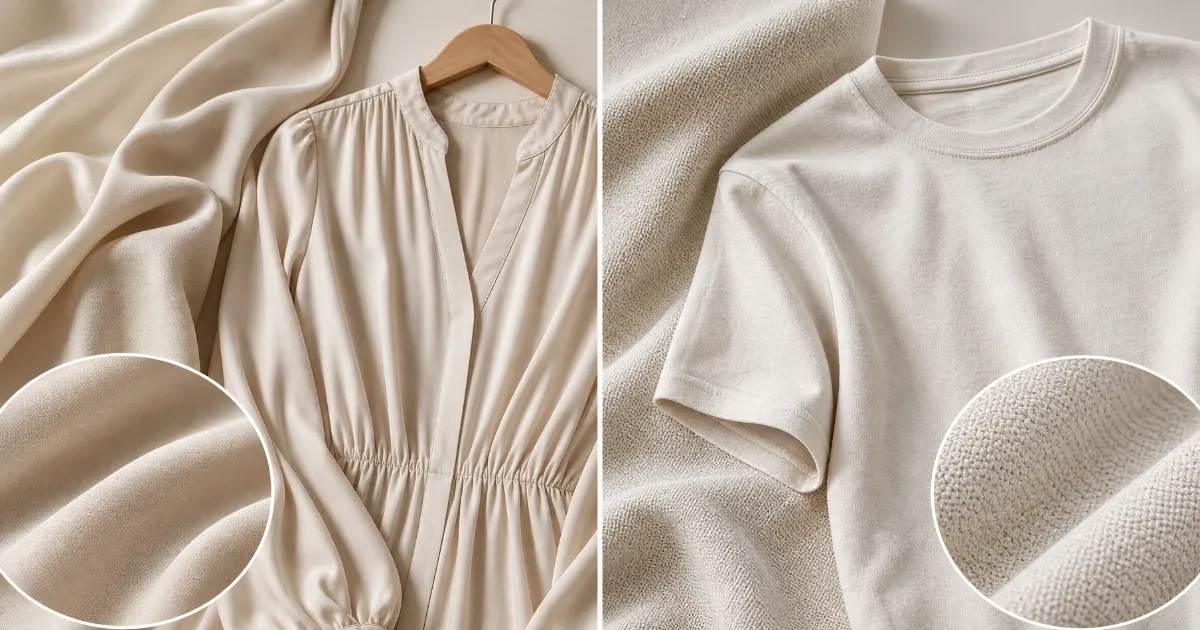
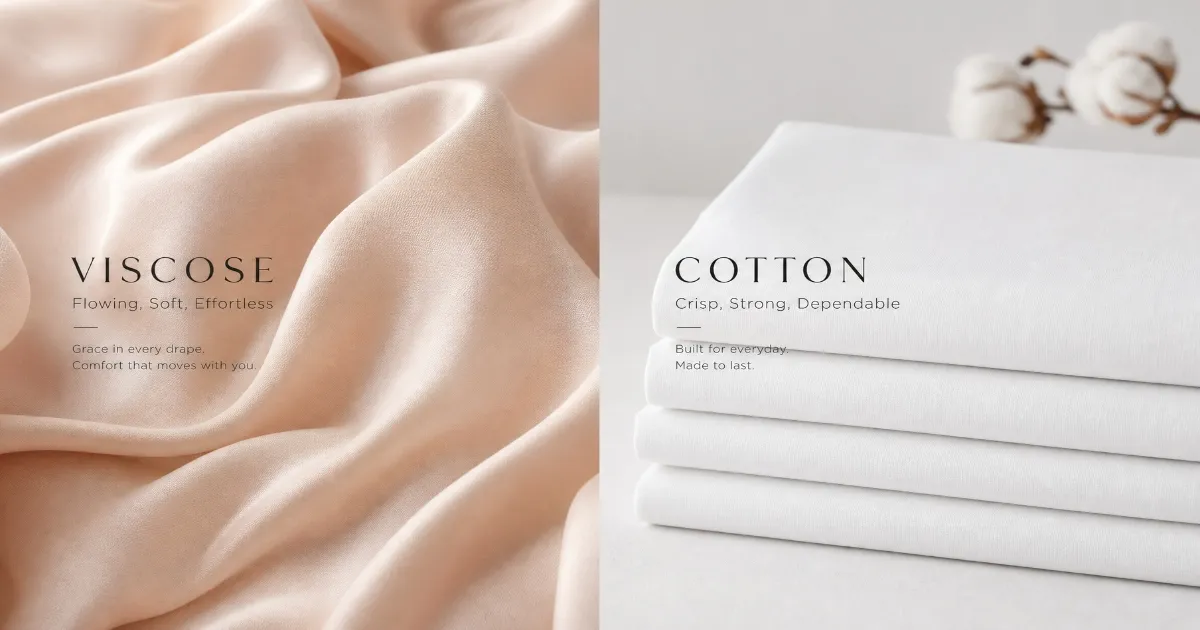
Viscose1 and cotton are both widely used in everyday clothing. Viscose feels softer and drapes better, making it ideal for elegant, flowy styles. Cotton is more stable and easier to produce at scale, making it the safer choice for basics and high-wash garments. The best fabric depends on your product type, not personal preference.
The real difference between these two fabrics does not show up on a small swatch. It shows up after cutting, sewing, washing, and finishing. I have seen brands make the wrong call on this and pay for it with returns, rework, and lost customers. So let me walk you through what I actually know from 21 years on the factory floor.
What Is Viscose Fabric? The Science Behind the Luxury Feel
You touch a viscose shirt and it feels expensive. But do you know what it actually is?
Viscose is a semi-synthetic fiber made from cellulose, usually sourced from wood pulp or recycled textile waste2. It is processed with chemicals to form a soft, smooth fiber that mimics the feel of silk. It absorbs moisture well and drapes naturally, which gives it that "luxury" look many brands want.
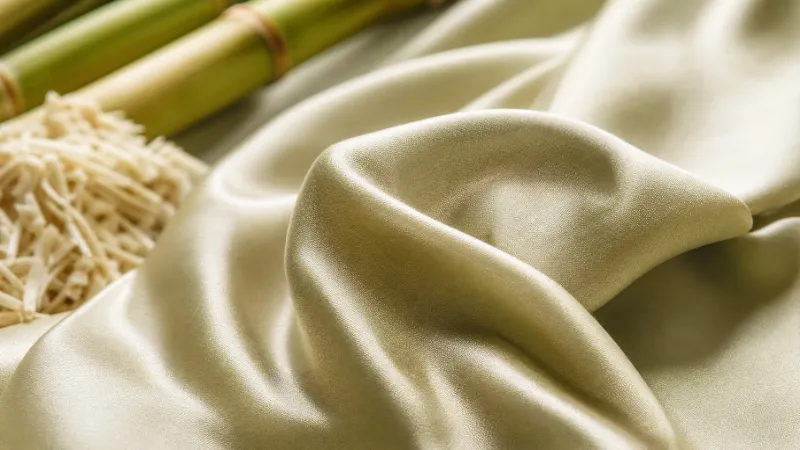
Viscose sits in an interesting middle ground. It comes from natural raw materials, but it goes through a heavy chemical process to become a fiber. That process is what gives it such a smooth, fluid hand feel. But that same process is also why it behaves differently from cotton once you start working with it in production. If you are comparing viscose, cotton, polyester, and blended fabrics for your next product line, our fabric guide for clothing brands can help you understand how different materials behave in real production.
A lot of people still think viscose is bad for the environment because older production methods required cutting down trees for wood pulp. That view needs updating. I visited the Keqiao Spring Textile Expo at the Shaoxing International Convention Center on May 8th this year, and the biggest sustainability topic in the industry right now is not deforestation. It is the recycling of old garments into new viscose fiber.
Companies like China's "Silkia" have broken through in the technology of turning waste textiles into pulp, producing both regenerated cellulose filament and staple fiber. Brands like "Uniqlo" are already using their products. Sweden's Renewcell makes a product called Circulose, which is 100% dissolved pulp made from textile waste3. It can be turned into viscose or lyocell fiber. So the sustainability story around viscose is changing fast.
How Viscose Is Different From Other Cellulose Fibers
| Fiber | Source | Process | Feel | Durability |
|---|---|---|---|---|
| Viscose (Rayon) | Wood pulp / recycled textiles | Chemical (wet spinning) | Soft, smooth, silky | Moderate, weaker when wet |
| Modal | Beech wood pulp | Refined viscose process | Softer than viscose | Better than standard viscose |
| Lyocell (Tencel) | Wood pulp / recycled textiles | Closed-loop solvent process | Smooth, slightly textured | Strong, more stable |
| Cotton | Cotton plant | Mechanical + minor chemical | Breathable, natural | High, especially after wash |
Understanding where viscose sits on this table helps you make a smarter sourcing decision. If your brand values sustainability and feel, modern recycled viscose or lyocell might be worth exploring. If your brand needs durability and production predictability, cotton is still the more reliable option for most styles.
Does Viscose Shrink More Than Cotton? Laundry and Production Realities
Your customer washes the shirt once and it no longer fits. That is the nightmare scenario. And it happens more often with viscose than brands expect.
Yes, viscose shrinks significantly more than cotton. Viscose can shrink between 5% and 10% after the first wash if it is not pre-treated4. Standard cotton typically shrinks between 2% and 5%5. For clothing brands, this difference directly affects sizing accuracy, return rates, and production planning.
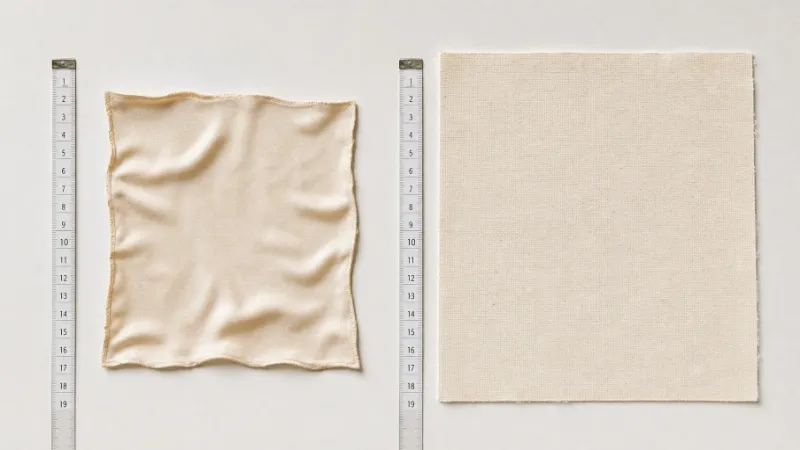
When I talk to other factory owners about fabric costs, they usually compare the raw material price per meter. Viscose fiber can cost less than cotton at that stage. But that is only one part of the picture, and honestly, it is the smaller part.
Here is what most people miss. Viscose has a much higher shrinkage rate during washing and finishing. It is harder to cut because the fabric shifts under the blade. It is harder to sew because the tension control has to be tighter. And its dye loss rate during washing is also higher than cotton. When you add all of that up, the total cost per finished garment is often not lower than cotton. In some cases it is higher.
Real Production Risk Comparison
| Production Stage | Cotton | Viscose |
|---|---|---|
| Cutting stability | High — fabric holds its position | Low — fabric slips and shifts easily |
| Sewing tension control | Standard — widely understood | Requires more care and adjustment |
| Shrinkage rate | 2%–5% after first wash | 5%–10% if not pre-treated |
| Dye loss in washing | Low to moderate | Moderate to high |
| Defect and rework rate | Lower | Higher, especially for first-time runs |
| Printing compatibility | Excellent for DTG, screen, DTF | Better suited for water-based screen print or reactive digital print |
On the printing point, this is something many brands get wrong. Cotton works well with almost every print method. DTG direct-to-garment printing, screen printing, and DTF heat transfer all work reliably on cotton. Viscose is too smooth and too sensitive to heat. Standard heat transfers or high-temperature curing can cause scorching or edge peeling. If you are printing on viscose, stick to water-based screen printing or specific reactive digital printing methods.
I always tell startup brands: run a full wash test and size check before you commit to a large order in viscose. Do not just test the fabric swatch. Test the complete finished garment.
Viscose vs Cotton: Head-to-Head Comparison
So which one is actually better? I hear this question all the time. And I have to be direct with you: it is the wrong question.
Neither viscose nor cotton is universally better. The right fabric depends on your garment type, target customer, wash frequency, and production capability. Viscose suits flowy, elegant styles with lower wash frequency. Cotton suits structured basics, activewear, and any garment that will be washed often.
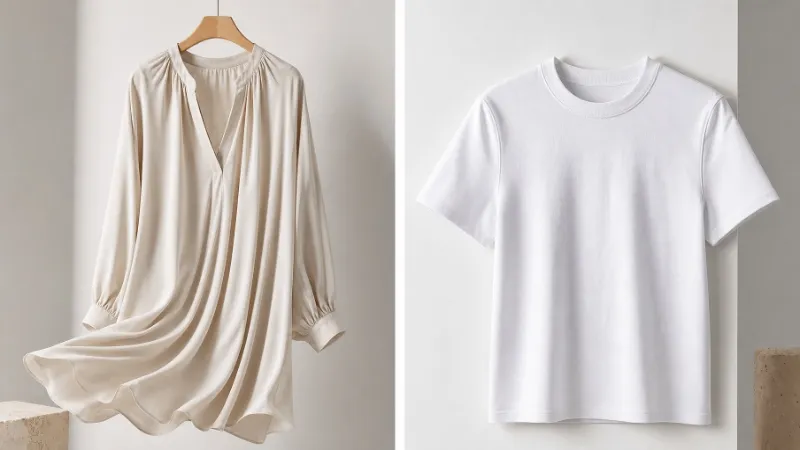
The real question you should be asking is not "which fabric is better." It is "what kind of garment am I making, does this style need structure or drape, and can I manage the production risks of this fabric?"
Let me break down how I think about this for the brands I work with.
Full Comparison: Viscose vs Cotton
| Category | Cotton | Viscose |
|---|---|---|
| Hand feel | Natural, breathable, familiar | Soft, smooth, silky, more "premium" on first touch |
| Drape | Moderate — holds structure | High — flows and drapes naturally |
| Breathability | Very good | Good, but less consistent |
| Moisture absorption | High | High, but can feel clammy when wet |
| Shrinkage | 2%–5% | 5%–10% without pre-treatment |
| Production difficulty | Low to moderate | Moderate to high |
| Printing options | All major methods | Water-based screen or reactive digital preferred |
| Price per garment (total cost) | Predictable and stable | Variable, often higher than expected |
| Consumer acceptance | Very high globally | High in fashion-forward markets |
| Best for | T-shirts, polos, sweatshirts, hoodies, basics | Flowy dresses, blouses, resort wear, premium casual |
| Risk level for new brands | Low | Medium to high without experienced factory partner |
For everyday basics, cotton is still one of the safest choices when working with a custom T-shirt manufacturer, especially for printed tees, polos, and high-wash products.
Common Mistakes Brands Make When Choosing Between These Two
I want to call out the mistakes I see most often, because they cost brands real money.
Mistake 1: Choosing viscose because it feels soft, without testing shrinkage and post-wash shape. The swatch feels great. The finished garment after two washes is a different story.
Mistake 2: Choosing cotton because it sounds more natural, without checking GSM, yarn quality, or pre-shrink treatment. Not all cotton is the same. A low-GSM, untreated cotton tee is not a good product just because it is "natural."
Mistake 3: Comparing only the fabric price per meter. This ignores defect rates, rework costs, dye loss, and the extra production time viscose requires.
Mistake 4: Testing the swatch but not the finished garment. The swatch tells you very little. The finished garment after washing tells you everything.
Mistake 5: Using viscose in styles that need structure. If your design needs to hold its shape, viscose will let you down. It is a drape fabric, not a structure fabric.
Mistake 6: Using lightweight cotton for styles that need a premium, substantial feel. Thin cotton feels cheap. If you want weight and quality, check your GSM before you commit.
Mistake 7: Skipping pre-production wash tests and size checks before bulk production. This is the step that prevents most returns and refund issues. It takes time. It is worth it.
Which One Should You Choose?
Here is how I summarize it for the brands I work with.
If you are building a line of premium womenswear, resort wear, or flowy dresses, viscose is a strong choice. It gives you that elevated, soft look that customers associate with luxury. Just make sure your factory has experience handling it and that you build shrinkage tolerance into your size specs.
If you are building everyday basics, printed tees, streetwear, or anything that will be washed frequently, cotton is the safer and more cost-predictable choice. It is easier to produce at scale, more forgiving in printing, and far more stable after washing.
If you are a startup brand with a tight budget and no production experience yet, I would recommend starting with cotton. Master your basics first. Then expand into viscose once you have a factory partner who knows how to handle it properly.
Conclusion
Viscose drapes beautifully. Cotton washes reliably. The right choice is not about the fabric itself — it is about matching the fabric to your garment, your customer, and your production reality.
"Synthetic fiber - Wikipedia", https://en.wikipedia.org/wiki/Synthetic_fiber. Viscose (also known as rayon) is a semi-synthetic regenerated cellulose fiber produced by dissolving natural cellulose—typically sourced from wood pulp—in a chemical solution and extruding it through spinnerets to form filaments; see, e.g., 'Rayon,' Encyclopædia Britannica, or the corresponding Wikipedia entry on viscose/rayon for an overview of the xanthation and wet-spinning process. Evidence role: definition; source type: encyclopedia. Supports: Viscose is a semi-synthetic regenerated cellulose fiber derived from wood pulp or other plant-based cellulose sources and produced through a wet chemical spinning process.. ↩
"Cellulose fiber - Wikipedia", https://en.wikipedia.org/wiki/Cellulose_fiber. Viscose (also termed rayon) is classified as a semi-synthetic or regenerated cellulosic fiber; its production involves dissolving cellulose derived from wood pulp in sodium hydroxide and carbon disulfide to form a viscous solution that is wet-spun into filaments, as documented in standard textile science references. Evidence role: definition; source type: encyclopedia. Supports: The classification of viscose as a semi-synthetic cellulosic fiber and its primary raw material sources. ↩
"Properties, Production, and Recycling of Regenerated Cellulose ...", https://pmc.ncbi.nlm.nih.gov/articles/PMC11595832/. Renewcell, a Swedish textile-to-textile recycling company, produces Circulose, a branded dissolving pulp manufactured from post-consumer cotton-rich textile waste; the pulp is intended as a raw material input for regenerated cellulosic fibers including viscose and lyocell, according to the company's published technical documentation. Evidence role: case_reference; source type: institution. Supports: That Renewcell's Circulose product is a dissolved pulp derived from post-consumer textile waste suitable for viscose and lyocell fiber production. Scope note: Product specifications and commercial availability may change; this citation reflects publicly available information at the time of writing and should be verified against current company disclosures. ↩
"The effect of fabric structure parameters on dimensional stability ...", https://www.academia.edu/111358273/The_effect_of_fabric_structure_parameters_on_dimensional_stability_after_domestic_washing. Studies on the dimensional stability of viscose rayon fabrics report shrinkage values commonly ranging from 5% to 10% in the warp direction after initial laundering, depending on fabric construction and finishing treatments applied prior to garment assembly. Evidence role: statistic; source type: paper. Supports: The shrinkage range of viscose/rayon fabric after laundering. Scope note: Exact shrinkage values vary by weave structure, yarn count, and finishing method; a single universal figure may not apply to all viscose constructions. ↩
"[PDF] a guide to improved shrinkage performance of cotton fabrics", https://www.cottoninc.com/wp-content/uploads/2017/12/ISP-1009-Guide-to-Improved-Shrinkage-Performance-of-Cotton-Fabrics.pdf. Industry testing protocols, including those outlined by the American Association of Textile Chemists and Colorists (AATCC), document cotton fabric shrinkage commonly falling within a 2–5% range after standardized home laundering cycles, with variation attributable to yarn twist, fabric construction, and pre-shrink finishing. Evidence role: statistic; source type: institution. Supports: The typical post-wash shrinkage range for cotton fabrics. Scope note: Shrinkage rates differ between woven and knit cotton constructions; the cited range is a general approximation rather than a value applicable to all cotton fabric types. ↩