
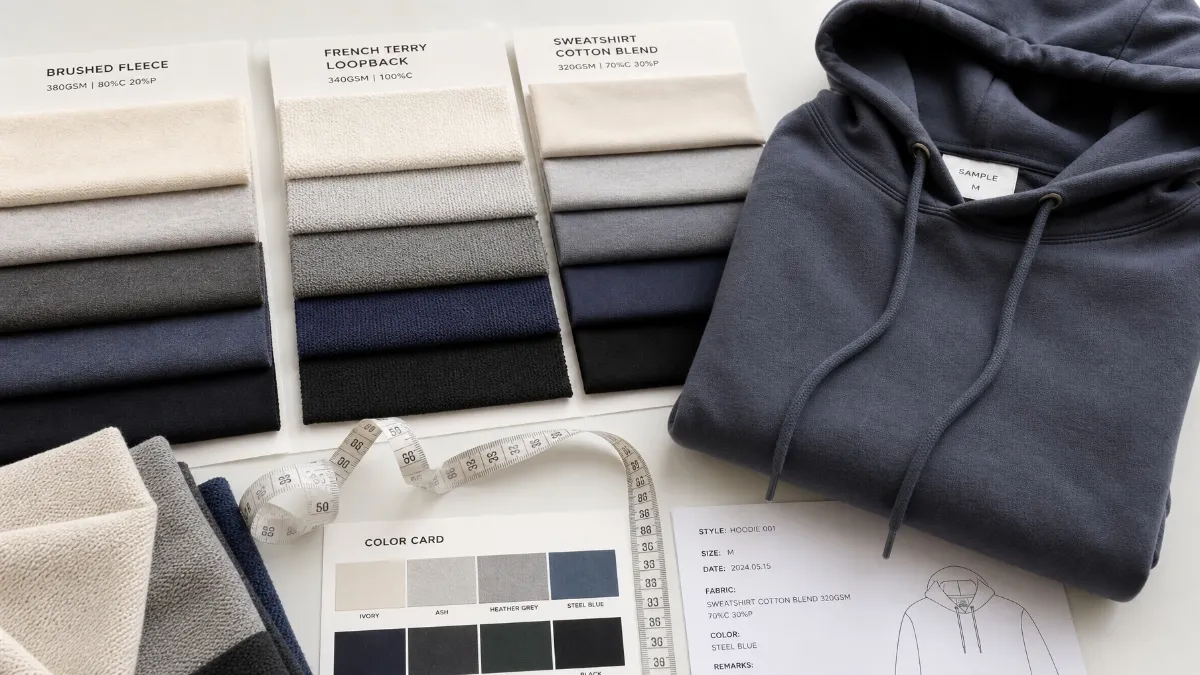
Choosing the right hoodie material is one of the most important decisions in hoodie development. It affects comfort, decoration results, production cost, and how reliably the product moves from sampling to bulk production.
For startup brands and sourcing teams, this is not just a fabric question. It is a product, pricing, and manufacturing decision. The right material can support your target positioning, while the wrong one can create avoidable issues in shrinkage, print quality, MOQ, or customer satisfaction.
This guide is written for brand owners, wholesalers, sourcing managers, and product developers who want a practical answer to one question: what is the best hoodie material for their product goal?
There is no single best fabric for every hoodie. For most brands, the right choice depends on season, target market, print or embroidery needs, cost target, GSM, and bulk production requirements. If you are already planning a hoodie collection, working with a custom hoodie manufacturer can help you compare fabric options, GSM, decoration methods, and bulk production requirements before sampling.
What Material Are Hoodies Made Of?
Most hoodies are made from one of a few core fabric families: fleece, French terry, 100% cotton sweatshirt fabric, or cotton-poly blends. Some brands also use polyester-rich performance fabrics, brushed knits, or specialty blends for activewear and technical products.
In practical terms, most mass-market and private label hoodies are built around either a cotton-rich fleece, a cotton-poly fleece, or a French terry construction. These fabrics differ in warmth, texture, drape, shrinkage behavior, and print performance.
If you are building a streetwear hoodie, a branded merch hoodie, or a retail-ready everyday sweatshirt, the decision usually comes down to fleece vs French terry, and then whether the fabric should be 100% cotton or a cotton-poly blend. For additional textile development references, CottonWorks also provides professional resources on fleece and French terry fabrics1, including how these knit structures are used in loungewear and activewear.
Need help choosing hoodie fabric before sampling?
Easson Apparel can help compare fleece, French terry, and cotton blend options based on your target GSM, handfeel, decoration method, MOQ, and budget.
Why Hoodie Material Matters for Brands
Hoodie material affects more than handfeel. It directly shapes product positioning, print or embroidery results, production stability, and retail value.
For most brands, fabric choice influences five practical areas: comfort, decoration performance, MOQ and cost, product identity, and bulk consistency. That is why material selection should be made early, not after the first sample is already built.
1. Comfort and Seasonality
The same hoodie silhouette can feel completely different depending on the fabric. Some materials feel warm, plush, and winter-ready. Others feel lighter, smoother, and better for transitional weather.
This matters because customers do not buy hoodie fabric in theory. They buy how the hoodie feels when they wear it.
2. Printing and Embroidery Results
Some fabrics are easier to print cleanly. Some are better for embroidery because they hold stitches more consistently. Others create more texture, more fiber lift, or more variation after wash.
If branding is important, fabric should be evaluated together with the decoration method, not afterward.
3. Cost and MOQ
Fabric type can change material cost, dyeing complexity, sourcing flexibility, and minimums. Specialty weights, brushed surfaces, custom colors, or premium cotton compositions can all affect MOQ and bulk planning.
For startup brands, this is often where good product ideas meet manufacturing reality.
4. Product Positioning
A heavyweight fleece hoodie communicates something different from a lightweight French terry hoodie. One may fit premium streetwear or winter basics. The other may fit spring drops, elevated loungewear, or layering pieces.
Fabric is part of brand identity.
5. Bulk Production Stability
A hoodie can look great in the first sample but still become difficult in bulk. Fabric shrinkage, spirality, shade consistency, and surface behavior all matter once the order scales.
That is why the best fabrics for hoodies are not just the ones that feel good, but the ones that can perform consistently in bulk.
Hoodie Fabric GSM Guide: Practical Weight Recommendations
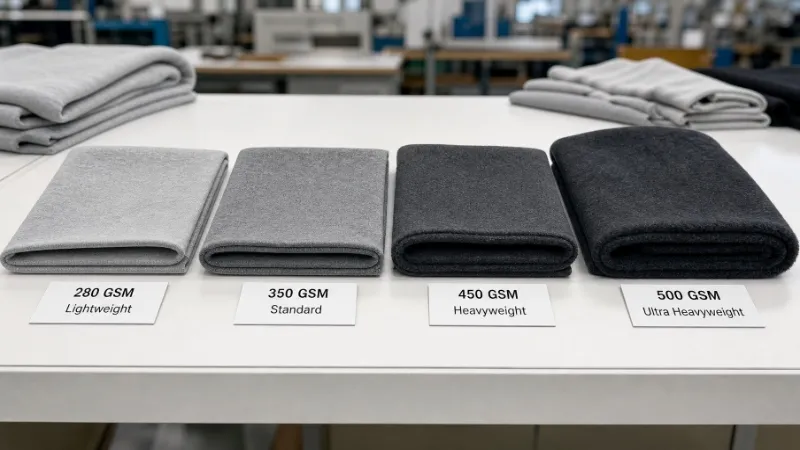
GSM means grams per square meter. It is one of the most important fabric specifications for hoodies because it affects warmth, structure, cost, drape, and shipping weight.
A higher GSM usually means a thicker and heavier fabric, but it does not automatically mean better quality. A well-made 350 GSM hoodie can feel better than a poorly finished 450 GSM hoodie. Fiber quality, knitting density, brushing quality, shrink control, and finishing are all important. If you also develop T-shirts, this T-shirt GSM guide can help you understand how fabric weight affects handfeel, structure, printing, and production decisions.
| Hoodie Type | Recommended Fabric | Common GSM Range | Best For | Notes |
|---|---|---|---|---|
| Lightweight hoodie | French terry or light cotton-poly fleece | 240–300 GSM | Spring, fall, layering, casualwear | Good for mild weather, but may feel too light for winter hoodies |
| Standard everyday hoodie | Cotton-poly fleece or cotton-rich fleece | 300–380 GSM | Retail basics, branded merch, school hoodies, private label programs | Balanced choice for cost, comfort, and bulk production |
| Premium casual hoodie | French terry or cotton-rich fleece | 320–420 GSM | Elevated basics, loungewear, boutique brands | Cleaner look and better drape when fabric quality is controlled |
| Heavyweight streetwear hoodie | Heavy cotton-rich fleece or heavyweight French terry | 400–500 GSM | Oversized fit, premium streetwear, structured silhouettes | Stronger shape, higher cost, heavier shipping weight |
| Ultra-heavy hoodie | Heavyweight fleece or custom-developed knit | 520–800 GSM | Niche streetwear, luxury heavyweight drops | Not suitable for every brand; sewing difficulty and cost increase significantly |
| Performance hoodie | Polyester-rich blend or technical knit | 220–320 GSM | Gymwear, activewear, travel layers | Usually lighter, faster-drying, and less cotton-like in handfeel |
Factory Insight from Easson Apparel
In our hoodie development experience, many startup brands first ask for “the thickest hoodie possible.” But after checking cost, shipping weight, sewing difficulty, and target retail price, many of them choose a more practical range around 350–450 GSM. For most premium hoodie projects, this range gives a strong handfeel without making the product too expensive or difficult to produce.
Best Fabrics for Hoodies Explained
Fleece
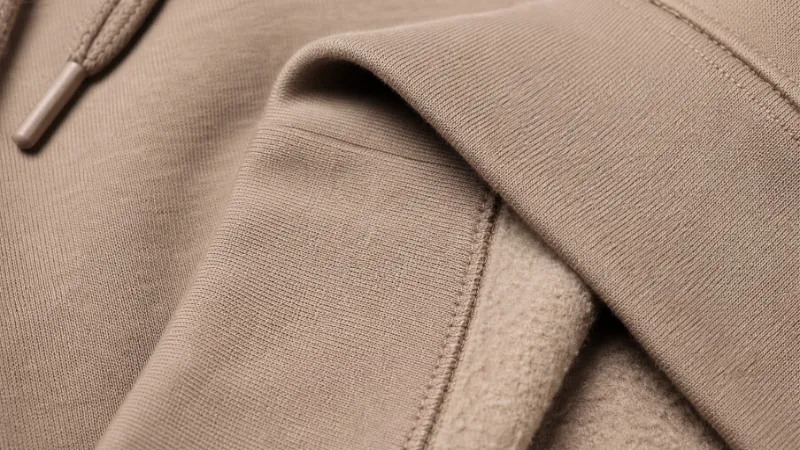
Fleece is one of the most common hoodie materials in the market. In most apparel discussions, fleece refers to a knit fabric with a brushed inner surface that creates warmth and softness.
For many brands, fleece is the default hoodie fabric because it offers a familiar “hoodie feel.” It is warm, soft, easy to position for casualwear, and widely accepted by consumers.
Fleece is often used for:
- Classic pullover hoodies
- Zip-up hoodies
- Winter-ready retail basics
- Streetwear silhouettes
- School, team, and promotional hoodies
From a sourcing point of view, fleece is usually a practical choice because mills and factories commonly work with it. That can make development easier, especially when you want a proven fabric structure rather than something highly experimental.
The trade-off is that fleece varies a lot. A lower-cost fleece may look acceptable at first but pill faster, lose surface quality, or feel less stable after washing. For startup brands, this means that “fleece” alone is not enough as a spec. Weight, composition, handfeel, shrinkage behavior, and brushing quality all matter.
Common GSM for Fleece Hoodies
| Fleece Type | Common GSM Range | Suitable Hoodie Type |
|---|---|---|
| Light fleece | 260–320 GSM | Lightweight casual hoodies, promotional hoodies |
| Standard fleece | 320–380 GSM | Everyday hoodies, private label basics |
| Heavy fleece | 400–500 GSM | Premium streetwear, oversized hoodies |
| Ultra-heavy fleece | 520 GSM+ | Special heavyweight streetwear projects |
For most brands, standard fleece around 320–380 GSM is the most commercially practical. For premium streetwear, 400–500 GSM is often more suitable if the budget allows.
French Terry
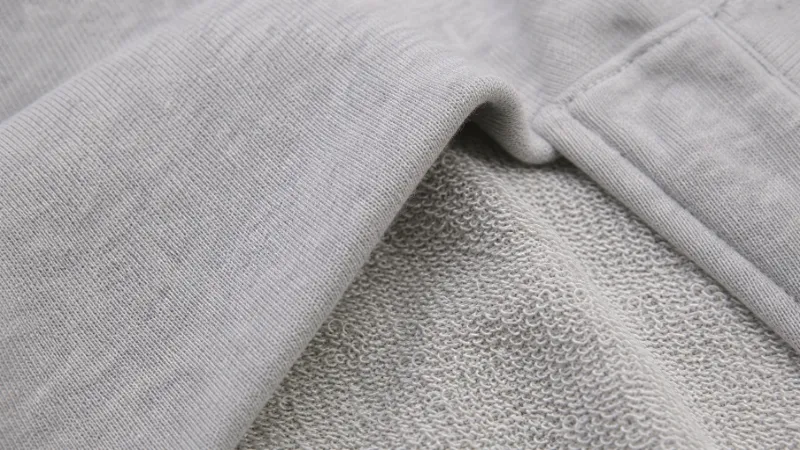
French terry is another major hoodie fabric, especially for brands that want a cleaner, lighter, more versatile product. Unlike fleece, French terry usually has smooth face yarns on the outside and looped yarns on the inside rather than a brushed back. For a simple fabric definition, French terry fabric2 is commonly described as a knit with soft loops on the inside and a smooth surface on the outside, which explains why it is often used in hoodies, sweatpants, pullovers, and loungewear.
This gives it a different feel. French terry is often lighter, less bulky, and better suited to mild weather or layering. It tends to feel more modern and less heavy than classic brushed fleece.
French terry is commonly used for:
- Spring and fall hoodies
- Premium casualwear
- Fashion basics
- Elevated loungewear
- Lighter-weight private label hoodies
For many brands, French terry is attractive because it feels more refined and has a cleaner look. It can also work well when the design goal is not maximum warmth, but balance between comfort, drape, and wearability.
The trade-off is that French terry may not deliver the same cozy, plush feel that customers expect from a classic winter hoodie. If your target market wants thick, warm, soft fleece, French terry can feel too light unless the weight is increased significantly.
Common GSM for French Terry Hoodies
| French Terry Type | Common GSM Range | Suitable Hoodie Type |
|---|---|---|
| Lightweight French terry | 240–300 GSM | Spring hoodies, layering pieces |
| Midweight French terry | 300–360 GSM | Premium casual hoodies, loungewear |
| Heavy French terry | 380–450 GSM | Structured hoodies, premium basics |
| Extra-heavy French terry | 450 GSM+ | Niche fashion or heavyweight hoodie programs |
French terry is a strong choice when the brand wants a cleaner, less bulky hoodie. But for winter warmth, brushed fleece usually performs better.
100% Cotton Hoodie Fabric
Cotton remains one of the most trusted materials in apparel because of its natural feel, breathability, and broad consumer acceptance. In hoodies, 100% cotton can be a strong choice for brands that want softness, natural touch, and a more traditional fabric story.
100% cotton hoodies are often used in:
- Premium basics
- Natural-fiber positioning
- Cotton-first private label programs
- Certain streetwear collections
- Products for customers who prefer less synthetic content
For many brands, cotton has clear marketing value. Customers understand it, trust it, and often associate it with comfort.
But in production, 100% cotton may require more attention. It can show more shrinkage than some blends, and in many cases it is less stable than a balanced cotton-poly fabric during repeated wear and care. It may also cost more depending on yarn quality, cotton grade, and the target fabric weight.
Cotton can still be an excellent hoodie material, but it should be chosen with realistic expectations. It is not automatically the best option for every product type, especially if durability, shape retention, or lower-cost scaling are priorities.
Common GSM for 100% Cotton Hoodies
| Cotton Hoodie Type | Common GSM Range | Notes |
|---|---|---|
| Lightweight cotton hoodie | 280–320 GSM | Comfortable but less structured |
| Standard cotton hoodie | 320–400 GSM | Good for premium basics and retail programs |
| Heavy cotton hoodie | 400–500 GSM | Better structure, higher cost, more shrink control needed |
| Ultra-heavy cotton hoodie | 500 GSM+ | Niche product; requires careful sampling and testing |
Cotton-Poly Blends
Cotton-poly blends are one of the most practical hoodie materials for bulk production. They combine the familiar comfort of cotton with improved stability, easier care, and more consistent performance in manufacturing.
For many brands, especially startups, blends offer a strong balance between feel, cost, and production reliability. They are commonly used in branded merch, school and corporate hoodies, private label basics, and mid-priced retail programs.
Common blend examples include:
- 80% cotton / 20% polyester
- 70% cotton / 30% polyester
- 60% cotton / 40% polyester
- CVC cotton-poly fleece
- Recycled polyester blends
The main trade-off is perception. Some brands prefer a 100% cotton story for marketing reasons, while others care more about consistency, shrink control, and cost. In many bulk orders, cotton-poly blends are chosen not because they are the most premium option, but because they are often the most commercially workable one.
Common GSM for Cotton-Poly Hoodie Blends
| Blend Hoodie Type | Common GSM Range | Suitable Use |
|---|---|---|
| Budget cotton-poly hoodie | 260–320 GSM | Promo, school, bulk orders |
| Standard cotton-poly fleece hoodie | 300–380 GSM | Everyday retail, private label, merch |
| Premium cotton-poly fleece hoodie | 380–450 GSM | Better handfeel, more structure |
| Heavy cotton-poly streetwear hoodie | 450 GSM+ | Oversized fit, heavier fashion hoodie |
For many startup brands, a cotton-poly fleece around 320–380 GSM is often a smart first choice. It gives a recognizable hoodie feel, controls cost better than many 100% cotton options, and is usually easier to manage in bulk production.
Polyester-Rich or Performance Fabrics
Polyester-rich hoodie fabrics are less common for classic lifestyle hoodies, but they can be useful in activewear, performance layering, or technical programs. These fabrics are often chosen when fast drying, lightness, or specific athletic use matters more than a natural handfeel.
For a fashion or streetwear hoodie, polyester-heavy fabrics are not always the best fit. But for gymwear, teamwear, travel layers, or technical collections, they can make sense.
This is why “best hoodie material” is always product-dependent. The best material for a streetwear fleece hoodie is not necessarily the best material for a performance training hoodie. For a broader fabric selection process, you can also read our guide on how to choose the best fabric for a startup clothing brand.
Hoodie Material Decision Table
The easiest way to choose hoodie material is to start from the product goal, not the fabric name.
| Brand Goal | Recommended Material | Suggested GSM | Why It Works |
|---|---|---|---|
| Classic warm hoodie | Brushed fleece | 320–420 GSM | Soft, warm, familiar hoodie feel |
| Premium streetwear hoodie | Heavyweight cotton-rich fleece | 400–500 GSM | Better structure, heavier handfeel, stronger visual value |
| Startup first hoodie drop | Cotton-poly fleece | 300–380 GSM | Balanced cost, comfort, MOQ, and production stability |
| Lightweight spring hoodie | French terry | 240–320 GSM | Less bulky, breathable, good for layering |
| Elevated loungewear hoodie | Midweight French terry | 300–380 GSM | Clean surface, comfortable drape, premium casual feel |
| Budget promotional hoodie | Cotton-poly fleece | 260–320 GSM | Cost-effective and easier to scale |
| Embroidered hoodie | Stable mid-heavy fleece | 350–450 GSM | Holds stitches better and reduces distortion |
| Puff print or screen print hoodie | Smooth-face cotton-rich fleece or cotton-poly fleece | 320–420 GSM | Cleaner print surface and better commercial results |
| Performance hoodie | Polyester-rich or technical blend | 220–320 GSM | Lightweight, faster drying, better for active use |
| Natural fiber positioning | 100% cotton or cotton-rich fleece | 320–450 GSM | Stronger natural material story, but needs shrink testing |
This table should be used as a starting point. The final material choice should still be confirmed through swatches, sample development, wash testing, and decoration testing.
Fleece vs French Terry Hoodie: What’s the Difference?
This is one of the most useful comparisons for product teams.
Warmth
Fleece is usually warmer because of the brushed back. The inner surface traps more air and gives a softer, more insulating feel.
French terry is generally cooler and more breathable in wear. It is better for moderate weather and for customers who want a lighter hoodie.
Feel
Fleece feels plush and cozy. French terry feels cleaner and slightly more structured, depending on the weight.
If your target customer expects a soft, winter hoodie, fleece often wins. If your customer wants a more versatile, all-season piece, French terry may be the better choice.
Weight and Drape
Both fabrics come in different GSM ranges, but fleece is more often used in heavier constructions. French terry can range from relatively light to quite substantial, but it usually feels less bulky than equivalent fleece.
That difference affects silhouette. Oversized streetwear hoodies often pair well with heavier fleece. Refined casual hoodies may work better in French terry.
Bulk Production Implications
For most brands, fleece is easier to position as a classic hoodie fabric. French terry can be a strong differentiator, but only if the target customer understands or appreciates that lighter, cleaner construction.
In bulk production, both can work well. The better choice depends on whether you are optimizing for warmth, drape, print surface, target season, or price. After choosing the right material, the next step is finding a reliable partner. This guide explains how to choose a hoodie manufacturer for sampling, shrinkage control, decoration, and bulk production.
Cotton vs Polyester Hoodie: Which Is Better?
This is another question buyers ask constantly. The answer depends on product goal.
Cotton Is Better When:
- Natural feel matters most
- Softness and comfort are part of the brand story
- You want a cotton-led product identity
- The customer expects a less synthetic handfeel
- Premium basics or lifestyle positioning are important
Polyester Is Better When:
- Durability and easy care matter more
- Shape retention is important
- The price target is tighter
- The hoodie is part of a performance or utility product line
- Faster drying is part of the product function
For Many Brands, Blends Are the Real Answer
Pure cotton and pure polyester are not the only choices. In real development, many brands land on blends because they offer a practical balance of:
- Comfort
- Cost
- Stability
- Printability
- Bulk consistency
That is why the best fabrics for hoodies are often not the most extreme option, but the most balanced one.
What Is the Best Hoodie Material for Printing and Embroidery?
There is no single universal winner, but there are patterns that most brands should know.
Best Hoodie Material for Printing
A smoother, more stable face usually helps printing. Cotton-rich fleece and balanced cotton-poly blends are commonly preferred for screen printing because they provide a good surface for artwork and everyday commercial results.
French terry can also work well, especially if the outer face is smooth and well-finished. The key issue is not just fiber content, but surface behavior. If the face is too fuzzy, too loose, or inconsistent, prints may not look as clean.
For puff print, plastisol print, or large front graphics, fabric stability becomes even more important. Very soft or unstable fabrics may cause print distortion after washing or wearing.
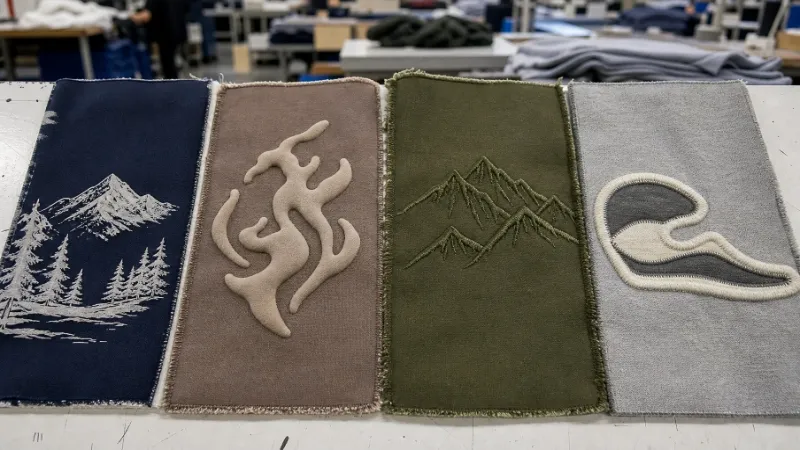
Best Hoodie Material for Embroidery
Embroidery usually benefits from fabrics that are stable enough to support stitching without distorting too much. Heavyweight fleece and stable cotton-rich blends are often better choices than very stretchy or very lightweight fabrics.
If the fabric is too soft, too lofty, or too unstable, embroidery can pucker or lose clarity. That does not mean embroidery is impossible, only that testing matters.
For large embroidery, appliqué, or 3D embroidery, a mid-heavy to heavyweight fabric is usually safer than a very light hoodie fabric.
| Decoration Method | Better Fabric Choice | Suggested GSM | Why |
|---|---|---|---|
| Screen printing | Smooth cotton-rich fleece or cotton-poly fleece | 300–420 GSM | Cleaner surface and more stable print result |
| Puff print | Stable fleece with smooth face | 320–450 GSM | Helps reduce distortion and uneven print texture |
| Embroidery | Mid-heavy fleece or cotton-rich blend | 350–450 GSM | Holds stitches better |
| Appliqué | Heavy fleece or stable French terry | 380–500 GSM | Better support for patchwork and stitching |
| Large back print | Smooth-face fleece or French terry | 320–420 GSM | Reduces print inconsistency |
| Small logo embroidery | Cotton-poly fleece or French terry | 300–420 GSM | Works well if fabric is stable |
Factory Insight from Easson Apparel
For embroidered hoodies, we usually do not judge the fabric by softness only. A fabric that feels very soft in hand may still perform poorly if it stretches too much under the embroidery machine. For embroidery, especially chest logos, sleeve embroidery, appliqué, or 3D embroidery, we prefer to test fabric stability, backing, stitch density, and wash performance before confirming bulk production.Planning print, embroidery, puff print, or appliqué on hoodies?
Send us your artwork, target GSM, and order quantity. Our team can suggest a more production-friendly hoodie material before sampling, helping reduce unnecessary sample revisions.
How Hoodie Material Affects Cost and MOQ

For most buyers, fabric is one of the biggest cost drivers in hoodie manufacturing.
Why Cost Changes
Hoodie cost usually shifts based on:
- Fiber composition
- Fabric weight
- Surface finishing
- Custom color development
- Sourcing availability
- Dyeing requirements
- Cutting consumption
- Sewing difficulty
- Decoration method
Heavier fabrics usually use more material per garment. Premium yarns, brushed constructions, or specialty finishes can also push cost upward.
A 450 GSM hoodie does not only cost more because the fabric is heavier. It may also increase cutting waste, sewing difficulty, shipping weight, and production handling time.
Why MOQ Changes
MOQ is not set by the hoodie style alone. It is often shaped by the fabric decision.
If a brand chooses a custom color, a less common composition, or a specialized fabric that is not already stocked, MOQ may increase because the mill or supplier needs a minimum production run.
For startups, this is important. A fabric may look ideal on paper but still be unrealistic if the minimums are too high for a first launch.
As a practical reference, many custom hoodie programs start around 100 pieces per color. For some startup projects, 50–100 pieces may be possible depending on fabric availability, decoration method, and color choice, but the unit price is usually higher.
Why Sampling Matters
Fabric behavior is hard to judge from swatches alone. In many cases, the sample stage reveals the real story:
- Does it feel right on body?
- Does it shrink too much?
- Does the print sit correctly?
- Does the embroidery pucker?
- Does the hoodie hold its shape?
- Does the fabric look clean after washing?
- Does the actual GSM match the product positioning?
For many hoodie projects, a simple sample can take around 8–12 days if the fabric and trims are available. More complex hoodie samples, such as heavyweight styles, special trims, custom dyeing, appliqué, or complex embroidery, may take 15–20 days or longer.
Bulk production often takes around 25–35 days, depending on order quantity, fabric availability, decoration complexity, packaging, and approval speed.
For brands developing hoodies for retail or wholesale programs, textile testing is important. Organizations such as ASTM publish textile testing standards3 covering fabric properties that help manufacturers evaluate materials for proper end use. If you are launching your first hoodie collection, this guide on starting a private label hoodie line can help you plan product direction, MOQ, sampling, and launch risk.
Factory Insight from Easson Apparel
In hoodie production, we usually recommend checking shrinkage, handfeel, color, print or embroidery performance, and garment shape before bulk production. For cotton-rich fleece and French terry, shrinkage control is especially important. A hoodie may look correct before washing but become shorter, tighter, or slightly twisted if fabric behavior is not tested early.
How to Choose the Right Hoodie Material for Your Brand
Start with your product goal, not the fabric name.
Choose Based on Customer Use Case
Ask how the hoodie will actually be worn:
- Winter streetwear
- All-season casualwear
- Premium basics
- Promotional merch
- Activewear layering
- School or team apparel
- Retail collection
- Private label program
The intended use usually narrows the fabric choice quickly.
For example, a winter streetwear hoodie may need a 400–500 GSM cotton-rich fleece. A spring layering hoodie may work better in 280–320 GSM French terry. A promotional hoodie may need a more cost-effective cotton-poly fleece around 280–330 GSM.
Choose Based on Product Positioning
If your brand is built around premium feel and natural storytelling, cotton-rich options may make more sense. If your focus is scalable retail basics or branded programs, blends may be more practical.
If your line is more technical or performance-oriented, polyester-rich or engineered blends may be worth considering.
Choose Based on Decoration
If printing is central to the product, prioritize a fabric with a clean, stable face. If embroidery is central, test the fabric’s ability to support stitching without distortion.
This is especially important for wholesale and private label programs, where repeatability matters.
Choose Based on Manufacturing Reality
The best hoodie material is not just the one with the best handfeel. It is the one that fits your budget, target customer, MOQ tolerance, decoration plan, and supplier capability.
For many startup brands, the smartest path is not the most expensive fabric. It is the one that gives the strongest overall balance of:
- Feel
- Cost
- Stability
- Brand fit
- Bulk readiness
Practical Hoodie Material Recommendations by Product Type
To make this easier, here is a simple decision approach.
Best for Classic Warm Hoodies
Choose brushed fleece, especially cotton-rich fleece or balanced cotton-poly fleece.
Recommended GSM: 320–420 GSM
This works well for brands that want a soft, warm, familiar hoodie feel.
Best for Premium Streetwear Hoodies
Choose heavyweight cotton-rich fleece or a stable heavyweight French terry.
Recommended GSM: 400–500 GSM
This is suitable for oversized silhouettes, drop-shoulder hoodies, premium basics, and heavyweight streetwear collections.
Best for Lighter Premium Casual Hoodies
Choose French terry.
Recommended GSM: 280–380 GSM
French terry is a good choice for brands that want a cleaner, lighter, more refined hoodie instead of a thick winter feel.
Best for Cost-Conscious Bulk Hoodie Programs
Choose cotton-poly fleece.
Recommended GSM: 280–350 GSM
This is often suitable for branded merch, school apparel, company uniforms, and private label basics.
Best for Performance or Active Layering
Choose polyester-rich or technical blends.
Recommended GSM: 220–320 GSM
These fabrics are usually better when fast drying, lighter weight, and easy care matter more than a natural cotton feel.
Best for Brands Emphasizing Natural Feel
Choose 100% cotton or cotton-rich fleece.
Recommended GSM: 320–450 GSM
This can support a more natural fabric story, but the brand should pay attention to shrinkage, cost, and shape retention.
Common Mistakes When Choosing Hoodie Material
Mistake 1: Only Asking for the Thickest Fabric
A heavier hoodie is not always better. Very heavy fabrics can improve structure, but they also increase cost, shipping weight, sewing difficulty, and customer expectations.
For many brands, 350–450 GSM is already enough to create a premium hoodie feel.
Mistake 2: Choosing Fabric Before Decoration
Fabric and decoration should be developed together. A hoodie planned for embroidery may need a different fabric than one planned for large screen printing or puff print.
Mistake 3: Ignoring Shrinkage
Cotton-rich fabrics can feel excellent, but shrinkage must be tested. Without shrinkage testing, the final hoodie may not match the approved sample after washing.
Mistake 4: Choosing a Custom Fabric Too Early
Custom fabric can be useful for established brands, but it may increase MOQ, cost, and development time. For a first hoodie drop, available fabric options may be more practical.
Mistake 5: Judging Fabric by Swatches Only
Swatches are useful, but they do not show the full garment effect. Hoodie shape, drape, pocket structure, hood weight, rib matching, print clarity, and wash performance should be checked through sampling.
For brands selling into international markets, fabric safety can also be part of the sourcing decision. Certifications such as OEKO-TEX STANDARD 1004 are often used to show that textile components have been tested for harmful substances, from yarn to finished product.
FAQ
What material are hoodies usually made of?
Most hoodies are commonly made from fleece, French terry, cotton, or cotton-poly blends. The best option depends on warmth, comfort, decoration method, GSM, and production budget.
What is the best hoodie material?
There is no single best hoodie material for every brand. Fleece is often best for warmth, French terry for lighter premium styles, and cotton-poly blends for balanced cost and bulk production.
What GSM is good for a hoodie?
For lightweight hoodies, 240–300 GSM is common. For standard everyday hoodies, 300–380 GSM is practical. For premium streetwear hoodies, 400–500 GSM is often used. Ultra-heavy hoodies can go above 500 GSM, but they cost more and are harder to produce.
Is fleece or French terry better for hoodies?
Fleece is usually better for warmth and a classic cozy feel. French terry is better for lighter, more versatile hoodies and brands that want a cleaner, less bulky fabric.
Is cotton or polyester better for a hoodie?
Cotton is usually better for natural comfort and a softer handfeel. Polyester is often better for durability, easier care, and lower-cost scaling. Many brands use blends to balance both.
What is the best hoodie material for printing?
Cotton-rich fleece and stable cotton-poly blends are commonly good choices for printing because they often provide a cleaner surface and dependable commercial results.
What is the best hoodie material for embroidery?
Stable mid-heavy fleece, cotton-rich fleece, and structured cotton-poly blends are often good choices for embroidery. Very lightweight, stretchy, or unstable fabrics may cause puckering or distortion.
Does hoodie material affect MOQ?
Yes. Fabric choice can affect MOQ because custom colors, specialty finishes, and less common compositions may require larger mill minimums or more complex sourcing.
Does hoodie material affect cost?
Yes. Fabric composition, weight, finish, and sourcing complexity all influence hoodie cost. Heavier and more specialized fabrics typically increase material cost.
Is 100% cotton good for hoodies?
Yes, 100% cotton can be good for hoodies if the brand wants a natural handfeel and cotton-led product story. However, it may need more attention to shrinkage, shape retention, and cost.
Final Thoughts
The best hoodie material depends on what you are trying to build. Fleece is often the strongest choice for warmth and classic hoodie appeal. French terry works well for lighter, more versatile products. Cotton blends are frequently the most practical option for scalable bulk programs.
For most brands, the goal is not to find the single “best” fabric in general. It is to choose the fabric that best fits the target customer, product positioning, decoration plan, budget, GSM target, and production reality.
That decision is usually confirmed through sampling, not guesswork.
Developing custom hoodies for your brand?
Easson Apparel helps brands compare hoodie fabrics, GSM options, sample development, printing, embroidery, MOQ, and bulk production solutions. Contact us to discuss the right hoodie material for your next collection.
This resource explains common cotton knit fabrics used in apparel, including fleece and French terry. It helps readers better understand how different hoodie fabrics feel and perform. ↩
This page explains what French terry fabric is, including its looped inside and smooth outside. It helps readers understand why French terry is often used for hoodies, sweatshirts, and loungewear. ↩
ASTM provides textile testing standards for fabric properties and performance. This helps brands understand why shrinkage, durability, and fabric quality testing matter before bulk production. ↩
This page explains a widely recognized textile safety certification for harmful substance testing. It helps buyers understand fabric safety requirements when sourcing hoodies for international markets. ↩